Breathing New Life Into Your Dining Room Table: A Complete Refinishing Guide
Transform a tired dining table into a showpiece with this step-by-step refinishing guide for DIYers.
How to Refinish a Dining Room Table Without Replacing It
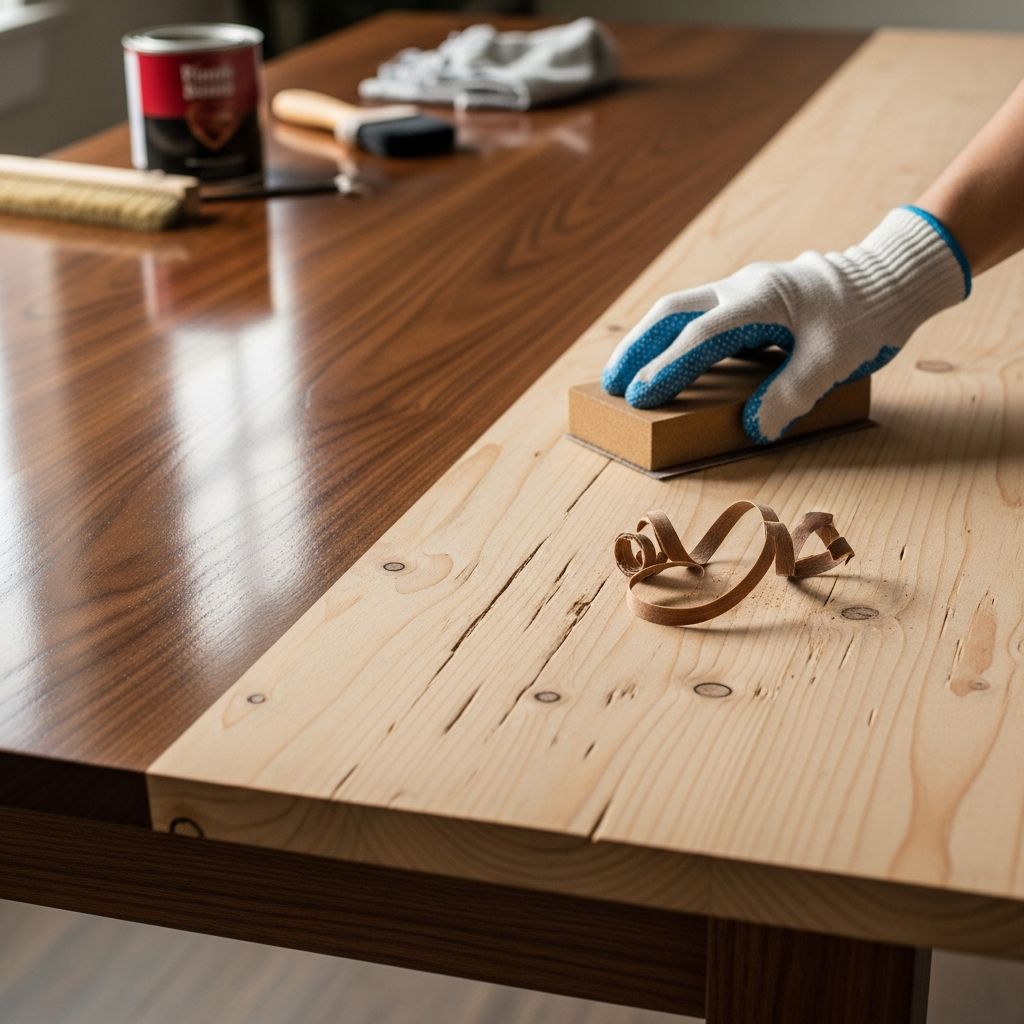
Refinishing a dining room table is one of the most satisfying DIY projects because it dramatically changes the look of your space without the cost of a new piece of furniture. With some patience, basic tools, and a clear plan, you can turn a scratched, dated, or yellowed table into a fresh centerpiece that suits your current style.
This guide focuses on practical steps and realistic expectations so that a first-time DIYer can follow along with confidence. It covers everything from deciding if your table is worth refinishing to caring for the new finish after the project is complete.
Deciding If Your Table Is a Good Candidate
Not every dining table needs or deserves a full refinish, so it helps to evaluate the piece before you start stripping finishes or buying products. A quick inspection can save time, money, and frustration later in the project.
Look closely at the material, structural integrity, and existing finish to decide whether a full refinish is appropriate or if a lighter refresh is enough.
Check the Material
The best candidates for refinishing are solid wood tables, because they can be sanded and re-stained multiple times over their lifetime. Veneer tables can also be refinished, but they require more care, since the thin wood layer can be sanded through if you are too aggressive.
- Look underneath the tabletop or at the edge for exposed wood grain, which usually indicates solid wood.
- If you see a thin layer of wood over a different core material, such as MDF or particleboard, the table is likely veneered.
- Heavily laminated or plastic-coated surfaces are generally poor candidates for traditional wood refinishing and may be better suited to painting.
Assess Damage and Stability
Before planning a new finish, make sure the table is structurally sound and repairable. Refinishing only the surface will not fix loose joints or major water damage, so it is important to address these issues first.
- Check for wobbly legs, loose stretchers, or cracked joints that may need glue or hardware repair.
- Identify deep gouges, warped sections, or severe water damage that may require wood filler or even professional help.
- Confirm that the table can be moved to a workspace safely, especially if it is an older or heavier piece.
Planning the Look and Finish
Refinishing is not only about fixing damage; it is also a chance to reinvent the style of your dining room table. Before you open a can of stripper or stain, decide how you want the finished piece to look and how it needs to perform in daily use.
Having a clear vision will help you choose the right products, from stains and paints to protective topcoats, and will keep you from changing direction halfway through the project.
Choose a Style Direction
Start with the overall design of your room and how you use your dining area. A farmhouse table in a busy household may need a durable, family-friendly finish, while a formal dining space might prioritize a richer, more delicate surface.
- For a classic wood look, choose a stain color that complements existing flooring or cabinetry.
- For a modern update, consider a lighter, natural finish that emphasizes the grain instead of a heavy, dark color.
- For a two-tone look, some people stain the top and paint the base, which can hide wear on legs and add visual interest.
Understand Stain and Topcoat Options
Different finishing products create different levels of color and protection. It is helpful to distinguish between the products that change the color of the wood and those that protect the wood from daily wear.
| Product Type | Main Purpose | Appearance | Best For |
|---|---|---|---|
| Oil-based stain | Adds rich color and highlights grain | Warm tone, often slightly amber | Traditional or rustic tables |
| Water-based stain | Colors wood with less odor | More neutral colors, less yellowing | Modern spaces and lighter looks |
| Polyurethane (oil-based) | Durable protective film | Can be glossy, semi-gloss, or satin | High-use family dining tables |
| Water-based poly | Protects without strong odor | Clear finish, less yellowing | Light-colored or contemporary tables |
| Hardwax oil or penetrating oil | Soaks into wood and enhances grain | Low-sheen, natural feel | Informal or Scandinavian-style spaces |
Gathering Tools and Setting Up Safely
Good preparation can make refinishing more efficient and much less messy. Setting up a safe, well-ventilated work area and having the right tools on hand will help the project go smoothly from the first pass of stripper to the final coat of finish.
Always read product labels for safety and application instructions, and protect both yourself and your home from dust and fumes.
Basic Tools and Supplies
The exact tools you need will depend on your table and the products you choose, but most refinishing projects use a similar core set of supplies.
- Drop cloths or plastic sheeting to protect floors.
- Random orbital sander plus sanding pads in several grits.
- Hand sanding blocks for edges, corners, and curved legs.
- Wood stripper (if removing a thick or stubborn finish).
- Plastic or metal scraper and a small putty knife.
- Tack cloths, lint-free rags, and shop vacuum.
- Stain applicators such as foam brushes or staining pads.
- Brushes or foam rollers for topcoat, depending on product type.
Safety Considerations
Many refinishing materials involve dust, fumes, or chemicals, so it is important to plan for personal protection. Even water-based products should be handled with care in a well-ventilated space.
- Wear safety glasses, gloves, and a respirator or dust mask while stripping and sanding.
- Work outdoors or in a garage with doors and windows open whenever possible.
- Dispose of stain-soaked rags properly, as they can be a fire hazard if left in a pile.
Removing the Old Finish
Removing the existing finish is the foundation of a successful refinish. Any old varnish, lacquer, or thick paint left behind will interfere with stain absorption and can cause new finishes to peel or look uneven.
Depending on the type of finish and your comfort level, you can strip the table chemically, mechanically with sanding, or by combining both approaches for efficiency and control.
Chemical Stripping Basics
Chemical strippers help loosen old finishes so they can be scraped off with less effort. They are especially useful on thick, multiple-layer finishes or heavily carved details that are hard to sand evenly.
- Apply stripper in a generous, even layer according to the product instructions.
- Allow it to sit undisturbed for the recommended time until the finish softens and wrinkles.
- Use a scraper to gently lift the softened finish, working with the grain of the wood to avoid gouges.
When You Can Skip Stripper
For tables with a thin, worn finish, you may be able to remove the old coating using sanding alone. This approach is less messy but creates more dust and may require more patience.
- Start with a medium or coarse grit sandpaper on a random orbital sander for flat surfaces.
- Check your progress frequently to avoid sanding too deeply, especially on veneer tops.
- Use hand sanding on edges, profiles, and delicate areas where a power sander could cause damage.
Sanding for a Smooth, Even Surface
After the bulk of the old finish is removed, sanding refines the surface and prepares the wood to accept stain or paint. Thoughtful sanding makes the difference between a professional-looking refinish and a patchy or scratchy surface.
Working through progressively finer grits removes marks from the previous step and reveals clean, fresh wood ready for finishing.
Recommended Sanding Sequence
Choosing the right grit progression helps you remove old finish efficiently without overworking the wood. Skipping directly from a coarse to a very fine grit can leave visible scratches under your final finish.
- Begin with a coarse or medium grit (for example, 80–100) to remove remaining finish and level minor imperfections.
- Move to an intermediate grit (such as 120–150) to refine scratches from the first pass.
- Finish with a fine grit (around 180–220) for a smooth touch and even stain absorption.
Detail Sanding Tips
Not every part of a dining table can be sanded with a power tool. Legs, crossbars, and decorative edges often require hand sanding to avoid flattening contours or creating flat spots.
- Wrap sandpaper around a sponge or shaped block to follow curves on turned legs.
- Sand with the grain, especially on visible surfaces, to reduce cross-grain scratches.
- Vacuum and wipe down the surface between grits so leftover dust does not create swirl marks.
Coloring the Wood: Stain or Paint
Once your table is stripped and sanded, it is ready for color. Staining enhances the natural grain and character of the wood, while painting offers full coverage and a more dramatic style shift.
Whichever option you choose, always test products on a hidden section or scrap piece of similar wood before committing to the entire tabletop.
Applying Wood Stain
Stain application can be simple if you work in manageable sections and follow a consistent process. The goal is to saturate the surface evenly and then remove excess product before it dries on top of the wood.
- Stir the stain thoroughly to distribute pigments, avoiding bubbles from shaking the can.
- Apply stain with a brush or cloth in the direction of the grain, keeping a wet edge to avoid lap marks.
- Allow the stain to soak for the recommended time, then wipe off the excess with a clean cloth.
- For deeper color, apply a second coat after the first one has dried according to the product label.
Painting Instead of Staining
Painting a dining table can hide mismatched woods, heavy stains, or repairs that might stand out under a clear finish. It also allows for bolder colors and creative combinations with chairs or other furniture.
- Use a bonding or sandable primer to help paint adhere to previously finished surfaces.
- Choose a high-quality furniture or cabinet paint designed to withstand frequent cleaning.
- Apply multiple thin coats instead of one heavy coat to reduce drips and brush marks.
Sealing and Protecting the Surface
A clear protective topcoat gives your newly stained or painted table the durability it needs to survive daily meals, homework, and gatherings. This layer acts as a shield against moisture, heat, and abrasion.
Topcoats are available in several sheens, including matte, satin, semi-gloss, and gloss, so you can choose a look that suits your style and maintenance preferences.
Applying a Clear Topcoat
Successful topcoating comes down to thin, even layers and adequate drying time. Rushing this step or applying finishes too heavily can lead to runs, bubbles, or a sticky surface that never feels truly cured.
- Lightly sand the stained or painted surface with very fine grit (such as 220–320) and wipe away dust before the first coat.
- Apply the topcoat in long, overlapping strokes, maintaining a wet edge for smooth coverage.
- Allow each coat to dry fully, then lightly sand and clean between coats to remove dust nibs.
- Plan on at least two to three coats on the tabletop for long-term durability.
Curing Time and Early Use
Even though a finish may feel dry to the touch in a few hours, it can take days or weeks to cure completely. During this period, the finish is more vulnerable to scratches, imprints, and heat damage.
- Avoid placing heavy objects, tablecloths, or hot dishes directly on the table during the early curing phase.
- Use coasters, placemats, and trivets from the beginning to build good habits and protect the new surface.
- Wait until the manufacturer’s full cure time has passed before intense daily use or deep cleaning.
Long-Term Care and Maintenance
After investing time and effort into refinishing, a few simple habits will help maintain the table’s appearance for years. Preventative care is more effective than frequent heavy refinishing, especially on softer woods prone to dents and scratches.
Focus on protection from moisture, temperature extremes, and rough contact to prolong the life of your new finish.
Everyday Protection Tips
Small routine choices make a significant difference in how a dining table ages. Consistent use of basic protections helps prevent common issues like ring marks, heat damage, and worn finish spots.
- Use felt pads under centerpieces, vases, and décor to avoid scratches.
- Clean spills promptly with a slightly damp cloth, then dry the area right away.
- Avoid harsh cleaners; instead, use mild soap and water or a product recommended for your specific finish type.
Refreshing a Worn Surface
Over time, even a well-protected dining table may show light wear, especially in the center or along edges where people rest their arms. Minor wear can often be repaired without fully stripping and refinishing the table again.
- For small scratches, lightly sand the affected area and touch up with matching stain and topcoat.
- For widespread dullness, clean thoroughly and scuff sand, then add a fresh coat of clear finish over the entire surface.
- Consider table runners or placemats in high-use zones to slow down future wear.
Frequently Asked Questions
How long does it take to refinish a dining room table?
The active working time often adds up to a full weekend, but the overall schedule depends on drying and curing times for each product. Many people strip and sand on the first day, then stain and start applying protective coats on the second day, allowing the table to cure over the following week.
Do I have to remove the legs before refinishing?
Removing the legs is not mandatory, but it can make sanding and finishing the tabletop much easier. If your table has easily removable legs or a pedestal base, taking it apart for the project may give you better control and reduce strain while working.
What if my table has a veneer top?
Veneer can still be refinished, but it requires a lighter touch and careful sanding to avoid going through the thin wood layer. Using a gentler grit, checking progress often, and relying more on chemical stripping than aggressive sanding helps protect veneer surfaces.
Which finish is best for families with kids?
Durable film finishes such as polyurethane are popular for busy households because they resist moisture, stains, and frequent wiping. A satin sheen often hides fingerprints and everyday wear better than a high-gloss finish while still looking polished.
Can I change a dark table to a light, natural look?
Lightening a table is possible when the wood underneath is naturally pale enough and the old dark finish can be fully removed. Stripping thoroughly, sanding carefully, and using a clear or light-toned finish instead of a dark stain can dramatically brighten the appearance of the table.
Is refinishing cheaper than buying a new table?
In many cases, refinishing is more affordable, especially if you already own a solid wood table with good bones. The main costs are supplies and tools, which are typically lower than purchasing a new, comparably built dining table of similar quality.
Similar Articles






Read full bio of medha deb