Mastering Tile Floor Staining: Complete DIY Guide
Unlock the secrets to transforming outdated tile floors with professional staining techniques for a durable, custom finish at home.
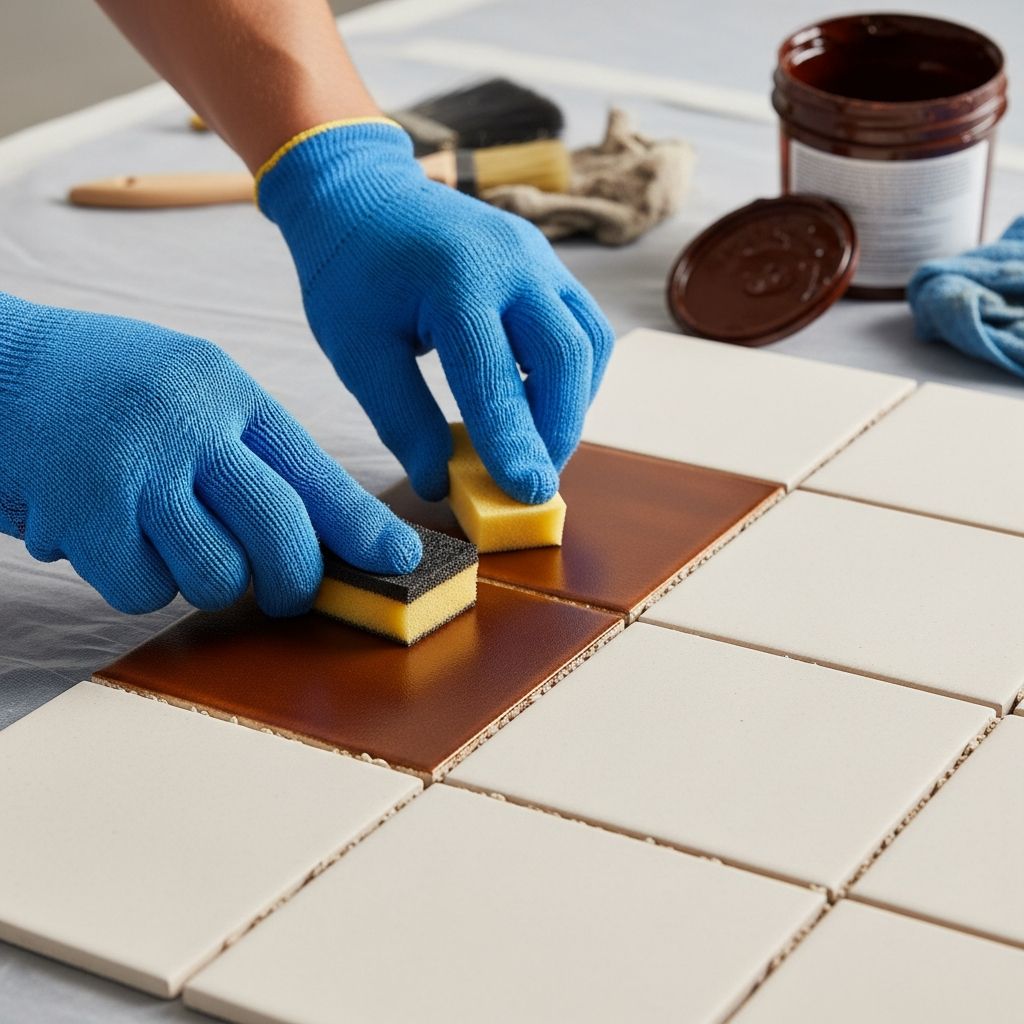
Staining tile floors offers a cost-effective way to refresh worn surfaces, imparting rich colors and unique patterns without the expense of full replacement. This process works best on porous materials like unglazed ceramic, terra cotta, or quarry tiles, where stains can penetrate deeply for long-lasting results.
Understanding Tile Types for Staining Success
Not all tiles respond equally to staining.
Porous tiles
, such as terra cotta and unglazed quarry varieties, absorb stains readily due to their natural composition, allowing for vibrant, durable coloration. In contrast, glazed porcelain or ceramic tiles resist penetration, often requiring alternative refinishing like painting after priming.Identify your tile by checking for a matte finish and water absorption test: sprinkle water—if it beads up, the surface is non-porous; if it soaks in, it’s ideal for staining. This distinction prevents wasted effort and ensures professional outcomes.
Essential Tools and Materials Roundup
Gathering the right supplies upfront streamlines the project. Here’s a curated list:
- Stains: Oil-based or concrete stains formulated for porous tiles; water-based options for low-VOC projects.
- Cleaning agents: Degreaser, tile/grout cleaner, stiff brushes for residue removal.
- Sanding tools: Fine-grit sandpaper (220-400 grit) or orbital sander for smoothing.
- Application tools: Paintbrushes, rollers, lambswool applicators, clean rags.
- Protection: Painter’s tape, drop cloths, gloves, goggles, respirator masks.
- Sealers: Penetrating or topical sealers compatible with stained tiles.
- Extras: Wood filler for cracks, pH-neutral cleaner for post-project care.
Invest in quality products from reputable brands to avoid patchy results or premature wear.
Comprehensive Surface Preparation Techniques
Preparation accounts for 70% of staining success, as contaminants block penetration. Follow this phased approach:
- Clear and vacuum: Remove furniture, rugs, and debris to expose every inch.
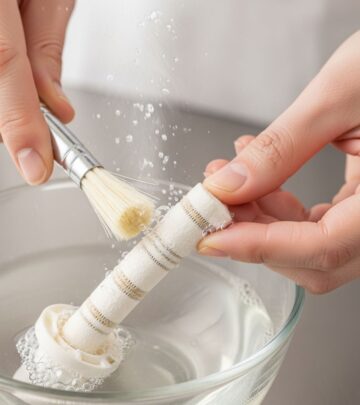
- Deep clean: Apply degreaser or professional tile cleaner; scrub with a stiff brush, focusing on grout lines. Rinse thoroughly and air-dry for 24-48 hours.
- Strip old finishes: Use a stripping solution on sealed tiles; agitate and rinse to reveal bare porosity.
- Sand imperfections: Lightly abrade rough spots or glossy residues with 400-grit sandpaper for even absorption.
- Tape boundaries: Mask walls, baseboards, and fixtures with painter’s tape for crisp edges.
- Test patch: Apply stain to a hidden area; observe color after drying to confirm suitability.
Proper prep ensures uniform color uptake and adhesion.
Selecting the Perfect Stain for Your Vision
| Stain Type | Best For | Pros | Cons |
|---|---|---|---|
| Oil-Based | Terra cotta, quarry tiles | Deep penetration, UV resistance | Strong fumes, longer dry time |
| Water-Based | Indoor, low-odor projects | Quick drying, eco-friendly | May require multiple coats |
| Concrete Stain | Porous ceramics | Varied colors, mottled effects | Less predictable on tiles |
| Acid-Based | Advanced users | Chemical reaction for permanence | Hazardous, ventilation critical |
Match stain to desired opacity: translucent for natural texture, semi-opaque for bolder hues. Always review manufacturer specs for tile compatibility.
Step-by-Step Staining Application Mastery
With prep complete, apply stain methodically for flawless coverage:
- Work in sections: Divide the floor into 10×10 ft quadrants to manage wet edges.
- Initial coat: Use a brush for edges/grout, roller for fields. Apply liberally, feathering strokes to avoid lines.
- Wipe excess: After 5-15 minutes (per instructions), buff with lint-free rags to control intensity and prevent puddles.
- Dry interval: Wait 4-24 hours; inspect for evenness.
- Second/third coats: Repeat for depth, allowing full dry between layers. Mottled effects emerge naturally on porous surfaces.
Avoid foot traffic during curing to preserve the finish.
Sealing for Longevity and Protection
Sealing locks in color and shields against stains, moisture, and wear. Choose penetrating sealers for breathability on grout-heavy floors.
- Prep sealer surface: Ensure stain is fully cured (24-72 hours).
- Apply thinly: Two coats with a roller/brush, 1-2 hours apart; wipe excess.
- Cure time: 48-72 hours before heavy use; full hardness in 7 days.
Reapply sealer every 1-2 years based on traffic.
Troubleshooting Common Staining Pitfalls
Even pros encounter issues—here’s how to fix them:
- Uneven color: Over-sanded areas or rushed wiping; sand lightly and recoat.
- Puddles/streaks: Excess not removed; buff post-dry and add dilute topcoat.
- Poor adhesion: Inadequate cleaning; strip, reclean, and restart.
- Fading: UV exposure; use UV-resistant sealer.
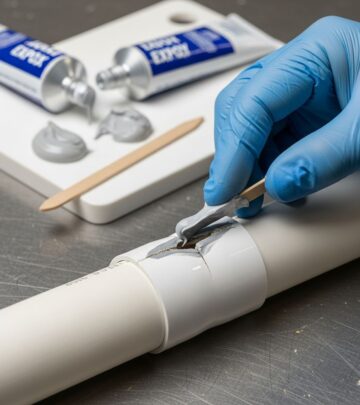
- Grout mismatches: Stain grout separately with epoxy products.
Prevention through testing yields superior results.
Maintenance Strategies for Stained Tile Floors
Sustain your investment with routine care:
- Dust mop daily; wet mop weekly with pH-neutral cleaner.
- Avoid harsh abrasives or acids that etch sealers.
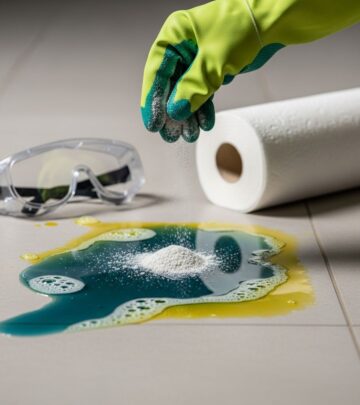
- Address spills immediately to prevent penetration.
- Inspect annually; reseal proactively.
This regimen extends life by 5-10 years.
Cost Analysis and ROI Insights
DIY staining costs $0.50-$2 per sq ft (materials), versus $5-15 for pro refinishing. A 200 sq ft kitchen refresh saves $800-2,600, with comparable durability when done right.
Frequently Asked Questions (FAQs)
Can you stain any type of tile floor?
Primarily unglazed, porous tiles like terra cotta. Glazed tiles need painting after priming.
How long does stained tile last?
10-20 years with proper sealing and maintenance.
Is staining tile floors messy?
Moderate; use drop cloths and tape. Fumes require ventilation.
Can I stain over existing grout?
Yes, after cleaning; use grout-specific epoxy stains.
What’s the drying time before walking?
24-72 hours post-sealing; full cure in a week.
References
- How to Stain Terra Cotta Floor Tiles — Stone Forensics. Accessed 2026. https://stoneforensics.com/how-to-stain-terra-cotta-floor-tiles/
- Transform Your Floors: A Step-by-Step Guide to the Staining Process — Corlew and Perry. Accessed 2026. https://www.corlewandperry.com/blog/articles/transform-your-floors-a-step-by-step-guide-to-the-staining-process
- Tile Floor Refinishing: A Comprehensive Guide — Carpet Outlets. Accessed 2026. https://www.carpetoutlets.net/post/tile-floor-refinishing-a-comprehensive-guide-to-revitalize-your-space
- A Pro’s Guide to Painting Tile — Benjamin Moore. Accessed 2026. https://www.benjaminmoore.com/en-us/contractors/job-solutions/project-advice/painting-tile
- How to Care for and Maintain Ceramic Tile — Daltile. Accessed 2026. https://www.daltile.com/how-to/how-to-care-for-and-maintain-tile/how-to-care-for-and-maintain-ceramic-tile
Similar Articles








Read full bio of medha deb