A Complete Guide to Washing Walls and Wallpaper Without Damage
Gentle, effective methods to refresh painted walls and wallpaper safely.
How to Clean Walls and Wallpaper Without Ruining the Finish
Walls and wallpaper quietly collect dust, fingerprints, and stains, yet they are often the last surfaces people remember to clean. A thoughtful approach lets you wash them thoroughly while preserving paint, paper, and texture for years to come.
Understanding Your Wall Surface Before You Clean
Knowing what you are working with is the most important step in wall care, because different finishes react very differently to moisture and scrubbing. A quick inspection will help you choose the safest method and avoid peeling, streaking, or shine loss.
- Flat or matte paint: Beautiful at hiding imperfections but easily marked and sometimes sensitive to moisture.
- Eggshell and satin paint: A bit more durable than flat, with a soft sheen that can usually handle gentle washing.
- Semigloss and gloss paint: Often used in kitchens, baths, and trim; more resistant to moisture and frequent cleaning.
- Vinyl or washable wallpaper: Designed to tolerate light cleaning, wiping, and mild cleaning solutions.
- Paper or fabric wallpaper: Typically more delicate; usually limited to careful dusting and very light spot work.
To test how your surface responds, moisten a cotton swab with a mild, soapy solution and dab a low, inconspicuous area. If color transfers to the swab, or the finish immediately dulls or softens, switch to dry or nearly dry methods only.
Essential Tools and Supplies for Safe Wall Cleaning
Gathering the right tools ahead of time makes wall cleaning faster and reduces the risk of streaks and scratches. Choose gentle materials and avoid anything overly abrasive or strongly scented unless specifically designed for walls.
- Soft microfiber cloths or pads for dusting and wiping.
- A soft, non-scratch sponge or cellulose sponge for washing.
- A bucket for clean water and, optionally, a second bucket for rinse water.
- Neutral or mild dish soap for general cleaning.
- Baking soda for non-scratch spot treatment on many painted surfaces.
- White vinegar for certain grease and mildew-prone areas, if compatible with the finish.
- A step stool or small ladder for ceilings and high corners.
- Floor protection such as an old sheet or plastic drop cloth.
Suggested Mild Cleaning Mixes
These simple mixtures work for many painted walls and some wallpapers, but always test first:
- Basic soap solution: About a few drops of mild dish soap stirred into a bucket of warm water.
- Grease-fighting mix: Slightly stronger dish soap in warm water, used sparingly on kitchen walls.
- Odor-control rinse: A small splash of white vinegar in a bucket of water to help cut odors on compatible surfaces.
Preparation: How to Get the Room Ready
A few minutes of preparation can prevent drips, splashes, and accidental damage to furniture and floors. Treat wall washing like any other deep-cleaning task and stage the space logically before you begin.
- Clear the area. Move furniture a safe distance from the walls and remove lightweight items from the room if possible.
- Protect the floor. Lay towels, a sheet, or a drop cloth along the base of the walls you will clean.
- Take down wall decor. Remove artwork, photos, and mirrors, and dust them separately.
- Turn off electricity near work zones. Switch off power to outlets or switches if you expect the area to get damp.
- Dust first. Use a dry microfiber mop, cloth, or a vacuum with a brush attachment to remove cobwebs and loose dust from top to bottom.
Step-by-Step: Washing Painted Walls
Painted walls can usually be freshened with mild soap and water if you control the amount of moisture and avoid aggressive scrubbing. Adjust the technique based on your paint sheen for best results.
General Method for Most Painted Walls
- Start with a test area. Choose a hidden corner and gently clean a small patch with your diluted solution, then let it dry.
- Work in sections. Focus on patches about arm-span wide rather than trying to tackle the entire wall at once.
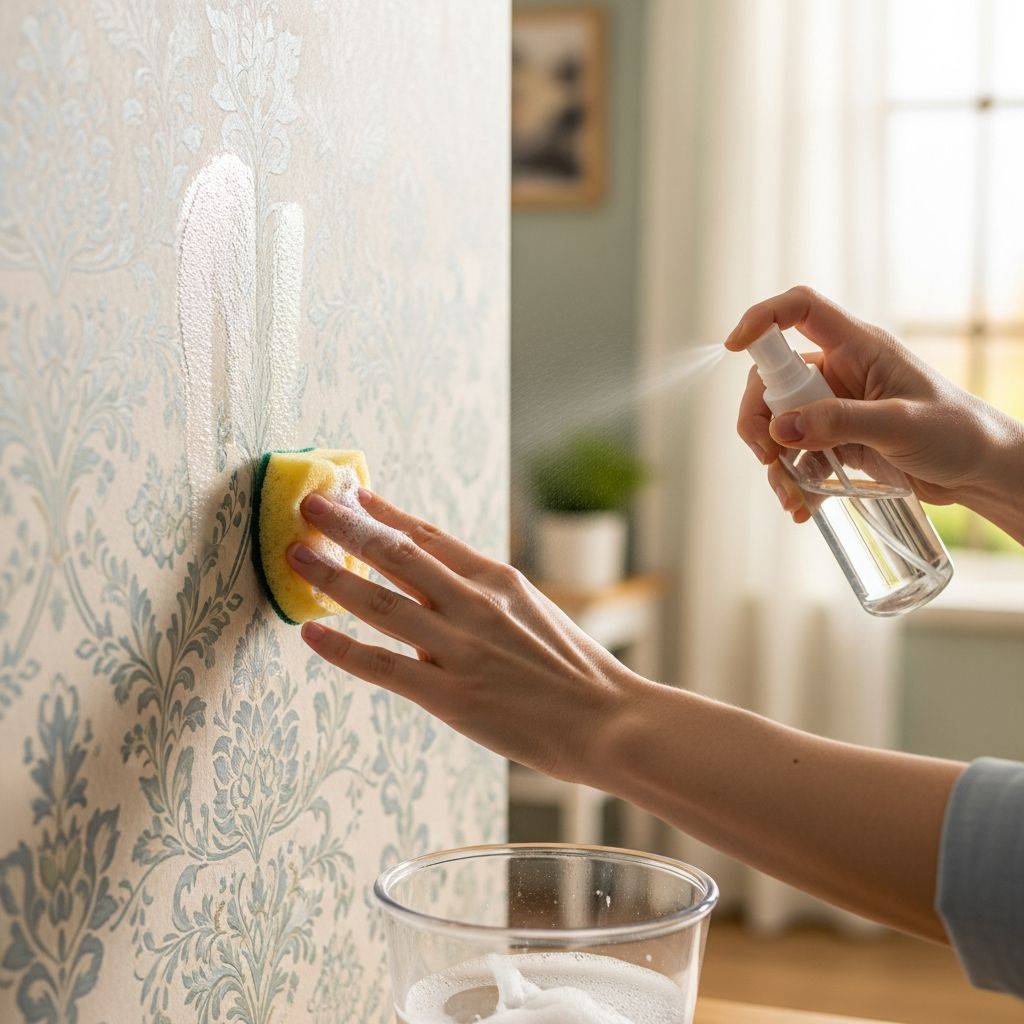
- Apply solution lightly. Dip your sponge or cloth into the cleaning mix, wring it out thoroughly, and wipe the wall in smooth, overlapping strokes.
- Rinse as you go. Follow each cleaned section with a second cloth dampened in clean water to remove soap residue.
- Dry immediately. Use a dry microfiber towel to blot and smooth the area, helping prevent water marks and drip lines.
Special Notes by Paint Sheen
| Wall Finish | Moisture Tolerance | Suggested Technique |
|---|---|---|
| Flat / Matte Paint | Low | Spot-clean only, using a nearly dry cloth and minimal pressure. |
| Eggshell / Satin Paint | Moderate | Gentle, full-wall washing with well-wrung cloths and quick drying. |
| Semi-gloss / Gloss Paint | High | Suitable for more frequent washing, especially in kitchens and baths. |
If your wall develops dull patches where you cleaned, the finish may be delicate or worn. In that case, focus on limited spot removal rather than repeated full washes.
How to Clean Wallpaper Safely
Wallpaper ranges from highly washable vinyl to porous paper and fabric, so always start with the gentlest method. When in doubt, treat the surface as delicate and limit water exposure as much as possible.
Dusting and Dry Cleaning Wallpaper
- Use a dry microfiber duster or a vacuum with a soft brush to remove loose dust and cobwebs.
- Move the duster in long, vertical strokes to avoid leaving visible lines or patches.
- For textured wallpaper, use a soft-bristled brush to gently dislodge dust without grinding it into the surface.
Wiping Washable or Vinyl Wallpaper
- Check manufacturer guidance. If you still have the original roll or installation instructions, confirm that the material is washable.
- Test a hidden corner. Dab lightly with a nearly dry, soapy cloth and ensure no color or pattern transfers.
- Clean in small sections. Wipe with a softly wrung sponge, following the pattern if possible to hide any slight changes.
- Keep seams dry. Avoid oversaturating joints where the paper meets, as moisture can lift edges.
- Pat, don’t rub. For isolated spots, press the cloth against the area rather than scrubbing in circles.
Handling Delicate Paper or Fabric Wallpaper
Non-washable wallpaper often tolerates only dry methods. In these cases, focus on prevention and gentle dusting rather than aggressive stain removal.
- Stick to vacuuming and soft dusting, especially for grasscloth, silk, or hand-printed designs.
- Address greasy or colored stains with professional help if the paper is valuable or irreplaceable.
- If you must attempt spot treatment, use the lightest possible touch and keep water use to a minimum.
Targeted Techniques for Common Wall Stains
Not all smudges respond to the same cleaner, so matching your approach to the type of stain can save time and protect the finish. Always start with mild soap and water before escalating to stronger methods.
Fingerprints and Everyday Smudges
- Create a mild soapy solution and wipe with a barely damp cloth, working around doorknobs, light switches, and high-touch areas.
- Rinse and dry immediately to avoid halo marks or drip trails.
Grease and Kitchen Film
- Increase the soap concentration slightly for areas near stoves or vents, but avoid heavy scrubbing.
- On glossy paint, a small amount of degreasing dish soap in warm water can help break down grease.
- For wallpaper, focus on blotting rather than rubbing, and test carefully before treating a large area.
Scuffs, Shoe Marks, and Abrasions
- Try lifting scuffs with a clean, white eraser or melamine sponge, using a light touch.
- If the mark remains, move to a diluted soap solution and gently rub in the direction of the mark.
- On fragile surfaces, it may be safer to touch up the paint instead of scrubbing repeatedly.
Crayon, Pencil, and Ink
- On durable paint, a small amount of baking soda on a damp cloth can sometimes lift crayon without scratching.
- A tiny dab of rubbing alcohol on a cotton swab may help with some inks on glossy finishes; avoid this on wallpaper or flat paint unless tested first.
- Work patiently using short, light strokes to avoid spreading the stain.
Preventing Water Damage and Streaks
Many wall problems during cleaning happen not from the cleaner itself but from too much water or inconsistent technique. A few habits can keep your results even and streak-free.
- Always wring sponges and cloths until they are damp, not dripping.
- Work from the bottom up or top down consistently to avoid tide lines where clean and dirty areas meet.
- Change rinse water frequently so you are not redistributing dirt.
- Use clean, dry towels to catch drips around baseboards, outlets, and window frames.
Ongoing Maintenance: Keeping Walls Looking Clean Longer
A regular light routine can drastically reduce the need for heavy scrubbing and deep cleaning. Building these tasks into weekly or monthly housekeeping helps walls stay fresh with minimal effort.
- Dust walls and corners during regular room cleaning, using an extension duster or vacuum attachment.
- Immediately wipe fresh splashes or fingerprints before they have time to set.
- Place furniture slightly away from walls to prevent constant rubbing and black marks.
- Use washable paint or scrubbable wallpaper in high-traffic areas such as hallways, kids’ rooms, and entryways.
Simple Wall Cleaning Schedule
| Frequency | Task |
|---|---|
| Weekly | Spot-clean fingerprints and visible smudges. |
| Monthly | Dust corners, ceilings, and high-traffic wall areas. |
| Twice a year | Wash or lightly wipe major wall sections as needed. |
| As needed | Address stains, scuffs, and kitchen grease buildup promptly. |
FAQs About Cleaning Walls and Wallpaper
How often should walls be washed?
In most homes, complete wall washing once or twice a year is enough if you also spot-clean and dust regularly. High-traffic areas, kitchens, and kids’ rooms might need more frequent attention, especially around switches, doorframes, and play zones.
Can all painted walls be washed with water?
No, some older, flat, or low-quality paints can soften or streak when exposed to moisture. Always test a small area with a mild solution first and, if you see color transfer or dulling, limit cleaning to dry dusting and very gentle spot treatments.
What is the safest cleaner for most walls?
A mild dish soap diluted in warm water is often gentle enough for many modern paints and some washable wallpapers. Avoid harsh chemicals, strong abrasives, or undiluted cleaners unless specifically labeled for use on walls, and always rinse with clean water afterward.
How can I clean walls without leaving streaks?
Use well-wrung cloths, work in small sections, and rinse and dry each area before moving on. Keeping your rinse water clean and maintaining consistent wiping patterns reduces uneven drying and visible streak lines.
Is it possible to remove smoke or cooking odors from walls?
Gentle washing with a mild, deodorizing solution can help reduce lingering odors embedded in painted surfaces. In spaces with heavy smoke or long-term cooking residue, priming and repainting may provide a more complete refresh.
When should I call a professional?
Professional help is wise for valuable wallpapers, historic finishes, extensive staining, or when ceiling heights make DIY work unsafe. Experts can also advise whether a wall is better served by repainting or replacement rather than aggressive cleaning.
Similar Articles




Read full bio of medha deb