The Complete Homeowner’s Guide to Safe, Fun Tree Swings
From picking the right tree to the final test push, here’s how to enjoy a backyard tree swing safely and in style.
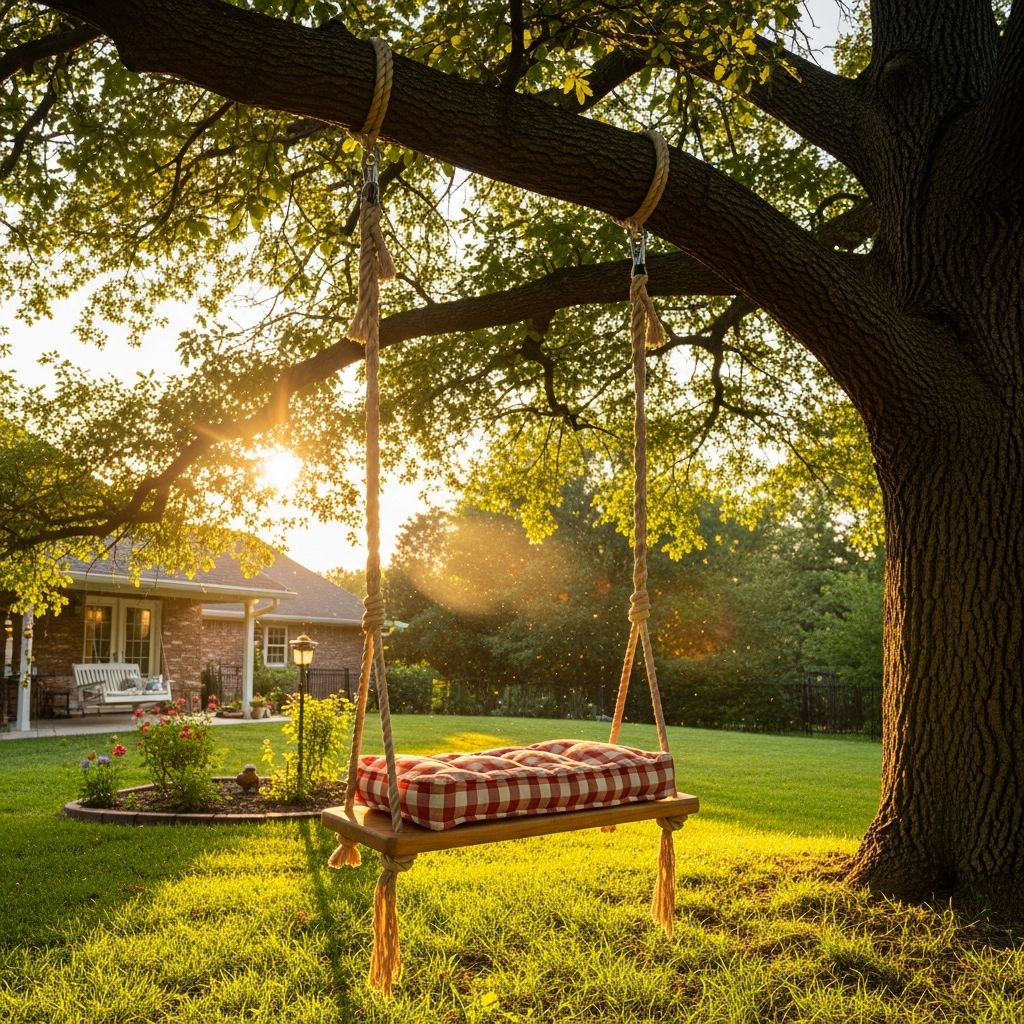
Few backyard projects deliver as much joy per dollar as a simple tree swing. The right setup can turn an ordinary tree into the centerpiece of outdoor play, relaxation, and family memories, all while staying safe and preserving the tree’s health.
This guide walks through how to choose a safe tree, pick the best hardware, install your swing, and keep it in good shape for years. It is written to inspire your own design and does not repeat any specific structure or wording from any one source.
Why Tree Swings Deserve Thoughtful Planning
Tree swings look simple, but the forces on the rope, hardware, and tree are surprisingly high, especially when kids jump on or adults join in. A bit of planning protects both people and the tree, reducing the risk of accidents and long-term damage.
Thinking ahead also ensures your swing stays comfortable and usable: good clearances, a level seat, weather-resistant materials, and a layout that fits your yard all make the difference between a quick novelty and a lasting feature.
Choosing the Right Tree and Branch
The single most important decision is which tree and branch will carry the swing. Not every tree in a yard is suitable, and using a weak or damaged tree can be dangerous.
- Favor mature hardwoods such as oak, maple, beech, or ash over softwoods like pine or spruce.
- Look for a straight, healthy trunk with no major cracks, fungus, or hollows.
- Choose a branch that is roughly horizontal, at least 20–25 cm (8–10 inches) in diameter, and free of visible rot.
- Ideally, the branch should extend well away from the trunk so the swing hangs at least 90 cm to 1 m (3 feet) from the trunk.
Signs a Tree Is Not a Good Candidate
Do not use a tree that has peeling bark, large dead sections, mushrooms at the base, or a significant lean toward structures or power lines. These can signal internal decay or instability that may not be obvious from the outside.
If you are unsure about the health of a tree you want to use, consult a certified arborist. A brief professional assessment costs far less than replacing a damaged tree or dealing with an injury.
Planning a Safe Swing Location
Once you have a suitable tree, plan the swing’s footprint so it is fun to use and unlikely to collide with anything. Think of an invisible bubble around the swing where people can move freely.
- Ensure a clear arc in front and behind the swing of at least 1.8–2.4 m (6–8 feet).
- Keep the swing away from fences, sheds, stone walls, and other hard objects.
- Avoid overhead obstacles such as other branches or wires that riders could hit.
- Place the swing over a forgiving surface like lawn or wood chips, not concrete or stone.
Recommended Heights and Clearances
| Feature | Recommended Value |
|---|---|
| Seat height above ground | 45–60 cm (18–24 inches) |
| Distance seat to trunk | At least 90 cm (3 feet) |
| Minimum branch height | Approx. 2.1–3 m (7–10 feet) |
| Front/back clearance | At least 1.8–2.4 m (6–8 feet) |
| Side clearance from obstacles | At least 0.9–1.2 m (3–4 feet) |
Rope, Chain, and Hardware: What to Use and Avoid
The swing is only as strong as its weakest component. Choosing quality rope or chain and the right hardware reduces the chance of sudden failure.
Rope Options
Most DIY tree swings use rope because it is easy to handle and gentle on the tree when combined with wide straps. Common choices include:
- Polyester rope: Strong, UV-resistant, and stretches less than many synthetics. A good all-round option.
- Braided nylon: Very strong but can stretch under load and may degrade with long-term sun exposure.
- Natural manila: Classic look, good grip, but absorbs water and may wear out faster outdoors.
Whatever material you choose, aim for a rope diameter of at least about 19 mm (3/4 inch) for comfort and strength, and buy more length than you think you need to allow for knots and adjustments.
Chain and Metal Components
Chain is durable and resists UV damage, but it can pinch fingers and wear into the bark if it rubs directly on the tree. If using chain, keep it off the bark with protective sleeves or anchor hardware.
Select galvanized or stainless-steel components, such as eye bolts and carabiners, rated well above the maximum load you expect. It is wise to assume that the actual forces on the hardware will be several times the rider’s weight due to swinging and bouncing.
Protecting the Tree While Hanging the Swing
A well-installed swing should not strip bark or choke a limb. Damage happens when a small contact area concentrates force or when materials cut into the tree over time.
- Use wide tree straps or sleeves around the branch to spread the load.
- Avoid wrapping bare rope tightly around the branch with no padding.
- Check periodically that bark is not being crushed or cut.
- Allow enough slack for the tree to grow, especially with fixed hardware like eye bolts.
Straps vs. Fixed Hardware
There are two main approaches to attaching a swing to a branch: removable hanging straps that loop around the limb, or fixed hardware such as lag or eye bolts driven into the wood.
Straps are non-invasive and can be adjusted or removed easily, which many homeowners prefer. Fixed hardware offers a cleaner look and a very solid anchor, but it penetrates the wood and should be installed only in a healthy, adequately sized branch.
Designing a Comfortable Swing Seat
The seat affects both comfort and safety. A seat that is too narrow, too slick, or poorly balanced discourages use and can lead to falls.
- Simple board seats work well when the edges are rounded and the surface is sanded smooth.
- Wider seats provide more stability for young children.
- Consider a slight rounding of the front edge to keep legs comfortable.
- Use exterior-grade finishes or sealers on wooden seats to protect against moisture.
Seat Materials Compared
| Material | Pros | Cons |
|---|---|---|
| Solid wood plank | Easy to build, classic look, customizable size | Requires sealing, can crack or splinter over time |
| Composite board | Weather resistant, low maintenance | Heavier, may need special tools to work |
| Store-bought plastic seat | Lightweight, often contoured and comfortable | Color fading, less custom fit for your tree |
| Rubber-coated seat | Good grip, forgiving surface | Typically more expensive, industrial appearance |
Step-by-Step Overview of a Typical Installation
The exact process will vary depending on your design and hardware, but most tree swings follow a similar overall sequence.
- Inspect and choose a healthy tree and suitable branch.
- Measure clearances and decide where the seat will hang.
- Gather rope or chain, hardware, and tools (ladder, drill, wrenches, etc.).
- Install straps or hardware on the branch safely using proper techniques.
- Attach the swing seat, leaving extra rope for adjustments.
- Level the seat and set the final height above the ground.
- Perform a careful test with a heavy adult before letting children use it.
Testing and Fine-Tuning
After the initial installation, test the swing slowly. Sit down gently, then gradually add motion, listening for creaks or shifting. Check that knots stay tight and that nothing slips.
Expect a new swing to settle slightly after a few uses. Re-check the seat height, level it again if necessary, and trim any excessive rope tails after you are sure you will not need further adjustments.
Safety Rules for Everyday Use
Even a well-built swing requires clear rules to stay safe. Children often push the limits because swinging feels exciting and carefree.
- Limit the swing to one rider at a time unless it is specifically built for multiple people.
- Teach children to sit, not stand or kneel, on the seat.
- Keep pets and other children clear of the swing path when in use.
- Do not twist the ropes repeatedly, which can stress hardware and suddenly unwind.
Weather and Seasonal Concerns
Rain, snow, and intense sun slowly weaken ropes and finishes. In areas with harsh winters, consider taking the seat down or at least inspecting it thoroughly before spring use.
After major storms, look for changes in the tree: broken branches, shifted limbs, or new cracks should be evaluated before anyone swings again.
Maintenance: Keeping the Swing Safe for Years
Tree swings should not be a “set it and forget it” project. A few quick checks throughout the year catch problems early.
- Inspect rope for fraying, flattening, or discoloration that suggests UV damage.
- Look for rust on chains, eye bolts, and carabiners.
- Check the seat for splinters, cracks, or loose fasteners.
- Examine the branch connection points for worn bark or recession around hardware.
Plan to replace rope periodically based on weather exposure and usage. When in doubt, swap in new rope rather than risk failure.
Tree Swings for Different Age Groups
The same tree can host very different swing designs as children grow, or as adults want a more relaxing space. Tailor your setup to who will use it most often.
- Toddlers: Use enclosed bucket-style seats with harnesses, installed very low and supervised constantly.
- School-age kids: Simple board or disc swings work well, with clear rules about safe use.
- Teens and adults: Wider benches, hammock-style swings, or platform swings can turn the tree into an outdoor lounge.
Frequently Asked Questions About Tree Swings
How much weight can a typical tree swing hold?
The safe capacity depends on the tree, branch size, hardware, and rope rating. Healthy hardwood branches with properly rated components can often support an adult comfortably, but you should always base your design on the lowest-rated element and build in a wide safety margin.
Is it better to wrap rope around the branch or drill into it?
Wrapping a padded strap around the branch is less invasive and easier to adjust, which many homeowners prefer. Drilling for eye bolts is more permanent and should only be done in a robust, healthy limb, ideally after professional advice if you have doubts.
How high should the seat be off the ground?
For most backyard swings, a height of about 45–60 cm (18–24 inches) above the ground is comfortable and practical. This allows children to climb on and off easily while still leaving enough clearance for safe swinging.
How often should I inspect my tree swing?
A quick visual check before use is a good habit, especially after storms or heavy use. At least a few times a year, perform a more thorough inspection of the tree, hardware, and seat, tightening, repairing, or replacing parts as needed.
Can a tree swing damage my tree over time?
Yes, if installed poorly or left unmaintained, a swing can strip bark, compress growth, or introduce decay. Using wide straps, giving the branch room to grow, and checking regularly for wear minimizes long-term harm and keeps both the tree and the swing in good condition.
Bringing It All Together
A tree swing is a deceptively simple project that blends carpentry, basic engineering, and tree care. By choosing a healthy tree, selecting strong materials, installing the swing thoughtfully, and performing regular checks, you can create a safe, inviting spot that draws people outside day after day.
Approached with care, that humble board and rope become much more than a toy: they become a reason to unplug, listen to the leaves, and enjoy the best parts of your yard.
Similar Articles








Read full bio of Sneha Tete