Connecting PVC and CPVC Pipes Effectively
Master the art of safely joining PVC and CPVC pipes for reliable plumbing repairs and installations in your home projects.
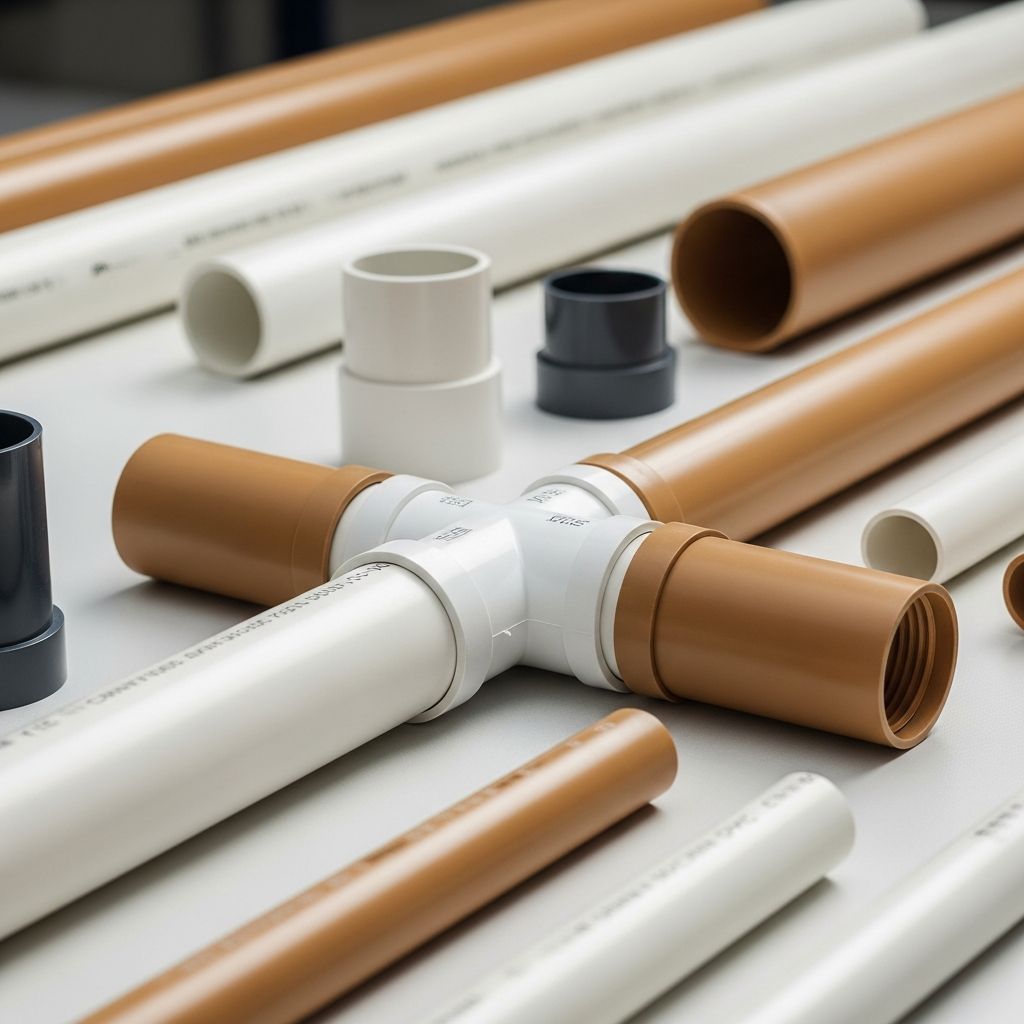
Plastic pipes like PVC and CPVC are staples in modern plumbing due to their affordability, durability, and ease of installation. PVC, or polyvinyl chloride, excels in cold water, drainage, and vent systems, while CPVC, its chlorinated counterpart, handles hot water up to 200°F. Directly fusing them poses challenges because of material incompatibilities, but specialized transition methods make secure joints possible.
Essential Differences Between PVC and CPVC Materials
Understanding the core distinctions is crucial before attempting any connection. PVC pipes are typically white or gray, rated for temperatures up to 140°F, and used in non-pressurized applications like irrigation or DWV (drain-waste-vent) systems. CPVC, often cream or light tan, withstands higher heat and chemicals, making it suitable for hot/cold domestic water lines.
Key variances include chemical composition: CPVC’s chlorination alters its molecular structure for better heat resistance. This affects joining—PVC solvent cement won’t properly bond CPVC, risking leaks or failures. Fittings also differ; PVC ones have thicker walls, while CPVC requires precise tolerances.
| Property | PVC | CPVC |
|---|---|---|
| Max Temperature | 140°F | 200°F |
| Typical Color | White/Gray | Cream/Tan |
| Common Uses | Drainage, Cold Water | Hot Water Lines |
| Solvent Cement | PVC-Specific | CPVC-Specific |
| Cost | Lower | 25-30% Higher |
This table highlights why mixing requires caution—mismatched materials lead to weak bonds under pressure or heat.
Why Direct Joining Isn’t Recommended
Standard solvent cement for PVC chemically melts and fuses pipe surfaces into a monolithic bond, but it lacks the formulation for CPVC’s chlorinated structure. Applying PVC cement to CPVC creates brittle joints prone to cracking, especially in hot water scenarios. Conversely, CPVC cement on PVC may not adhere fully due to dimensional mismatches.
- Leak Risks: Improper fusion allows water seepage, causing mold, rot, or structural damage.
- Pressure Failures: Joints may burst under system pressure, leading to floods.
- Code Violations: Most building codes mandate compatible materials for safety.
- Longevity Issues: Mismatched connections degrade faster, shortening system life.
Transition fittings bridge this gap reliably, using mechanical or hybrid seals instead of pure chemical welding.
Required Tools and Materials for Successful Connections
Gather these essentials for a professional-grade join:
- Pipe Cutter or Hacksaw: For clean, square cuts.
- Deburring Tool/Emery Cloth: Smooths edges to prevent seal gaps.
- Transition Fittings: PVC-to-CPVC adapters (e.g., Schedule 40 PVC x CTS CPVC).
- CPVC-Compatible Primer and Cement: One-step or two-step formulations (yellow/orange for CPVC).
- PVC Primer/Cement: Purple primer and clear cement for PVC side.
- Clean Rags, Gloves, Marker: For safety and precision marking.
- Ventilation Mask: Fumes from solvents are hazardous.
Select fittings certified for both materials, often labeled for pressure ratings up to 150 psi. Universal cements exist but verify NSF/ANSI 61 potable water approval.
Step-by-Step Guide to Joining PVC and CPVC
Follow this methodical process for leak-proof results. Work in a well-ventilated area at 40-110°F ambient temperature.
- Measure and Cut: Mark pipe lengths accurately. Use a cutter for burr-free ends; sand if needed.
- Dry Fit Components: Test-assemble the transition fitting with PVC pipe on one end and CPVC on the other. Ensure 1/16-inch insertion depth; adjust if binding occurs.
- Prepare PVC Side: Apply purple primer to pipe exterior and fitting socket. Follow with PVC cement using a dauber—full coverage, no gaps. Insert immediately, twisting 1/4 turn clockwise.
- Prepare CPVC Side: Use CPVC primer (if two-step) on CPVC pipe and fitting. Apply yellow CPVC cement generously. Insert with quarter-turn for fusion.
- Hold Firmly: Maintain alignment for 30 seconds. Wipe excess cement.
- Cure Time: Allow 15-30 minutes set time before handling; 2 hours before pressure testing. Full cure: 24 hours.
For threaded transitions, use flanges with gaskets: bolt flanges rated for 150 psig, torquing per manufacturer specs.
Advanced Techniques for Complex Installations
Beyond basic solvent transitions, consider these for demanding setups:
- Mechanical Couplings: Stainless steel clamps with EPDM gaskets for no-cement joins—ideal for repairs.
- Expansion Accommodations: In long hot water runs, incorporate slip joints or bellows to handle thermal movement.
- Flange Adapters: Connect to dissimilar metals like copper or steel using full-face gaskets.
- Push-Fit Fittings: Tool-free options for retrofits, though less common for pressure lines.
Always locate transitions in cool zones to protect PVC from heat migration.
Safety Precautions and Best Practices
Prioritize safety to avoid health risks and project failures:
- Wear nitrile gloves, safety glasses, and respirator—solvents emit VOCs.
- Work outdoors or ventilate; avoid open flames (solvents are flammable).
- Cut pipes securely to prevent kickback.
- Test joints under hydrostatic pressure per code (e.g., 1.5x operating psi).
- Follow local plumbing codes; some jurisdictions ban direct transitions.
Store materials below 100°F; shelf life is 2-3 years. Discard if jelled.
Troubleshooting Common Problems
| Issue | Cause | Solution |
|---|---|---|
| Leaking Joint | Inadequate cement/primer | Re-cut, re-prime, re-cement properly |
| Cracked Pipe | Over-twist or stress | Align straight; support adequately |
| Slow Cure | Cold temps or moisture | Warm area; dry surfaces first |
| Beading Cement | Excess application | Wipe immediately; use less next time |
If failures persist, consult a licensed plumber—DIY limits apply to pressurized systems.
Applications and When to Choose Transitions
Use PVC-CPVC joins in hybrid retrofits: extending PVC drainage to CPVC hot lines or repairs in mixed homes. Avoid in high-heat industrial use; opt for all-CPVC. Cost savings: PVC fittings cut expenses where possible, but prioritize safety.
Both materials are potable-water safe when certified, but test for lead-free compliance.
Frequently Asked Questions (FAQs)
Can I use PVC cement on CPVC pipe?
No, PVC cement weakens CPVC joints, causing leaks. Always use CPVC-specific (yellow/orange) cement.
Are PVC fittings compatible with CPVC?
In non-pressure apps with matching sizes (NPS systems), yes—but pair with correct cements and limit to <140°F.
How long do joints take to cure?
Handle after 30 minutes; pressure test after 2 hours; full strength in 24 hours.
Is a primer always needed?
One-step cements skip it, but two-step (primer + cement) ensures better bonds, especially on larger diameters.
Can these connections handle drinking water?
Yes, if NSF/ANSI 61 certified—check labels for potability.
References
- Solvent Cement vs Heat Welding for CPVC & Polyolefin Pipes — Weld-On. 2025-03-20. https://weldon.com/2025/03/20/solvent-cement-vs-heat-welding-the-differences-between-cpvc-polyolefin/
- Comparing Plumbing Joints: A Far-Out Look at Pipe Connection Methods — Roger Wakefield. N/A. https://rogerwakefield.com/comparing-plumbing-joints-a-far-out-look-at-pipe-connection-methods/
- CPVC vs PVC Pipes: Key Differences You Must Know — Scottopipes. N/A. https://scottopipes.com/blog-detail/cpvc-vs-pvc-pipes-key-differences-you-must-know
- PVC vs CPVC: How to Determine What Types of Pipe a Structure Has — Interplay Learning. N/A. https://www.interplaylearning.com/blog/pvc-vs-cpvc-how-to-determine-what-types-of-pipe-a-structure-has/
- Can You Use PVC Fittings with CPVC Pipe? — Maxx Supply. N/A. https://maxx-supply.com/blog/can-you-use-pvc-fittings-with-cpvc-pipe/
- CPVC vs PVC Pipe Comparison — Dave Pools. N/A. https://davepools.com/cpvc-vs-pvc-pipe-comparison/
- Can You Use PVC Fittings with CPVC Pipe? — PVC Fittings Online. N/A. https://www.pvcfittingsonline.com/blogs/resource-center/can-you-use-pvc-fittings-with-cpvc-pipe
Similar Articles








Read full bio of medha deb