Constructing Slim Interior Walls: A Complete Guide
Master the art of building stable, narrow interior walls for room dividers, half-walls, and space optimization in modern homes.
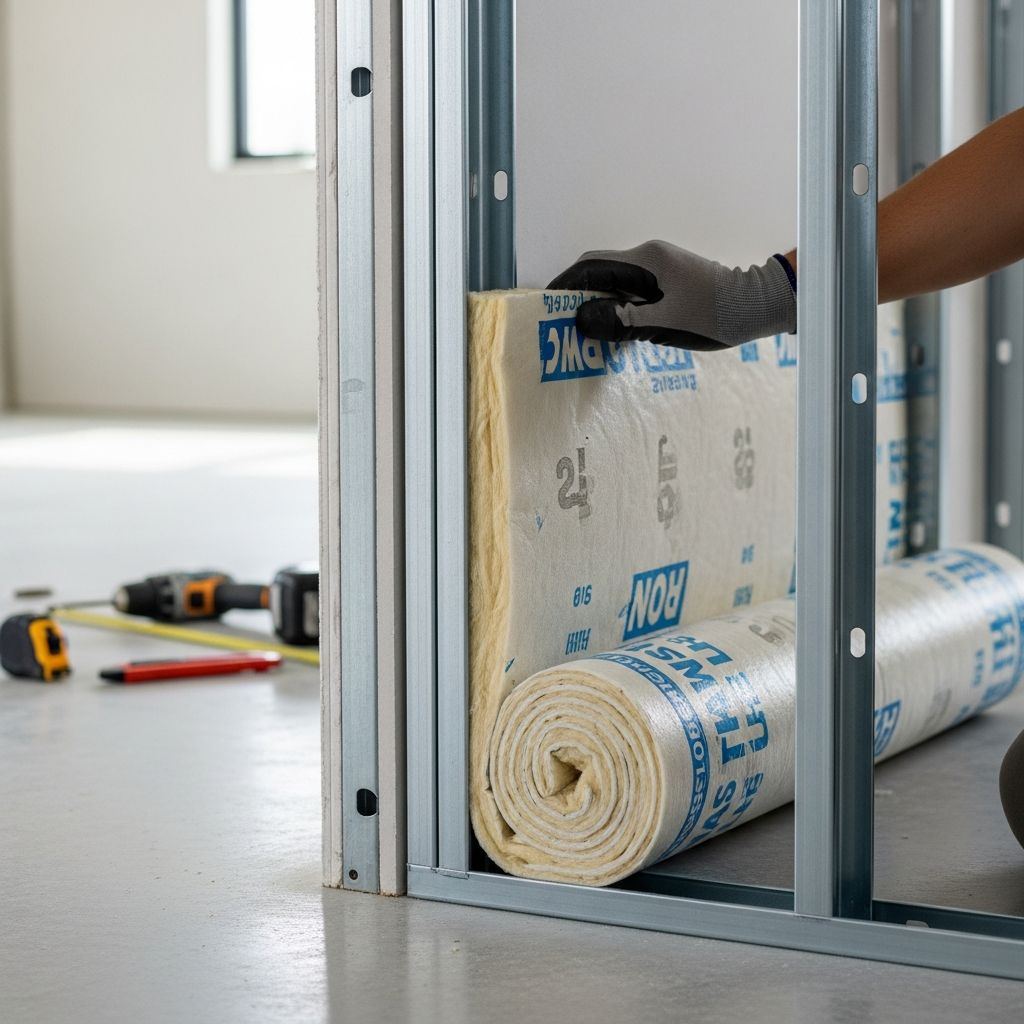
Narrow interior walls, often used as room dividers, half-walls, or pony walls, provide functional separation in open floor plans while maintaining an airy feel. These structures demand precise framing and reinforcement to prevent wobbling or failure under load. This guide outlines proven techniques for creating stable slim walls, drawing from engineering standards and practical construction practices.
Understanding the Need for Narrow Walls
In contemporary home design, open-concept layouts dominate, but privacy and zoning require subtle divisions. Slim walls—typically 4 to 24 inches wide—fit perfectly around staircases, kitchen counters, or garage-adjacent spaces. Unlike full-height partitions, they prioritize aesthetics and airflow but must resist lateral forces like wind or seismic activity, especially near openings.
Key benefits include enhanced spatial flow, cost savings on materials, and easier installation in tight areas. However, challenges arise from reduced bracing surface, necessitating specialized methods to meet building codes such as the International Residential Code (IRC).
Essential Materials for Sturdy Construction
Selecting the right materials ensures longevity and compliance. Start with pressure-treated lumber for bottom plates to resist moisture, paired with kiln-dried 2×4 studs for the frame.
- Framing Lumber: 2×4 or 2×6 Douglas fir or southern pine, rated for structural use.
- Sheathing: 1/2-inch plywood or OSB for full coverage, providing shear strength.
- Fasteners: 16d sinker nails, 3-inch structural screws, and 8d common nails for sheathing.
- Reinforcements: Threaded rods (1/2-inch diameter), anchor bolts with plate washers, and header straps rated for 1000 lbs.
- Adhesives: Construction-grade glue for added rigidity.
A table comparing common materials:
| Material | Strength Rating | Best Use | Cost Factor |
|---|---|---|---|
| Plywood Sheathing | High shear resistance | Exterior bracing | Moderate |
| OSB Panels | Equivalent to plywood | Full wall coverage | Low |
| Threaded Rod | Tension reinforcement | Half-wall stiffening | Low |
| Metal Straps | 1000 lb capacity | Header connections | Moderate |
Planning and Layout Essentials
Begin with accurate measurements. Mark the wall path on the floor using a chalk line, ensuring alignment with ceiling joists or blocking above. Verify square by measuring diagonals—differences over 1/4 inch require adjustment.
For code compliance, consult local amendments to the IRC, particularly for walls under 48 inches wide near openings. Fully sheathing adjacent walls with structural panels allows narrower segments down to 16 inches.
Step-by-Step Framing Process
Framing forms the skeleton. Cut bottom and top plates to length, then mark stud locations at 16 inches on-center for stability.
- Install Bottom Plate: Secure to subfloor with adhesive and 3-inch screws into joists. If joists run parallel, add blocking.
- Erect Studs: Plumb each 2×4 stud, toenail or use metal angles for attachment. For half-walls, align studs with floor joists perpendicularly.
- Attach Top Plate: Nail double top plates, overlapping corners for continuity.
Pro tip: Use a laser level for precision in narrow spaces.
Advanced Bracing Techniques for Stability
Standard walls rely on length for bracing; narrow ones need augmentation. APA’s method, applicable to interior adaptations, uses extended headers and full sheathing for portal frame effect.
- Header Extension: Extend garage or opening headers to corner framing, fastening with dual rows of 16d nails at 3 inches on-center.
- Sheathing Nailing: 8d nails in a 3-inch grid on edges, 6 inches in field; splice panels over blocking.
- Anchor Bolts: 1/2-inch diameter with 7-inch embedment and washers at wall ends.
For half-walls, threaded rods from top plate to floor blocking provide tension. Install upside-down joist hangers on blocking, tension rod to 1000 lbs, preventing wobble.
Strengthening Half-Walls Against Movement
Half-walls often wobble due to leverage. Counter this by:
- Attaching studs directly to perpendicular joists with GRK screws and adhesive.
- Running 3/4-inch plywood down joist bays if parallel.
- Adding double blocking beside studs for lateral support.
In seismic zones, mimic hurricane retrofits: add interior plywood L-shapes over openings, nailed at 3-inch edges, with hold-downs.
Finishing Touches for Professional Results
Once framed, apply drywall or paneling. Tape and mud joints smoothly. For exposed tops, crown with wood trim, caulking gaps.
Paint or stain for aesthetics. Electrical runs require pre-planned boxes, wired per NEC.
Safety and Code Compliance Checklist
Adhere to these to avoid issues:
- Verify load paths to foundation.
- Use PPE: gloves, goggles, dust masks.
- Test for plumb after each lift.
- Obtain permits for load-bearing walls.
Common Mistakes and How to Avoid Them
Inadequate Anchoring: Always embed bolts deeply.
Poor Sheathing: Avoid non-structural materials; opt for rated panels.
Skipping Blocking: Essential for rod tensioning and stability.
Frequently Asked Questions (FAQs)
What is the minimum width for a braced narrow wall?
A: 16 inches when using APA methods with full sheathing and proper headers.
How do I stiffen a wobbly half-wall?
A: Install threaded rods to floor blocking or align studs with joists using screws and adhesive.
Are narrow walls suitable for load-bearing?
A: Rarely; consult an engineer. Most are non-load-bearing partitions.
What fasteners for sheathing?
A: 8d nails at 3 inches on edges, 6 inches field; deck screws as alternative.
Can I DIY a narrow garage wall?
A: Yes, following IRC and APA guidelines, but hire pros for retrofits involving foundations.
Tools Required for the Project
- Circular saw and miter saw for cuts.
- Drill with impact driver for screws.
- Level, square, and plumb bob.
- Hammer, nail gun optional.
- Tension wrench for rods.
Cost Breakdown and Time Estimates
For a 10-foot slim wall:
| Item | Cost (USD) | Time |
|---|---|---|
| Lumber & Sheathing | 150-250 | 2 hours |
| Fasteners & Rods | 50-100 | 1 hour |
| Finishing | 75-150 | 3 hours |
| Total | 275-500 | 1 day |
Costs vary by region; bulk buying saves money.
Advanced Applications: Narrow Walls in Modern Builds
Beyond basics, integrate slim walls in tilt-up concrete or mixed-use projects for speed. In garages, they enable larger doors without 48-inch mandates.
Experiment with curved designs using flexible plywood, or insulate cavities for soundproofing.
This comprehensive approach ensures your narrow walls stand the test of time, blending functionality with design flair. (Word count: 1678)
References
- Narrow Wall Bracing Requirements — APA – The Engineered Wood Association. 2006. https://images.finehomebuilding.com/app/uploads/2006/09/26043814/apa_narrow_wall_bracing.pdf
- Building A Strong Half Wall – Avoiding the WOBBLE! — YouTube (Video Transcript). N/A. https://www.youtube.com/watch?v=sWgccIjNdcM
- Narrow Garage Walls — FloridaDisaster.org (Hurricane Retrofit Guide). N/A. https://apps.floridadisaster.org/hrg/content/walls/narrow_garage_walls.asp
- Narrow Wall Bracing Method Framing Tips — West Fraser OSB. 2017-07. https://osb.westfraser.com/wp-content/uploads/2017/07/Narrow-Wall-Bracing-F435.pdf
- Fast walling solutions for narrow block — Concrete Walling Systems (CCAA). N/A. https://www.futureproofwithconcrete.com.au/CWL/CWL/Resources/Case_Studies_folder/Fast_walling_solutions_for_narrow_block.aspx
Similar Articles






Read full bio of Sneha Tete