Correcting a Leaning Tree: Expert Techniques
Master practical methods to upright leaning trees and ensure long-term stability in your landscape.
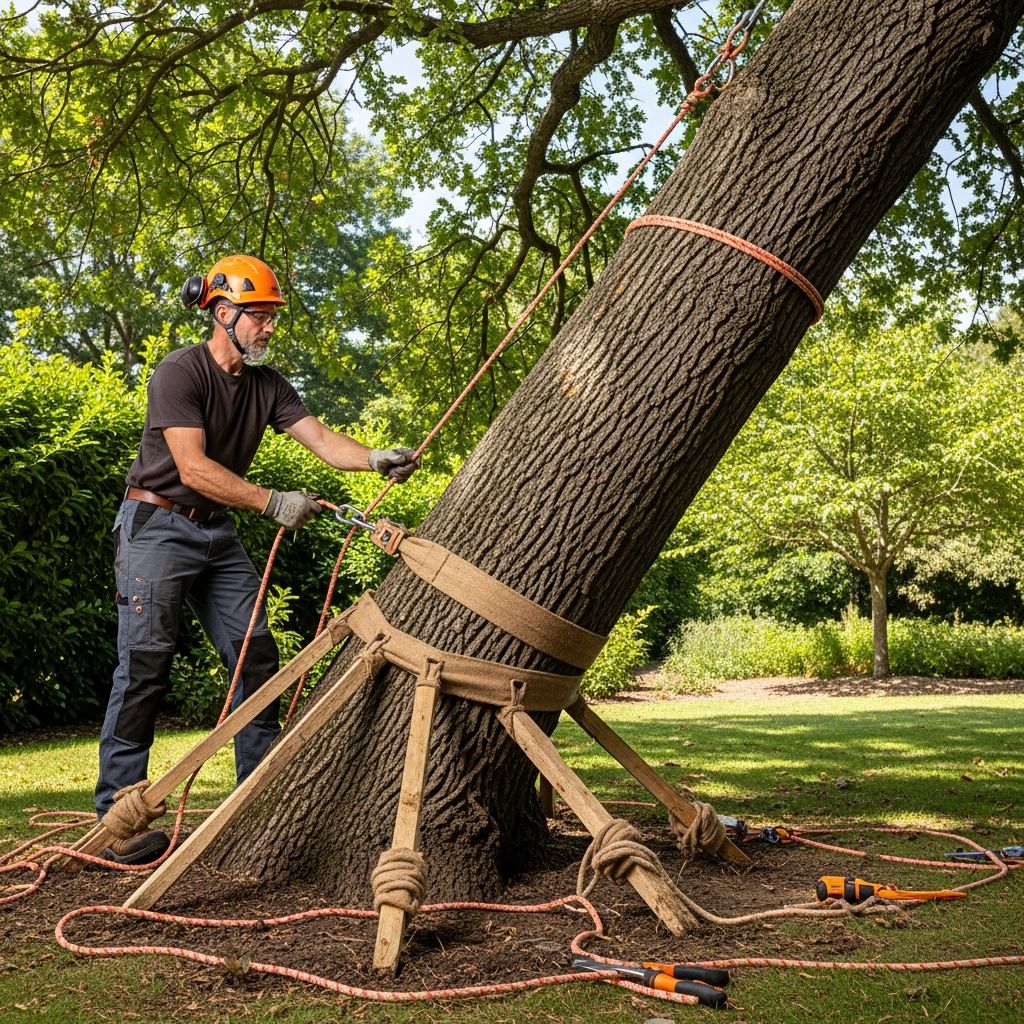
Leaning trees pose risks to property and safety, often resulting from storms, erosion, or transplant shock. Addressing the issue promptly with targeted support methods can restore balance and promote vigorous growth.
Understanding Why Trees Lean
Trees deviate from vertical growth due to environmental pressures. High winds during storms exert force on the canopy, displacing the trunk if roots lack anchorage. Saturated soils from heavy rains weaken root grip, allowing the tree to shift. Newly planted trees frequently lean because their root balls remain loose post-transplant, unable to resist even mild gusts. Poor initial planting depth or uneven backfill exacerbates this, as does soil composition—sandy or clay-heavy earth compacts differently under weight.
Evaluate the lean’s severity: minor tilts in young trees respond well to intervention, while pronounced angles in mature specimens signal deeper problems like root rot or structural weakness. Inspect the base for heaving soil or exposed roots, indicators of instability.
Assessing Tree Health Before Correction
Before any adjustment, confirm the tree’s viability. Check for bark cracks, fungal growth, or hollow trunks, which suggest internal decay rendering correction futile. Gently probe the soil around the base; if roots move freely, the foundation needs fortification.
- Examine canopy density: Sparse branches may indicate stress.
- Test trunk flexibility: Healthy trees bend without snapping.
- Observe lean direction relative to prevailing winds.
For older trees, professional assessment is crucial. Arborists use tools like resistographs to gauge wood density, determining if stabilization is viable or removal necessary.
Essential Tools and Materials for Tree Straightening
Gather durable, tree-safe supplies to avoid girdling or abrasion. Sturdy wooden or metal stakes (4-6 feet long), flexible straps or ropes, protective hose sections, mallet, and tension devices form the basics.
| Item | Purpose | Tips |
|---|---|---|
| Stakes | Anchors | Drive 18-24 inches deep, angled outward. |
| Straps/Ropes | Securing | Use synthetic materials; avoid thin wire. |
| Garden Hose | Padding | Slice lengthwise over contact points. |
| Come-along/Winch | Tensioning | For stubborn leans on larger trees. |
| Earth Anchors | Heavy Duty | Screw-in types for soft soil. |
Water deeply post-correction to settle soil and encourage root expansion.
Step-by-Step Guide: Straightening Young Trees
Young, flexible trees correct easiest via staking. This method bolsters one side against the lean, allowing natural reorientation.
- Position Stakes: Select 2-3 stakes, hammer them 18 inches from the trunk, opposite the lean, at a 45-degree angle for leverage.
- Pad the Trunk: Wrap hose sections around the trunk at 4-6 feet height to prevent rubbing.
- Attach Straps: Loop straps through padding, secure to stakes with firm knots or ratchets. Pull gradually to upright the tree.
- Compact Soil: Backfill any voids around roots, tamping in layers to eliminate air pockets.
- Monitor: Check monthly, loosening ties periodically for girth growth. Remove after 1 year.
This approach succeeds for trees under 10 feet, fostering stronger root development.
Advanced Support for Mature or Stubborn Leans
Larger trees demand guying systems with multiple anchors. Drive 3-4 ground anchors equidistantly, threading cables through trunk protectors, tensioned via turnbuckles.
Root ball stabilization suits recent transplants: Excavate loosely, realign, then layer and firm soil while watering thoroughly. For wind-damaged cases, employ come-alongs to winch the trunk upright before permanent fixing, as demonstrated in practical videos.
- Guying excels in soft soils or high-wind zones.
- Combine with pruning to reduce top-heaviness.
Leave supports 1-2 years, adjusting for sway without rigidity.
Soil Management and Long-Term Prevention
Post-straightening, recompact soil firmly to lock roots. Mulch 3 inches deep (keeping off trunk) retains moisture, suppressing weeds that destabilize soil.
Prevent future leans by planting at proper depth, firming backfill, and staking preemptively in exposed sites. Aerate compacted areas annually; avoid overwatering, which softens substrates. Select wind-resistant species like oaks for vulnerable spots.
Common Mistakes to Avoid
Over-tightening straps girdles trunks, stunting growth. Using nails or wire causes wounds inviting pests. Ignoring periodic checks leads to slippage. Never attempt solo on trees over 20 feet—risk of snapping endangers lives.
- Too Rigid: Trees need flex for strength.
- No Padding: Bark damage promotes disease.
- Permanent Ties: Remove to prevent constriction.
When to Call Professional Arborists
Signs warranting experts: leans exceeding 30 degrees, visible decay, proximity to structures, or heights over 25 feet. Certified arborists deploy cabling, bracing, or dynamic systems beyond DIY scope. Costs vary, but prevention saves expenses.
Frequently Asked Questions
Can mature trees be straightened safely?
Some can if roots are stable, but assessment is key. Old trees with leans may persist safely or require removal if unstable.
How long to keep stakes in place?
Minimum one year for root establishment; monitor and adjust as needed.
What if soil is very loose?
Replant in firmer ground or use earth anchors; tamp thoroughly post-correction.
Is guying better than staking?
Guying suits larger trees with multi-point support; staking for young ones.
Will pruning help a leaning tree?
Yes, reducing heavy branches on the lean side balances weight.
References
- How to Straighten a Leaning Tree – A Homeowner’s Guide — Backridge Tree Service. 2023-12-04. https://backridgetreeservice.com/2023/12/04/how-to-straighten-leaning-tree/
- How to Straighten a Leaning Tree – Tree Care Guide — Boutte Tree. N/A. https://www.bouttetree.com/how-to-straighten-a-leaning-tree
- How To Straighten a Leaning Tree in Nashville, TN — Monster Tree Service. 2024-07. https://www.monstertreeservice.com/middle-tennessee/about-us/blog/2024/july/how-to-straighten-a-leaning-tree-in-nashville-tn/
- How I Stopped My Leaning Tree From FALLING! — YouTube (Gardening Channel). N/A. https://www.youtube.com/watch?v=tl0ZBEQXdpw
- How To Straighten A Leaning Tree Damaged In A Wind Storm — YouTube (Gardening Tips). N/A. https://www.youtube.com/watch?v=SBDXPXh0F-I
- Straightening mature trees — Habitat-Talk Forum. N/A. https://habitat-talk.com/threads/straightening-mature-trees.15621/
Similar Articles








Read full bio of medha deb