Tongue And Groove Boards: Complete DIY Guide With Pro Tips
Master the art of creating interlocking tongue and groove boards for flawless walls, ceilings, and flooring projects with this detailed DIY guide.
Crafting Tongue and Groove Boards: A Complete DIY Guide
Tongue and groove boards feature a protruding ridge (tongue) on one edge that fits precisely into a matching slot (groove) on the adjacent board, creating strong, seamless joints ideal for paneling, flooring, and ceilings. This timeless woodworking technique ensures stability and aesthetic appeal without visible fasteners in most cases.
Understanding the Tongue and Groove System
The tongue and groove joint has been a staple in construction for centuries due to its ability to align boards tightly while allowing for natural wood expansion and contraction. Unlike butt joints, which rely solely on adhesives or nails, this method interlocks pieces mechanically, reducing gaps over time. Common applications include interior walls, vaulted ceilings, porches, and even outdoor siding when treated properly[10].
Boards typically range from 3/4-inch thick pine or cedar, with widths of 4 to 6 inches, though custom sizes can be milled for specific needs. The tongue is usually 1/4 to 1/2 inch wide and extends about 1/4 inch from the edge, while the groove matches these dimensions exactly for a snug fit.
Essential Tools and Materials for Success
Gathering the right equipment is crucial for precision and safety. Here’s what you’ll need:
- Power tools: Table saw or router with dado blade set for milling grooves and tongues; miter saw for crosscuts; circular saw for rough adjustments.
- Hand tools: Hand plane or chisel for fine-tuning; mallet and scrap wood for tapping boards together; clamps for securing workpieces.
- Measurement and layout: Tape measure, combination square, pencil, level, and stud finder for installation prep.
- Fastening and finishing: Brad nailer or finish nail gun with 1.5- to 2-inch nails; wood glue (optional for added strength); sandpaper or orbital sander; safety gear including goggles, dust mask, and hearing protection.
- Materials: Straight, kiln-dried lumber of consistent thickness (e.g., pine, cedar, or oak); wood filler for imperfections.
Invest in sharp blades to avoid tear-out, especially on softwoods like pine.
Planning Your Project: Measurements and Layout
Before cutting, acclimate lumber in the installation space for 48-72 hours to match humidity levels and prevent warping. Measure the total area length and height, dividing by board width to calculate rows. Aim to avoid slivers less than 1.5 inches at edges by trimming the first row accordingly.
For ceilings or walls, snap chalk lines with a level as guides. Mark joist or stud centers every 16 inches using a stud finder—nailing into these ensures secure hold. Stagger end joints by at least 12 inches across rows for strength, and plan cuts around obstacles like lights or vents using a jigsaw.
| Project Type | Avg. Board Width | Expansion Gap | Nailing Schedule |
|---|---|---|---|
| Walls | 5-6 inches | 1/2 inch per edge | Every 16 inches into studs |
| Ceilings | 4-5 inches | 1/4-1/2 inch | Every 24 inches into joists |
| Floors | 3-4 inches | 3/4 inch perimeter | Glue + nails into subfloor |
Step-by-Step: Making Tongue and Groove Joints with Power Tools
Power tools offer speed and consistency for DIYers. Always secure the workpiece and use push sticks on table saws.
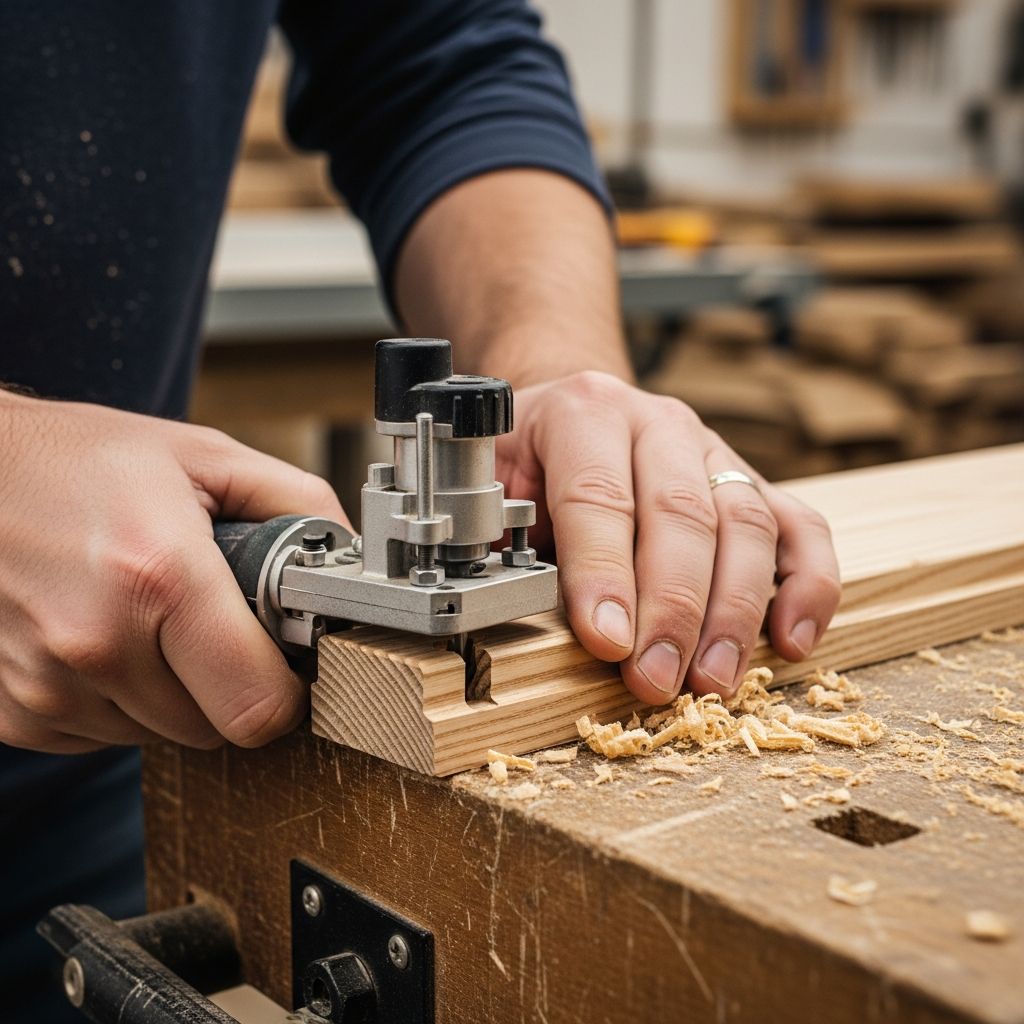
- Prepare the groove: Set table saw fence to groove depth (typically 1/4 inch). Make multiple passes, adjusting the fence incrementally until the slot matches tongue width. Test-fit on scrap.
- Form the tongue: Adjust saw for two parallel cuts on board edges, leaving the center ridge. Use a dado stack for wider tongues. Plane down high spots for fit.
- End matching (optional): Repeat on board ends for floating installations, ensuring tongues face the same direction.
- Smooth and test: Sand edges lightly. Dry-assemble several boards to verify alignment—no gaps wider than 1/16 inch.
For production runs, a dedicated router jig with straight bits excels, producing cleaner profiles than saws.
Handcrafting Tongue and Groove for Precision Work
Hand methods suit custom or restoration projects, requiring patience but yielding superior control.
- Mark dimensions: Use a marking gauge to scribe tongue and groove lines uniformly.
- Cut the groove: Chisel out waste in shallow passes, staying square. Pare walls smooth with a router plane if available.
- Shape the tongue: Plane edges parallel, tapering slightly for easier insertion. Check fit frequently against the groove.
- Refine: Sand or scrape for seamless locking.
Practice on scraps; sturdy woods like hard maple hold detail better. Expect 2-3 times longer than machine methods.
Installation Techniques for Walls and Ceilings
Walls
Start groove-side against the corner, leaving expansion gaps. Face-nail the first board into studs, then angle-nail tongues of subsequent rows (45 degrees) for concealment. Tap with a mallet and scrap block to seat joints.
Ceilings
Work perpendicular to joists for direct nailing. Rip first row to center the layout, snapping a chalk line. Use temporary ledger boards at starts for support. For peaks, bevel rips on table saw.
Pro tip: Pre-finish boards for easier touch-ups; apply sealant to tongues for moisture resistance[10].
Advanced Tips and Common Pitfalls
- Humidity control: Wood moves—always gap edges and avoid direct adhesive reliance.
- Uneven surfaces: Shim behind boards or use furring strips.
- Finishing: Sand progressively (80-220 grit), then stain or paint. Fill nail holes post-install.
- Safety: Secure ladders; wear masks during sanding to avoid dust inhalation.
Avoid over-nailing, which splits tongues. If joints resist, sand high spots rather than forcing.
Choosing the Right Wood Species
Pine is affordable and lightweight for interiors; cedar resists rot for exteriors. Oak offers durability but weighs more. Select straight-grained, defect-free boards[10].
Frequently Asked Questions (FAQs)
Can I use tongue and groove for flooring?
Yes, with floating or glue-down methods over subfloors. Add underlayment for soundproofing.
How do I fix a loose joint?
Apply wood glue into the groove before reassembly, clamping overnight.
What’s the best nail size?
1.5-2 inch brad nails for 3/4-inch boards, ensuring they penetrate framing by 1 inch.
Do I need to paint or stain before install?
Pre-finishing prevents lap marks, but site-finish allows color matching.
How much expansion gap for humid areas?
Increase to 3/4 inch; use spacers during install.
Troubleshooting Installation Issues
Gaps? Check for swelling—dry fit and plane as needed. Warping? Replace bowed boards. Nail pops? Countersink and fill.
References
- Installing Tongue & Groove Wall Boards: Paneling How-To Guide — Sustainable Lumber Co. 2024-06. https://www.sustainablelumberco.com/2024/06/how-to-install-tongue-and-groove-wall-boards/
- How to Install Tongue & Groove Board — YouTube (Video Transcript). Circa 2023. https://www.youtube.com/watch?v=nBdKqXAyxlM
- The Ultimate Guide to Tongue and Groove — HB Elements Inc. Accessed 2026. https://www.hbelementsinc.com/the-ultimate-guide-to-tongue-and-groove/
- DIY Tongue and Groove Ceiling Wood Planks — Jenna Sue Design. Circa 2023. https://www.jennasuedesign.com/kitchen-chronicles-diy-tongue-and/
- Tongue and Groove: A Comprehensive Guide — Reliance Timber. Accessed 2026. https://reliancetimber.com/guide-to-tongue-and-groove/
- How to Install Tongue & Groove Paneling on Walls or Ceilings — Enterprise Wood Co. Accessed 2026. https://enterprisewood.com/about-us/articles-faqs/how-to-install-tongue-groove-paneling-on-walls-or-ceilings/
Similar Articles







Read full bio of medha deb