Wooden Wagon Wheels: Step-By-Step Guide For DIY Builders
Master the art of building durable, authentic wooden wagon wheels using basic tools and lumber for DIY projects like carts and decor.
Crafting Wooden Wagon Wheels at Home
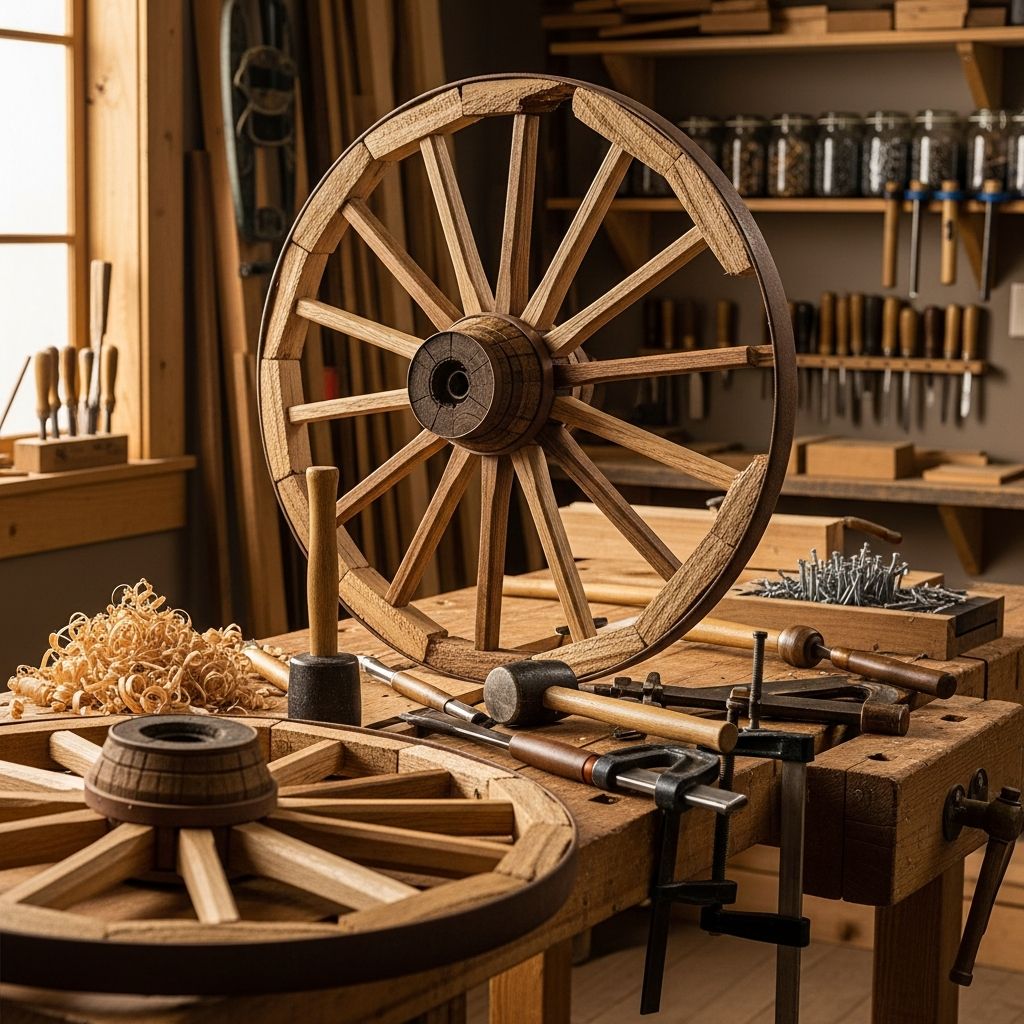
Building wooden wagon wheels from scratch combines traditional craftsmanship with modern DIY techniques, allowing hobbyists to create functional pieces for garden carts, Halloween props, or vintage restorations. These wheels, typically 36 to 48 inches in diameter, rely on a strong central hub, radiating spokes, and a curved outer rim for both aesthetics and load-bearing capacity.
Understanding Wheel Anatomy and Design Principles
A classic wooden wagon wheel consists of three primary components: the
hub
(central axle connector),spokes
(radiating supports, usually 8-12 per wheel), andrim
(outer band that holds everything together). The design ensures even weight distribution, with spokes angled slightly outward from the hub to handle tension from a metal tire or wooden felloes.Key principles include using hardwoods like oak or ash for durability, as softer pines may warp under stress. Scale your design based on purpose: smaller 24-inch wheels suit toy wagons, while 48-inch versions support heavy loads. Sketch a full-scale template on paper or MDF first, dividing the circle into equal spoke sections for symmetry.
- Hub: 4-6 inches long, 2-3 inches diameter, often laminated from multiple pieces.
- Spokes: Tapered from 1.5 inches wide at hub to 1 inch at rim, 24-36 inches long.
- Rim/Felloes: Segmented steam-bent wood or layered segments forming a circle.
Gathering Materials and Essential Tools
Start with affordable lumber: 2x4s and 2x6s for spokes and rims, 1.5×1.5-inch stock for hubs. You’ll need about 20-30 board feet for a pair of 42-inch wheels. Supplement with plywood or MDF for templates, wood glue, screws, and optional metal banding.
| Material | Quantity (per wheel) | Purpose |
|---|---|---|
| 2×6 Lumber | 4 pieces, 8 ft each | Rim felloes |
| 2×4 Lumber | 6 pieces, 8 ft each | Spokes and hub |
| MDF/Template Board | 1 sheet, 1/4-inch | Patterns |
| Wood Glue & Screws | 1 quart, 100 #8 | Assembly |
Required Tools: Bandsaw or jigsaw for curves, router for joints, circular saw for straight cuts, drill with spade and Forstner bits, clamps, sander, and radial arm saw if available. Safety gear like goggles and dust masks is non-negotiable.
Creating Accurate Templates and Patterns
Begin by drafting precise patterns. Use graph paper to plot a circle with your desired diameter, marking hub (2-inch radius) and rim (1.5-inch width). Divide into 10 equal spokes (36 degrees each) for balance. Transfer to 1/4-inch MDF, spray adhesive for hold, and bandsaw out the shapes, leaving a kerf allowance for sanding smooth.
Make separate templates for spoke taper (wider at hub end), hub mortises (slots for spokes), and felloe segments. Test-fit on scrap wood to verify angles—spokes should splay 5-10 degrees outward. Digital tools like free CAD software can refine proportions for authenticity.
Building the Central Hub
The hub anchors everything, so laminate it for strength. Rip 2x4s to 1.5-inch squares, then crosscut into 6-inch lengths. Stack and glue four pieces, clamping overnight. Once dry, drill the axle hole (1-1.25 inches) through the center using a Forstner bit for clean edges.
Next, route or chisel 10 mortise slots around the hub’s circumference, angled to match spoke taper. Each slot should be 1-inch deep, matching spoke thickness. Square the ends with a chisel for a tight fit. For added realism, add wooden cheeks (end caps) glued and screwed on, hiding joints.
Fabricating and Shaping the Spokes
Cut spokes from 2x4s using your template: bandsaw the outline, then plane or sand to taper from 1.5×1.5 inches at the hub end to 1×1 inches at the rim. Square tenons on both ends—hub tenon fits the mortise, rim tenon seats into felloes.
Mark and cut bevels on tenon shoulders to match wheel dish (slight concave curve for stability). Number each spoke (1-10) to track positions, as minor length variations ensure true rotation. Sand all edges smooth; aim for 1/16-inch tolerances to prevent wobbles.
Assembling the Felloes for the Outer Rim
Felloes form the rim via 10 curved segments from 2x6s. Cut blanks to 4-5 inches wide, 8-10 inches long. Trace template, bandsaw curves, then rip bevels (15-20 degrees on inner edge) for tight joints. Dry-fit a full circle, adjusting with a belt sander.
Glue and screw joints sequentially: apply glue, clamp two felloes with spoke tenons aligned, pre-drill and secure with screws. Work around the wheel, tapping with a mallet for flush fits. For bending stubborn wood, steam segments lightly or layer thinner strips.
Integrating Spokes into the Wheel Assembly
With hub and rim ready, insert spokes: glue hub tenons into mortises, fanning them outward. Align rim tenons into felloe mortises, clamping pairs opposite each other for balance. Use wedges or nuts under the hub to tension spokes evenly— they should flex slightly under thumb pressure.
Once set, reinforce with glue-up screws through felloe-spoke joints. Add a clamping ring (metal or wood) over spoke ends into the rim for compression. True the wheel by mounting on a temporary axle and spinning; sand high spots.
Finishing Touches and Reinforcement
Sand the entire wheel progressively (80-220 grit) for smoothness. Apply 3-5 coats of polyurethane or boiled linseed oil for weather resistance. For authenticity, fit a steel tire: heat-expand a band, slip over rim, quench to shrink tight.
Test load gradually—start with 50 lbs centered, increasing to 300+ lbs. Balance by adding weights opposite heavy spokes. Mount on axles with grease fittings for rotation.
Advanced Techniques for Authentic Wheels
For historical accuracy, steam-bend felloes using a PVC pipe boiler (30-60 minutes at 200°F). Incorporate hickory spokes for flex, or metal dowels in hubs. Scale up for wagons by doubling spoke count to 20.

Common Mistakes and Troubleshooting
- Uneven Spokes: Recheck template angles; remake if over 1/8-inch variance.
- Weak Joints: Use slow-set glue; reinforce with dowels.
- Warp Risk: Dry lumber under 12% moisture; store flat.
- No Bandsaw? Jigsaw + oscillating sander works, but slower.
Project Variations and Uses
Adapt for mini-wheels (12-inch) on barrows or oversized for stage props. Paint in black with gold hubs for decor, or stain naturally for rustic appeal. Pair with a matching axle assembly for full wagons.
Frequently Asked Questions (FAQs)
How long does it take to build one wheel?
8-12 hours over 2-3 days, including drying times.
What wood is best for load-bearing wheels?
Oak or ash; avoid softwoods for heavy use.
Can I use metal instead of wood for the rim?
Yes, weld a steel hoop, but wood offers traditional look.
Do I need a lathe for the hub?
No, laminated squares work fine without turning.
How much weight can a DIY wheel hold?
400-800 lbs per wheel with proper tensioning.
References
- Building a full sized 48″ wooden wagon wheel from 2×6 and 2×4’s!! — YouTube (Hansen Wheel & Wagon Shop channel equivalent). 2020-approx. https://www.youtube.com/watch?v=c3hAT-a-HAM
- MAKING A WAGON WHEEL / WOODWORKING — YouTube (Woodworking demonstration). 2020-approx. https://www.youtube.com/watch?v=XkUO2tUfqLg
- Wheelwrighting-A Modern Introduction Vol 1 — Hansen Wheel & Wagon Shop. N/A (timeless reference). https://www.hansenwheel.com/wheelwrighting-a-modern-introduction/
Similar Articles







Read full bio of medha deb