Cultivating Peach Trees in Florida’s Climate
Master the art of growing peach trees in Florida's unique subtropical environment with expert techniques and proven strategies.
Understanding Florida’s Unique Growing Environment for Peach Trees
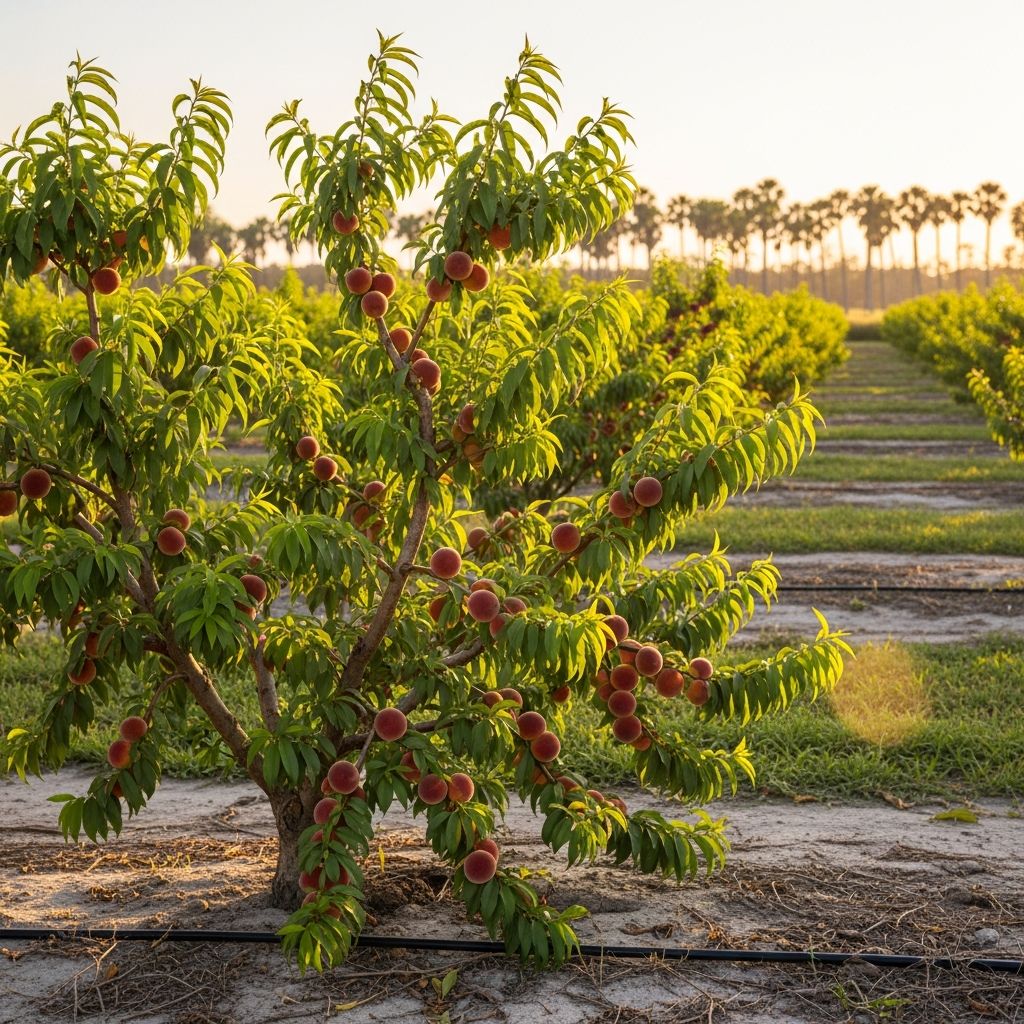
Growing peach trees in Florida presents a fascinating challenge for home gardeners. Unlike traditional peach-growing regions with harsh winters, Florida’s subtropical climate requires gardeners to think differently about tree selection and management. The key to success lies in understanding how Florida’s warm temperatures affect the chilling requirements that peach trees need to produce fruit reliably. Traditional peach varieties require up to 1,000 chill hours—periods when temperatures drop below 45°F—to set fruit properly. Since Florida rarely experiences such prolonged cold periods, gardeners must prioritize low-chill varieties that thrive in warmer climates.
Peach trees are deciduous plants that can grow rapidly, reaching 20 feet or taller with similar width, though they can be managed at 12 to 15 feet through proper pruning techniques. Young trees typically begin bearing fruit at three to four years old, reaching peak production around 12 years of age. With proper care, peach trees in home gardens can produce fruit for 8 to 10 years. This extended productive lifespan makes the initial investment in quality trees and proper establishment worthwhile for Florida growers.
Selecting the Right Location and Site Preparation
The foundation of successful peach tree cultivation begins with selecting an appropriate planting location.
Full sun exposure is absolutely essential
, with trees requiring a minimum of 6 to 8 hours of direct sunlight daily during the growing season. Peach trees cannot tolerate shade or competition from other trees, so choose an open area away from large vegetation that might block sunlight or compete for nutrients and water.Beyond sunlight,
soil drainage stands as perhaps the most critical factor
in Florida peach cultivation. Florida’s naturally sandy soil composition offers advantages, but many properties contain dense, clayey soils with poor drainage characteristics. Peach trees cannot tolerate waterlogged conditions and are particularly susceptible to root rot in soggy soil. If your yard holds water or sits in a low spot, seriously consider constructing a raised bed measuring approximately three feet deep and six feet by six feet square. Alternatively, create a mound of soil to elevate the root zone above the water table.Before planting, test your soil’s pH level and composition. Peaches thrive in slightly acidic soil with a pH between 6.0 and 6.8. The ideal soil texture combines sandy loam with good drainage characteristics. Up to two feet of sandy, loamy, fertile topsoil provides the best foundation, even if deeper subsoil contains more clay. When selecting spacing between trees, allow 8 to 14 feet apart for standard varieties, or closer spacing for dwarf cultivars.
Choosing Low-Chill Peach Varieties for Florida Success
Perhaps no decision matters more than variety selection when growing peaches in Florida. University of Florida researchers have devoted considerable effort to developing peach cultivars that require fewer chill hours while maintaining excellent flavor and productivity. Modern low-chill varieties available through Florida nurseries require 300 hours or fewer of temperatures below 45°F, and many are self-fertile, eliminating the need to plant multiple trees for cross-pollination.
When shopping for peach trees at local nurseries or from mail-order suppliers, specifically seek out varieties labeled as low-chill or suited for Florida conditions. These carefully selected cultivars represent the result of years of agricultural research and provide the best chance of consistent fruit production in your Florida garden. The investment in selecting appropriate varieties upfront prevents years of disappointment and maintenance of underperforming trees.
The Planting Process: Establishing Your Peach Tree Correctly
Proper planting technique significantly influences how well your peach tree establishes and performs throughout its productive years. Begin by digging a hole approximately two to three times wider than the root ball and equally deep or slightly deeper. This generous hole allows roots to spread outward and downward into loosened soil without encountering compaction.
Rather than adding fertilizer or soil amendments directly to the planting hole, create a rounded mound of soil in the center of the hole. Position the root crown on top of this mound and carefully spread the lateral roots outward over the elevated soil. Any roots that are excessively long should be trimmed rather than bent to fit within the hole, preventing circling and girdling problems that could eventually strangle the tree.
A critical detail that many Florida gardeners overlook involves the
graft union—the point where the fruiting variety joins the rootstock
. Position this union 2 to 6 inches above the ground surface. This elevation prevents soil from covering the graft point and helps prevent graft rot in Florida’s humid conditions.After positioning the tree correctly, backfill the hole halfway with excavated soil and water thoroughly to settle the soil and eliminate air pockets. Once drainage has occurred, adjust the tree’s depth if necessary and complete the backfilling process, gently tamping the soil. This two-stage watering approach ensures proper soil contact with roots while removing harmful air voids.
Establishing Effective Watering Routines
Newly planted peach trees require consistent moisture during their establishment year, yet they simultaneously fear waterlogging. This seemingly contradictory requirement demands careful attention to soil conditions and watering frequency. During the first growing season, check soil moisture regularly—it should feel consistently moist but never soggy.
Florida’s summer rainfall typically provides some moisture, but supplemental watering becomes necessary during drier periods. Consider installing a tree gator or soaker irrigation system to deliver water slowly and directly to the root zone. These systems prove especially valuable during Florida’s occasional drought periods. The key is maintaining even moisture without creating swampy conditions that promote root diseases.
After the establishment year, mature trees require less frequent watering unless unusual drought conditions develop. However, always water deeply rather than lightly, encouraging roots to penetrate deeper into the soil profile where they access moisture more reliably.
Mulching: Protecting Roots and Conserving Moisture
A properly applied mulch layer provides multiple benefits in Florida peach cultivation. Apply 3 to 6 inches of organic mulch—such as wood chips, pine needles, leaves, straw, or partially composted sawdust—around the base of the tree, extending outward for one to two feet beyond the root zone. This mulch layer helps retain soil moisture, moderates soil temperature, suppresses competing weeds, and gradually breaks down to improve soil structure.
One critical detail: keep mulch a few inches away from the tree trunk itself. Mulch touching the bark can trap moisture and promote trunk rot, particularly problematic in Florida’s humid climate. Maintain a small mulch-free zone immediately around the trunk to allow air circulation and reduce disease pressure.
Begin mulching in spring when soil has warmed, and adjust depth seasonally—slightly thicker in summer during hot, dry periods and reduced depth in winter when moisture is less critical.
Developing a Pruning Strategy for Open Canopy Structure
Proper pruning creates the framework for a productive, disease-resistant tree. The fundamental goal is developing an
open-center or vase-shaped canopy
that allows light to penetrate to interior branches and facilitates fruit picking without requiring ladders. This open architecture also promotes air circulation, critical in Florida’s humid climate for reducing fungal disease pressure.Conduct main pruning during late winter when the tree is still dormant. Remove any dead, diseased, or crossing branches. Thin out crowded limbs to create spacing between major branches. When the tree begins flowering and fruit develops, thin individual fruits when they reach marble size—removing smaller or deformed fruits concentrates the tree’s energy into remaining fruits, resulting in larger harvests of premium-quality peaches.
As the tree matures, continue light pruning annually to maintain the open-center form and manage height. Avoid severe pruning that removes excessive foliage, as this reduces photosynthetic capacity and next season’s fruit production.
Implementing a Fertilization Schedule
Peach trees are moderate feeders that require consistent nutrient availability throughout the growing season.
Use an organic fruit tree fertilizer applied two to three times yearly during spring and summer months
. Read and follow label instructions carefully, but expect to apply approximately one-half cup of a 5-10-5 formulation during the first year. Importantly, do not fertilize at the time of planting, as this can burn tender roots and encourage excessive vegetative growth at the expense of root establishment.Apply fertilizer on the ground around the tree, extending outward to the drip line—the furthest-reaching branches. This broad distribution area ensures roots throughout the root zone access nutrients. Proper fertilization encourages 10 to 18 inches of growth during the active growing season, a reasonable rate that balances vigor with flowering and fruiting.
For trees grown in containers or raised beds, liquid fertilizers applied every few weeks may prove more effective than granular applications, ensuring consistent nutrient availability in the limited soil volume.
Managing Weeds, Pests, and Competing Vegetation
Maintain a weed-free zone approximately three feet in radius around the tree base. Competing weeds reduce water and nutrient availability while providing habitat for pests and diseases. Hand-pull weeds or apply organic mulch to suppress growth. Avoid herbicides that might drift onto the tree or contaminate the root zone.
In some Florida locations, deer and rabbit damage can significantly impact young trees. Protective fencing or tree guards may be necessary during the establishment years. Young, weak, or leggy trees benefit from support stakes and wires during their first one to two years, providing stability until they develop sufficient trunk strength.
Container Growing for Flexibility and Control
Florida gardeners with limited space or problematic soil conditions can successfully grow peaches in containers. Select containers at least 12 inches deep or 5 gallons in volume for fruit-bearing varieties. Use a high-quality commercial soilless potting mix or sandy loam topsoil that provides excellent drainage. Container growing offers precise control over soil composition, moisture, and drainage—advantages particularly valuable in Florida’s challenging conditions.
Container-grown trees require more frequent watering than in-ground trees, often twice weekly during dry spells. Maintain consistent moisture while ensuring proper drainage prevents root rot. Container trees also benefit from liquid fertilizer applications every few weeks to compensate for nutrients leaching through frequent watering.
Position containers in locations receiving ample sunlight, ideally near south-facing windows for maximum light exposure. For indoor container cultivation, supplement natural light with grow lights positioned 12 to 18 inches above the plant if natural light proves insufficient.
Frequently Asked Questions About Florida Peach Growing
Q: Why won’t my peach tree produce fruit despite growing vigorously?
A: The most common cause is insufficient chill hours. Traditional peach varieties require extended cold periods that Florida rarely provides. Switch to low-chill varieties requiring 300 hours or fewer, which have been specifically developed for Florida’s climate. Alternatively, inadequate sunlight or poor tree nutrition can reduce flowering and fruit set.
Q: How often should I water my newly planted peach tree?
A: During the first year, keep soil consistently moist but not waterlogged. Check soil moisture regularly—it should feel like a wrung-out sponge. During rainy seasons, reduce supplemental watering; during dry periods, water deeply 2-3 times weekly depending on soil drainage.
Q: What’s the difference between standard and dwarf peach varieties?
A: Standard varieties grow 20+ feet tall and wide, while dwarf varieties remain more compact at 8-12 feet. Dwarf varieties work better in smaller spaces and raised beds. Both can produce excellent fruit if the variety is suited to Florida’s climate.
Q: Can I grow peach trees in my Florida container garden?
A: Yes, peach trees can thrive in containers at least 12 inches deep or 5 gallons in volume. Use quality potting mix, ensure excellent drainage, maintain consistent moisture, and fertilize regularly. Container trees require more frequent watering but offer excellent control over growing conditions.
Q: When should I expect my peach tree to produce fruit?
A: Most peach trees begin producing fruit at 3-4 years old, reaching peak production around 12 years of age. A well-cared-for tree produces fruit for 8-10 years in the home garden.
Q: Is special winter protection needed for Florida peach trees?
A: Low-chill varieties suited to Florida require minimal protection since Florida rarely experiences damaging freezes. However, newly planted trees benefit from frost protection during unexpected cold snaps in their first winter. Established trees seldom require protection.
References
- Growing Peaches and Plums in Florida: A Guide to a Sweet Harvest — Green Dreams FL. https://www.greendreamsfl.com/single-post/growing-peaches-and-plums-florida
- Peach Planting Guide: How to Grow A Peach Tree — My Perfect Plants. https://myperfectplants.com/blogs/grow-guides/peach-planting-guide
- Peach, Plum, Nectarine Growing Guide — Plant Me Green. https://plantmegreen.com/pages/peach-plum-nectarine-guide
- A Guide to Grow a Peach Tree Indoors Successfully — Everglades Farm. https://everglades.farm/blogs/news/a-guide-to-grow-a-peach-tree-indoors-successfully
- Growing Peaches in Florida — Rockledge Gardens. https://rockledgegardens.com/growing-peaches-in-florida/
- Peaches: UF/IFAS Gardening Solutions — University of Florida Institute of Food and Agricultural Sciences. https://gardeningsolutions.ifas.ufl.edu/plants/edibles/fruits/peaches/
Similar Articles








Read full bio of Sneha Tete