Customizing Bamboo Roman Shades: Trimming Guide
Transform oversized bamboo Roman shades into perfect window treatments with our detailed DIY trimming techniques for height and width adjustments.
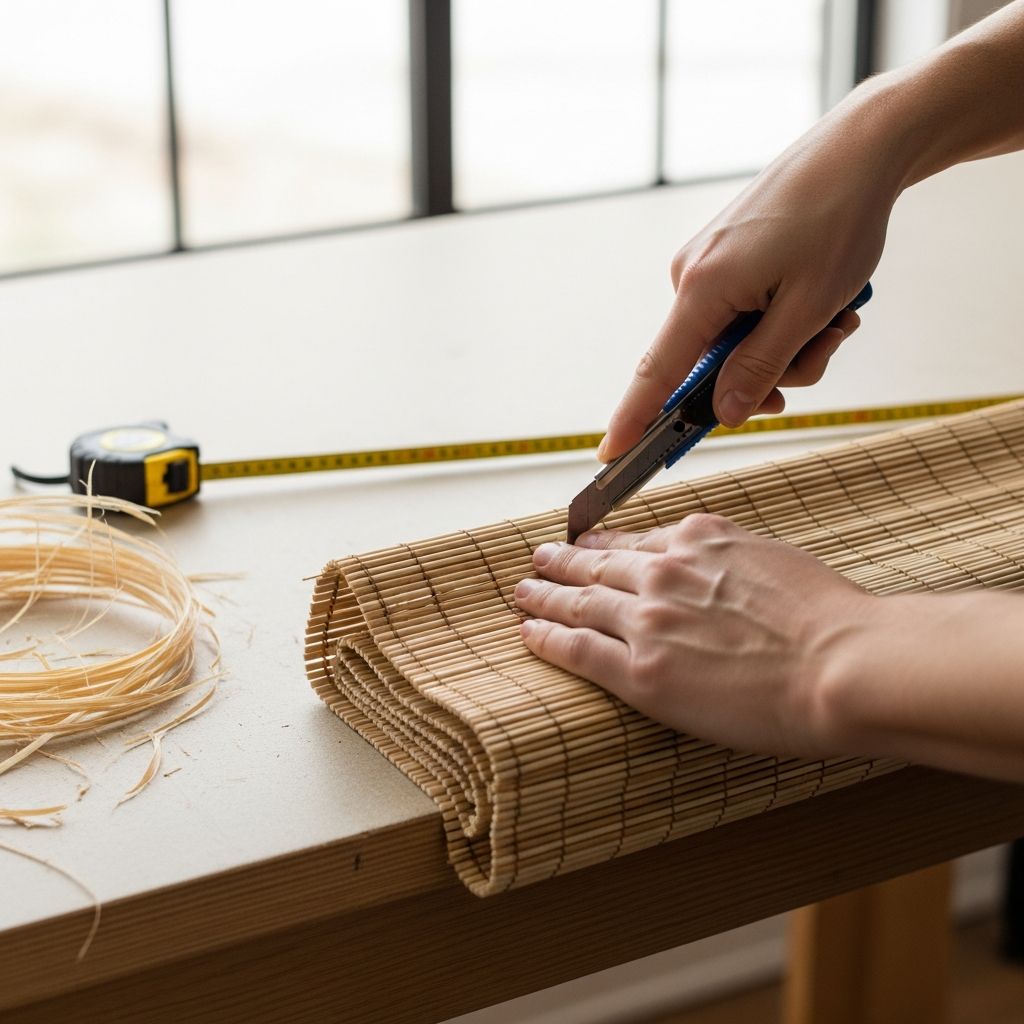
Bamboo Roman shades offer a natural, elegant solution for window coverings, blending texture and light control seamlessly into any interior design. However, when off-the-shelf options exceed your window dimensions, trimming becomes essential. This comprehensive guide explores practical techniques to modify these shades, focusing primarily on length reduction while touching on width adjustments. With basic tools and careful execution, homeowners can achieve a tailored look without professional assistance.
Understanding Bamboo Roman Shades
These shades consist of woven bamboo slats threaded with cords that enable raising and lowering. Unlike fabric Roman shades, their rigid structure demands precise cuts to preserve functionality. The headrail at the top houses the lifting mechanism, while the bottom often features a wooden dowel for weight and stability. Strings pass through rings on the rear, creating uniform folds when lifted. Trimming requires securing these elements to prevent fraying or operational failure.
- Key components: Bamboo slats, lift cords, rear rings, headrail, bottom dowel.
- Common issues: Excessive length pooling on sills; width mismatches blocking operation.
- Benefits of customization: Cost savings, perfect fit, enhanced room aesthetics.
Essential Tools and Materials
Gathering the right supplies ensures smooth modifications. Prioritize quality adhesives and sharp cutters for clean results.
| Item | Purpose | Tips |
|---|---|---|
| Measuring tape | Precise marking | Use metal for accuracy |
| Razor blade or fine-tooth saw | Cutting slats | Sharp edge prevents splintering |
| Super glue or hot glue gun | Securing cords | Quick-dry formula ideal |
| Staple gun or small nails | Reattaching dowel | Match gauge to material thickness |
| Cutting board | Safe surface | Protect floors and blades |
| Scissors | Trimming excess cord | Heavy-duty for strings |
Work in a well-lit, spacious area. Wear gloves to handle adhesives and eye protection for cutting.
Step-by-Step: Shortening the Length
Reducing height is the most straightforward alteration, suitable for shades hanging too low. This process typically takes 30-60 minutes per shade.
- Measure and plan: Hang the shade fully extended. Mark the desired bottom edge, adding 2-3 inches for hemming. Note ring positions on the back for cord adjustments.
- Remove bottom dowel: Flip the shade over. Pry out staples or tacks holding the dowel. Slide it free, preserving cords.
- Adjust cords: Identify rings one level above your cut line. Snip cords there, then tie secure double knots around the rings. Repeat for all cords (usually 2-4).
- Secure weave: Apply glue along the front and back at the cut mark, spanning 1/4 inch above and below. This binds slats and prevents unraveling. Let dry fully (10-15 minutes).
- Cut the shade: Place on a cutting board. Use a razor blade to slice steadily between slats. Trim excess bamboo evenly.
- Hem and reinstall dowel: Fold the new bottom over the dowel. Secure with staples or glue. Touch up any loose ends with adhesive.
- Trim pull cords: Shorten excess string from the bottom, knotting ends to prevent slippage.
Test functionality post-assembly. Raise and lower multiple times to confirm smooth operation.
Advanced: Adjusting Width for Perfect Fit
Width trimming poses greater challenges due to the integrated headrail and cord paths. Experts caution against it for complex shades, recommending professional services or replacements instead. If attempting, proceed cautiously.
Challenges include:
- Headrail disassembly: Remove end caps, cut rail to match, redrill holes.
- Slat alignment: Trim each horizontal piece uniformly to maintain weave integrity.
- Cord rerouting: Adjust paths through shortened material, risking tangles.
- Bottom rail resize: Match new dimensions precisely.
For simple shades, measure from the less-dominant side (opposite cord lock). Cut slats first, then headrail with a hacksaw. Reassemble components meticulously. Note: This may void warranties and compromise safety if cords bind.
Safety Considerations and Best Practices
Modifying shades involves sharp tools and adhesives. Key precautions:
- Ventilate area during gluing to avoid fumes.
- Keep cords away from reach of children and pets; continuous-loop styles reduce risks.
- Inspect for loose slats post-trim; reinforce as needed.
- Avoid over-tightening knots, which can hinder lift mechanism.
For lined or edge-bound shades, additional sewing may be required, elevating difficulty.
Maintenance for Long-Lasting Shades
Post-trimming care extends durability. Dust weekly with a microfiber cloth or vacuum on low suction. Spot-clean stains with mild soap solution; avoid soaking. In humid climates, apply UV protectant spray annually to prevent fading. Store flat if removing seasonally.
Creative Styling Ideas
Beyond trimming, elevate shades with valances, tiebacks, or contrasting liners for blackout. Pair with sheer curtains for layered light control. Natural tones suit boho, coastal, or minimalist decors.
Frequently Asked Questions (FAQs)
Can I trim bamboo shades too wide?
It’s possible but complex; focus on one side and test mechanisms thoroughly.
What if my shades have a liner?
Cut and hem liner separately, or detach before trimming slats.
Will trimming affect light filtering?
Minimal impact if cuts are clean; bottom hem may slightly alter diffusion.
How do I fix uneven cuts?
Sand lightly and glue frayed edges; minor discrepancies blend over time.
Are custom shades worth it over DIY?
For intricate designs, yes; simple length trims favor DIY savings.
Troubleshooting Common Issues
| Problem | Solution |
|---|---|
| Cords unravel after cut | Reapply glue; knot higher rings |
| Shade won’t lift smoothly | Check knot tension; lubricate rings |
| Slats splay open | Add tension cord or weight |
| Headrail misaligned | Remount brackets; use shims |
These solutions resolve 90% of post-trim glitches.
References
- How to Shorten Bamboo Window Shades — The DIY Playbook. 2020-06-15. https://thediyplaybook.com/shorten-bamboo-window-shades/
- Instructions on How to Shorten Bamboo Blinds — Blinds Chalet. 2023-01-10. https://www.blindschalet.com/kba-shorten-bamboo-blinds-136.html
- Helpful Guide to Cutting Too-Wide Bamboo Shades — Blindster. 2024-05-22. https://www.blindster.com/blog/how-to-cut-bamboo-blinds-that-are-too-wide
Similar Articles






Read full bio of medha deb