Customizing Polyurethane Finishes with Color Tints
Master the art of tinting polyurethane for beautiful, custom wood finishes.
Understanding the Fundamentals of Tinted Polyurethane
Polyurethane stands as one of the most popular protective coatings for wood surfaces, offering durability and longevity when applied correctly. However, most woodworkers and homeowners are unaware that this versatile finish can be customized with color to create semitransparent coatings that enhance the natural beauty of wood while providing superior protection. Tinting polyurethane opens up possibilities for creating unique finishes that complement your existing décor, match specific wood tones, or add character to furniture and architectural elements.
The process of adding tint to polyurethane involves introducing universal coloring pigments into the clear finish before application. This technique works equally well with both oil-based and water-based polyurethane formulations, making it accessible to various project types and personal preferences. Understanding the fundamentals of this process ensures successful results and prevents common mistakes that can compromise the finish quality.
Selecting the Right Materials and Equipment
Before beginning any tinting project, gathering the appropriate materials and tools sets the foundation for success. The primary ingredient in this process is universal tinting pigments, which are specifically designed to integrate with clear finishes without compromising their protective qualities. These pigments are widely available at paint retailers and hardware stores, typically sold in convenient tubes or small containers.
Essential equipment for the tinting process includes:
- Measuring cups or containers for precise liquid measurement
- Small glass or plastic containers for creating test batches
- Universal tinting pigments in desired colors
- Wooden or plastic stir sticks for thorough mixing
- Scrap wood pieces for color testing and experimentation
- Quality brushes or applicators for the final application
- Drop cloths or protective coverings for work surfaces
- Sandpaper in various grits for surface preparation
Having all materials organized and within reach before starting prevents interruptions during the critical mixing phase. It also allows for immediate testing of color combinations without delay, which is essential for achieving consistent results.
Preparing Your Polyurethane for Color Integration
Proper preparation of the polyurethane itself is often overlooked but plays a crucial role in successful tinting. Begin by thoroughly stirring the polyurethane base, whether oil-based or water-based, to ensure uniform consistency throughout. This initial stirring prevents settling of components and ensures that any pigments will integrate evenly throughout the entire batch.
The choice between oil-based and water-based polyurethane affects several aspects of the tinting process. Oil-based polyurethane offers extended working time and produces deeper color saturation but requires longer drying periods and proper ventilation due to volatile organic compounds. Water-based polyurethane, conversely, dries more quickly and produces minimal odor, making it suitable for indoor projects, though color intensity may be slightly less pronounced than oil-based alternatives.
Before committing to tinting your entire supply of polyurethane, create a manageable test batch. Measure out a small fraction of your total polyurethane—typically one-tenth of the amount needed for your project—and transfer it to a separate container. This test batch approach allows for experimentation without risk of wasting large quantities of material.
The Art and Science of Color Selection
Choosing appropriate pigment colors represents both an artistic and technical decision. For projects targeting traditional wood tones, five primary pigment colors provide an excellent foundation: burnt umber, raw umber, burnt sienna, raw sienna, and black. These earthy pigments blend naturally with wood surfaces and create authentic wood-tone finishes that enhance rather than mask the natural grain patterns.
However, the pigment palette extends far beyond traditional wood tones. Contemporary applications may call for vibrant colors, metallic tints, or contemporary hues that make artistic statements. The versatility of universal pigments means virtually any color imaginable can be introduced into polyurethane, provided the pigments are compatible with your specific polyurethane type.
When targeting a specific color goal, such as matching golden oak or a particular wood species, obtaining a physical color reference sample from your hardware store proves invaluable. Ensure your reference chip displays the desired color on the exact wood type you plan to finish, as wood grain and undertones significantly influence how applied color appears on the final surface.
Mastering the Tinting Process: A Systematic Approach
Step-by-Step Color Addition and Mixing
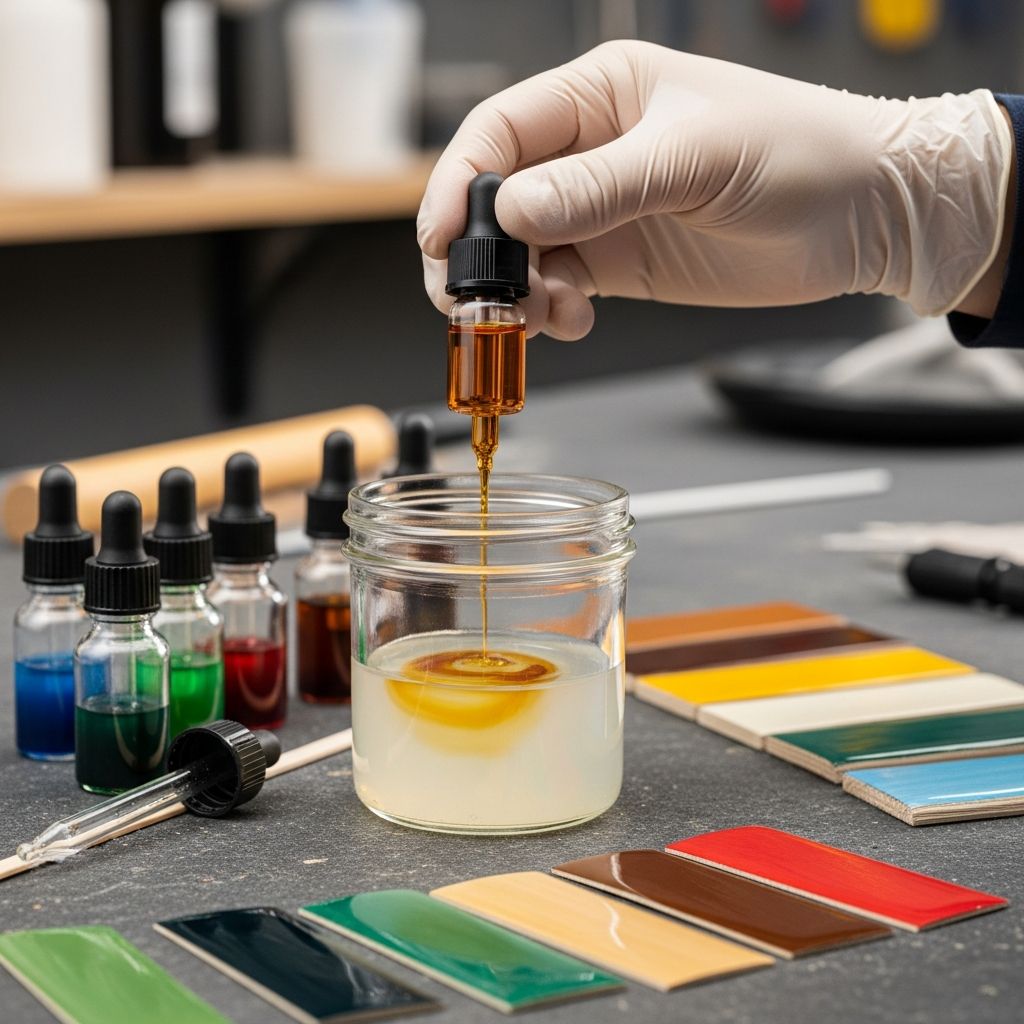
The tinting process requires precision, patience, and methodical documentation. Begin with your test batch of polyurethane and select your first pigment color. Using a dropper or applicator, add the pigment one drop at a time to the polyurethane base. This gradual approach is critical because each individual drop creates a noticeable color change in clear polyurethane, and it is remarkably easy to overshoot your desired color intensity.
As each pigment drop enters the polyurethane, immediately stir the mixture thoroughly using your stir stick. Continue stirring until the pigment distributes uniformly throughout the liquid with no visible streaks or color variations. Incomplete mixing results in mottled, inconsistent color application on the wood surface.
If combining multiple colors to achieve a specific hue, continue the drop-by-drop process with each subsequent pigment, maintaining careful documentation of the exact number of drops used for each color component. This record becomes essential when scaling your test formula up to full-batch production.
Testing and Evaluation Procedures
Once your test batch reaches the desired color intensity, apply it to a scrap piece of wood using the same application method you plan to use for your final project. This practical testing phase reveals how your tinted polyurethane performs on actual wood rather than in liquid form. Paint a generous sample area and allow it to dry completely according to manufacturer specifications.
The dried sample often appears somewhat different than the wet mixture, so comparing the wet application to the dried result provides critical information. If the color proves too dark, too light, or simply incorrect, discard the test batch without hesitation and begin again with fresh polyurethane. The small amount of material wasted in testing far outweighs the cost and frustration of applying an incorrect color across an entire project.
When the test result satisfies your color goals, document all the specific details: the number of drops of each pigment used, the total volume of polyurethane, and any mixing observations. This documentation ensures reproducibility when mixing your full-batch production.
Scaling Your Successful Test Formula to Production Batches
Converting a successful test batch formula to your full production quantity requires straightforward mathematical calculation. Identify the scaling factor by dividing your total project requirement by the test batch size. For example, if your test batch represented one-tenth of a quart and you need to tint a full quart, your scaling factor is nine, meaning you must multiply all pigment drop counts by nine.
Apply this scaling factor consistently to every pigment component in your formula. If your test used three drops of burnt umber and two drops of raw sienna, your production batch requires twenty-seven drops of burnt umber and eighteen drops of raw sienna. Maintaining these proportional relationships ensures color consistency between test and production batches.
Mix your production batch using identical methods employed for the test batch: add pigments drop by drop, stir thoroughly after each addition, and document your process. Maintain careful control throughout mixing to prevent introducing excessive air bubbles, which can compromise the finish clarity.
Strategic Timing and Settling Considerations
After completing your tinted polyurethane mixture, patience becomes an important virtue. Allow the finished product to settle for one to two hours before applying it to your wood surface. This settling period permits air bubbles introduced during the vigorous mixing process to rise to the surface and escape naturally. Applying polyurethane before adequate settling results in a finish speckled with small bubbles that compromise both aesthetics and protective quality.
This waiting period also allows pigments to fully integrate into the polyurethane matrix, promoting uniform color distribution across the entire batch. The investment of just a couple hours prevents numerous application problems and produces superior final results.
Application Techniques for Tinted Polyurethane
Applying tinted polyurethane differs minimally from applying clear polyurethane, though a few considerations specific to colored finishes warrant attention. Begin with proper surface preparation: sand the wood surface progressively with increasingly fine sandpaper grits, finishing with 220-grit paper. This creates a smooth, properly prepared surface that accepts the tinted finish evenly.
For brush-on application, use a high-quality brush designed for polyurethane use. Dip the brush adequately, blot excess on the container edge, and apply in long, even strokes following the wood grain. Slight overlap of strokes ensures even coverage without gaps or color variations. Allow each coat complete drying time before applying subsequent coats.
Wipe-on application suits smaller projects or intricate surfaces. Saturate a clean cloth with tinted polyurethane, wring out excess, and wipe onto the wood surface following the grain direction. This method produces thinner, more transparent coatings and typically requires additional coats to build protective layers.
Multiple coats ensure complete color development and adequate protection. Most projects benefit from two to three coats of tinted polyurethane, with light sanding between coats to ensure proper adhesion and smooth texture.
Advanced Color Matching and Problem-Solving
Sometimes achieving precise color matches through direct tinting proves challenging. An alternative approach involves layering techniques: apply your tinted polyurethane base, then layer gel stain over the dried polyurethane in a complementary shade. This method offers greater color control and forgiving application, allowing subtle adjustments to final appearance without starting from scratch.
When using layering techniques, thin gel stain with mineral spirits to achieve proper consistency for even application. Use a foam applicator pad to spread the gel stain uniformly across the surface, building color gradually through multiple thin applications rather than attempting complete color coverage in a single thick coat.
Compatibility represents a critical consideration when incorporating multiple products. Oil-based pigments and stains do not integrate with water-based polyurethane, and attempting to combine incompatible products results in color inconsistency and potential finish failure. Always verify that all components—polyurethane base, pigments, stains, and additional coatings—share compatible chemistry.
Understanding Polyurethane Types and Their Tinting Characteristics
Oil-based polyurethane produces rich, warm-toned finishes and works exceptionally well with traditional wood-tone pigments. The longer drying time associated with oil-based products allows extended working time and provides opportunity for color adjustment before the finish hardens. However, oil-based polyurethane requires adequate ventilation and protective equipment during application.
Water-based polyurethane maintains clarity and produces cooler tones, making it ideal for contemporary applications and light-colored woods where original wood character should remain prominent. The quick drying time and minimal odor make water-based options preferable for indoor residential projects, though the shorter working window requires decisive application techniques.
The tinting compatibility of polyurethane depends on the base chemistry. Universal pigments work with both types, but water-based stains should accompany water-based polyurethane, while oil-based stains pair with oil-based polyurethane. Mixing incompatible components produces separation, poor color development, and potentially compromised protective qualities.
Common Mistakes to Avoid During the Tinting Process
Rushing the mixing process represents one of the most common errors in polyurethane tinting. Adding excessive pigment too quickly overwhelms the base polyurethane with color, resulting in an overly dark finish that cannot be corrected. Remember that each drop creates significant color change, necessitating a deliberate, measured approach.
Inadequate mixing leads to color inconsistency across the application surface. Thorough stirring after each pigment addition ensures uniform distribution and prevents streaky, mottled appearance in the final finish. Incomplete mixing compromises both the aesthetic and protective qualities of the polyurethane.
Skipping the test batch phase virtually guarantees disappointment. Every wood species, every lighting condition, and every pigment batch produces slightly different results. Testing consumes minimal materials and time while preventing catastrophic color mistakes across entire projects.
Failing to document your formula wastes the value of successful experimentation. Without recording exact drop counts and procedures, replicating successful colors becomes guesswork rather than reproducible science.
Practical Applications and Project Suitability
Tinted polyurethane excels for numerous applications where traditional clear finishes fall short. Exterior woodwork benefits tremendously from tinted polyurethane, which provides ultraviolet protection while adding aesthetic character without the appearance of paint. Furniture refinishing projects gain new possibilities through color customization that complements existing décor rather than fighting against it.
Floor finishing represents another significant application where tinted polyurethane creates visual interest while protecting high-traffic surfaces. Interior woodwork, cabinets, and trim can all benefit from subtle color enhancement that deepens wood tones or creates contemporary finishes.
The semitransparent nature of tinted polyurethane maintains visibility of wood grain and natural characteristics, distinguishing this technique from opaque staining or painting. This transparency provides sophisticated finishing options for projects where natural wood beauty should remain evident but deserves enhancement.
Frequently Asked Questions About Polyurethane Tinting
Q: Can I tint both oil-based and water-based polyurethane with the same pigments?
A: Yes, universal tinting pigments work with both oil-based and water-based polyurethane formulations. However, ensure all other products in your system—stains, additional coatings, and cleaning supplies—share compatible chemistry with your polyurethane base.
Q: How much pigment should I add to polyurethane for adequate color?
A: Start with just one drop of pigment per small quantity of polyurethane and increase gradually. Each drop creates noticeable color change in clear polyurethane, so proceed cautiously. Always test your formula on scrap wood before committing to full-batch production.
Q: What happens if I add too much pigment to my polyurethane?
A: Excessive pigment can compromise the protective qualities of polyurethane and may cause the finish to appear overly dark or muddy. If you exceed your desired color intensity, discard the batch and begin again with fresh polyurethane rather than attempting to lighten an already-darkened mixture.
Q: How long should tinted polyurethane settle before application?
A: Allow at least one to two hours of settling time after mixing to permit air bubbles introduced during stirring to escape naturally. This settling period improves finish clarity and ensures uniform color distribution throughout the entire batch.
Q: Can I mix different pigment colors together in polyurethane to create custom hues?
A: Absolutely. Combining multiple pigment colors is an excellent way to create custom shades. Add each pigment drop by drop, stirring thoroughly after each addition, and carefully document the drop count for each color to ensure reproducibility.
Q: Should I sand between coats of tinted polyurethane?
A: Yes, light sanding between coats improves adhesion and ensures a smooth final texture. Use fine-grit sandpaper and sand lightly before applying each subsequent coat.
Q: What is the difference between wipe-on and brush-on polyurethane application methods?
A: Brush-on polyurethane provides thicker coats and excellent control but may leave brush marks if not applied correctly. Wipe-on polyurethane produces thinner, more even layers with fewer application marks but typically requires more coats to achieve adequate protection.
References
- How To Add Tint To Polyurethane — Hunker. https://www.hunker.com/12544172/how-to-add-tint-to-polyurethane/
- All About Polyurethane — This Old House. https://www.thisoldhouse.com/painting/all-about-polyurethane
- Can You Tint Oil Based Polyurethane? — LearnToDIY360. https://www.youtube.com/watch?v=Yx07bJBgg10
- TINTING POLYURETHANE with dye and paint to create a custom color finish — YouTube. https://www.youtube.com/watch?v=tplGVCqgA9g
Similar Articles








Read full bio of Sneha Tete