Cutting Glass Without a Cutter: Proven Methods
Discover safe, effective techniques to precisely cut glass using everyday tools and household items—no specialized cutter required.
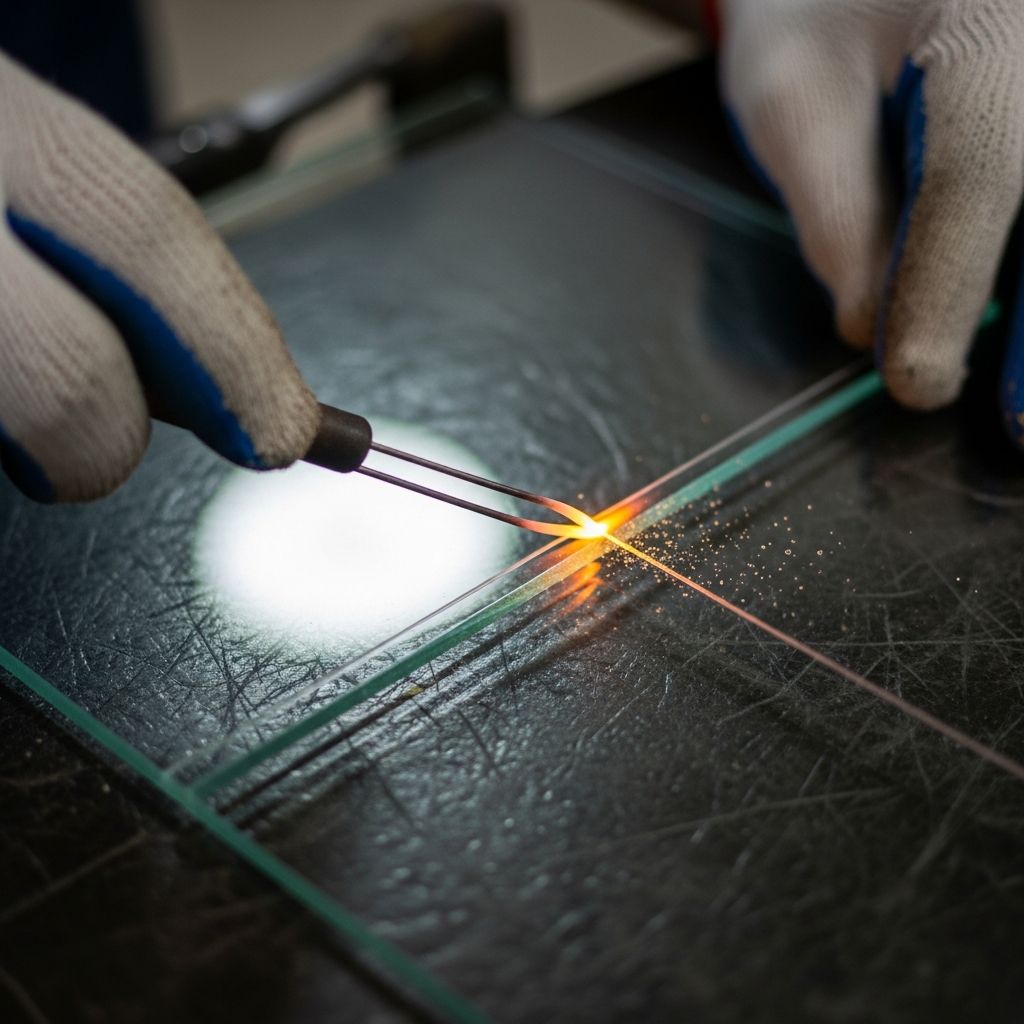
Glass cutting is a valuable skill for DIY enthusiasts tackling home projects like custom frames, bottle crafts, or mirror installations. While professional glass cutters provide precision, many effective alternatives exist using common household items or power tools. This guide details reliable techniques, emphasizing safety and achievable results for beginners and experienced makers alike.
Why Skip the Glass Cutter?
Traditional glass cutters score the surface to create a clean break line, but they’re not always handy. Whether you’re in a pinch during a project or prefer budget-friendly options, alternatives leverage thermal shock, mechanical scoring, or abrasive action. These methods work on flat sheets, bottles, and even mirrors, though success depends on glass thickness—ideally under 6mm for best outcomes.
Safety Essentials Before Starting
Glass shards pose serious risks, so prioritize protection. Wear cut-resistant gloves, safety goggles, and a dust mask. Work in a well-ventilated area on a stable surface covered with newspapers or a drop cloth for easy cleanup. Keep a first-aid kit nearby and avoid cutting thick or tempered glass, which shatters unpredictably.
- Gloves: Thick leather or Kevlar-lined to shield hands.
- Goggles: ANSI-rated to block flying fragments.
- Surface prep: Tape edges with masking tape to contain breaks.
- Cleanup: Use a shop vac for shards; never use bare hands.
Method 1: Thermal Shock with String for Bottles
This classic technique uses fire and water to induce controlled cracking, ideal for recycling bottles into vases or lamps. It’s simple, requiring no power tools.
- Clean and dry the bottle thoroughly.
- Mark the cut line with a marker or painter’s tape.
- Soak a cotton string in acetone (nail polish remover) or alcohol, wrap it tightly around the line 3-4 times.
- Light the string, rotate the bottle for even heating (30-60 seconds) until soot appears.
- Extinguish flames and plunge into ice-cold water—the thermal shock snaps the glass cleanly.
- Smooth edges with 220-grit sandpaper under running water.
Pro tip: Practice on cheap bottles first. For thicker glass, repeat heating for deeper stress lines.
Method 2: Scoring with Files or Nails
For flat glass sheets, a metal file or sturdy nail mimics a cutter’s scoring action. This mechanical method relies on deep scratches to guide the snap.
| Tool | Best For | Pros | Cons |
|---|---|---|---|
| Steel file | Sheets 2-4mm thick | Precise, inexpensive | Requires firm pressure |
| Nail/screwdriver | Thin glass | Readily available | Less consistent score |
| Utility knife | Mirrors | Sharp carbide tip | Blade dulls quickly |
Steps: Clamp glass securely. Score along the line with steady, even pressure (10-20 passes). Place over a table edge, align score with edge, and tap underside gently with a mallet or press down firmly. Use pliers with taped jaws for separation.
Method 3: Grinder Power for Straight Cuts
An angle grinder with a diamond or carbide wheel cuts like a pro, perfect for larger pieces or curves. It’s faster but generates heat and dust.
- Secure glass face-down on a workbench.
- Mark line with oil-based marker (resists water).
- Attach appropriate wheel; use wet grinding to cool.
- Score slowly at low RPM, applying light pressure—let the tool do the work.
- Cool with water spray periodically.
- Snap along score as above; polish edges with a diamond file.
Warning: Overheating causes cracks. Maintain constant water flow and wear full PPE including respirator.
Special Case: Handling Mirrors
Mirrors have a fragile silver backing, so extra care prevents scratches. Limit to pieces under 1/4 inch thick.
- Cover surface with thin cardboard or painter’s plastic.
- Clamp securely to avoid slips.
- Score with carbide scribe or fresh razor blade.
- Tap from behind to separate; avoid direct front pressure.
- Deburr with fine file and clean with glass cleaner.
For larger mirrors, consider professional help to preserve the reflective layer.
Smoothing and Finishing Edges
Raw cuts always need refinement to prevent injuries.
- Wet sand: Start with 120-grit, progress to 400-grit under water.
- Polish: Use cerium oxide compound on a felt pad with a drill.
- Bevel optional: Angle grinder with polishing wheel for professional look.
Test smoothness by running a fingernail over the edge—no catches means it’s safe.
Advanced Tips and Troubleshooting
Common issues: Uneven breaks from shallow scores (score deeper), chipping from rushed snaps (use running pliers), or fogging on mirrors (score lightly).
- Thicker glass (>6mm): Use oil on score line for lubrication.
- Curved cuts: Template with cardboard, follow freehand with grinder.
- Storage: Wrap finished pieces in bubble wrap.
Experiment on scrap glass. Precision improves with practice.
Project Ideas to Test Your Skills
Apply these methods creatively:
- Bottle terrarium: Cut bases for multi-level planters.
- Picture frame inserts: Custom-fit glass for artwork.
- Wind chimes: Thin strips from sheet glass.
- Tabletop mosaic: Irregular shapes via thermal shock.
Frequently Asked Questions (FAQs)
Can I cut tempered glass without a cutter?
No—tempered glass is safety-treated to shatter fully. Use annealed glass only.
Is the string method safe for colored bottles?
Yes, but test acetone compatibility; some inks bleed.
How do I avoid grinder kickback?
Secure workpiece, use two hands, start at low speed.
What’s the best file type for scoring?
Triangular machinist’s file for deep, even grooves.
Can these methods work on auto glass?
Laminated auto glass resists breaking; not recommended—opt for pros.
References
- Glass Cutting Safety Guidelines — Occupational Safety and Health Administration (OSHA). 2023-05-15. https://www.osha.gov/publications/glass-cutting-safety
- Manual Glass Handling and Processing — National Glass Association. 2024-02-10. https://www.glass.org/resources/manual-glass-handling
- DIY Glassworking Techniques — Fine Homebuilding Magazine. 2025-01-20. https://www.finehomebuilding.com/project-guides/glassworking
- Thermal Stress in Glass Materials — Journal of Materials Science (Springer). 2022-11-08. https://doi.org/10.1007/s10853-022-07890-1
- Power Tool Safety for Glass Fabrication — Underwriters Laboratories (UL). 2024-07-12. https://www.ul.com/services/power-tool-safety-glass
Similar Articles



Read full bio of medha deb