Cutworms: How to Identify and Control Garden Pests
Complete guide to identifying cutworms and implementing effective control methods.
Understanding Cutworms: A Gardener’s Guide to Pest Management
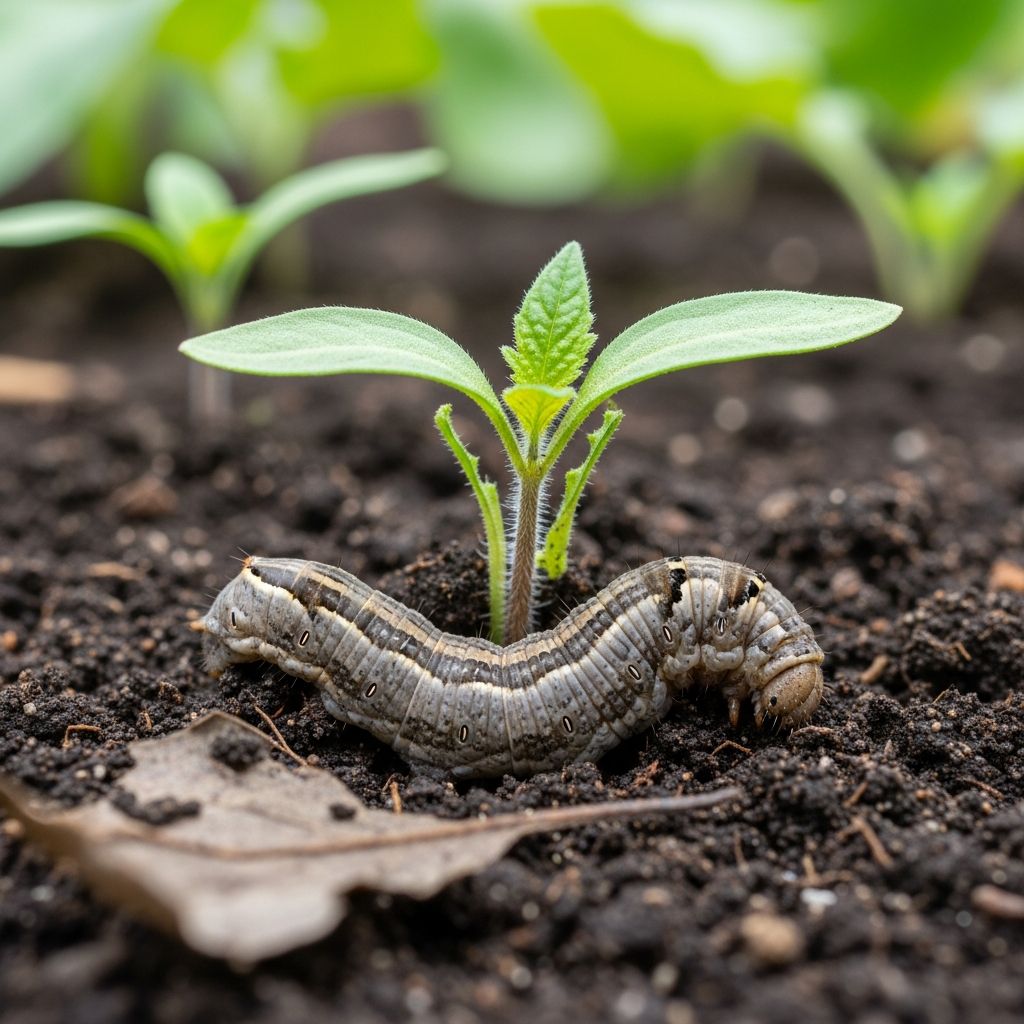
Cutworms are among the most destructive and frustrating garden pests that home gardeners face. These nocturnal larvae can devastate seedlings and young plants, often destroying an entire garden bed overnight. Understanding what cutworms are, how to identify them, and implementing effective control strategies can save your garden from significant damage.
What Are Cutworms?
Cutworms are the larval stage of several species of moths belonging to the family Noctuidae. These pests earned their name from their characteristic behavior of cutting down seedlings and young plants at ground level. The larvae are typically gray, brown, or black in color and measure between one-half to two inches in length when fully grown.
The adult moths lay their eggs in soil during late spring and early summer. Once the eggs hatch, the larvae emerge and begin feeding on plant material. Most cutworm species are nocturnal, remaining hidden in the soil during the day and emerging at night to feed on plants. This nighttime feeding pattern is why many gardeners wake up to find their seedlings completely severed at the base.
Identifying Cutworm Damage
Recognizing cutworm damage is essential for taking prompt action. The most obvious sign is seedlings that have been cut off at or just below ground level. Unlike other pests that create holes or irregular patterns on leaves, cutworms typically sever the entire stem of young plants.
Additional indicators of cutworm presence include:
- Young transplants mysteriously disappearing overnight
- Clean cuts at the base of seedlings with no plant material remaining
- Damage appearing suddenly without warning
- Evidence of damage concentrated on the youngest, most tender plants
- Small, dark droppings (frass) near damaged plants
Cutworms are particularly destructive to newly transplanted seedlings and young vegetables including cabbage, tomatoes, peppers, lettuce, and beans. However, they will attack virtually any garden plant.
Understanding Cutworm Life Cycles
Different cutworm species have varying life cycles, which affects timing of infestations. Some species produce one generation per year, while others may produce two or three generations. Understanding the typical cutworm life cycle helps gardeners anticipate and prevent infestations.
The lifecycle typically begins in late spring when adult moths emerge and lay eggs in soil. Eggs hatch within one to two weeks, and larvae begin feeding immediately. The larval stage lasts three to four weeks, during which cutworms cause the most damage. Once fully grown, larvae pupate in the soil and eventually emerge as adult moths to repeat the cycle.
Prevention and Exclusion Methods
Prevention is always preferable to treatment when dealing with garden pests. Several exclusion methods can effectively protect your plants from cutworm damage.
Physical Barriers
One of the most effective prevention methods involves creating physical barriers around vulnerable plants. Gardeners can use toilet paper tubes, paper towel tubes, or any hollow cardboard tubing placed around seedlings at planting time. These barriers should extend both above and below the soil surface, creating a protective sleeve that prevents cutworms from accessing the plant stem.
For additional protection, create a collar around the base of plants using materials such as:
- Cardboard tubes or paper rolls
- Aluminum foil wrapped around stems
- Plastic bottles with the bottom removed
- Stiff paper or newspaper
Soil Barriers
Applying ash or diatomaceous earth around plant bases creates a physical and chemical barrier that deters cutworms. These materials irritate the pests and make it uncomfortable for them to crawl across. Reapply after rain to maintain effectiveness.
Plant Selection Strategy
Choosing more mature transplants instead of tiny seedlings significantly reduces cutworm damage. Larger plants with woody, sturdy stems are far more resistant to cutworm attack than delicate young seedlings. While mature plants may cost slightly more, they often result in more successful gardens with less pest pressure.
Organic Control Methods
When prevention methods prove insufficient, organic control options offer effective alternatives to synthetic pesticides.
Bacillus Thuringiensis (Bt)
Thuricide BT is an organic insecticide derived from the bacterium Bacillus thuringiensis. This biological pesticide is highly effective against cutworm larvae while posing no threat to beneficial insects, pets, or humans. BT works by producing toxins that destroy the digestive system of cutworm larvae when ingested.
When applying BT:
- Spray in early evening when cutworms are most active
- Cover the base of plants thoroughly
- Reapply after rain or as directed on the product label
- Begin applications as soon as cutworm activity is detected
- Use on sturdy transplants for best results
Beneficial Nematodes
Beneficial nematodes can be applied to soil where they actively hunt and parasitize cutworm pupae. These microscopic organisms are completely safe for plants, pets, and humans while being devastating to garden pests. Apply beneficial nematodes to soil according to product instructions for best results.
Replacement Strategy
When cutworms have already caused damage to seedlings, replacement with more mature plants is an excellent solution. Purchasing larger transplants that are past the vulnerable seedling stage eliminates the primary window when cutworms cause the most damage. These sturdy plants can withstand cutworm attacks better and are less likely to be completely destroyed.
This strategy proves particularly effective for vegetables with longer growing seasons where replanting later is feasible. While it may require additional investment in larger transplants, the improved success rate often justifies the cost.
Natural Predators and Beneficial Insects
Encouraging natural predators in the garden provides long-term cutworm control. Ground beetles, carabid beetles, and parasitic wasps actively hunt cutworms and their pupae. Creating habitat for beneficial insects through:
- Planting native flowering plants
- Maintaining mulch and ground cover
- Avoiding broad-spectrum pesticides
- Providing water sources
These practices support predator populations that naturally regulate cutworm populations over time.
Garden Sanitation and Cultural Practices
Maintaining good garden hygiene reduces cutworm populations and prevents infestations. Remove plant debris, fallen leaves, and dead vegetation where cutworms can overwinter. Till soil in fall and spring to expose pupae to predators and weather.
Rotating crops to different locations each season disrupts the life cycles of cutworms adapted to specific plants. Avoid planting susceptible crops in the same location consecutively, especially areas that previously had cutworm problems.
Monitoring and Early Detection
Regular garden monitoring allows for early detection of cutworm activity before significant damage occurs. Check plants daily, especially newly transplanted seedlings. Look for the characteristic cut stems and small holes in soil where cutworms emerge at night.
Handpicking cutworms can be effective for small infestations. Search the soil surface and just below ground level in the morning to find resting larvae. Dispose of collected cutworms appropriately by removing them from your property or destroying them.
Frequently Asked Questions
Q: What time of year are cutworms most active?
A: Cutworms are typically most active in spring when young seedlings are being transplanted. However, depending on your region and cutworm species, activity can occur throughout the growing season.
Q: Can I use chemical pesticides for cutworm control?
A: While chemical pesticides are available, organic methods prove highly effective and safer for families, pets, and beneficial insects. Organic solutions like BT insecticide are recommended as first-line treatments.
Q: Why do cutworms only appear at night?
A: Cutworms are nocturnal because they are sensitive to sunlight and dry conditions. During the day, they hide in soil where it’s cool and moist, emerging at night to feed.
Q: How can I tell if my plants have cutworms versus other pest damage?
A: Cutworm damage is distinctive—seedlings are typically severed cleanly at ground level. Other pests create holes, discoloration, or irregular damage patterns rather than complete severing.
Q: Are all my garden plants at risk?
A: While cutworms attack many plants, they show particular preference for young seedlings of vegetables like cabbage, tomatoes, peppers, lettuce, and beans. Young ornamental plants are also vulnerable.
Q: How long does it take BT to work on cutworms?
A: BT typically begins working within 24-48 hours as cutworms ingest the bacteria and stop feeding. Complete death of larvae usually occurs within 3-5 days of application.
References
- Cutworms and Other Soil-Dwelling Larvae — University of California Statewide Integrated Pest Management Program. 2024. https://ipm.ucanr.edu/PMG/PESTNOTES/pn74129.html
- Black Cutworm: Agrotis ipsilon — Purdue University Entomology & Plant Pathology Department. 2023. https://www.purdue.edu/
- Bacillus thuringiensis (Bt) for Pest Management — United States Environmental Protection Agency. 2023. https://www.epa.gov/pesticides/biopesticides
- Integrated Pest Management for Home Gardeners — Cornell University College of Agriculture and Life Sciences. 2024. https://hort.cals.cornell.edu/
Similar Articles








Read full bio of medha deb