Darken Kitchen Cabinets: Complete DIY Guide
Transform outdated light cabinets into rich, modern dark tones with this step-by-step staining process using gel stains and minimal prep.
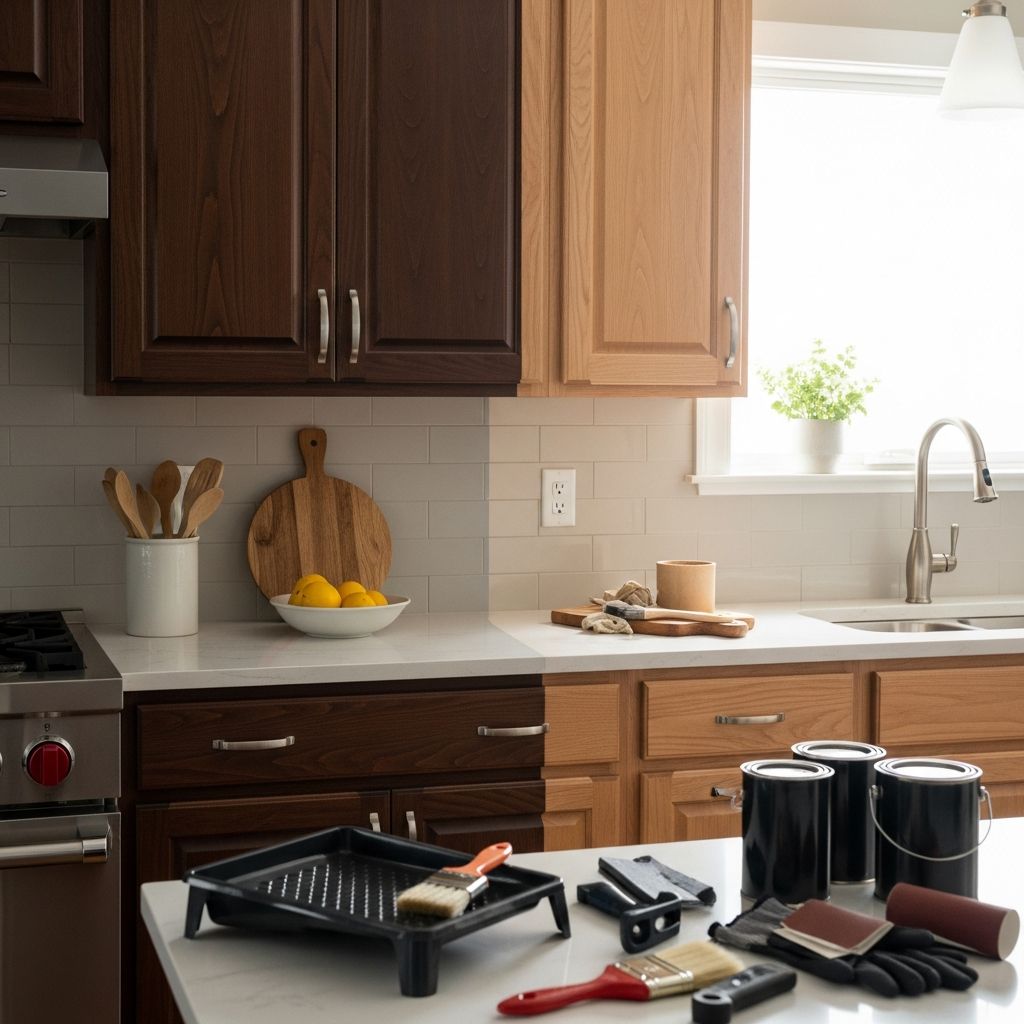
Updating the look of your kitchen doesn’t require replacing cabinets. By applying specialized stains over existing finishes, you can shift light or dated tones to sophisticated dark shades, enhancing wood grain visibility while modernizing the space. This method saves time and money compared to full replacements or stripping.
Why Darken Your Cabinets?
Dark stains bring contemporary appeal, hide wear better, and pair well with modern hardware and countertops. They reduce the prominence of heavy grain patterns in woods like oak, creating a smoother, richer appearance. Homeowners often choose this for quick refreshes before selling or to match evolving design trends.
- Cost-effective: Under $200 for most kitchens.
- Preserves original structure.
- Buildable color depth with multiple coats.
Essential Tools and Materials
Gather these items before starting to ensure smooth progress. Focus on quality gel stains for adhesion over sealed wood.
| Category | Items | Purpose |
|---|---|---|
| Prep Tools | Screwdriver/drill, 220-grit sandpaper/block, tack cloth, wood filler, putty knife | Removal, smoothing, cleaning |
| Staining | Gel stain (e.g., Varathane Dark Walnut or Minwax PolyShades), stain brushes, nitrile gloves, drop cloths | Color application |
| Finishing | #000 steel wool, clear lacquer spray or polyurethane, painter’s stands/tripods | Sealing and protection |
| Optional | Liquid deglosser, felt pads for doors | Extra adhesion, smooth operation |
Expect to use 1 quart of gel stain for average kitchens; scale up for larger areas. Work in a ventilated garage or basement to avoid indoor fumes.
Preparation: Setting Up for Success
Proper prep prevents issues like poor adhesion or drips. Label doors and drawers with painter’s tape and numbers to match original positions, avoiding reassembly mix-ups.
- Disassemble: Unscrew doors, drawers, and hardware. Lay flat on elevated supports like cans or tripods to access all sides.
- Repair: Fill old hardware holes with wood filler if updating pulls. Sand smooth once dry.
- Clean: Wipe grease with degreaser, then tack cloth for dust-free surfaces.
This phase takes 1-2 hours; rushing leads to uneven results.
Surface Prep Without Full Stripping
Skip aggressive sanding—light scuffing suffices for new stain to bond. Use 220-grit on all surfaces, following wood grain to avoid scratches.
- Sand frames in place; doors/drawers separately.
- Vacuum debris, wipe with damp cloth, dry fully.
- For glossy finishes, apply liquid deglosser per instructions for better grip.
Expect 30-60 minutes sanding time. This ‘tooth’ ensures longevity without removing old layers.
Pro Tip: Test deglosser on inconspicuous areas to confirm no discoloration.
Applying the First Coat of Gel Stain
Gel stains excel over oil-based finishes due to thickness, minimizing runs. Stir thoroughly; do not shake to avoid bubbles.
Brush on thin, even layers with the grain. Start with frames, then fronts, finally backs if desired. Work in sections to maintain wet edges.
- First coat appears streaky—normal; it darkens upon drying.
- Avoid overbrushing; let penetrate 5-10 minutes.
- Wipe excess sparingly for translucent effect.
Dry 12-24 hours. Patience prevents tacky recoats.
Building Depth: Second and Third Coats
Inspect after first coat dries. Buff lightly with #000 steel wool for intercoat adhesion.
Apply second coat similarly; it evens tone and deepens color. Third coat optional for espresso-like richness.
| Coat | Expected Look | Dry Time |
|---|---|---|
| 1st | Subtle darkening, uneven | 24 hours |
| 2nd | Rich brown, grain softened | 24 hours |
| 3rd | Deep, uniform dark | 24+ hours |
Total staining: 2-4 days. Wet stain looks darker than dry—judge cured results.
Sealing for Durability
Unprotected stain wears quickly in kitchens. Spray lacquer or brush-on poly provides water-resistant sheen.
- Light sand between coats (320-grit).
- Apply 2-3 thin layers; sand final for satin feel.
- Add felt pads to edges post-seal for stick-free operation.
Cure 48-72 hours before handling. Lacquer suits high-moisture areas like baths.
Reassembly and Final Touches
Once cured, reinstall in reverse order. Update hardware for contrast—dark knobs blend seamlessly.
- Torque screws evenly to prevent warping.
- Adjust hinges for plumb doors.
- Buff lightly if dusty.
Full project: 5-7 days. Enjoy transformed cabinets instantly.
Common Challenges and Fixes
| Issue | Solution |
|---|---|
| Drips or runs | Wipe immediately; sand and recoat. |
| Uneven color | Additional thin coats; buff between. |
| Poor adhesion | More sanding/deglossing next time. |
| Sticky finish | Extend dry times; ventilate. |
Timeline for Your Project
- Day 1: Disassemble, repair, sand, clean.
- Day 2: First stain coat.
- Day 3: Buff and second coat.
- Day 4: Optional third coat or start sealing.
- Days 5-7: Seal, cure, reassemble.
Frequently Asked Questions
What stain works best over sealed cabinets?
Gel stains like Varathane or General Finishes adhere without stripping; PolyShades combines stain and poly.
Can I stain cabinets in place?
Possible but messy—removal ensures even coverage and no drips on floors.
How dark can I go?
3 coats yield near-black tones; test on scrap wood first.
Is sanding mandatory?
Light sanding yes; full strip unnecessary and labor-intensive.
What if my cabinets are painted?
Degloss and prime first; gel stain over paint may not hold.
References
- How To Stain Your Wood Cabinets Darker — Young House Love. 2015-approx. https://www.younghouselove.com/the-darkness/
- Darken Cabinets WITHOUT Stripping the Existing Finish — Pneumatic Addict. 2014-06-01. https://www.pneumaticaddict.com/2014/06/darken-cabinets-without-stripping.html
- How to Stain Oak Cabinets in 5 Steps — The Designery. 2023-approx. https://thedesignery.com/blog/how-to-stain-oak-cabinets-in-5-steps/
- Minwax Wood Finish Product Instructions — Minwax Official (via product guidelines). 2024. https://www.minwax.com/en/products/stains/polyshades/
- General Finishes Gel Stain Application Guide — General Finishes Official. 2025-01. https://generalfinishes.com/instructions/gel-stain
Similar Articles






Read full bio of medha deb