Decoupage Furniture: 14 Essential Tips
Transform old furniture into stunning pieces with these 14 practical decoupage tips for beginners and experts alike.
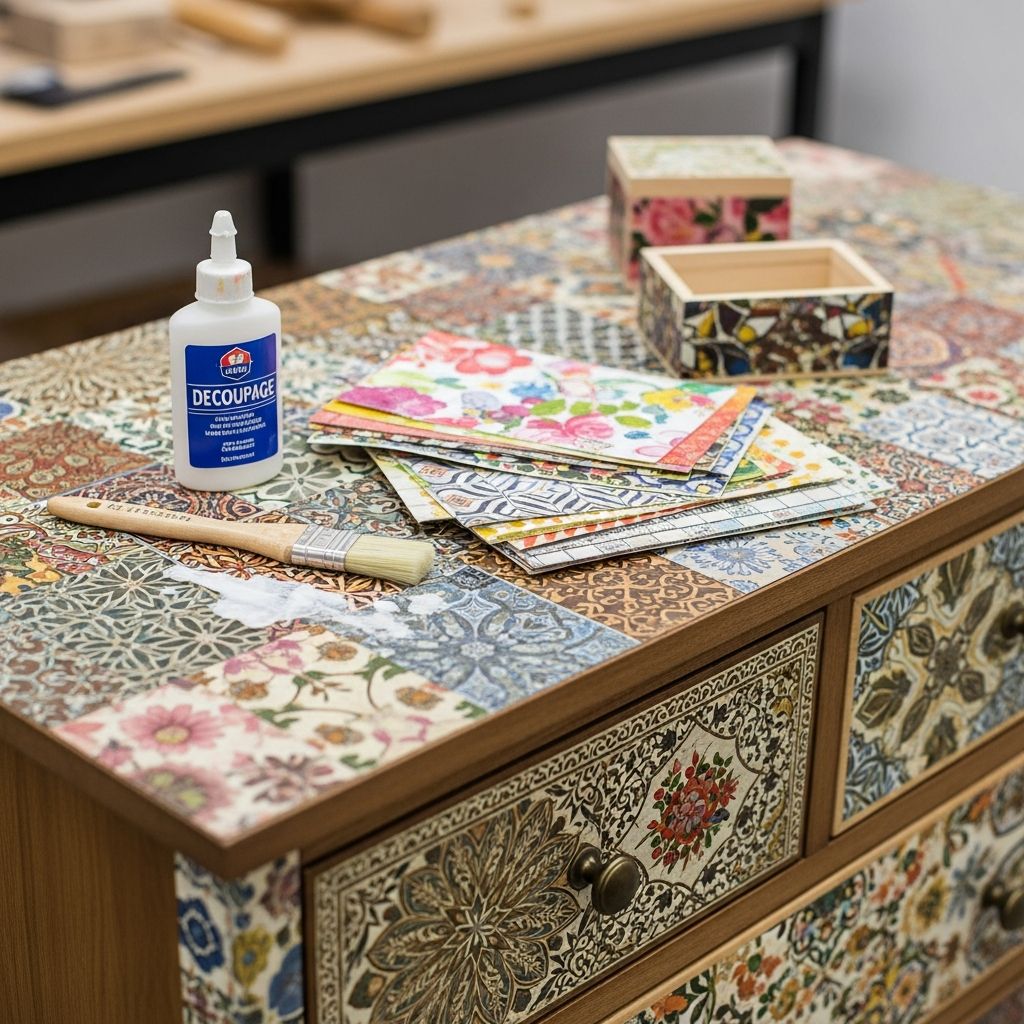
Decoupage offers a versatile way to revitalize furniture by adhering decorative paper, fabric, or napkins to surfaces and sealing them for protection. This technique allows for endless customization without the need for advanced painting skills, making it ideal for DIY enthusiasts looking to upcycle thrift finds or refresh family heirlooms.
Understanding the Basics of Decoupage
At its core, decoupage involves gluing images or patterns onto wood, metal, or other furniture surfaces and coating them with multiple layers of sealant to create a smooth, durable finish. Common materials include Mod Podge, a popular all-in-one glue and sealer available in matte, gloss, or spray forms. Alternatives like spray adhesives paired with polyurethane work well for larger areas to minimize bubbles.
Projects range from simple tabletops to full dressers, suitable for flat or gently curved pieces. Beginners should start small to build confidence before tackling intricate designs.
Tip 1: Select the Right Furniture Piece
Choose items with mostly flat surfaces to simplify application. Avoid highly ornate carvings initially, as they complicate paper adhesion. Dressers, nightstands, or trays provide excellent starting points. Measure dimensions accurately to determine material quantities, ensuring patterns align without waste.
Tip 2: Gather Quality Supplies
- Decorative materials: Scrapbook paper, wallpaper, maps, sheet music, napkins, or rice paper.
- Adhesives: Mod Podge, spray adhesive, or photo mount spray.
- Tools: Sharp scissors, craft knife, 100-160 grit sandpaper, pencil, tack cloth, brushes.
- Sealants: Water-based polyurethane or clear topcoats in brush-on or spray formulas.
- Optional: Wood filler, primer, acrylic/chalk paint, silicone spreaders.
Invest in high-quality items for better results; cheap brushes shed bristles into the finish.
Tip 3: Prepare the Surface Thoroughly
Remove hardware like knobs and hinges. Sand with 100-grit paper to roughen glossy finishes, fill dents with wood filler, and wipe clean with a tack cloth. This step ensures strong bonding and prevents peeling. Work in a ventilated space to avoid inhaling dust.
Tip 4: Prime and Base Coat Strategically
Apply primer or paint-and-primer combo for bare wood. Use acrylic or chalk paint over latex, as Mod Podge adheres poorly to the latter. For glossy existing paint, sand to dull the sheen. Skip painting areas fully covered by decoupage to save time. Allow 24 hours drying.
Tip 5: Choose and Cut Materials Precisely
Opt for thinner papers to reduce wrinkling risks. Trace shapes upside down on protective paper, then cut with scissors or a craft knife for clean edges. Test fit before gluing. For fabric, measure generously and pre-cut around hardware like knobs with vertical and crisscross slits for flat laying.
Tip 6: Master Adhesive Application Techniques
Spray adhesives offer even coverage for large pieces, allowing repositioning. For Mod Podge, apply thin layers to both surface and material back. Lay from center outward, using a silicone spreader, fingers, or balled cling wrap to smooth bubbles. Check periodically for new wrinkles.
Tip 7: Handle Edges and Seams Smoothly
Trim excess with a craft knife post-adhesion. For seamless blends, feather edges with matching paint or blend techniques. On drawers, cut between gaps after stiffening with glue, then sand frayed edges toward the wood.
Tip 8: Clean Before Sealing
Wipe the adhered surface with a tack or microfiber cloth to remove dust. This prevents imperfections under the topcoat.
Tip 9: Layer Sealant Properly
Apply 2-3 thin coats of water-based sealer, waiting 5-10 minutes between. Use foam or quality bristle brushes. Build layers gradually for durability, especially on high-touch areas like tabletops. Dry overnight between full sets.
Tip 10: Work with Fabric for Texture
Fabric decoupage adds dimension. Use photo mount spray for initial tack, press firmly, and seal multiple times. Sand edges post-drying. Ideal for bold patterns on flat surfaces.
Tip 11: Use Templates for Multi-Piece Projects
For matching sets, create reusable templates from the first piece. This speeds up tracing and ensures uniformity.
Tip 12: Address Hardware Challenges
Pre-cut slits around knobs or handles. Slide paper over, align, and seal seams minimally for invisibility.
Tip 13: Experiment with Rice Paper and Napkins
Rice paper adheres easily with just topcoat—no extra glue needed. Napkins require peeling to single ply. Both yield professional, sheer effects.
Tip 14: Cure and Maintain for Longevity
Allow 72 hours full cure before use. Clean with mild soap; avoid harsh abrasives. Reapply sealant yearly on heavy-use items.
Common Mistakes and Fixes
| Mistake | Fix |
|---|---|
| Paper wrinkling | Use spray adhesive or thin Mod Podge layers; smooth immediately. |
| Bubbles/air pockets | Pierce and press out with spatula; check over time. |
| Poor adhesion | Sand/prep surface; use primer on raw wood. |
| Visible seams | Blend with paint or use seamless papers. |
| Shedding bristles | Choose quality brushes/foam applicators. |
Project Ideas for Inspiration
- Decoupage a vintage tray with maps for a travel-themed server.
- Revamp a dresser with floral rice paper for a shabby chic bedroom.
- Apply sheet music to a piano bench for musical flair.
- Use fabric on outdoor side tables (with exterior sealant).
- Blend napkin motifs on chair seats for dining refresh.
FAQs
Can I decoupage over painted furniture?
Yes, but sand glossy surfaces first for adhesion.
Is Mod Podge waterproof?
Standard versions aren’t; use dishwasher-safe or exterior formulas for moisture exposure.
How many sealant coats are needed?
3-5 thin layers for durability on furniture.
Does decoupage work on metal?
Yes, after priming for rust prevention.
Can I distress the finish?
Sand lightly after curing, then reseal.
Advanced Techniques
For pros, try multi-layer designs or pour-on resins like Envirotex for glossy depth. Blend colors to match paper edges seamlessly. Fabric on curved edges requires more sanding and layers.
Decoupage empowers creativity, turning drab pieces into heirlooms. Practice yields mastery—start simple and iterate.
References
- How To Decoupage Furniture: A Step-By-Step Guide (With Pictures) — In My Own Style. Accessed 2026. https://inmyownstyle.com/how-to-decoupage-furniture.html
- How to Apply Decoupage on Wood Furniture — Traceys Fancy. Accessed 2026. https://www.traceysfancy.com/how-to-apply-decoupage-on-wood-furniture
- How to Decoupage Furniture with Fabric — Tanglewood Works. Accessed 2026. https://tanglewoodworks.com/blogs/tanglewood-sue/how-to-decoupage-furniture-with-fabric
- How To Decoupage Furniture — Salvaged Inspirations. Accessed 2026. https://salvagedinspirations.com/how-to-decoupage-furniture/
- How to Decoupage Furniture with Fabric — YouTube (patioelf). Accessed 2026. https://www.youtube.com/watch?v=OJW9X2tjmls
- How to Blend Decoupage Paper Seamlessly on Furniture — YouTube (Dixie). Accessed 2026. https://www.youtube.com/watch?v=01cwlwIELBc
Similar Articles



Read full bio of Sneha Tete