Dehumidifier Drain Hose Setup Guide: Gravity, Pump, Tips
Master continuous drainage for your dehumidifier with our detailed step-by-step instructions to eliminate manual emptying forever.
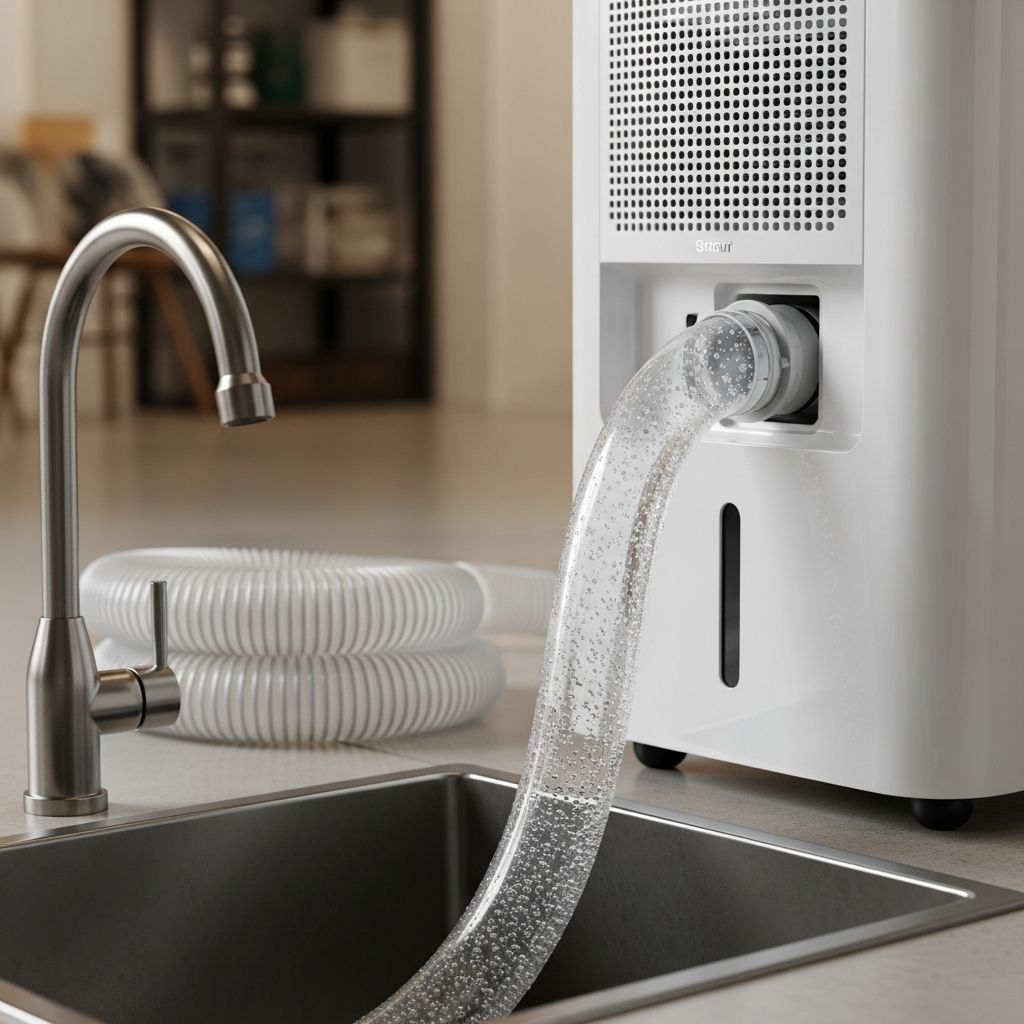
Dehumidifier Drain Hose Setup Guide
Setting up a drain hose for your dehumidifier transforms it from a manual-maintenance appliance into a fully automated humidity fighter. This comprehensive guide walks you through every aspect of the process, from selecting the right components to advanced installations and maintenance tips.
Why Continuous Drainage Matters for Dehumidifiers
Dehumidifiers pull moisture from the air, collecting it in an internal tank that requires regular emptying. In high-humidity environments like basements or laundry rooms, this tank fills quickly, interrupting operation and risking overflow. A properly installed drain hose allows water to flow continuously to a floor drain, sink, or external outlet, enabling 24/7 performance without intervention.
Gravity-fed systems rely on the dehumidifier’s elevated position relative to the drain, while pump-assisted setups handle uphill or distant drainage. Both methods prevent mold growth by maintaining steady humidity control below 50-60% relative humidity.
Essential Tools and Materials for Installation
Gather these items before starting to ensure a smooth setup:
- Compatible drain hose (typically 3/8-inch or 1/2-inch inner diameter, often included with unit)
- Hose adapters or fittings (garden hose swivel, push-connect, or threaded connectors)
- Teflon tape or pipe sealant for leak-proof joints
- Hose clamps or zip ties for securing connections
- Bucket or towels for testing
- PVC pipe or elbows for custom routing (optional for wall penetrations)
- Drain pump kit if gravity drain isn’t feasible
Check your dehumidifier’s manual for exact hose specifications, as sizes vary by model (e.g., 3/8-inch OD tubing common for many units).
Step-by-Step Gravity Drain Installation
Gravity drainage is the simplest method, ideal when the dehumidifier sits higher than the drain point.
- Position the Unit: Place the dehumidifier near a floor drain, sink, or utility basin. Ensure the drain outlet (usually at the back) is at least 6-12 inches above the target drain to promote flow.
- Prepare the Outlet: Locate the threaded drain port, typically covered by a cap. Unscrew and remove it, cleaning any debris.
- Attach the Hose: Screw the hose directly onto the port. Align any directional arrows upward for proper sealing, then hand-tighten or use a quarter-turn wrench if needed.
- Route the Hose: Extend the hose downward without kinks or loops. Secure it to prevent movement, positioning the end securely in the drain.
- Test the Setup: Run the unit for 30 minutes, checking for leaks at connections and steady flow. Adjust hose position if water backs up.
For sink drainage, drape the hose over the edge with a weight or clip to hold it in place, avoiding contact with the sink bottom to prevent siphoning.
Advanced Pump-Assisted Drainage Systems
When drains are above or far from the unit, integrate a condensate pump. These activate automatically when water levels rise, pushing condensate vertically or horizontally.
| Feature | Gravity Drain | Pump Drain |
|---|---|---|
| Drain Location | Below unit | Anywhere (uphill OK) |
| Power Needs | None | Requires outlet |
| Cost | Low ($10-20 hose) | Medium ($50-150 kit) |
| Maintenance | Clog checks | Pump cleaning |
Pump Setup Steps:
- Install the pump near the dehumidifier’s drip point or bucket area.
- Connect the intake hose to capture condensate, routing output hose to the drain.
- Prime the pump with water if required, then test cycles.
Pumps handle 10-20 feet of lift, perfect for upper-floor drains or external walls.
Custom Solutions: Draining Through Walls or Long Distances
For basements without floor drains, route water outside. Drill a 1-inch hole through the wall at 8-12 inches above ground level (below dehumidifier height), inserting PVC pipe sleeved with foam for insulation.
Seal penetrations with caulk to prevent air leaks. For long runs (over 20 feet), use larger diameter hose (1/2-inch) and slope downward at 1/4-inch per foot to maintain flow. Avoid sharp bends; use gentle sweeps or elbows.
Troubleshooting Common Drain Hose Issues
Even robust setups encounter problems. Here’s how to diagnose and fix:
- No Flow: Check for kinks, clogs, or insufficient height difference. Flush with vinegar solution.
- Leaks: Tighten fittings, add Teflon tape, or replace washers.
- Air Locks: Ensure hose end is submerged in drain; install a P-trap for stability.
- Pump Failure: Clean impeller, verify power, and replace float switch if faulty.
- Overflow: Confirm unit’s auto-shutoff works; reposition hose.
Monitor monthly: Inspect hoses for algae buildup (use bleach rinse) and verify connections remain tight.
Best Practices for Long-Term Performance
To maximize efficiency:
- Clean filters bi-weekly to prevent reduced condensate production.
- Route hoses away from foot traffic to avoid dislodging.
- In cold climates, insulate external hoses to prevent freezing.
- Pair with a hygrometer for precise control (set to 45-55% RH).
Energy savings: Continuous drainage reduces cycles, potentially cutting power use by 20-30% in humid conditions.
Safety Considerations and Precautions
Water and electricity mix poorly—unplug the unit before servicing. Avoid routing hoses near power cords. For pump installs, use GFCI outlets. If modifying plumbing, comply with local codes to prevent backups.
FAQs
What size hose fits most dehumidifiers?
Standard is 3/8-inch or 1/2-inch ID; confirm with your model’s specs.
Can I use a garden hose?
Yes, with adapters, but dedicated tubing is cheaper and less bulky.
How far can a gravity hose run?
Up to 20 feet if sloped properly; beyond that, use a pump.
Does the hose need to be straight?
No gentle curves OK, but no kinks or upward loops.
What if my drain is higher than the unit?
Install a pump for uphill drainage.
Enhancing Your Dehumidifier with Smart Features
Modern units offer app controls for remote monitoring of drainage status. Integrate with whole-home systems for seamless humidity management. Regular maintenance extends hose life to 2-3 years.
References
- How to Use Hoses to Drain Dehumidifiers — Honeywell Air Comfort. 2023. https://honeywellaircomfort.com/blogs/news/how-to-use-hoses-to-drain-dehumidifiers
- Dehumidifier direct hose to drain connection #howto — YouTube (DIY channel). 2022-06-15. https://www.youtube.com/watch?v=Hfx6WP38Q_I
- Dehumidifier Drain Hose Set-up — DIYNorth YouTube. 2024-06-29. https://www.youtube.com/watch?v=SXHCTlE7oFs
- Drain a Dehumidifier With a Hose — YouTube (DIY channel). 2023. https://www.youtube.com/watch?v=SiSwmwxRhCU
- The proper way to drain a dehumidifier through an outside wall — Grassroots Motorsports Forum. 2023. https://grassrootsmotorsports.com/forum/off-topic-discussion/the-proper-way-to-drain-a-dehumidifer-through-an-outside-wall/256257/page1/
Similar Articles








Read full bio of medha deb