Demolishing Tile Kitchen Countertops: Step-By-Step Guide
Master the complete process of safely dismantling outdated tile countertops to refresh your kitchen space with confidence and efficiency.
Demolishing Tile Kitchen Countertops: A Complete DIY Guide
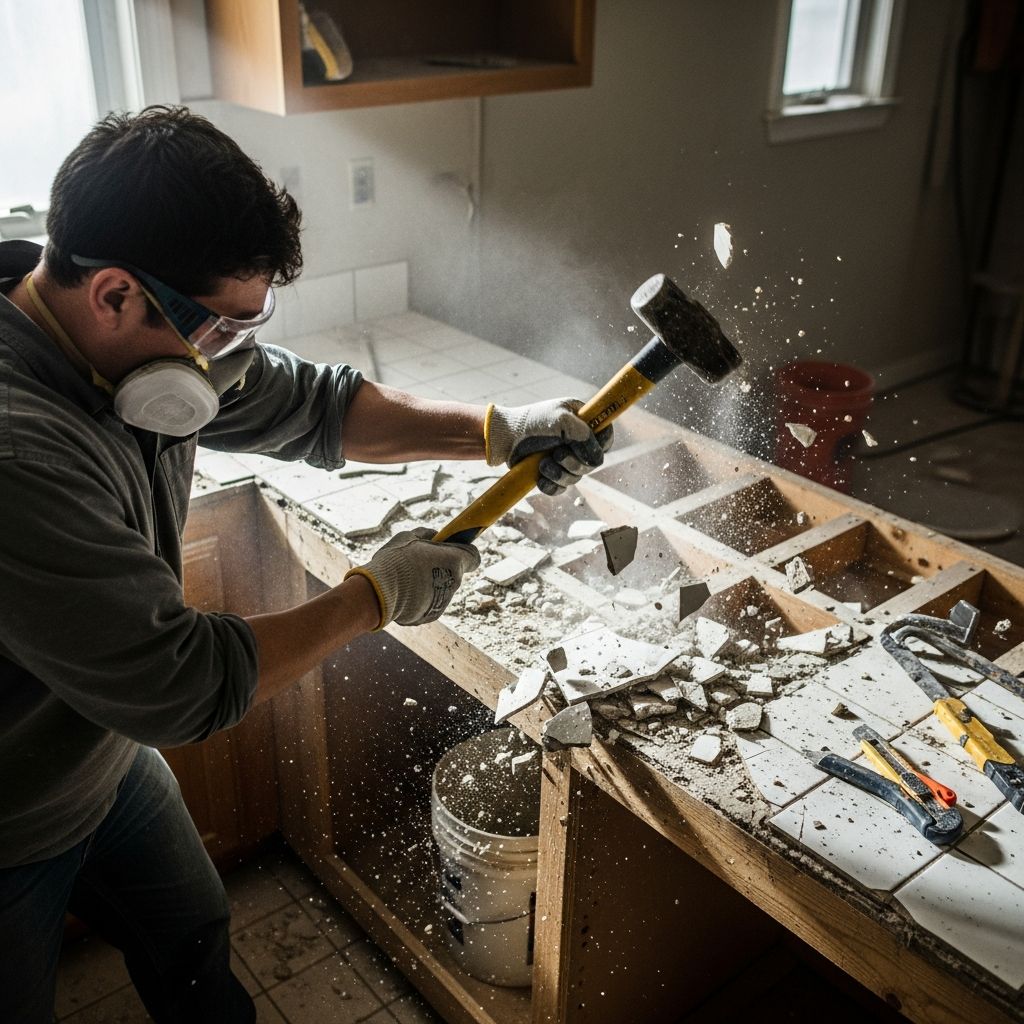
Removing a tile kitchen countertop is a demanding yet achievable task for homeowners embarking on a kitchen refresh. These surfaces, often built over a sturdy base, demand careful planning to avoid damaging underlying cabinets or creating hazardous dust clouds. This guide draws from proven methods to ensure you handle the job with minimal risk and maximum efficiency, transforming a potential mess into a streamlined project.
Understanding Your Countertop Setup
Tile countertops typically consist of ceramic or porcelain tiles adhered to a substrate like plywood or particleboard with thinset mortar and grout. Beneath lies a laminate or wood base secured to cabinets via screws. Recognizing this layered construction helps anticipate challenges, such as stubborn adhesives or heavy assemblies that resist lifting intact. Assess your setup by inspecting seams, edges, and underside access points inside cabinets to plan your attack effectively.
Essential Safety Protocols
Prioritizing protection is non-negotiable due to flying shards, sharp edges, and respirable crystalline silica in grout and mortar. OSHA regulations limit exposure to 50 μg/m³ over an 8-hour period, mandating controls for tasks exceeding brief durations.
- Personal Protective Equipment (PPE): Don safety glasses, heavy-duty gloves, long sleeves, pants, and steel-toed boots. For silica risks over 4 hours, use an APF 10 respirator like N95 or P100 filters.
- Dust Mitigation: Wet surfaces continuously, employ HEPA vacuums, and seal work zones with plastic sheeting. Direct fans outward and consider air scrubbers for enclosed spaces.
- Physical Precautions: Enlist a helper for heavy lifting; tile assemblies can weigh hundreds of pounds. Avoid rushing to prevent slips or strains.
Gathering the Right Tools and Materials
Equip yourself with durable, versatile tools to tackle breaking, prying, and cutting without excessive force. Budget options work for DIYers, but quality ensures safety and speed.
| Category | Tools/Materials | Purpose |
|---|---|---|
| Demolition | Hammer, stiff putty knife/chisel, pry bar, reciprocating saw with carbide blade | Breaking tiles, chiseling mortar, cutting sections |
| Fastening | Phillips screwdriver, #2 square drive bit, drill | Removing cabinet screws |
| Protection | Plastic sheeting (3.5 mil), painter’s tape, cardboard/drop cloths, Windex spray bottles | Covering surfaces, wetting for dust control |
| Cleanup | Shop vac with HEPA filter, dustpan, heavy-duty trash bags | Debris removal |
Rentals like air scrubbers from equipment suppliers enhance dust control for larger jobs.
Pre-Removal Site Preparation
A cluttered workspace amplifies risks and complicates cleanup. Dedicate time here to set up for success.
- Clear the Area: Remove appliances, utensils, and nearby items. Cover cabinets, floors, and walls with protective layers.
- Shut Off Utilities: Turn off water at the main valve, disconnect sink plumbing, and cap lines. Unplug or shut off gas/electric for cooktops.
- Seal the Zone: Hang plastic over doorways, vents, and HVAC returns. Tape edges securely and position an exhaust fan blowing outdoors.
- Base Inspection: Open cabinet doors to locate screws along the perimeter and any brackets.
Step-by-Step Demolition Process
Follow this sequence to dismantle systematically, starting from accessible points to preserve cabinet integrity.
Step 1: Detach Fixtures and Perimeter Elements
Begin with the sink: Loosen clips underneath, lift out, and scrape residual sealant. Remove backsplashes by scoring grout lines with a utility knife and prying gently. This exposes fastening points.
Step 2: Access and Remove Fasteners
Inside cabinets, extract all screws using appropriate bits. If tiles cover them from above, target a corner tile: Strike firmly with hammer and chisel to shatter it, then probe for hardware. Expect 20-30 fasteners on standard setups.
Step 3: Break and Section the Tile Layer
Work edges first: Position chisel at tile-substrate joints, tap progressively harder to crack and pry loose. For monolithic slabs, create breaks by hammering edges inward. Use a reciprocating saw to cut along seams if lifting intact proves impossible—insert blade between tiles and substrate to divide into manageable 2-3 foot sections.
Pro Tip: Wet tiles intermittently to suppress silica-laden dust; silica becomes hazardous only when airborne.
Step 4: Lift and Separate the Assembly
With fasteners gone and sections loosened, recruit help to hoist. Rock gently to detach adhesive bonds. If stuck, chisel under edges or saw remaining ties. Peel away tile layer from base, reserving the substrate if reusing cabinets.
Step 5: Scrape Residual Adhesives
Mortar remnants require patience: Heat with a gun if thick, then scrape. For thinset, angle chisel at 15-20 degrees and work methodically to avoid gouging wood.
Managing Dust and Debris Effectively
Silica dust poses long-term lung risks like silicosis, prompting strict OSHA oversight. Implement multi-layered controls:
- Spray mist continuously during chiseling.
- Vacuum at the source with shrouded tools.
- Contain with negative pressure via exhaust setups.
- Clean post-job: HEPA vac all surfaces, wet-wipe, then damp mop. Avoid dry sweeping.
Professionals often use dustless grinders or tents with HEPA filtration for sensitive interiors.
Cleanup and Disposal Guidelines
Post-demo, prioritize thorough sanitation to eliminate irritants.
- Bag shards immediately in heavy-duty liners; sort recyclables if local facilities accept.
- Vacuum cabinets and floors multiple passes.
- Wipe all surfaces with microfiber and mild detergent.
- Dispose per municipal rules—construction debris may require special hauls.
Inspect cabinets for water damage or weakened laminates; reinforce as needed before new installs.
Common Mistakes and Troubleshooting
Avoid pitfalls that extend timelines or cause damage:
- No Prep: Skipping covers leads to stained cabinets.
- Dry Demo: Ignites dust storms; always wet down.
- Solo Lifting: Risks back injury—team up.
- Rushing Edges: Pry backsplashes last to prevent cracks.
If countertop resists: Verify hidden fasteners or excessive adhesive; targeted sawing resolves most binds.
Time and Cost Estimates
Average kitchen (10-15 linear feet) takes 2-4 hours for experienced DIYers, longer for novices. Tool rentals add $50-200; disposables minimal if owned. Compare:
| Experience Level | Time | Cost (Tools Only) |
|---|---|---|
| Beginner | 4-6 hours | $100-300 |
| Intermediate | 2-4 hours | $50-150 |
| Pro | 1-2 hours | $20-100 |
FAQs
Can I salvage the underlying base?
Yes, if undamaged; sand and refinish for reuse.
Is professional help necessary for dust control?
DIY viable with proper PPE and methods, but pros excel in containment.
What if tiles won’t budge?
Section with a saw; avoid over-force to protect cabinets.
How do I handle asbestos concerns?
Test older tiles (pre-1980s); if positive, hire certified abatement.
Post-removal cabinet prep?
Clean, level surfaces, and add blocking for new tops.
When to Call Professionals
Opt for experts if dealing with integrated appliances, large spans, suspected hazards, or lacking tools/time. Costs range $500-2000, saving hassle.
References
- Tile Countertop Removal Instructions — Fix My Cabinet. 2011-05-30. https://fixmycabinet.com/2011/05/30/tile-countertop-removal-instructions/
- Do I need to have containment and silica dust control when I remove my tile counter top? — CTASC (Certified Tile Installers). Accessed 2026. https://ctasc.com/expert-answers/do-i-need-to-have-containment-and-silica-dust-control-when-i-remove-my-tile-counter-top/
- How to Remove or Demolish Old Tile Counter Tops — Instructables. Accessed 2026. https://www.instructables.com/How-to-Remove-or-Demolish-Old-Tile-Counter-Tops/
Similar Articles



Read full bio of medha deb