Determinate vs Indeterminate Tomatoes: Key Differences
Unlock the secrets to identifying and growing determinate and indeterminate tomatoes for a bountiful harvest in any garden space.
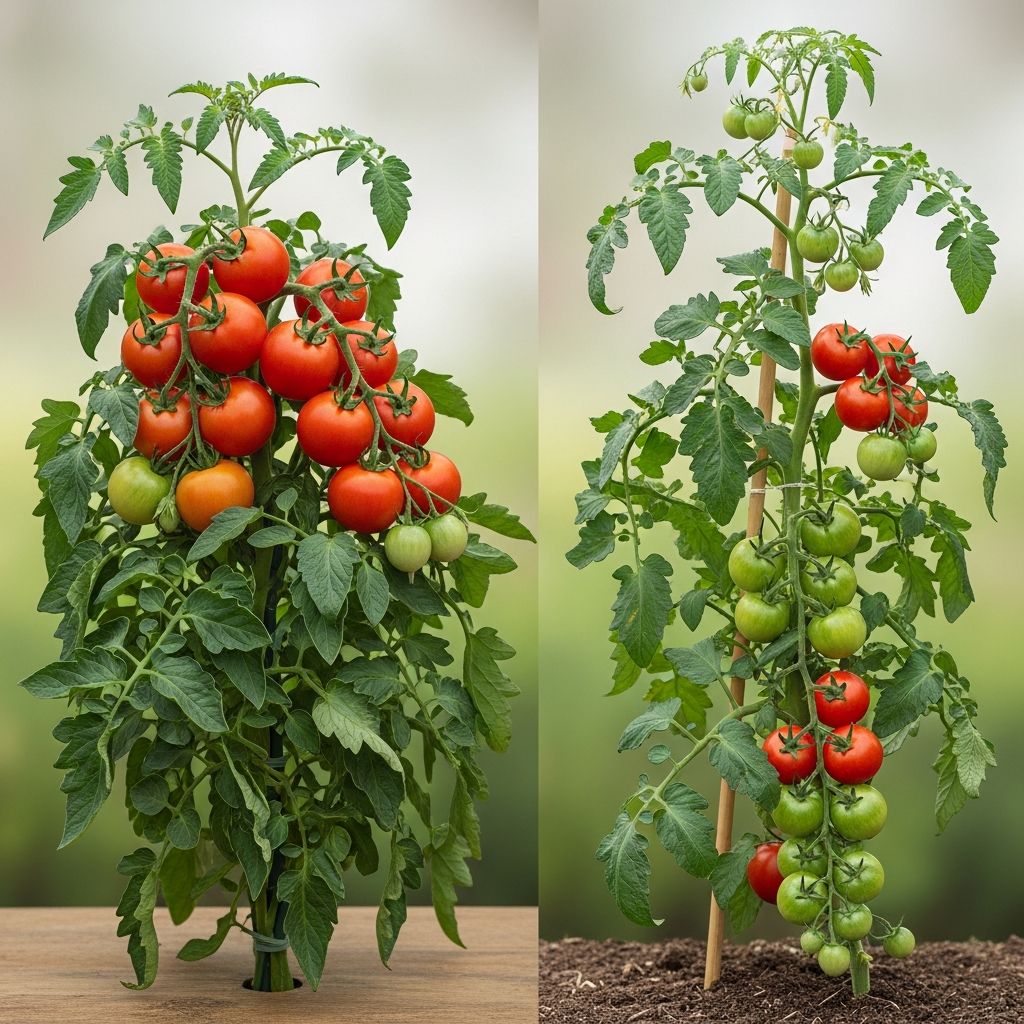
Tomato plants fall into two primary categories based on their growth patterns: determinate and indeterminate. Determinate varieties grow to a compact size and produce fruit in a concentrated period, while indeterminate types vine endlessly and fruit continuously until frost. Understanding these distinctions helps gardeners select the right plants for their space, climate, and harvest goals.
Understanding Tomato Growth Habits
Tomato growth habits determine how plants develop, fruit, and respond to care. Determinate tomatoes, often called bush types, reach a predetermined height—typically 3 to 5 feet—and set fruit clusters at the top of the plant before halting vertical growth. This makes them self-limiting in size and productivity.
Indeterminate tomatoes, by contrast, exhibit vining behavior, continuously extending their main stem and producing flowers and fruit along lateral shoots throughout the season. They can stretch 6 to 12 feet or more if supported properly, offering prolonged harvests but demanding more space and maintenance.
A third category, semi-determinate tomatoes, blends traits of both, growing larger than determinates but not as vigorously as indeterminates. These hybrids provide a middle ground for gardeners seeking balanced production.
Physical Characteristics of Each Type
Spotting the difference starts with observing plant structure early in the season. Determinate plants form a bushy, compact framework with sturdy branches that cluster tightly. Leaves and stems remain dense, and the plant tops out without needing extensive tying.
Indeterminate plants show long, sprawling vines with spaced-out fruit clusters. Their stems are more flexible, and they produce suckers—shoots emerging from leaf axils—profusely, which can be pruned to direct energy toward fruiting.
| Feature | Determinate | Indeterminate |
|---|---|---|
| Height | 3-5 feet | 6-12+ feet |
| Growth Form | Bushy, compact | Vining, sprawling |
| Fruit Spacing | Dense clusters at top | Spaced along vines |
| Maturity | Uniform, short burst | Continuous, staggered |
This table summarizes core physical traits, aiding quick identification in your garden.
Fruit Production Patterns
Determinate tomatoes focus energy on a single, heavy flush of fruit over 4-6 weeks, often ripening simultaneously. This suits canning or sauce-making, as you harvest bushels at once. Yields are reliable in short-season climates, but production ceases once the terminal buds set fruit.
Indeterminate varieties yield smaller amounts weekly, ripening progressively from early summer to frost. This provides fresh eating tomatoes over months, ideal for salads or snacking. However, yields depend on consistent care to prevent disease buildup in prolonged foliage.
- Determinate advantage: Predictable harvest window for processing.
- Indeterminate benefit: Extended fresh supply without replanting.
Care and Maintenance Strategies
Pruning Guidelines
For determinate plants, minimal pruning preserves foliage that supports the concentrated fruit load. Remove only lower leaves touching soil to boost airflow and deter splash-borne diseases. Aggressive sucker removal can reduce yields, as all shoots contribute to production.
Indeterminate tomatoes thrive with regular pruning to 1-2 main stems, eliminating suckers below the first flower cluster. This channels nutrients to fruit, enhances flavor, and reduces pest habitats. Weekly sessions keep vines manageable.
Support Systems
Bushy determinates rarely need staking; a simple cage suffices for heavy fruit. Their sturdy structure handles loads without toppling.
Vining indeterminates demand robust trellises, stakes, or cages at least 5-6 feet tall. Train stems upward, tying loosely with soft ties to avoid girdling. Florida weave or cattle panel arches work well for rows.
Best Garden Placements
Choose determinates for containers, patios, or small plots under 100 square feet. Their compact nature fits balconies and raised beds, freeing space for succession planting like fall greens.
Reserve indeterminates for expansive in-ground or large raised beds. They excel in permaculture setups or greenhouses, where vertical space maximizes output.
In cooler regions, indeterminates may underperform due to late ripening; opt for early determinate hybrids. Hot climates favor indeterminates for heat tolerance in vines.
Popular Varieties to Grow
- Determinate: Roma (pasta sauce), Celebrity (slicing), Glacier (cold-tolerant early).
- Indeterminate: Beefsteak (large slicers), Sungold (sweet cherry), Brandywine (heirloom flavor).
- Semi-determinate: Better Boy, Park Whopper.
Seed packets often label types; if not, observe growth by mid-season.
Common Challenges and Solutions
Determinate plants risk overcrowding and humidity-related blights; thin middle leaves judiciously. Indeterminates face sprawl and nutrient drain; fertilize balanced NPK every 4 weeks.
Both types battle aphids and hornworms—use neem oil or hand-pick. Rotate crops annually to prevent soil-borne issues like verticillium wilt.
Advanced Growing Tips
Start seeds indoors 6-8 weeks pre-last frost for both. Harden off seedlings gradually. Mulch heavily to retain moisture and suppress weeds. Water deeply at base, avoiding wet foliage.
For indeterminates, pinch tips in late summer to ripen existing fruit before frost. Determinates benefit from companion planting with basil or marigolds for pest control.
Frequently Asked Questions (FAQs)
What if my seed packet doesn’t specify the type?
Monitor growth: bushy and topping out early signals determinate; endless vining indicates indeterminate. Most cherries are indeterminate.
Can I prune determinate tomatoes heavily?
No—light pruning only at the base. Heavy cuts diminish your single harvest wave.
Which is better for beginners?
Determinates: less support and pruning fuss, quicker rewards in small spaces.
Do growth habits affect flavor?
Indirectly—proper pruning on indeterminates boosts sugar concentration for superior taste.
How do I extend harvests?
Stagger determinate plantings every 2 weeks; maintain healthy indeterminates with pruning and feeding.
Planning Your Tomato Patch
Assess space, time, and goals: short burst for preserves? Go determinate. Steady supply for fresh use? Choose indeterminate. Mixing both ensures versatility. With tailored care, either type delivers garden-fresh abundance.
Experiment annually—journal varieties, weather impacts, and yields to refine selections. Tomatoes reward attentive growers with vibrant health and flavor unmatched by stores.
References
- Determinate Vs. Indeterminate Tomatoes — Azure Farm Life. 2023-05-15. https://www.azurefarmlife.com/farm-blog/determinate-vs-indeterminate-tomatoes
- What’s the difference between ”indeterminate” and ”determinate” tomatoes? — TomatoFest. 2022-08-10. https://www.tomatofest.com/tomato_questions_s/128.htm
- Tomato Talk: Determinate v. Indeterminate, What’s the Difference? — YouTube (Epic Gardening). 2024-03-20. https://www.youtube.com/watch?v=TA3v0AxklEg
- Growing Determinate and Indeterminate Tomatoes — Roots and Refuge Farm. 2023-11-12. https://rootsandrefuge.com/growing-determinate-and-indeterminate-tomatoes/
- Determinate vs Indeterminate Tomatoes and 5 Reasons — YouTube (MIgardener). 2024-01-05. https://www.youtube.com/watch?v=4dnGBJE6wmI
Similar Articles








Read full bio of medha deb