Attached Carport Construction: Step-By-Step DIY Guide
Learn how to build a sturdy attached carport with expert tips and detailed instructions.
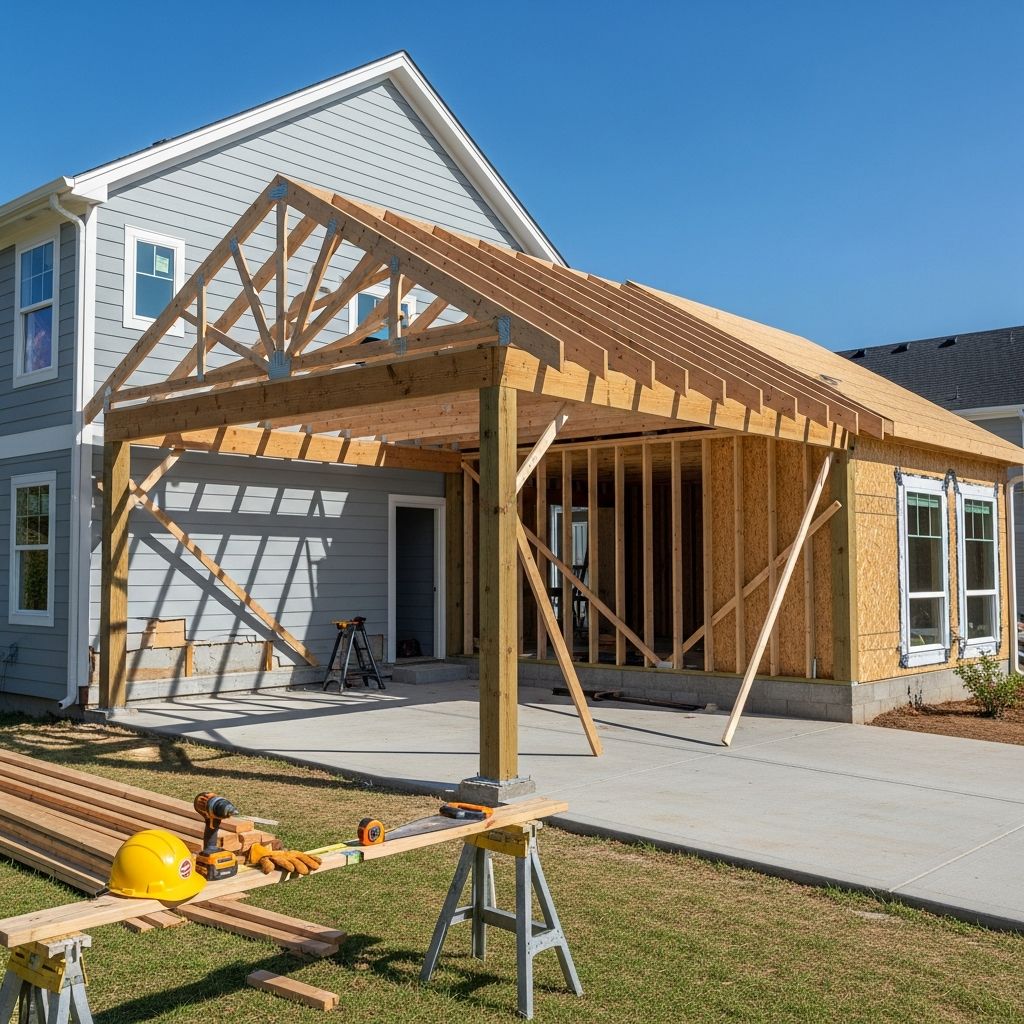
DIY Attached Carport Construction Guide
Understanding the Project Scope
An attached carport serves as a practical addition to any residential property, providing weather protection for vehicles while maintaining affordability compared to traditional garage construction. Unlike a detached structure, an attached carport leverages your existing home foundation and walls, reducing material costs and construction complexity. This configuration makes the project accessible to homeowners with moderate building experience and basic carpentry skills.
Before committing to this undertaking, assess your local building codes and permit requirements. Most jurisdictions mandate permits for carport construction, particularly when the structure attaches to your primary residence. Consulting with your local building department ensures compliance and prevents costly corrections during the building process.
Site Selection and Design Planning
Choosing the ideal location determines your project’s success and functionality. Select an area adjacent to your home where an existing wall—such as a garage or main house wall—can serve as one side of the structure. This approach minimizes construction requirements and maximizes structural stability. Ensure the chosen wall faces the direction where you typically park vehicles and where weather protection is most needed.
Develop a basic design sketch before beginning construction. Key design considerations include:
- Roof pitch angle for proper water drainage
- Structure depth extending from your home
- Overall width to accommodate your vehicle dimensions
- Clearance height for vehicle entry and exit
- Aesthetic consistency with existing home architecture
Measure your primary vehicle’s dimensions carefully. Standard carport designs accommodate single vehicles with dimensions approximately 12 feet wide and 20 feet deep, though dual-vehicle carports may extend 20 feet wide. Allow additional clearance beyond actual vehicle dimensions for door opening and maneuvering space.
Foundation and Post Installation
A robust foundation prevents structural settling and ensures long-term stability. The foundation process begins with determining precise post locations. Using stakes and string lines, establish the layout for support posts positioned away from your home. This triangulation technique, common in professional construction, ensures perfect alignment and square corners.
Begin the excavation phase by digging post holes to appropriate depths. Standard recommendations call for holes ranging from 2 to 3 feet deep with approximately 1-foot diameter dimensions. The depth depends on your local frost line—the depth where soil remains unfrozen year-round. Deeper holes in northern climates prevent frost heave from disrupting your structure.
Prepare the hole base by adding 4 to 6 inches of crushed gravel. This drainage layer prevents water accumulation beneath posts and reduces wood decay risk. Compact the gravel firmly to create a stable base.
For post installation, pressure-treated 4×4 lumber provides excellent durability and rot resistance. Position posts in excavated holes and verify vertical alignment using a level. Pour concrete around the base of each post, typically using standard concrete mix products like Quikrete. Ensure posts remain perfectly vertical during concrete curing by bracing them temporarily with wooden supports. Allow concrete to cure for 24 to 48 hours before removing bracing or adding structural loads.
Ledger Board Installation and Home Connection
Connecting your carport to the existing home structure requires careful attention to detail. The ledger board—a horizontal beam attached directly to your home—forms the carport’s back wall. This component transfers roof weight directly to your residence, making proper installation critical for structural integrity.
Select 2×6 lumber for the ledger board, ensuring straight, defect-free pieces. Position the ledger approximately half an inch away from siding or trim to allow for future finishing materials. This offset prevents moisture accumulation and allows proper fastening into underlying wall studs.
Locate house framing members (wall studs) using a stud finder. Drill pilot holes through the ledger into studs, spacing fasteners approximately 16 inches apart. Use 3-inch lag screws for secure attachment, driving them through the ledger completely through the siding into studs. Never rely solely on siding for fastening—fasteners must penetrate the house structural framing.
Check the ledger board for level alignment along its entire length. Use a level tool to verify horizontal positioning, and tie string lines at both ends to ensure the gap between the ledger and wall remains uniform. This attention to detail prevents roof water runoff issues later.
Support Beam Assembly and Post Connection
Support beams span horizontally between posts, transferring roof weight to the foundation system. These structural members require proper sizing and secure fastening. Typically, 2×6 beams suffice for standard single-vehicle carports, though larger structures may require 2×8 or doubled 2×6 members.
Position beams atop installed posts, maintaining level alignment throughout. Use a long level to verify perfect horizontal positioning—any deviation creates uneven roof slopes and potential drainage problems. Secure beams to posts using carriage bolts or lag screws, with fasteners spaced appropriately for load distribution. Pre-drill pilot holes before driving fasteners to prevent lumber splitting.
For maximum strength, install bolts that fully penetrate both beam and post members. Use washers under bolt heads and nuts to distribute fastening loads across larger surface areas. Tighten all fasteners firmly but avoid over-tightening, which may crack lumber.
Rafter Installation and Roof Framing
Rafters form the roof framework, sloping from the ledger board to the outer support beams. These angled members create the structural pitch necessary for water drainage. Common carport designs utilize a 4:12 pitch—4 inches of vertical rise for every 12 inches of horizontal run—providing adequate drainage while maintaining moderate angles.
Calculate rafter length based on your carport depth and desired pitch angle. Mark cutting angles precisely at both ends—one end connects to the ledger board using a birdsmouth cut, while the opposite end slopes toward the outer beam. Use a miter saw for accurate angle cuts.
Install rafters at 16-inch spacing along the ledger and support beam, spacing consistent with standard building practices. Secure rafters using metal hurricane ties or roof hangers rather than relying solely on nailing or bolting. These specialized fasteners distribute forces across larger areas and significantly increase resistance to wind uplift and dynamic loads.
Before fastening rafters permanently, verify alignment at both connection points. Ensure rafters sit fully on support surfaces and ledger boards without gaps or rocking. Use temporary bracing to hold rafters in position during fastening operations.
Roof Decking and Underlayment Installation
Once the rafter framework is complete, install roof decking to create the surface supporting roofing materials. Standard practice calls for 3/4-inch tongue-and-groove plywood, which provides strength and weather resistance. Lay plywood sheets perpendicular to rafters, staggering end joints to increase rigidity.
Secure decking with 2.5-inch deck screws spaced 6 inches apart, creating a continuous connection between plywood and rafters. This fastening pattern prevents decking from separating under wind or snow loads. Work methodically from one end to the other, ensuring tight joints between adjacent plywood sheets.
Apply roofing felt or tar paper over the decked surface, starting from the bottom edge and working upward. This underlayment layer provides secondary weather protection and helps prevent wind-driven moisture penetration. Secure underlayment with staples spaced approximately 12 inches apart, overlapping courses by 4 inches for continuous protection.
Roofing Material Selection and Installation
Several roofing options suit carport applications, each offering distinct advantages. Asphalt shingles provide economical and attractive coverage, matching home architecture effectively. Metal roofing offers superior durability against snow loads and long service life with minimal maintenance. Polycarbonate or fiberglass panels allow light transmission while providing weather protection—ideal for carports with work areas or where natural lighting is desired.
For asphalt shingle installation, begin at the bottom edge of the roof. Align starter shingles along the eave line and secure with 1/2-inch galvanized roofing nails spaced appropriately. Apply subsequent shingle courses upward, overlapping each row to direct water runoff downward. Use chalk lines to guide straight shingle placement and maintain uniform appearance.
For metal roofing installations, position the first panel at one roof edge with slight overhang for water drainage. Overlap each subsequent panel according to manufacturer specifications, typically 1.5 inches for proper sealing. Secure panels using self-drilling screws with rubber washers that prevent water penetration at fastening points. Seal all gaps and joints with weatherproof caulk for maximum durability.
Finishing Details and Weather Protection
Proper finishing details determine whether your carport provides reliable long-term weather protection. Install drip caps along all roofing edges—bottom drip caps install beneath roofing felt, while side drip caps sit above tar paper. This overlapping arrangement directs water away from structural members and prevents decay.
Consider adding side panels or lattice enclosures to enhance functionality and appearance. Lattice panels provide wind protection without full enclosure, suitable for climates with moderate weather. Solid side panels offer maximum protection but may restrict ventilation and light. Allow adequate clearance for vehicle movement and door operation when designing side enclosures.
Paint or stain exposed wood members to enhance appearance and provide weather protection. Select exterior-grade finishes formulated for carport environments where UV exposure and moisture fluctuation occur. Reapply protective coatings every 2-3 years to maintain appearance and extend wood life.
Common Construction Mistakes to Avoid
- Inadequate foundation depth: Shallow post holes invite frost heave and settling, destabilizing the entire structure
- Improper ledger fastening: Fasteners must penetrate house framing, not just siding—otherwise structural failure occurs
- Insufficient roof slope: Flat or minimal-slope roofs collect standing water, accelerating decay and material breakdown
- Poor drainage at edges: Missing or improperly installed drip caps allow water infiltration behind roofing materials
- Inadequate fastener spacing: Loose fastening allows movement during wind events, accelerating deterioration
- Skipping underlayment: Eliminating tar paper or felt reduces protection against wind-driven moisture
Tools and Materials Checklist
Essential Tools:
- Post hole digger or power auger
- Measuring tape and framing square
- Power drill with bits
- Miter saw or circular saw
- Level and plumb bob
- Hammer and screwdriver set
- Safety equipment (gloves, goggles, hearing protection)
Primary Materials:
- Pressure-treated 4×4 posts
- 2×6 lumber for ledger and beams
- 2×4 or 2×6 rafter lumber
- 3/4-inch tongue-and-groove plywood
- Lag screws and carriage bolts
- Metal roof hangers and hurricane ties
- Roofing material (asphalt shingles, metal panels, or alternatives)
- Tar paper and roofing felt
- Concrete mix for post settings
- Fasteners: screws, nails, and weatherproof caulk
Timeline and Project Management
A typical single-vehicle attached carport requires 5-7 days of active construction, though this varies based on site conditions, material availability, and crew experience. Organize work in logical sequences: foundation preparation, post installation (requiring curing time), framing assembly, decking installation, and roofing completion. Weather delays often extend timelines—plan projects during favorable seasons when rain and freezing temperatures are minimal.
Safety Considerations Throughout Construction
Construction work involves significant hazards requiring consistent safety practices. Wear appropriate personal protective equipment throughout the project—safety glasses protect eyes from airborne particles, hearing protection guards against power tool noise, and work gloves prevent splinter and cut injuries. Use fall protection when working at heights above 6 feet. Never work alone during major operations—having a helper ensures someone can respond to emergencies and assist with cumbersome materials.
Verify electrical lines don’t run through work areas before digging post holes. Contact your utility locating service before beginning excavation to mark underground lines. Follow all manufacturer instructions for power tools and equipment, and ensure proper grounding for electrical devices in outdoor environments.
References
- Building an Attached Carport: A Step-by-Step Guide — Oreate AI. 2024. https://www.oreateai.com/blog/building-an-attached-carport-a-stepbystep-guide/
- How to Install a Carport: Expert Guide for Spring Projects — American Steel Inc. 2024. https://americansteelinc.com/blog/how-to-install-a-metal-carport-professional-guide/
- Attached Carport Plans — MyOutdoorPlans. 2023. https://myoutdoorplans.com/carport/attached-carport-plans/
Similar Articles






Read full bio of medha deb