Butcher Block Countertops: DIY Step-By-Step Guide
Transform your kitchen with durable, stylish butcher block countertops using this comprehensive DIY installation manual for professional results at home.
DIY Butcher Block Countertops Guide
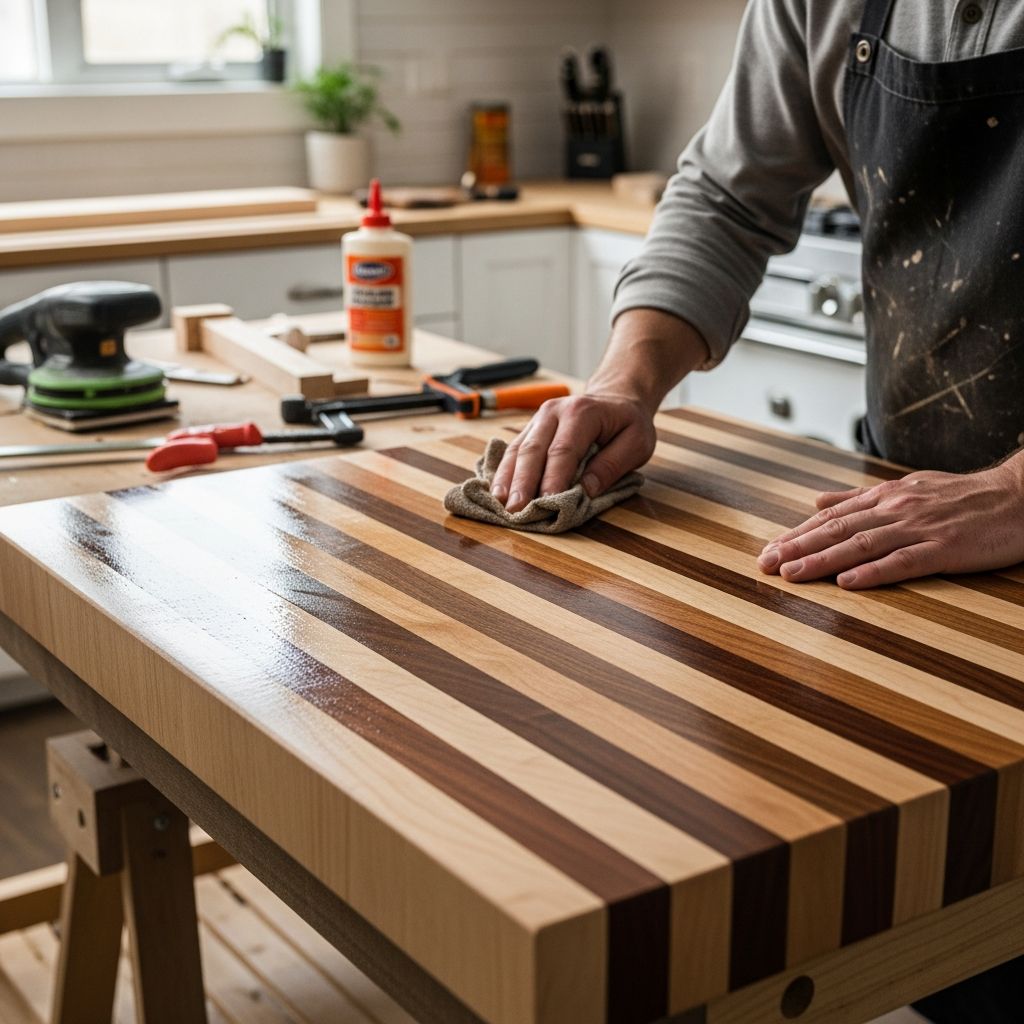
Butcher block countertops offer a timeless appeal with their natural wood grain and versatility for food prep, making them a popular choice for kitchen renovations. This guide provides a complete roadmap to building and installing them yourself, ensuring stability, beauty, and longevity in your space.
Why Choose Butcher Block for Your Kitchen
These countertops combine functionality and aesthetics, providing a warm, inviting surface ideal for chopping, serving, and casual dining. Unlike stone or laminate, wood surfaces can be sanded and refinished multiple times, extending their life over decades with proper care. They also insulate better against hot pots and add value to homes through their custom, high-end look.
Selecting the Perfect Butcher Block Material
Begin by choosing the right species of wood based on durability, appearance, and maintenance needs. Hard maple stands out for its tight grain and resistance to knife marks, while walnut delivers rich color and unique patterns. Domestic options like oak provide affordability without sacrificing strength.
- Edge-grain vs. end-grain: Edge-grain is more budget-friendly and easier to maintain; end-grain offers superior durability but requires more upkeep.
- Thickness options: Standard 1.5-inch slabs suit most kitchens; 2-inch versions enhance an island’s presence.
- Pre-made vs. custom: Pre-made slabs fit standard sizes quickly, while custom allows precise dimensions.
Measure your cabinetry accurately, adding 1-1.5 inches for overhang on non-wall sides. Account for seams if spanning over 10 feet, as longer pieces risk warping.
Gathering Essential Tools and Supplies
A well-equipped workspace prevents frustration during installation. Prioritize safety gear like dust masks and eye protection, especially when cutting dense hardwoods.
| Category | Tools/Supplies | Purpose |
|---|---|---|
| Cutting | Circular saw, jigsaw, router with straight bit | Precise shaping and sink cutouts |
| Drilling/Fastening | Cordless drill, 1/8-inch and 3/8-inch bits, screws with washers | Secure mounting without surface damage |
| Joining | Biscuit joiner or miter bolts, clamps | Seamless multi-piece assembly |
| Finishing | Sandpaper (80-220 grit), food-safe oil or sealant | Smooth surface and protection |
| Measuring | Tape measure, carpenter’s square, pencil | Accurate layouts |
Stock extra blades for hardwoods, as they dull quickly. Construction adhesive and silicone caulk complete the list for joints and sealing.
Preparing Your Kitchen Cabinets
Stable cabinets form the foundation. For open-top units, install 3/4-inch plywood blocking along the back and sides, screwing at angles to avoid weakening frames. Closed-top cabinets benefit from 1/4-inch furring strips spaced 12-16 inches apart, adhered with sealant for flexibility.
Drill 3/8-inch expansion holes through blocking every 24 inches, plus corners, allowing wood movement. Clean surfaces thoroughly to ensure a flat, debris-free base.
Acclimating and Initial Prep of the Wood
Wood expands and contracts with humidity, so place slabs in the installation room for 5-7 days on a flat surface. This matches ambient conditions, minimizing future issues like cupping.
Inspect for defects and lightly sand factory finishes if uneven. Mask areas near cut lines to prevent splintering.
Measuring and Cutting to Fit
Tape sink and faucet templates securely atop the slab. Trace boldly with pencil, offsetting 1/4-1/2 inch from edges for undermount sinks to accommodate overhang.
- Drill starter holes at corners using a 1/2-inch spade bit.
- Cut straight sections with a circular saw guided by a straightedge; account for blade kerf.
- Maneuver curves with a jigsaw, staying inside lines for sanding cleanup.
- Router edges square and smooth; seal raw cuts immediately with finish.
Test-fit pieces dry before permanent joins. Adjust for level cabinets using shims if needed.
Joining Multiple Pieces Seamlessly
For L-shapes or long runs, opt for miter or butt joints. Miter joints bevel edges at 45 degrees for elegance, secured by biscuits, glue, or bolts.
- Biscuit method: Slot ovals into edges, insert glue-coated biscuits, clamp overnight.
- Miter bolts: Router recesses on undersides, insert bolts, tighten progressively.
- Butt joints: Align end-to-end with opposing grain, fasten with silicone only—no glue.
Apply adhesive sparingly to edges, tape joints to contain squeeze-out, and clamp evenly.
Secure Installation Process
Position the assembly on cabinets, aligning with overhang marks. From below, drill 1/8-inch pilot holes through expansion holes into the wood, stopping short of breakthrough—tape bits for depth control.
Drive screws with fender washers, snug but not overtightened, preserving expansion room. Add brackets under overhangs exceeding 12 inches for support.
Finishing for Protection and Beauty
Sand progressively from 80 to 220 grit for a silky feel. Choose finishes wisely:
- Mineral oil: Penetrates for natural patina; reapply monthly.
- Polymerizing oil: Hardens for water resistance; durable with less maintenance.
- Polyurethane: Film finish for heavy use; avoid on cutting areas.
Apply multiple thin coats, sanding lightly between. Buff final layer for luster.
Installing Sinks, Faucets, and Appliances
For drop-in sinks, cut per template and seal rim with silicone. Undermounts require precise routing and bracing. Drill faucet holes oversized by 1/8 inch, sealing with silicone. Reconnect plumbing after countertop securement, checking for leaks.
Ongoing Maintenance and Care
Wipe spills promptly; oil monthly or as water beads break. Avoid harsh cleaners—use mild soap. Sand and refinish annually for wear. Heat pads protect from burns; cutting boards prevent deep scars.
Common Pitfalls and Pro Tips
Avoid gluing tops to cabinets—fasteners only permit breathing. Double-check measurements; errors compound in seams. Work in good light for cut accuracy. Level everything iteratively.
For islands, use adjustable brackets and corner gussets for rigidity.
Frequently Asked Questions
Can butcher block handle daily cooking?
Yes, with proper sealing; it’s tougher than it appears and repairable.
How much overhang is safe without brackets?
Up to 12 inches; beyond, add supports every 3 feet.
What’s the best finish for high-use areas?
Polymerizing oil balances protection and renewability.
Does wood warp over time?
Minimal with acclimation, expansion gaps, and stable humidity (40-60%).
Cost comparison to granite?
Often half the price, plus refinishing saves replacement costs.
References
- 7 Steps to Butcher Block Wood Countertop Installation — Forever Joint Tops. 2023. https://www.foreverjointtops.com/blog/countertop-installation/
- How to Install Butcher Block Countertops — The Home Depot. 2024-01-15. https://www.homedepot.com/c/ah/how-to-install-butcher-block-countertops/9ba683603be9fa5395fab901f01afa17
- CenterPointe Butcher Block Countertop Installation Instructions — VT Industries. 2022. https://www.vtindustries.com/webres/File/tops-surfaces/brochures/CenterPointe_Butcher_Block_Countertop_Installation_Instructions_English.pdf
- Installing Butcher Block Countertops — Vermont Butcher Block. 2023. https://www.vermontbutcherblock.com/pages/installation
- Installation Tips — Bally Block Co. 2024. https://butcherblock.com/information-resources/how-tos/installation-tips/
Similar Articles





Read full bio of Sneha Tete