DIY Chain Hoist Frame: 6-Step Guide For Safe 2-Ton Builds
Build a sturdy, portable frame for your chain hoist to safely lift heavy loads in garage or workshop spaces.
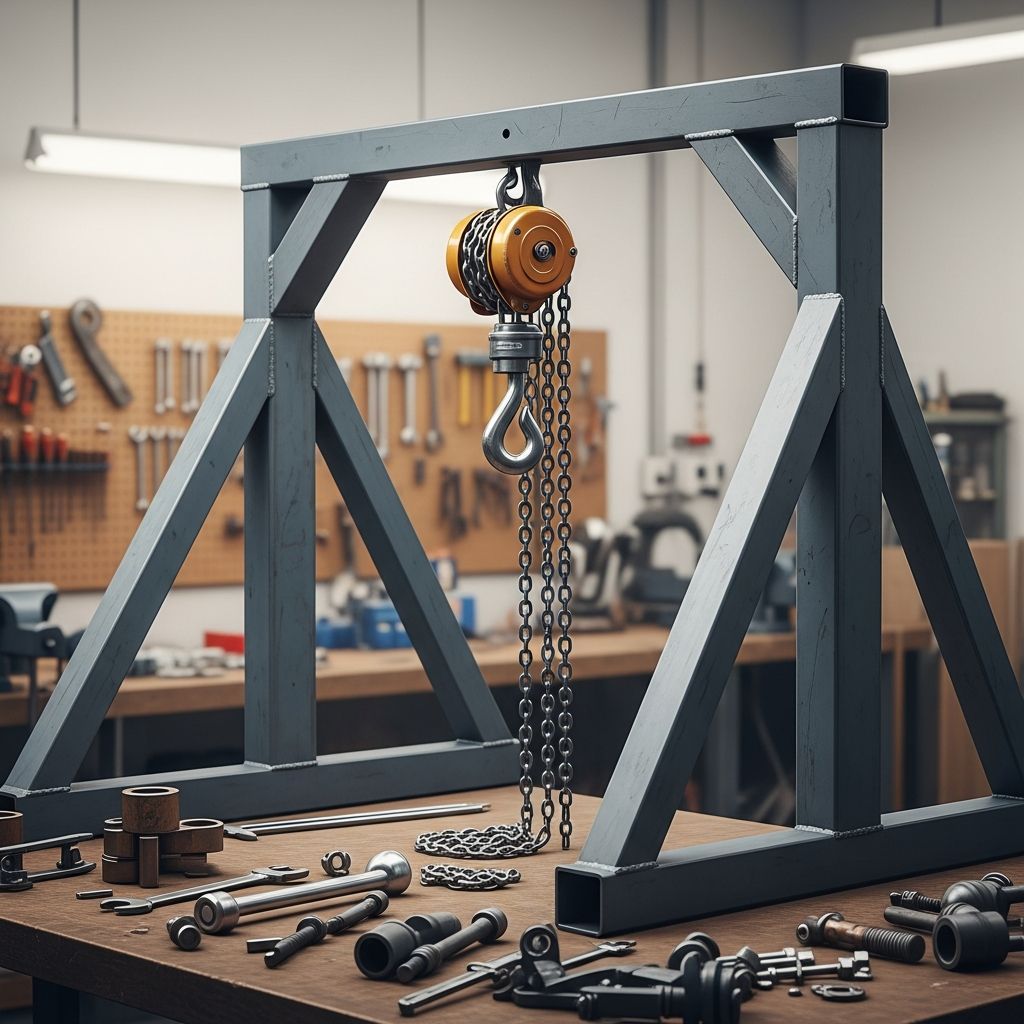
DIY Chain Hoist Frame Guide
Constructing a custom frame for a chain hoist transforms your garage or workshop into a powerful lifting station capable of handling engines, machinery, or other heavy items safely and efficiently. This guide provides everything needed to build a durable, portable structure inspired by proven DIY designs, emphasizing strength, disassembly ease, and load safety.
Why Build a Custom Chain Hoist Support?
A dedicated frame eliminates reliance on makeshift supports or ceiling mounts, offering mobility and precise load positioning. Common designs like A-frames or gantries support 1-2 ton capacities using affordable lumber or steel, ideal for home mechanics or fabricators. These setups outperform temporary solutions by distributing weight evenly and allowing hoist trolley movement along the beam.
Key advantages include portability for storage, adjustability for various heights, and overbuilt strength for peace of mind. Forum builders report success with scrap wood and bolts, achieving disassembly in under 30 minutes while holding substantial loads.
Selecting the Right Design for Your Needs
Choose between an
A-frame
for compact spaces or agantry-style
for wider spans. A-frames use angled legs for stability in tight garages, while gantries provide beam travel for larger work areas.- A-Frame: Two triangular sides connected by a top beam; best for fixed-position lifts up to 8 feet high.
- Gantry: Four vertical legs with cross-bracing and overhead I-beam; movable and versatile for 10+ foot spans.
- Hybrid: Bolted uprights forming an A on each side, with crossbeams for extra rigidity.
Match design to your chain hoist’s rating—typically 1-2 tons from brands like Harbor Freight—and workspace dimensions. Overbuilding with doubled-up members ensures safety margins.
Essential Materials and Tools
Gather pressure-treated lumber for longevity or steel for maximum strength. Budget options use 2x4s and 2x6s; premium builds incorporate I-beams.
| Component | Quantity | Specs | Purpose |
|---|---|---|---|
| Upright Legs | 4 | 2×6 x 8-10 ft | Main supports forming A-shape |
| Top Beam | 1 | 4×6 x 8 ft or I-beam 6-8″ | Hoist mounting rail |
| Cross Braces | 8-12 | 2×4 x 4-6 ft | Lateral stability |
| Base Plates | 4-8 | Steel 6×6″ w/ bolts | Floor anchoring |
| Fasteners | Lots | 3/8″ carriage bolts, 3″ deck screws | Assembly/disassembly |
Tools Required: Circular saw, drill w/ bits, socket wrench, clamps, level, tape measure, ladder. Power tools speed up cuts and drilling for base plates.
Step-by-Step Construction Process
Step 1: Prepare and Cut Lumber
Measure your space: aim for 7-9 ft height and 6-8 ft width. Cut uprights to length, angling bottom ends at 20-30 degrees for A-frame stability. Trim cross braces to fit between legs at 1/3 and 2/3 heights.
Step 2: Assemble Individual Sides
Lay out two A-frame sides on the ground. Bolt front and back legs together at the top peak using metal brackets or doubled 2×4 gussets. Add diagonal braces from peak to base midpoint, securing with through-bolts for shear strength. Repeat for second side.
Step 3: Install the Top Beam
Hoist the sides upright (use jacks or helpers) and position the top beam across peaks. Secure with heavy lag bolts or U-bolts. For gantry, add vertical legs under beam ends if needed, cutting to exact height post-installation.
Step 4: Add Cross Bracing and Stability
Connect sides with horizontal crossbeams at multiple levels using bolts for easy breakdown. Install diagonal X-bracing between frames to prevent racking. For mobile gantries, add casters to base plates rated for 1000+ lbs each.
Step 5: Mount Base Plates and Anchor
Drill for steel plates at leg bottoms, using expansion bolts into concrete floors. This prevents tipping under eccentric loads. Test level across entire structure.
Step 6: Integrate the Chain Hoist
Attach trolley to beam (ensure end stops), then hook hoist. Slack chain for load attachment. Verify smooth travel before loading.
Load Capacity Calculations and Enhancements
Basic 2×6 A-frame supports 1000-1500 lbs safely; double legs or steel beam boosts to 2+ tons. Factor in height: taller frames need more bracing. Use this simple table for estimates:
| Design | Material | Est. Capacity (lbs) |
|---|---|---|
| A-Frame | 2×6 Lumber | 1200 |
| A-Frame | Doubled 2×6 + Beam | 2000 |
| Gantry | I-Beam w/ Steel Legs | 3000+ |
Enhance with guy wires from peak to floor or wall mounts for seismic stability.
Safety Protocols and Best Practices
Never exceed 80% of rated capacity. Inspect for cracks, loose bolts pre-use. Position load directly under hoist to avoid swings—use taglines for control. Wear PPE: gloves, helmet, steel toes.
- Attach to solid anchors capable of 5x load.
- Secure loads with slings or hooks properly seated.
- Lift slowly, monitoring for sway or creak.
- Keep area clear; no one under load.
Regular maintenance: lubricate hoist chain, torque bolts monthly.
Common Mistakes to Avoid
Avoid nails—use bolts for disassembly. Don’t skimp on bracing; weak laterals cause collapse. Overestimate lumber strength at height—test incrementally with sandbags. Skip concrete anchors on uneven floors at peril.
Customization Ideas for Advanced Builds
Add winch for height adjustment, LED lighting under beam, or wheeled base for portability. Integrate festoon cabling for powered hoists per crane manuals. Scale up with welded steel for shop cranes.
Frequently Asked Questions (FAQs)
Can I use this frame for engine lifts?
Yes, 2-ton rated frames handle most automotive engines safely with proper slings.
How portable is the bolted design?
Fully disassembles into flat components, storable in a corner or truck bed.
What’s the cost for a basic build?
$100-300 using scrap lumber and hardware store fasteners.
Do I need welding skills?
No, all-bolted versions work fine; welding optional for steel beams.
Is it code-compliant for commercial use?
DIY frames suit home garages; consult engineer for business applications.
Troubleshooting Frame Issues
Frame sways: Add X-bracing or base anchors.
Beam flexes: Upgrade to steel I-beam.
Hoist binds: Check trolley alignment and lubricate.
References
- Constructing an A-Frame for Use with Chain Hoist — Garage Journal Forum. 2019-07-15. https://www.garagejournal.com/forum/threads/constructing-an-a-frame-for-use-with-chain-hoist.312820/
- DIY Garage Gantry with Chain Hoist — YouTube (Wide Vision Metal Fab). 2019-01-01. https://www.youtube.com/watch?v=Aj-lzNgfAH4
- Complete Assembly Instruction for Cranes — RM Hoist (Official Manual). Undated. https://rmhoist.com/sites/default/files/public_files/rm_kit_assembly_manual_2.pdf
- Step-by-Step Guide Using a Chain Hoist Effectively — Industrial Products Blog. Undated. https://www.industrialproducts.com/blog/post/material-handling-and-storage/step-by-step-guide-using-a-chain-hoist-effectively
Similar Articles






Read full bio of medha deb