DIY Cleaning Slime: A Fun, Flexible Way to Detail Every Nook and Cranny
Make your own reusable cleaning slime to grab dust and crumbs from the tightest spaces in your home, car, and office.
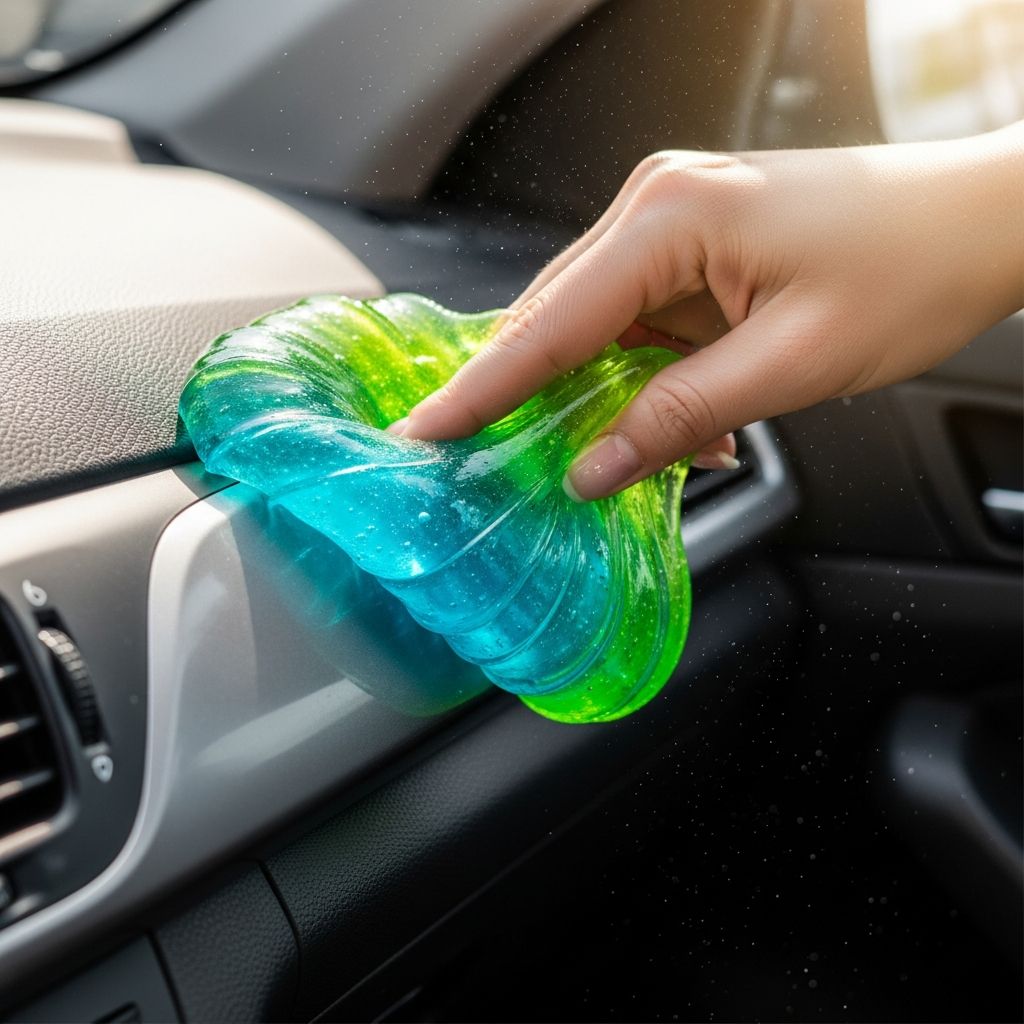
Cleaning slime (sometimes called cleaning putty or gel) is a stretchy, moldable helper that slides into tiny spaces and lifts out dust, crumbs, and lint without harsh scrubbing. With a few simple household ingredients, you can mix up a batch that feels like a toy but works like a detailing tool.
What Exactly Is Cleaning Slime?
Cleaning slime is a soft, slightly sticky material that can be pressed into crevices and textured surfaces where traditional tools like cloths and brushes struggle to reach. When removed, it takes loose particles with it, leaving behind cleaner surfaces and fewer crumbs.
Unlike typical liquid cleaners, slime does not rely on soaking or scrubbing; instead, it relies on its texture and flexibility to hug surfaces and capture debris. This makes it especially useful for delicate electronics, decorative objects, and tight automotive spaces where you want to avoid moisture and abrasion.
- Flexible enough to mold around buttons, switches, and vents.
- Sticky enough to capture dust and crumbs, but not so sticky that it clings to most surfaces.
- Reusable for multiple quick cleanups when stored correctly.
Best Places to Use Cleaning Slime
Cleaning slime shines in areas that collect dust and crumbs but are annoying to reach with a cloth or vacuum attachment. Think of it as a gap specialist: if a space is too small for your fingers but large enough to collect gunk, slime can probably reach it.
Here are some practical ways to put your homemade batch to work:
- Electronics: Keyboards, remote controls, gaming controllers, printer buttons, and speaker grilles.
- Car interiors: Air vents, cup holders, dashboards, gear shift surrounds, and storage cubbies.
- Home decor: Carved woodwork, picture frame details, lamp bases, and textured vases.
- Office spaces: Desk organizers, calculator keys, phone handsets, and window track corners.
- Everyday hotspots: Drawer dividers, appliance control panels, and fan vents.
Avoid using cleaning slime on hot, wet, or greasy surfaces, as excess heat and moisture can break it down quickly and reduce its ability to hold debris.
Basic DIY Cleaning Slime Recipe
The most common homemade cleaning slime uses a simple combination of school glue, a mild activator, and a small amount of baking soda to help adjust the texture. This produces a pliable material that can be handled easily and shaped to fit tight areas.
The exact proportions can be tweaked to make your slime stiffer or stretchier, but the basic structure remains the same: a glue base that forms a stretchy mass when combined with an activating liquid.
Ingredients and Tools
- Liquid school glue (white or clear)
- Baking soda
- Contact lens solution or similar activator
- Optional colorant (a small amount of food coloring or liquid dye)
- Mixing bowl and spoon or spatula
- Air-tight container for storage
Step-by-Step Mixing Instructions
Use the following procedure as a baseline, then adjust the activator amount to fine-tune the texture to your preference:
- Pour the glue: Add a generous amount of liquid school glue to your mixing bowl. Start with about one small bottle for a test batch.
- Add baking soda: Sprinkle a modest amount of baking soda over the glue and stir until the mixture looks smooth and uniform.
- Optional color: If desired, add a drop or two of colorant and mix thoroughly so the slime will be easy to spot if a piece tears off during cleaning.
- Introduce the activator: Add a small amount of contact lens solution, stirring constantly. The mixture will begin to thicken and pull away from the sides of the bowl.
- Knead by hand: When the mixture forms a soft ball, remove it from the bowl and knead it with clean, dry hands until it is smooth and only slightly tacky.
- Adjust as needed: If it sticks too much to your fingers, knead in a few extra drops of activator. If it feels too rubbery and does not mold easily, add a very small amount of glue and knead again.
- Store properly: Place the finished slime in an air-tight container to prevent it from drying out between uses.
Safety First: Surfaces and Situations to Avoid
Although cleaning slime is convenient, it is not a universal cleaner. Some surfaces and environments can react poorly to its ingredients or texture, so it is important to be selective about where and how it is used.
Before pressing slime onto a new surface, test a small area in an inconspicuous spot. This precaution helps you see whether any residue is left behind or if there is a reaction with finishes or coatings.
- Avoid raw, unsealed wood, which may absorb moisture from the slime.
- Keep slime away from hot surfaces and electronics that are powered on.
- Do not use on heavily greased or oily areas; clean those first with an appropriate degreaser.
- Supervise children and pets around slime, and do not allow ingestion or contact with eyes.
How to Use Cleaning Slime Effectively
Once your slime is mixed and ready, using it is straightforward. The goal is to let the slime make gentle contact with dusty areas without pushing debris deeper into crevices.
A slow, controlled motion works better than aggressive pressing, which can force the slime to thin out and slip between tiny gaps you do not want it to enter.
- Start with dry surfaces: Ensure the area is not wet or freshly sprayed with cleaner.
- Press, do not rub: Gently press the slime onto the area, letting it conform to the shape of buttons, ridges, or vents.
- Lift straight up: Peel the slime back slowly so it carries the dust and crumbs with it.
- Fold and rotate: After a few presses, fold the slime to move a clean section to the outside.
- Stop when saturated: Retire or discard the slime when it becomes discolored, crumbly, or overly dirty.
Storing and Reusing Your Slime
With proper storage, cleaning slime can be reused several times before it loses effectiveness. The main goals are to keep it from drying out and to prevent contamination from liquids or food residues.
Because slime gradually becomes loaded with dust and particles, it is not a permanent tool. Plan to replace it regularly, especially if used on high-traffic or visibly grimy areas.
| Practice | Best Approach | Why It Matters |
|---|---|---|
| Storage container | Use a small, air-tight jar or plastic tub with a lid. | Reduces exposure to air so the slime stays soft and flexible. |
| Storage location | Keep in a cool, dry spot away from direct sunlight and heat sources. | Prevents melting, separation, or premature drying. |
| Reusability | Reuse only as long as the color is fairly clean and the texture remains smooth. | Ensures that grime is not redeposited onto surfaces. |
| Replacement timing | Discard when it darkens, smells off, becomes stringy, or crumbles. | Indicates that the slime is saturated with debris or has broken down chemically. |
Customizing Texture for Different Cleaning Tasks
One of the advantages of making your own cleaning slime is the ability to fine-tune its consistency. Some jobs benefit from a firmer product that holds its shape, while others call for a softer slime that can seep into shallow grooves.
Instead of discarding a batch that feels slightly off, try minor adjustments to salvage it for specific cleaning tasks around your home or car.
- For delicate surfaces: Aim for a slightly softer slime that presses into spaces without requiring much pressure.
- For deeper gaps: Use a stiffer slime that can be pushed into narrow openings without tearing.
- For frequent quick jobs: Divide one batch into several smaller pieces so you can dedicate each piece to a particular area.
Environmental and Disposal Considerations
Although DIY cleaning slime uses familiar household ingredients, it should not be washed down sinks or toilets. The thick, stretchy texture can contribute to clogs and does not break down like typical liquid cleaners.
To dispose of used slime, place it in a small bag or wrap it in paper before putting it in the trash. This helps contain any dust, food particles, or pet hair it has collected during use.
Troubleshooting Common Slime Issues
Even with careful measuring, small differences in products, humidity, and temperature can affect how your slime turns out. Minor adjustments usually correct problems without needing to start over from scratch.
Use the tips below to rescue imperfect batches and create a texture that matches your preferred feel and cleaning style.
Too Sticky
- Knead in a few extra drops of activator.
- Let the slime rest for several minutes, then test it again.
- Dust your hands lightly with baking soda before kneading to reduce tackiness.
Too Firm or Rubbery
- Knead in a small amount of glue to soften the texture.
- Stretch and fold the slime repeatedly to warm it up and relax the structure.
- Use overly firm slime for narrow or deeper gaps where a strong structure is beneficial.
Leaves Residue on Surfaces
- Reduce the amount of activator in your next batch to keep it more cohesive.
- Test on a glossier, non-porous surface first to confirm adhesion levels.
- Wipe any light residue with a barely damp microfiber cloth, then dry immediately.
Quick FAQ About Homemade Cleaning Slime
Is cleaning slime safe for all keyboards?
Most modern keyboards with sealed key mechanisms handle gentle use of cleaning slime well, but older or very low-profile designs may have gaps where soft material can seep inside. Test a corner or edge first, and avoid aggressive pressing around loose or wobbly keys.
How long does homemade cleaning slime last?
With proper storage and light use, a batch can typically be reused for several short sessions over the course of a few weeks. However, once it darkens, collects visible debris, or changes smell and texture, it should be discarded.
Can children help make and use cleaning slime?
Older children often enjoy helping mix and knead slime, but adult supervision is important to prevent ingestion and ensure ingredients are handled properly. When using slime for cleaning, remind kids that this version is a tool, not a toy, and keep it away from very young children and pets.
Does cleaning slime replace regular dusting?
Cleaning slime is best viewed as a supplement, not a replacement, for regular dusting and vacuuming. It excels at detail work in tight spaces but cannot handle large flat areas, heavy buildup, or sticky spills that require traditional cleaning methods.
Can essential oils be added for scent?
A small drop of a mild essential oil may be added for fragrance, but too much can change the texture, increase residue, or irritate sensitive skin. If you experiment with scents, keep the amount minimal and test the slime on a small area before using it widely.
Final Thoughts
Homemade cleaning slime is a low-cost, hands-on way to keep dust and crumbs from accumulating in frustrating, hard-to-reach spots. With a few basic ingredients and a bit of experimentation, you can customize batches for your keyboard, car, decor, and more.
By understanding how to mix, store, and use this flexible tool, you will add a surprisingly satisfying step to your cleaning routine—and enjoy the process of watching grime lift away with every gentle press and peel.
Similar Articles







Read full bio of medha deb