DIY Corner Hearth Pad Step-By-Step Guide For Wood Stoves
Step-by-step guide to constructing a safe, custom corner hearth pad that meets wood stove clearance requirements and enhances your home's style.
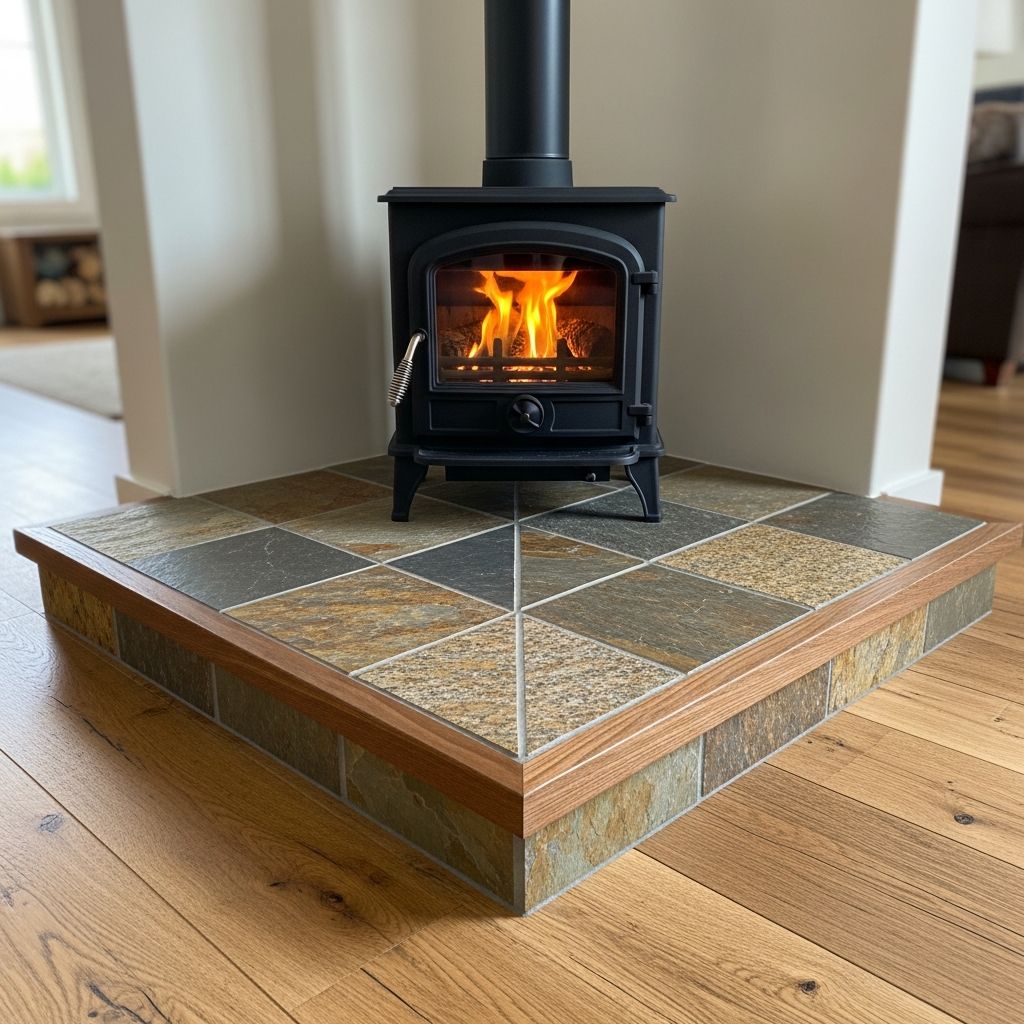
DIY Corner Hearth Pad for Wood Stoves
Installing a wood stove in a corner requires a properly constructed hearth pad to protect floors from heat, embers, and heavy weight. This guide provides a complete walkthrough for building a raised corner hearth pad, ensuring compliance with safety standards while achieving a polished look.
Understanding Hearth Pad Essentials
A hearth pad serves as the non-combustible base under and around a wood stove, preventing fire hazards. For corner installations, the design must extend sufficiently from two walls, typically 16-18 inches beyond the stove’s edges per manufacturer specs and local codes. Raised pads, elevated 8-12 inches, offer better heat dissipation and visual appeal.
- Key benefits: Protects flooring, supports stove weight (often 300-600 lbs), improves room aesthetics.
- Common materials: Wood framing, plywood subfloor, cement board, tile/stone veneer.
- Size requirements: Minimum 36×48 inches for corners, but verify stove manual.
Planning starts with your stove’s manual—download specs online if needed. Mark the area with painter’s tape for precise layout.
Gathering Materials and Tools
Select sturdy, fire-resistant materials to handle the stove’s load and radiant heat.
| Category | Items | Quantity Estimate (for 4×5 ft pad) |
|---|---|---|
| Framing | 2×6 lumber, 4-inch deck screws | 10-12 boards (8-12 ft lengths) |
| Subfloor | 3/4-inch plywood, construction adhesive | 2 sheets |
| Fireproofing | 1/2-inch cement board, thinset mortar | 2 sheets |
| Finish | Slate/tile, grout, edge trim | 50-70 sq ft |
| Tools | Circular saw, drill, level, tile saw, trowel | N/A |
Total cost: $300-600, depending on finishes. Opt for pressure-treated lumber if moisture is a concern.
Planning Your Corner Layout
Position the stove in the corner, ensuring 18 inches clearance from walls unless listed otherwise. Tape the outline, double-check squareness with a framing square. Account for stovepipe height and door swing. Sketch a frame: L-shaped perimeter against walls, internal joists at 12-16 inches on center for strength.
- Measure wall-to-stove distances twice.
- Plan plywood seams over joists.
- Height: 8-10 inches typical for raised design.
Building the Sturdy Frame
Remove the stove and stovepipe. Clear debris.
- Wall sides: Cut two 2x6s—one full length, one shorter by 2 inches. Butt and screw ends with 4-inch screws. Anchor to wall studs and subfloor.
- Front/side pieces: Measure gaps, cut equals. Screw to wall frame.
- Mitered corner: Cut final perimeter board at 45 degrees both ends. Secure firmly.
- Internal bracing: Add parallel joists under stove base. Focus reinforcements beneath runners or legs. Miter internals for snug fit. Space at 12-16 inches.
Use a level at every step. Toe-screw for extra hold.
Installing the Subfloor and Fire Barrier
Frame complete? Cover with plywood.
- Lay 3/4-inch plywood sheets, marking overhangs. Cut to fit with circular saw.
- Apply construction adhesive to joists, then screw every 6 inches with 2-inch deck screws.
- Seams must land on joists; stagger for strength.
Next, add cement board for fire resistance: Score and snap, fasten with mortar-approved screws. This layer prevents ember penetration.
Applying the Protective Finish
Choose durable, heat-resistant veneer. Tile or stone excels for corners.
Tiling in Herringbone Pattern
Herringbone adds elegance. Use 4×12-inch slate tiles.
- Snap chalk lines for center.
- Spread thinset mortar with 1/4-inch notched trowel.
- Butter tiles, set at 45 degrees using speed square. Use 1/8-inch spacers.
- Edge cuts: Trace with straightedge or paper template, cut on wet saw.
- Grout after 24 hours cure.
Alternative: Stone Veneer or Brick
For rustic vibe, apply thin stone over mortar-embedded mesh. German schmear whitewash enhances texture.
Finishing Edges and Trim
Raw plywood/tile edges need polish.
- Cut pine quarter-round or cove molding at 45-degree miters.
- Stain/paint to match decor.
- Adhere with construction glue; secure corners with 1-inch screws.
Caulk gaps for seamless look.
Safety Standards and Code Compliance
Hearth pads must meet NFPA 211 or local codes. Minimum thickness: 2-4 inches equivalent R-value; non-combustible top. Test heat output: Wood stoves exceed 500°F—pad must withstand without degradation.
- Ember protection: 18 inches all sides for freestanding stoves.
- Weight support: Joists handle 50 psf live load.
- Inspection: Verify with local fire marshal pre-install.
For portable pads, build modular on leveling feet.
Common Mistakes to Avoid
- Inadequate framing: Skimping on joists leads to sagging.
- Poor measurements: Always double-check against stove specs.
- Skipping fire board: Direct tile on plywood risks charring.
- Uneven floors: Shim frame for level.
Cost Breakdown and Time Estimate
| Component | Cost Range | Time |
|---|---|---|
| Materials | $250-500 | 4-6 hours |
| Tools (if buying) | $100-200 | N/A |
| Finish work | $50-100 | 2-4 hours + cure |
| Total | $400-800 | 1-2 days |
Maintenance Tips for Longevity
- Sweep regularly; avoid harsh cleaners on tile.
- Regrout cracks annually.
- Inspect frame for settling yearly.
Frequently Asked Questions (FAQs)
How thick should a corner hearth pad be?
Typically 8-12 inches raised, with 3/4-inch plywood + 1/2-inch cement board + 1/2-inch tile for total 1.75+ inches fire layer. Codes vary—check local.
Can I build on carpet?
No—remove to bare subfloor for secure anchoring.
What if my stove has legs?
Still need full pad extension for embers; legs distribute weight.
Is cement board necessary?
Yes, for wood stoves—provides Class A fire rating.
How do I make it portable?
Use detachable framing and leveling pads; avoid wall screws.
References
- How to Build a Wood Stove Hearth – Framing a Hearth — YouTube (Hearth Framing Tutorial). 2020-approx. https://www.youtube.com/watch?v=C0ECeeKAzbA
- DIY Hearth Pad — Farmhouse on Boone. 2023-approx. https://www.farmhouseonboone.com/diy-hearth-pad/
- How make a tile hearth pad for wood stove? — Fine Homebuilding Forums. 2022-approx. https://www.finehomebuilding.com/forum/how-make-a-tile-hearth-padfor-woodstove
- How To Build a Hearth Step by Step German Schmear — YouTube (Stone Hearth Build). 2023-approx. https://www.youtube.com/watch?v=vquXRKFs51U
Similar Articles








Read full bio of medha deb