DIY Curved Top Mirror Frame Guide
Transform ordinary mirrors into stunning arched masterpieces with this comprehensive DIY tutorial, perfect for elevating any room's aesthetic on a budget.
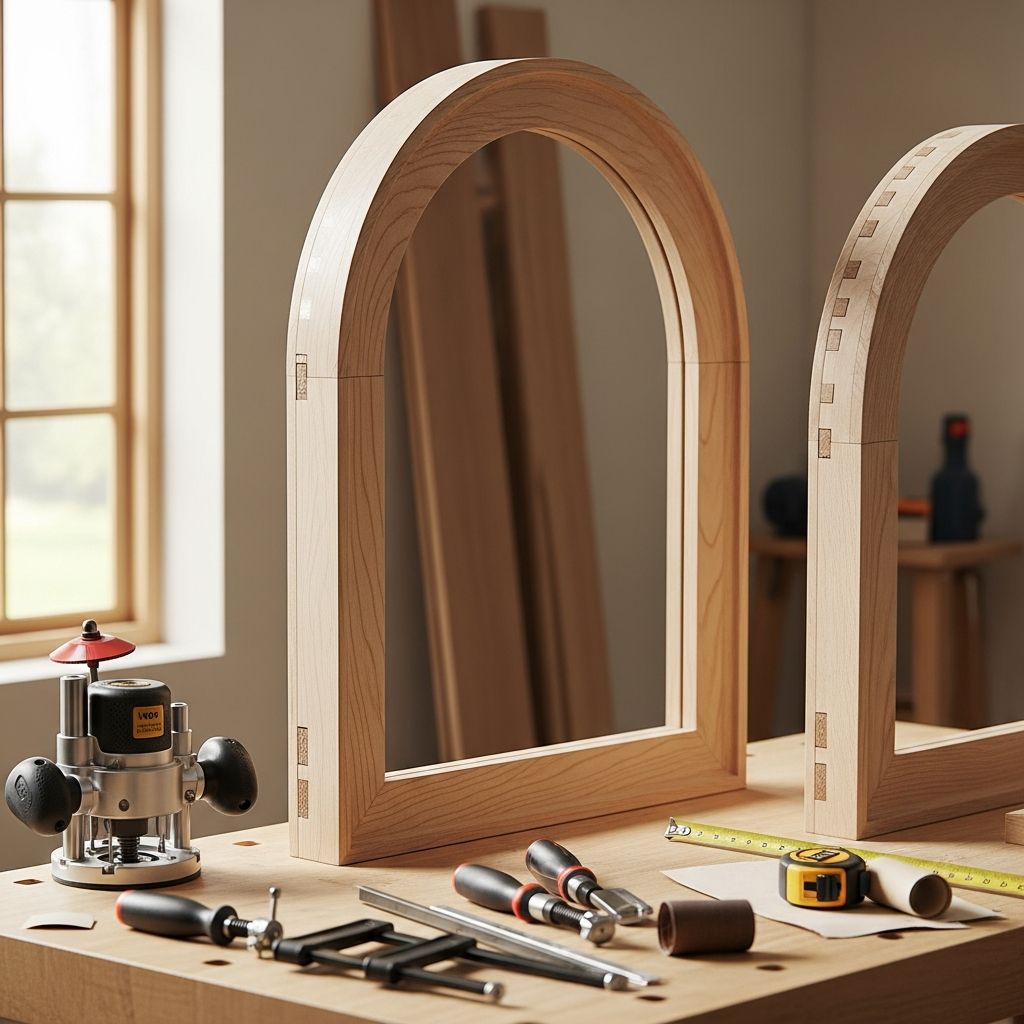
Create a striking focal point in any space with a handmade curved top mirror frame. This project combines woodworking basics with creative shaping to produce a custom piece that rivals high-end store-bought options, all while saving significant costs.
Why Choose a Curved Top Design?
Curved top mirrors add elegance and softness to interiors, softening straight lines in modern or traditional settings. They work well above consoles, in entryways, or as bathroom vanities, drawing the eye upward for a sense of height and grandeur. Unlike flat frames, the arch introduces architectural interest, mimicking vintage or Parisian styles without professional carpentry skills.
Customization is key: tailor the size, wood type, and finish to match your decor. Plywood provides a stable base, while flexible trim conceals edges for a polished look. Expect to spend under $400 for a large piece, far less than retail prices exceeding $1,000.
Essential Materials and Tools
Gather these items before starting to ensure smooth progress. Quantities depend on your mirror’s dimensions—scale up for larger projects.
- 19/32-inch plywood sheet (4×8 feet for oversized mirrors)
- Custom-cut mirror glass (1/4-inch thick, ordered from local glass suppliers)
- Flexible edge molding or automotive trim (black or paintable, 1/4-inch wide)
- French cleat hanging system (30-inch length for heavy pieces)
- Wood glue, super glue, and construction adhesive
- Stain or paint (water-based for quick drying), wax polish optional
- Sandpaper (various grits: 120-220), clamps
Tools required:
- Jigsaw with fine-tooth blades
- Circular saw or table saw for straight cuts
- Router with rabbeting bit (1/2-inch depth)
- Orbital sander, drill, level
- Screw/string compass for arch tracing, tape measure
Planning Your Mirror Dimensions
Measure the intended wall space first. Standard heights range from 36-60 inches tall and 24-48 inches wide. For a balanced arch, make the curve radius equal to half the width—e.g., a 48-inch wide mirror uses a 24-inch radius semicircle.
| Size Category | Width | Height | Ideal Location |
|---|---|---|---|
| Small | 24 inches | 36 inches | Half bath |
| Medium | 36 inches | 48 inches | Entryway |
| Large | 48 inches | 60 inches | Living room |
Sketch your design on paper, noting the arch height (typically 8-12 inches rise). Contact glass shops early; many cut mirrors to spec for $200-400, including beveling edges.
Step 1: Shaping the Plywood Base
Begin with a sturdy plywood sheet cut to rough dimensions using a circular saw. Mark the arch using the screw-and-string method: drive a screw at the center bottom, tie a string to form the radius, and trace a perfect semicircle with a pencil.
Secure the plywood on sawhorses. Equip your jigsaw with a clean blade to minimize splintering—cut slowly along the line, staying slightly outside to allow sanding room. Flip the piece and repeat for symmetry if needed.
Sand the edges progressively: coarse grit removes saw marks, finishing with 220-grit for smoothness. Test-fit the mirror atop the plywood; it should sit flush without rocking.
Step 2: Securing the Mirror Glass
Professional glass cutting ensures precision. Provide your plywood template to the shop—they’ll bevel edges and apply backing if requested. Pickup takes 5-10 days.
At home, clean both surfaces thoroughly. Apply adhesive dots around the plywood perimeter and center, avoiding excess to prevent squeeze-out. Press the mirror firmly, using clamps wrapped in soft cloth to protect the glass. Let cure 24 hours undisturbed.
For added stability in frames, route a shallow rabbet (lip) around the plywood edge post-cutting. This cradles the mirror like a picture frame, reducing reliance on glue alone.
Step 3: Adding Decorative Edge Trim
Edge trim hides the plywood-mirror seam, elevating the frame’s sophistication. Flexible options like automotive wheel arch molding (foam-based) bend easily around curves, costing under $25.
Miter corners at 45 degrees for seamless joints—practice on scrap. Dry-fit the entire piece, marking overlaps. Activate adhesive backing, supplement with super glue on curves, and clamp gently. Fill minor gaps with caulk, sand smooth, and paint to match if needed.
Alternatives include wood veneer strips or PVC quarter-round, stained for a solid wood illusion. This step transforms a basic shape into a luxurious frame.
Step 4: Finishing Touches for Professional Appeal
Sand the entire assembly lightly. Apply wood stain in thin coats—water-based varieties like dark walnut dry fast and minimize odor. Two coats deepen color; wipe excess for evenness.
Seal with wax polish for a satin sheen or polyurethane for durability. Buff to a glow. For painted frames, prime first, then use semi-gloss latex in neutral tones like black or white.
Step 5: Mounting Securely on the Wall
French cleats excel for heavy mirrors, distributing weight evenly. Attach one half to the frame’s back (pre-drill to avoid splitting), ensuring level alignment. The wall half screws into studs—use a stud finder.
Position the cleat with mitered top edge facing up on the wall, sloping down. Hang by hooking the frame over it; the design locks securely. For lighter pieces, D-rings suffice, but cleats handle 50+ pounds effortlessly.
Verify plumb with a level post-installation. Add rubber bumpers to the bottom for stability.
Customization Ideas and Variations
- Scalloped Edges: Trace printable templates for wavy tops, cut with jigsaw, ideal for bathrooms.
- Wood Choices: White oak for durability, pine for budget-friendly staining.
- Multi-Mirror Arrangements: Create grids of smaller arched units for dramatic walls.
- Lighting Integration: Recess LED strips behind the frame for backlit glow.
Common Mistakes to Avoid
Don’t rush the arch cut—uneven curves are hard to fix. Always wear safety gear: goggles, dust masks, gloves. Over-gluing the mirror traps bubbles; use sparingly. Test trim flexibility before committing; rigid types crack on bends.
Cost Breakdown and Time Estimate
| Component | Estimated Cost |
|---|---|
| Plywood | $30 |
| Mirror | $300 |
| Trim & Hardware | $50 |
| Finish & Adhesives | $20 |
| Total | $400 |
Timeline: 2-3 days active work, plus curing/drying. Glass shop wait adds a week.
FAQs
Can beginners tackle this project?
Yes, with basic power tool experience. Practice cuts on scrap plywood first.
Where to source custom mirrors?
Local glass shops or framers; provide dimensions and plywood sample.
Is plywood visible in the final product?
No, trim and mirror cover it completely for a seamless look.
How heavy is a 48×60-inch version?
Around 40-50 pounds; use stud-mounted cleats.
Can I adapt for oval shapes?
Absolutely—adjust string length for elongated arches.
References
- How to Make a Large Arched Mirror — Jenna Sue Design. 2023-01-15. https://www.jennasuedesign.com/diy-large-arched-mirror/
- DIY Arched Scallop Wooden Bathroom Mirrors — Hamilton Park Home. 2024-02-01. https://hamiltonparkhome.com/2024/02/diy-arched-scallop-wooden-bathroom-mirrors/
- Woodworking Safety Guidelines — U.S. Consumer Product Safety Commission (.gov). 2022-05-10. https://www.cpsc.gov/s3fs-public/woodworking.pdf
- French Cleat Hanging Systems — Fine Woodworking (Taunton Press). 2023-11-20. https://www.finewoodworking.com/project-guides/hanging/french-cleat-basics
Similar Articles



Read full bio of medha deb