Transform Your Doorways: A Complete DIY Farmhouse Door Trim Makeover
Affordable trim, big farmhouse character for any doorway.
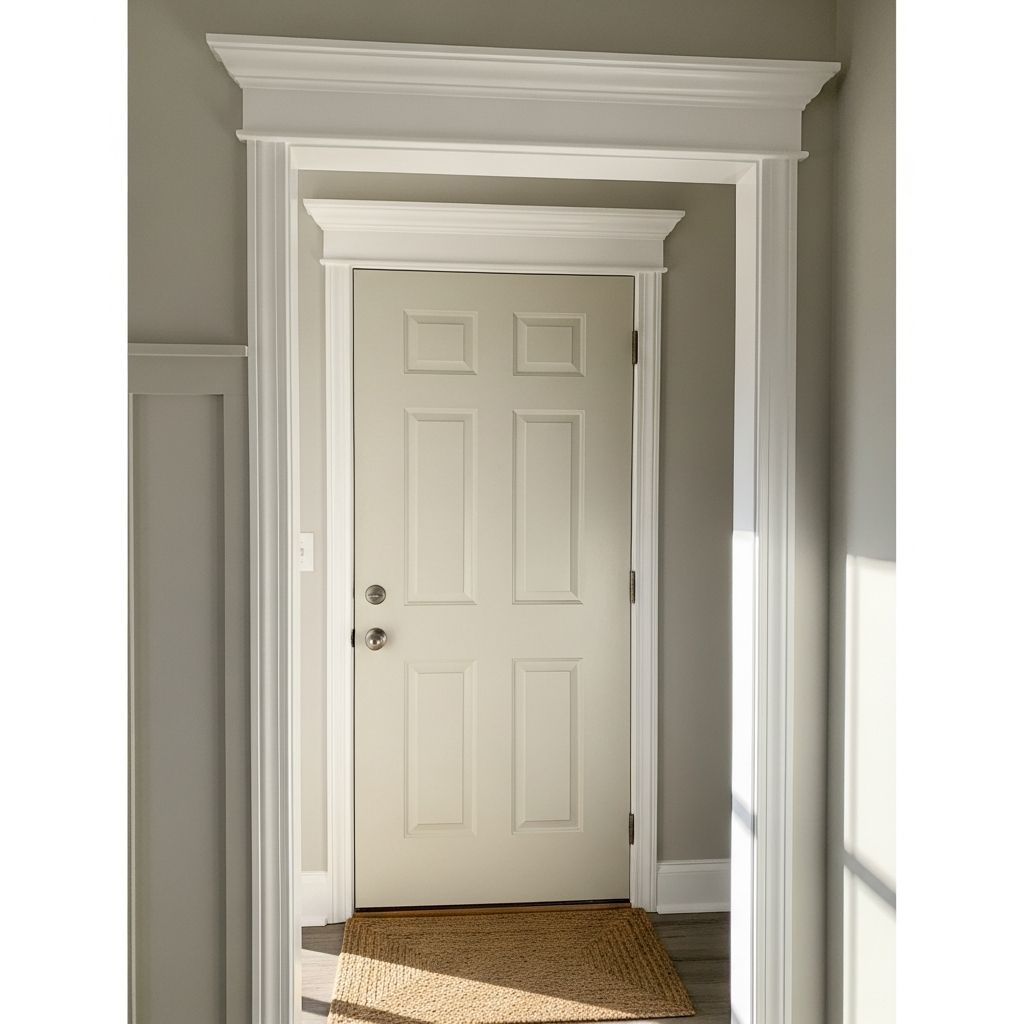
DIY Farmhouse Door Trim: A Complete Guide for a High-End Look on a Budget
If a plain drywall opening or builder-grade casing makes your doorway feel unfinished, farmhouse-style door trim is one of the most budget-friendly upgrades you can tackle yourself. With a few boards, basic tools, and a free afternoon, you can turn an ordinary doorway into a standout architectural feature that looks custom-built.
Why Farmhouse Door Trim Changes the Whole Room
Farmhouse trim is all about clean, strong lines that frame a doorway and give it presence. Instead of delicate, fussy profiles, it leans on wider flat boards, simple layering, and a slightly rustic feel that works with both modern and traditional interiors.
- Instant character: Wide, simple boards visually thicken the wall and make the opening feel more substantial.
- Flexible style: The same trim pattern can look rustic with distressed paint or crisp and modern with smooth white semi-gloss.
- Beginner-friendly: Straight cuts and basic joinery mean you can get great results even without advanced carpentry skills.
Planning Your Farmhouse Door Trim Design
Before picking up a saw, take a few minutes to decide how bold or subtle you want the trim to be. Farmhouse casing is built from simple rectangular boards, but proportions matter. A little planning helps the door feel balanced with your ceiling height, room size, and other trim in the house.
Measure the Doorway and Wall Space
Grab a tape measure and note the width and height of the door opening, the distance to nearby walls, and the ceiling height. This ensures your trim won’t overwhelm a small wall or look undersized on a tall one.
- Measure the opening width (jamb to jamb).
- Measure the opening height (floor to top of jamb).
- Check clearances to adjacent corners, windows, and outlets.
- Note your baseboard height so the leg trim can meet it cleanly.
Select Your Farmhouse Trim Profile
A classic farmhouse look typically uses three elements: two vertical side boards, a chunkier head board, and a small cap detail that acts like a miniature shelf over the doorway. You can keep it minimal or add one more thin board as a vertical backer for extra depth.
| Component | Common Board Size | Role in Design |
|---|---|---|
| Side legs | 1×4 or 1×5 | Vertical lines that frame the opening and visually raise the ceiling. |
| Head board | 1×6 or 1×8 | Horizontal piece that anchors the doorway and adds weight to the top. |
| Top cap | 1×2 or lattice | Small ledge that finishes the profile and gives a custom, built-up look. |
| Backer board (optional) | 1×6 behind 1×4 legs | Adds extra depth and shadow lines for a more substantial, historic feel. |
Choosing Materials and Tools
You can build farmhouse trim with basic, big-box-store boards and a short list of tools. The key is selecting straight pieces and spending a little time on surface prep. For most interior projects, pine or primed MDF is more than enough.
Recommended Materials
- 1×4 or 1×5 boards for side legs (actual thickness about 3/4 inch).
- 1×6 or 1×8 board for the top head board.
- 1×2 or similar small board for the top cap.
- Construction adhesive (optional but helpful for a solid bond).
- 2-inch and 2.5-inch finish nails or brad nails.
- Wood filler for nail holes and minor dents.
- Paintable caulk for seams against the wall and jamb.
- Primer and paint or stain and clear coat.
Basic Tools You Will Need
- Measuring tape and pencil.
- Level (2–4 feet is ideal).
- Combination square (for consistent reveals and square lines).
- Miter saw or circular saw with a straight edge guide.
- Nail gun with finish nails, or a hammer and nail set.
- Caulk gun for adhesive and caulk.
- Sanding block or power sander with fine-grit paper.
Step 1: Remove Old Trim and Prepare the Opening
If there is existing trim around your doorway, gently remove it before you start. Work slowly to avoid damaging the drywall or the door jamb, since you’ll be attaching the new boards directly to those surfaces.
- Score the paint and caulk lines with a utility knife along the edges of the old casing.
- Use a flat pry bar and a scrap of cardboard to protect the wall as you pull the trim away.
- Remove leftover nails from the jamb and wall; snip off any you can’t pull out and drive them flush.
- Scrape away old caulk and patch large gouges with joint compound, then let it dry and sand smooth.
Step 2: Mark the Reveal Around the Door
The reveal is a narrow, consistent border of the door jamb that remains visible inside the trim. It acts like a guide line and ensures the trim looks straight, even if the walls are not perfectly square. A typical reveal is around 3 mm to 6 mm (about 1/8 to 1/4 inch).
- Set a combination square to your desired reveal distance.
- Run the square along each side and the top of the jamb, marking small pencil ticks at regular intervals.
- Connect the ticks with a light pencil line to create a continuous reference for the inside edge of your new trim.
Step 3: Cut and Install the Side Legs
Side legs are usually installed first in a farmhouse-style build-up because they set the vertical lines and help you confirm the final height for the head board. Whether you butt the legs directly against the floor or sit them on top of the baseboard is up to your overall trim style.
Measure and Cut the Boards
- Measure from the floor (or top of baseboard) up to the underside of your penciled head reveal line.
- Transfer that number to your 1×4 legs and make straight, square cuts.
- Dry-fit both legs to confirm they line up with the reveal lines and sit plumb against the wall.
Attach the Legs to the Jamb and Wall
- Optional: Apply a thin bead of construction adhesive to the back of each leg.
- Align the inner edge of the leg with the reveal line and check with a level.
- Fasten the leg to the jamb using shorter finish nails spaced every 30–40 cm (12–16 inches).
- Use longer nails angled slightly inward to catch wall studs along the outer edge.
- If the wall bows, insert thin shims behind the board, then nail through the shim and trim into the stud.
Step 4: Build the Farmhouse-Style Head Piece
The head board and cap are what make this style instantly recognizable. Instead of running a single narrow piece across the top, you create a layered, blocky header that mimics traditional farmhouse millwork in a simplified way.
Size and Cut the Head Board
- Measure the full distance from the outside edge of one leg to the outside edge of the other.
- Add a small overhang (commonly 1–2 cm per side) if you want the head board to project past the legs.
- Cut your 1×6 or 1×8 head board to this length with square ends.
Attach the Head Board
- Position the board so its bottom edge lines up with the reveal marks across the top of the jamb.
- Check that both corners sit evenly on the side legs and that the board is level.
- Secure it to the jamb with finish nails along the inner edge and to the wall studs across the top edge.
Add the Top Cap for a Custom Look
The top cap is a slim board that slightly overhangs the head board, creating a mini shelf and a strong horizontal line. This small detail does a lot of visual work.
- Cut a 1×2 or thin trim piece slightly longer than the head board so it overhangs on each side.
- Apply wood glue or construction adhesive along the top edge of the head board.
- Center the cap, press it into the glue, and nail down through the top into the head board every 15–20 cm (6–8 inches).
Step 5: Fill, Caulk, and Sand for a Seamless Finish
A professional-looking farmhouse doorway comes from careful finishing, not just getting the boards on the wall. Filling nail holes and cleaning up gaps will make even inexpensive lumber look high-end once painted.
- Use a nail set to drive any proud nail heads just below the surface of the wood.
- Apply wood filler to nail holes and any small dings; slightly overfill and let it dry completely.
- Sand filled spots smooth with fine-grit sandpaper until flush with the surface.
- Run a thin bead of paintable caulk along seams where trim meets the wall and jamb.
- Smooth the caulk with a damp finger or finishing tool for a clean, subtle line.
Step 6: Prime, Paint, or Stain Your Trim
The finish you choose determines whether your trim reads as modern farmhouse, cottage, or more traditional. White paint is the classic choice, but natural wood or moody darker hues can be just as effective.
- Prime bare wood or MDF to seal the surface and improve paint adhesion.
- Lightly sand after priming to remove raised grain or roughness.
- Apply at least two coats of your chosen paint, sanding lightly between coats if needed.
- For a stained look, apply a wood conditioner (if recommended), then stain and finish with a clear topcoat.
Styling Ideas to Match Your Farmhouse Trim
Once your new trim is up, small styling decisions help pull the look through the rest of the room. Because farmhouse door trim has a strong, simple profile, it pairs well with other straightforward details.
- Repeat similar board widths on nearby windows for a unified look.
- Use compatible baseboards, like tall flat stock with a single small cap, to echo the door casing.
- Layer natural textures—woven rugs, linen curtains, wood furniture—to complement the rustic simplicity of the trim.
- Choose hardware with matte black, aged brass, or brushed nickel finishes for a farmhouse-meets-modern vibe.
Common Mistakes to Avoid
Most problems with DIY door trim come from rushing measurements or skipping the finishing steps. Taking a little extra time during layout and prep dramatically improves your final result.
- Skipping the reveal lines: Without a guide, trim can wander out of square and highlight crooked walls.
- Using warped boards: Even thick paint cannot hide a twisted leg or bowed head piece.
- Overfilling with caulk: Caulk is for small gaps at the wall, not for fixing poor joints between boards.
- Neglecting sanding: Filler left rough will show through every layer of paint.
Frequently Asked Questions About DIY Farmhouse Door Trim
Do I need to remove the door to add farmhouse trim?
No. In most cases, the door can stay in place throughout the project. You are working on the jamb and surrounding wall, not the moving part of the door itself. Just be sure the door can open fully while you measure and install the trim.
Can I install farmhouse trim over existing casing?
Technically it is possible to layer boards over old trim, but it usually creates awkward transitions and extra thickness around the opening. Removing the old casing first gives a cleaner profile, a flatter surface, and a more intentional farmhouse look.
Should I miter the corners or keep all cuts square?
Traditional casing often uses 45-degree mitered corners, but many farmhouse designs intentionally avoid them in favor of straightforward butt joints. Keeping all cuts square is easier for beginners and suits the simple, board-and-batten style of farmhouse interiors.
What if my walls are not plumb or the jamb is slightly crooked?
Uneven walls are very common, especially in older homes. Rely on your reveal lines and a level rather than the existing drywall edges. Use thin shims behind boards where needed and fill minor gaps with caulk so the finished trim looks straight to the eye.
Is farmhouse trim only for white interiors?
Not at all. White is popular, but the same trim design looks great in wood tones, greige, or even deep charcoal colors. The key farmhouse elements are the simple, wide boards and the layered head detail, not the exact paint color.
Simple Project Checklist
Use this quick checklist to keep the project on track from start to finish:
- Measure door opening, wall space, and baseboard height.
- Choose board sizes for legs, head, and cap.
- Remove old trim and clean up the jamb and wall.
- Mark consistent reveal lines around the door.
- Cut, dry-fit, and install side legs.
- Cut, install the head board, then add the cap.
- Fill nail holes, caulk seams, and sand smooth.
- Prime, paint or stain, and enjoy the new farmhouse look.
Similar Articles








Read full bio of medha deb