DIY Ferret Habitat Step-By-Step Guide For Safe, Spacious Homes
Craft a custom ferret enclosure with safe materials, smart design, and essential features for happy, healthy pets.
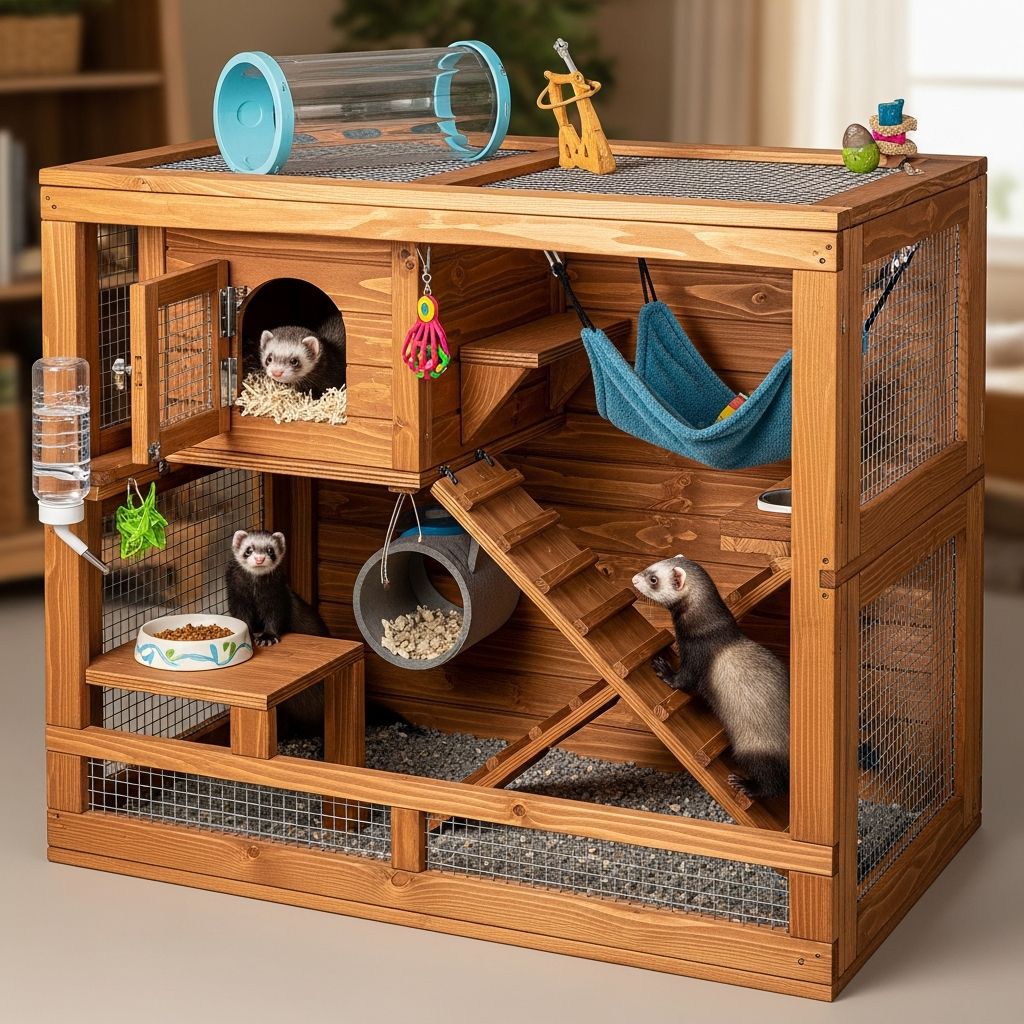
DIY Ferret Habitat Guide
Creating a custom habitat for ferrets allows pet owners to tailor an environment that matches their playful, curious nature while ensuring safety and comfort. Ferrets thrive in spacious, multi-level enclosures that mimic their natural burrowing and climbing instincts. This guide provides detailed instructions for building one from basic materials, focusing on durability, hygiene, and enrichment.
Why Build Your Own Ferret Enclosure?
Store-bought cages often fall short in size or quality for active ferrets, who need at least 3 feet long by 2 feet wide by 2 feet high per animal, with extra levels for exploration. A DIY approach lets you scale up affordably, using sturdy wire grids and platforms that resist chewing and escapes. Benefits include cost savings—under $100 for a large unit—custom dimensions, and the ability to incorporate ferret-proof features like close bar spacing (under 1 inch) to prevent head entrapment.
Owners report higher engagement in homemade setups, as they can add hammocks, tunnels, and digging zones tailored to their pets’ preferences. However, prioritize safety: avoid toxic paints, loose wires, or steep ramps that could cause injury.
Essential Planning Before Construction
Assess your space and ferret count. A single ferret needs 4-6 cubic feet minimum; multiples require double that, plus supervised playtime outside. Sketch dimensions: aim for 3x2x3 feet (LxWxH) with 2-3 levels for climbing. Consider folding designs for storage or permanent setups for daily use.
- Number of ferrets: Scale height and width accordingly.
- Room location: Quiet, draft-free area away from direct sun or heaters.
- Budget: $50-150, sourcing from hardware stores.
- Time: 4-6 hours for assembly.
Check local regulations; some areas require secure enclosures for small mammals.
Gathering Materials and Tools
Select pet-safe, chew-resistant items. Core components form a grid-based frame with solid flooring to contain litter.
| Category | Items | Quantity | Purpose |
|---|---|---|---|
| Frame | Wire storage cubes (coated, 1-inch grid) | 2-3 packs of 6 | Walls and shelves |
| Flooring | Self-adhesive vinyl tiles, plywood base | 10 sq ft | Waterproof tray |
| Platforms | Carpet remnants, plastic trays | 2-4 pieces | Resting areas |
| Fasteners | Bolts, zip ties (heavy-duty), J-clips | 50+ each | Secure joints (avoid chewable ties long-term) |
| Accessories | Ramps (gentle slope), hammocks, litter pans | As needed | Enrichment |
Tools: Wire cutters, pliers, drill, screwdriver, measuring tape, mallet. Use galvanized or PVC-coated wire to prevent rust and injury.
Step-by-Step Construction Process
Build on a flat surface. Start with the base for stability.
- Prepare the base tray: Cut plywood to 3×2 feet. Attach 1×3 lumber edges with screws, forming a lip. Line with vinyl tiles for easy cleaning; heat tiles with a dryer for clean cuts and secure with adhesive.
- Assemble main frame: Connect wire grids into a U-shape: two 3-foot sides, one 2-foot front. Bend or clip long panels at corners for a rectangle. Ensure bar spacing <1 inch.
- Add levels: Insert shelf grids midway up sides, aligning protrusions with frame holes. Secure with J-clips or bolts. Top with carpet-covered plywood for footing.
- Incorporate doors: Cut or designate a full-height panel (2 feet wide) with secure latches—bolts over swivels, as ferrets unlatch easily. Position on locking caster side if wheeled.
- Attach ramps: Slope at 30-45 degrees using wire mesh or wood covered in carpet. Clip to shelves; test stability.
- Install top and wheels: Secure roof grid with screws and hooks to deter escapes. Add casters for mobility, locking ones opposite doors.
For folding versions, hinge sides inward with piano hinges on grid edges, allowing collapse without snags. Test all joints by shaking vigorously.
Safety Features Every Ferret Cage Needs
Ferrets are master escape artists, capable of bending wires or picking latches. Key safeguards:
- Bar spacing: Maximum 1 inch to block heads and paws.
- Secure flooring: No gaps >0.5 inches; solid pans catch waste.
- Non-toxic coatings: PVC or powder-coated metals only.
- Stable platforms: Bolted, not tied; avoid high drops.
- Locking mechanisms: Double bolts on doors; no zip ties as primary fasteners.
Inspect weekly for chew damage. Place 2-3 feet off ground to deter jumping out and reduce drafts.
Optimal Interior Layout and Zoning
Divide space into functional zones for health and activity. Use verticality: ferrets climb naturally.
- Sleeping nook: Hammocks or fleece-lined boxes in upper corners; provide 2-3 per ferret.
- Litter area: Corner pans with low sides, scooped daily.
- Play zone: Lower level with tunnels (PVC pipes), dig boxes (rice-filled bins), and toys.
- Feeding station: Elevated dishes to keep clean; rotate heavy ceramic bowls.
Incorporate shelves at varying heights, connected by ramps. Add ferret-proof electrical ties for hanging toys. Aim for 50% open space, 50% furnished.
Ferret Enrichment and Daily Care
A bare cage leads to boredom; enrich with rotations. Hang bells, pom-poms, and tunnels weekly. Provide dust-free bedding like fleece for burrowing. Clean fully bi-weekly: wipe wires, wash trays with pet-safe vinegar solution. Spot-clean daily to prevent odor—ferrets are prone to musky smells.
Monitor temperature: 60-75°F ideal. Supervised out-of-cage time (4+ hours daily) in ferret-proofed rooms extends play.
Common Mistakes to Avoid
Beginners often overlook these pitfalls:
- Insufficient height: Ferrets need climbing space.
- Weak fasteners: Zip ties fail quickly.
- Steep ramps: Cause slips; test by rolling a ball.
- Poor ventilation: Full solids block airflow.
- Overcrowding: One level per ferret minimum.
Upgrade as needed; start simple and expand.
Customization Ideas for Multi-Ferret Homes
For 2-4 ferrets, extend to 4x3x4 feet. Add dividers for quarantine or pair bonding. Incorporate closet conversions: line with plastic sheeting, add wire fronts. Use garden fencing for runs, but secure tops.
Cost and Time Comparison: DIY vs. Store-Bought
| Type | Cost | Size | Build Time | Pros |
|---|---|---|---|---|
| DIY Grid | $80 | 3x2x3 ft | 5 hrs | Custom, spacious |
| Ferret Nation | $200+ | Similar | 2 hrs assembly | Pre-made durability |
| Closet Convert | $50 | Variable | 3 hrs | Repurposed space |
Frequently Asked Questions
What size cage for two ferrets?
Minimum 4x2x3 feet with multiple levels for separation and play.
Can ferrets live in a closet setup?
Yes, if lined, ventilated, and spacious with platforms; best as playpen.
How often clean a ferret cage?
Daily spot-clean, full wash every 1-2 weeks.
Are wire cubes safe for ferrets?
Yes, if coated and spacing <1 inch; clip securely.
What bedding is best?
Fleece liners or hammocks; avoid cedar/pine.
References
- Building a Ferret Cage — Ferret Central. Accessed 2026. https://www.ferretcentral.org/gallery/cage-dirns.html
- DIY Ferret Cages: An Indoor Paradise for Your Weasel — Ferret World. Accessed 2026. https://www.ferret-world.com/ferret-cage-setup-ideas
- FERRET NATION CAGE ASSEMBLY – STEP BY STEP — YouTube (MidWest Homes for Pets). 2015-02-15. https://www.youtube.com/watch?v=AqE2UPyIAIA
- The Ultimate Ferret Cage Guide: Setup, Bedding, and Care Explained — YouTube. Accessed 2026. https://www.youtube.com/watch?v=uUY7O9ifixw
- Ferret Cage Setup Done Right — Jungle Aquatics. Accessed 2026. https://jungleaquatics.com/blogs/news/ferret-cage-setup-done-right
- How to Create a Good Home For Ferrets — RSPCA. Accessed 2026. https://www.rspca.org.uk/adviceandwelfare/pets/ferrets/environment
Similar Articles








Read full bio of medha deb