DIY Firewood Cutting Frame: Build Your Own Wood Processing Station
Construct an efficient firewood cutting frame to streamline your wood processing workflow.
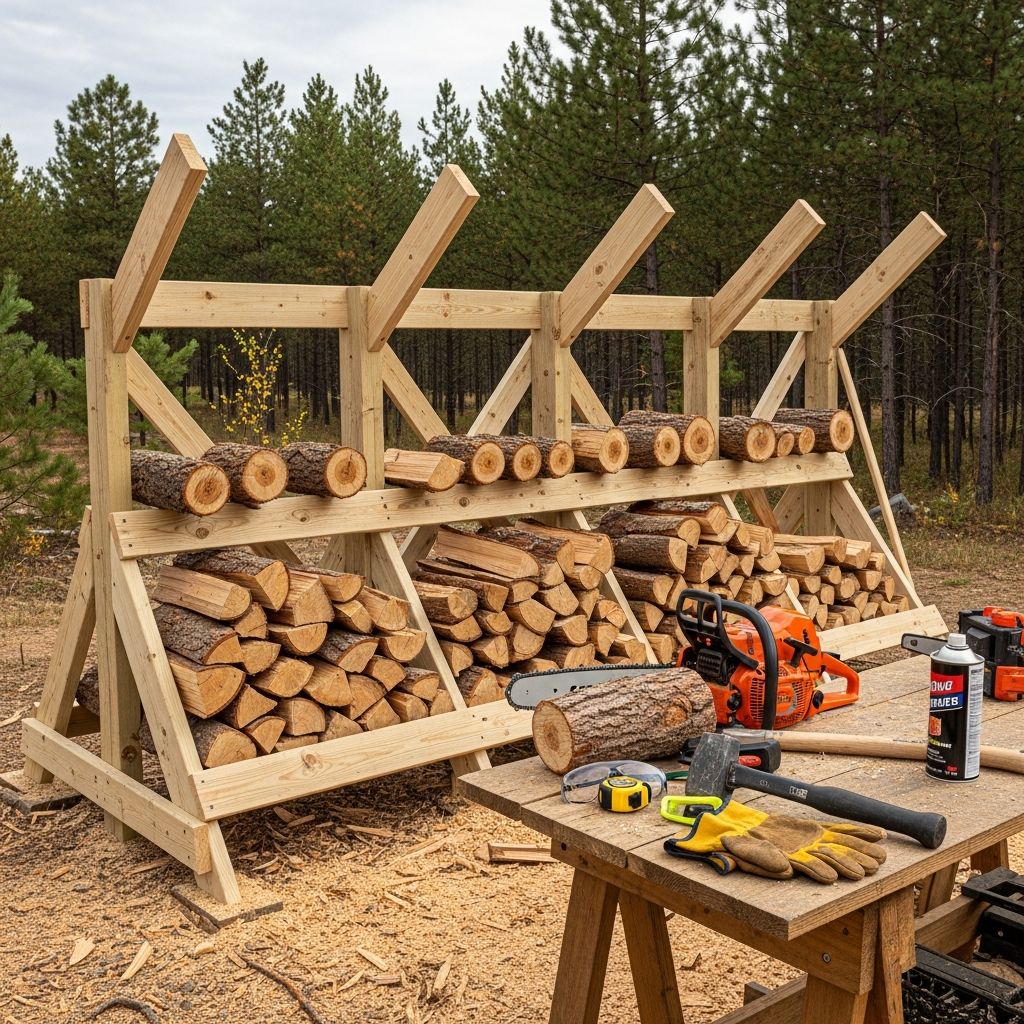
Understanding the Purpose and Benefits of a Firewood Cutting Frame
When managing a property that relies on firewood for heating or when processing logs for storage, efficiency becomes paramount. A dedicated firewood cutting frame serves as a stationary workstation specifically engineered to hold logs securely while you cut them to uniform lengths. Unlike traditional methods that require bending over logs or attempting to stabilize them manually, a properly constructed frame eliminates unnecessary strain on your back and shoulders while significantly reducing the time needed to process large quantities of wood.
The primary advantage of utilizing a cutting frame is its ability to accommodate multiple logs simultaneously. By packing logs tightly within the frame structure, you create a stable bundle that resists movement during cutting operations. This stability is crucial for maintaining consistent cut lengths and, more importantly, for ensuring your personal safety while operating a chainsaw or other cutting tools. A frame typically allows you to complete the entire loading, cutting, and unloading cycle in approximately 15 to 20 minutes, depending on the number of logs and cuts required.
Essential Materials for Frame Construction
Building a functional firewood cutting frame requires a modest selection of materials that are readily available at most lumber suppliers. Understanding the specific dimensions and quantities needed will help you make an accurate shopping list and ensure your finished project meets your processing needs.
Structural Components
- Primary vertical supports: Six pieces of substantial lumber measuring 63mm by 75mm (approximately 2.5 inches by 3 inches), each cut to 1,650mm (approximately 65 inches) in length. These vertical posts form the foundational structure that bears the weight of loaded logs.
- Lower bracing rails: Two pieces of 40mm by 60mm lumber (approximately 1.5 inches by 2.5 inches) cut to 830mm (approximately 33 inches) in length. These provide lateral stability to the lower section of the frame.
- Upper support rails: Two additional pieces of 40mm by 60mm lumber measuring 1,430mm (approximately 56 inches) in length. These rails support the cutting surface and provide extended carrying handles that project from the sides of the frame.
- Cross-bracing members: Six pieces of 40mm by 60mm lumber cut to 600mm (approximately 24 inches). These horizontal members connect the two sides of the frame and provide structural rigidity.
- Log retention supports: Four pieces measuring 450mm (approximately 18 inches) in length that prevent freshly cut logs from falling through the frame opening.
Fastening Hardware
Your project will require approximately 48 wood screws measuring 70mm (approximately 2.75 inches) in length for securing primary structural connections, and approximately 20 screws measuring 120mm (approximately 4.75 inches) for reinforcing joints where multiple pieces intersect. Using quality construction screws rather than nails provides superior holding power and allows for disassembly if modifications become necessary.
Tools Required for Assembly
A cordless drill-driver with appropriately sized screwdriver bits forms the backbone of your assembly toolkit. You will also need 6mm (approximately 0.25 inch) drill bits for pre-drilling screw holes, which prevents wood splitting and ensures screws sit properly. A handsaw serves as a backup cutting tool, while a set square helps you verify right angles during assembly. A permanent marker pen allows you to make layout marks that won’t fade during construction, and optional disc sanding equipment can round off the carrying handle edges for improved comfort.
Systematic Assembly Process
Phase One: Constructing the Frame Sides
Begin your project on a clean, level surface where you have adequate working space. Take three of your vertical support posts and position them parallel to each other. Using your measuring tools, mark locations at 70mm from one end and at 380mm from the same end on all three posts. These marks indicate where your bracing rails will attach.
Attach your shorter 830mm bracing rail at the 70mm mark, positioning it so the outer two posts align flush with the rail’s ends. This creates a square base. The middle post should be centered at 390mm from the left side. Drive a minimum of two screws at each connection point, pre-drilling to prevent wood splitting. This side frame now possesses lateral stability at its base.
Next, position your longer 1,430mm support rail at the 380mm height mark. This rail should be centered so that 300mm of the rail extends beyond each outer post on both sides. These protruding sections become your carrying handles, making the frame portable without requiring you to grip the logs themselves. Secure this upper rail with screws at all connection points.
Replicate this exact process to create a second frame side that mirrors the first in every dimension and configuration. Taking time to ensure these two halves are identical will dramatically simplify the final assembly stages.
Phase Two: Joining the Frame Halves
With both frame sides complete, position one side securely on a stable surface with the rails facing inward (toward where the logs will sit). Take your six 600mm cross-bracing pieces and attach four of them using your 70mm screws, spacing them evenly to create a rectangular framework when the second side is attached.
Carefully position the second frame side in alignment with the first, ensuring all rails and supports mirror each other. Drive two 70mm screws through each cross-bracing piece into the corresponding posts on the opposite side. The frame should now be rigid and capable of supporting substantial weight. If possible, recruit a helper to support the second side during this phase, though solo construction is certainly achievable with careful maneuvering.
Phase Three: Adding Final Reinforcements
Install the remaining two 600mm cross-bracing pieces to complete the rectangular structure. Then attach your four 450mm log retention supports to the lower support rail using your 120mm screws. For additional security, drive screws vertically through all bracing pieces into their supporting rails below. This creates a robust grid that prevents cut logs from escaping the frame opening.
If desired, use your disc sander to round the edges of the carrying handles, making them more comfortable to grip during transport and handling.
Optimization Techniques for Maximum Efficiency
Loading Strategy
The most critical factor in achieving fast cutting times is how you arrange logs within the frame. Spend time examining each log and identifying grain patterns, irregular shapes, and natural curves. Position logs to fit together like a three-dimensional puzzle, utilizing the irregular shapes of one log to fill the gaps created by another. Densely packed logs resist movement during cutting, maintain consistent spacing, and reduce the likelihood of logs tumbling out when sections are severed.
A well-packed frame requires approximately 5 to 10 minutes to load properly, but this investment in organization pays dividends when cutting begins. Loosely packed logs shift and move during chainsaw operation, requiring pauses to reposition pieces and creating dangerous situations where the saw can bind unexpectedly.
Cutting Execution
Once your frame is loaded, position yourself safely on one side with secure footing. Make deliberate, steady cuts rather than rushing through the process. The actual cutting phase typically requires 30 to 60 seconds depending on the quantity and diameter of logs being processed. Let your chainsaw do the work rather than forcing the blade through the material. Maintain proper positioning throughout cutting to ensure you maintain visibility of your work area and control of the tool.
Unloading Process
After cutting is complete, carefully remove finished sections of wood from the frame. Allow your chainsaw to cool slightly before repositioning it, and never reach into the frame to retrieve logs while the chain is still moving. Transfer cut wood directly into storage containers, log sheds, or transport vehicles. The unloading phase typically consumes 5 to 10 minutes depending on your storage proximity and organizational system.
Maintenance and Longevity Considerations
Your completed frame will require periodic inspection to maintain optimal functionality. Check all screw connections regularly, as vibration from chainsaw operation can gradually loosen fasteners. Keep the frame clean and dry, removing bark and debris that accumulates in corners and joints. If you notice any wood cracking or splintering, sand affected areas smooth to prevent personal injury during handling.
For seasonal storage, consider protecting your frame from direct weather exposure. Storing it under a roof overhang or applying wood stain or sealant extends the lifespan of your construction lumber significantly. The structural integrity of your frame directly impacts your personal safety, so addressing maintenance issues promptly prevents accidents and ensures reliable performance year after year.
Common Questions About Firewood Cutting Frame Construction
Q: What wood species should I use for maximum durability?
A: Hardwoods such as oak or maple provide superior durability compared to softwoods like pine, though they are more expensive. Construction-grade pressure-treated lumber offers good longevity at a reasonable cost and resists rot and insect damage effectively.
Q: Can I modify the dimensions to accommodate larger logs?
A: Yes, the basic design is scalable. Increasing the distance between vertical posts and adjusting rail lengths proportionally allows you to process larger diameter logs. However, ensure all modifications maintain structural integrity and proper support for the increased weight.
Q: Is it safe to operate a chainsaw while logs are in the frame?
A: Yes, when properly constructed and loaded. The stationary frame provides stability that actually enhances safety by preventing logs from rolling or shifting unexpectedly during cutting. Always wear appropriate personal protective equipment including eye protection, hearing protection, and cut-resistant chaps.
Q: How much time does it really save compared to traditional cutting methods?
A: Most users report processing logs two to three times faster than manual methods. The time savings compound significantly when processing large quantities, making the frame invaluable for households that heat with wood or those processing logs commercially.
Q: What is the weight capacity of a standard frame?
A: A properly constructed frame using the specified materials can safely accommodate several hundred pounds of logs. However, avoid overloading by packing more logs than your frame was designed to hold, as this compromises structural integrity and creates safety hazards.
Q: Do I need special training to use a firewood cutting frame?
A: While the frame itself is straightforward to use, operating the chainsaw or cutting tool requires appropriate training and experience. If you are unfamiliar with chainsaws, consider taking a safety course before beginning your project.
Q: Can I disassemble the frame for storage or relocation?
A: Yes, if you use screws rather than bolts, you can disassemble the frame by unscrewing connections. However, reassembly requires careful attention to alignment to maintain structural integrity. Some builders prefer permanent assembly for consistency and reliability.
References
- How to make a Firewood Cutting Frame — My French Forest. 2010-12-15. https://myfrenchforest.blogspot.com/2010/12/how-to-make-firewood-cutting-frame.html
- Sawbuck: 5 Steps (with Pictures) — Instructables. https://www.instructables.com/Sawbuck/
- Building a Sawbuck: Work Smarter in the Woodpile — Survival Sherpa. 2013-11-06. https://survivalsherpa.wordpress.com/2013/11/06/building-a-sawbuck-work-smarter-in-the-woodpile/
- How To Build A Firewood Holder In 7 Quick Easy Steps — Wilker Do’s. https://wilkerdos.com/how-to-build-a-firewood-holder-in-7-quick-easy-steps/
- Build a Folding Sawbuck for Easy Log Cutting and Storing — Mother Earth News. https://www.motherearthnews.com/homesteading-and-livestock/easy-log-cutting-and-storing-zmaz96onzgoe/
Similar Articles








Read full bio of medha deb