DIY Flower Food: 3 Easy Recipes For Lasting Blooms
Discover simple homemade recipes to keep your cut flowers fresh and vibrant for weeks, saving money while enhancing bouquet beauty.
DIY Flower Food for Lasting Blooms
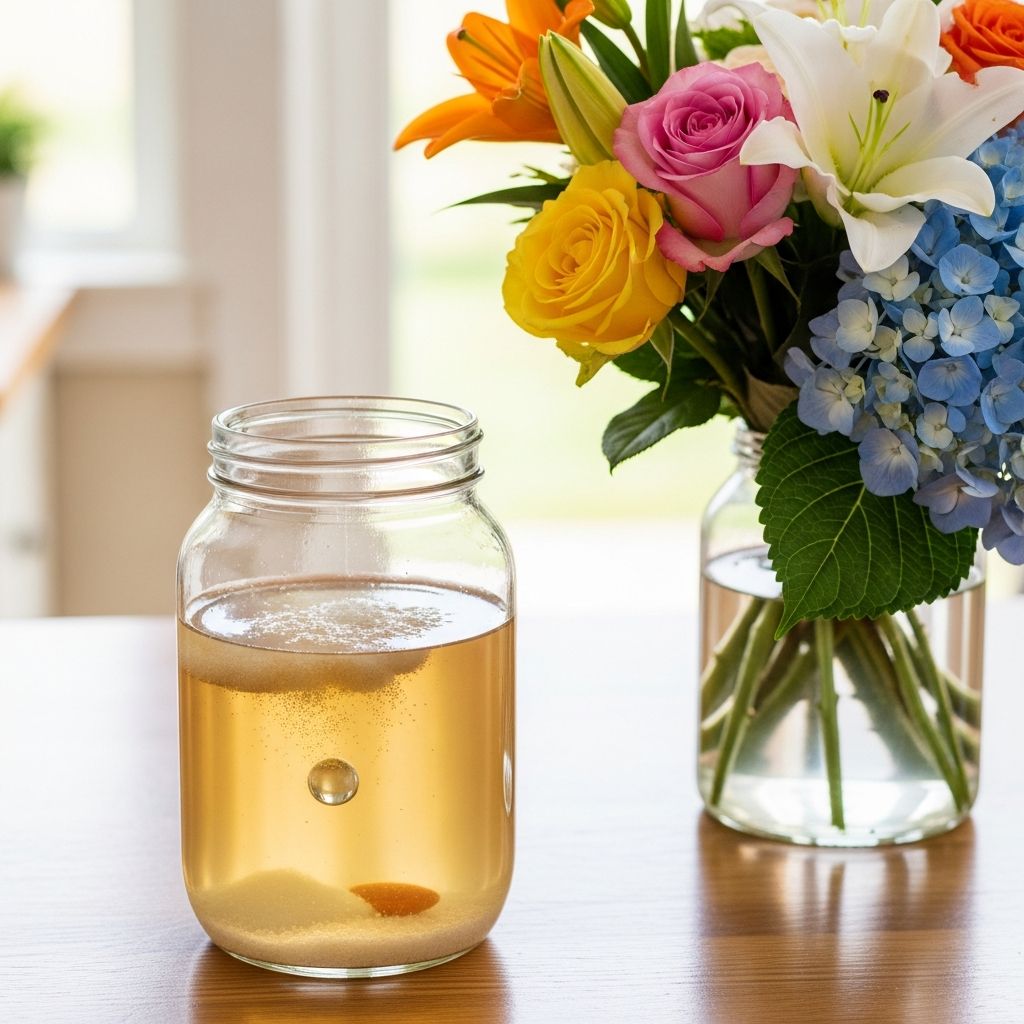
Homemade flower food solutions can significantly prolong the freshness of cut flowers by providing essential nutrients, controlling bacteria, and optimizing water conditions. These simple recipes use common kitchen staples to mimic commercial packets, ensuring vibrant petals and sturdy stems for days longer than plain water alone.
The Science Behind Flower Preservation
When stems are severed from their roots, flowers lose access to natural sugars, water, and hormones produced by the parent plant. This triggers rapid wilting as bacteria clog vascular tissues and ethylene gas accelerates aging. Effective flower food addresses these issues with three core components: carbohydrates for energy, biocides to inhibit microbes, and acidifiers to lower pH for better hydration.
Carbohydrates, typically sugars like sucrose, fuel bud opening and color retention since cut flowers can no longer photosynthesize. Biocides such as diluted bleach kill fungi and bacteria that cause cloudy, smelly water and stem blockages. Acidifiers adjust vase water to a slightly acidic pH (around 3.5-5.0), enhancing water uptake through stem cells. Together, these elements can extend vase life by up to 60% compared to water only.
Essential Ingredients for Homemade Mixes
Stock your pantry with these proven basics for reliable results:
- Sugar (sucrose or table sugar): Primary energy source; use 1-2 teaspoons per quart of water, but pair with antimicrobials to avoid feeding bacteria.
- Acid (lemon juice, vinegar, or citric acid): Lowers pH for optimal absorption; 1-2 tablespoons per quart mimics commercial formulas.
- Biocide (household bleach or vodka): Tiny amounts (1-2 drops bleach or 1 teaspoon vodka per quart) prevent microbial growth without harming stems.
- Optional enhancers: Apple cider vinegar for mild acidity or copper coins to further inhibit bacteria.
Avoid over-sugaring, as excess promotes decay; balance is key for success.
Step-by-Step Recipes for Every Need
Basic Sugar-Vinegar Solution
This beginner-friendly mix nourishes roses, tulips, and lilies effectively.
- Mix 2 cups warm water, 2 tablespoons white sugar, and 2 tablespoons apple cider vinegar.
- Stir until dissolved; add to a clean vase.
- Recut stems at a 45-degree angle underwater to prevent air embolisms.
Expect 7-10 days of freshness for most blooms.
Bleach-Boosted Formula for Bacteria-Prone Flowers
Ideal for daisies, carnations, and mixed bouquets susceptible to fungi.
| Ingredient | Amount per Quart | Benefit |
|---|---|---|
| Warm water | 1 quart | Base for dissolution |
| Sugar | 1 teaspoon | Energy supply |
| Lemon juice | 1 tablespoon | pH regulation |
| Bleach (5% sodium hypochlorite) | 1-2 drops | Eliminates fungi/bacteria |
Combine gently; refresh every 2-3 days. This combats botrytis cinerea, preventing petal drop in roses and dahlias.
Vodka-Powered Longevity Elixir
Vodka’s alcohol acts as a natural biocide and ethylene inhibitor for delicate orchids and lilies.
- 1 quart warm water
- 1 teaspoon sugar
- 1 teaspoon vodka or clear spirits
- Juice of half a lemon
Mix and use immediately. It inhibits ethylene to keep buds opening properly.
Preparation and Vase Care Best Practices
Success starts with proper setup:
- Clean vases thoroughly: Wash with hot soapy water; rinse well to remove residues that breed bacteria.
- Recut stems daily: Slice 1 inch off at 45 degrees with sharp shears; do this underwater.
- Remove foliage: Strip all leaves below the waterline to prevent rot.
- Position wisely: Keep away from direct sun, heat sources, ripening fruit (ethylene producers), and drafts.
- Refresh solution: Every 2-3 days or when cloudy; top off daily with plain water otherwise.
Warm water (100-110°F) dissolves ingredients faster and aids uptake.
Tailoring Formulas to Flower Types
Different blooms have unique needs:
- Roses and hydrangeas: Bleach mix fights fungi; revives wilted stems with overnight soak.
- Tulips and daffodils: Sugar-light formula prevents flopping; add pennies for copper biocide.
- Lilies and orchids: Vodka version inhibits ethylene for bud development.
- Chrysanthemums: Vinegar solution controls pH sensitivity.
Test small batches first; observe for 24 hours.
Common Pitfalls and Fixes
Avoid these errors for peak performance:
- Dirty water: Indicates bacteria; fix with full refresh and bleach addition.
- Bent necks: Stress symptom; flower food reduces incidence by supporting hydration.
- Premature wilting: Often pH imbalance; measure with strips if available (aim 3.5-5.0).
- Overdosing bleach: Causes browning; stick to drops, not milliliters.
Store mixes refrigerated up to 1 week; discard if cloudy.
Environmental Factors Influencing Longevity
Beyond food, temperature (65-72°F ideal), humidity (avoid dry air), and light (indirect) play roles. Ethylene from fruits/veggies hastens decay—keep separate. Hard tap water? Use filtered to lower dissolved solids.
Cost Savings and Eco Benefits
DIY costs pennies per vase versus $1+ packets. Reduces waste by extending enjoyment, minimizing flower purchases. Sustainable for gardeners harvesting backyard blooms.
Frequently Asked Questions
Can I use regular sugar instead of floral-specific?
Yes, table sugar works as sucrose; just balance with biocide to prevent bacterial overgrowth.
How often should I change the water?
Every 2-3 days or when cloudy/smelly; daily top-offs suffice otherwise.
Is bleach safe for flowers?
In tiny doses (1-2 drops/quart), yes—it targets microbes without residue harm.
What if my flowers wilt anyway?
Recut stems, plunge in hot water 30 seconds, then cool food solution overnight.
Does flower food work on all bouquets?
Most yes; avoid on bulb flowers like daffodils if toxic sap present—rinse stems first.
Advanced Tips from Pros
Florists dose precisely for 60% vase life gains. Experiment with ratios; track results in a journal. For shipping, use powdered dry mixes. Pair with conditioning: hang stems in cool air 12 hours pre-vase.
References
- Benefits of Cut Flower Food — BloomingBox. 2023. https://bloomingbox.com/blog/benefits-of-cut-flower-food
- Why do flowers need flower food? — Chrysal. 2024. https://www.chrysal.com/en-us/knowledge/flower-care/why-do-flowers-need-flower-food
- A Florist’s Guide to Flower Food — Blooming Amazing. 2023. https://www.bloomingamazing.ie/blogs/flower-care-advice/why-we-need-to-feed-flowers-flower-food
- The Importance of Dosing Flower Food Correctly — FloraLife. 2024. https://floralife.com/article/the-importance-of-dosing-flower-food-correctly/
- Sugar Keeps Flowers Fresh — Sugar.org. 2022. https://www.sugar.org/blog/sugar-keeps-flowers-fresh/
- How To Use Flower Food Correctly — Farmgirl Flowers. 2023. https://farmgirlflowers.com/blog/how-to-use-flower-food
- Cut-Flower Care — Brooklyn Botanic Garden. 2023. https://www.bbg.org/article/cut-flower_care
Similar Articles








Read full bio of Sneha Tete