Removing Your Formica Countertop: Complete Homeowner’s Guide
Master the art of removing old Formica countertops safely and efficiently
Removing Your Formica Countertop: A Complete Homeowner’s Guide
Updating your kitchen doesn’t require hiring expensive contractors or breaking your renovation budget. One of the most achievable first steps in kitchen modernization is learning how to remove your existing Formica countertop yourself. This versatile laminate surface, once a kitchen staple, can be safely dismantled with basic tools and careful technique. Whether you’re making room for granite, quartz, or another premium surface, understanding the removal process empowers you to take control of your kitchen transformation.
Understanding Formica Countertops and Their Construction
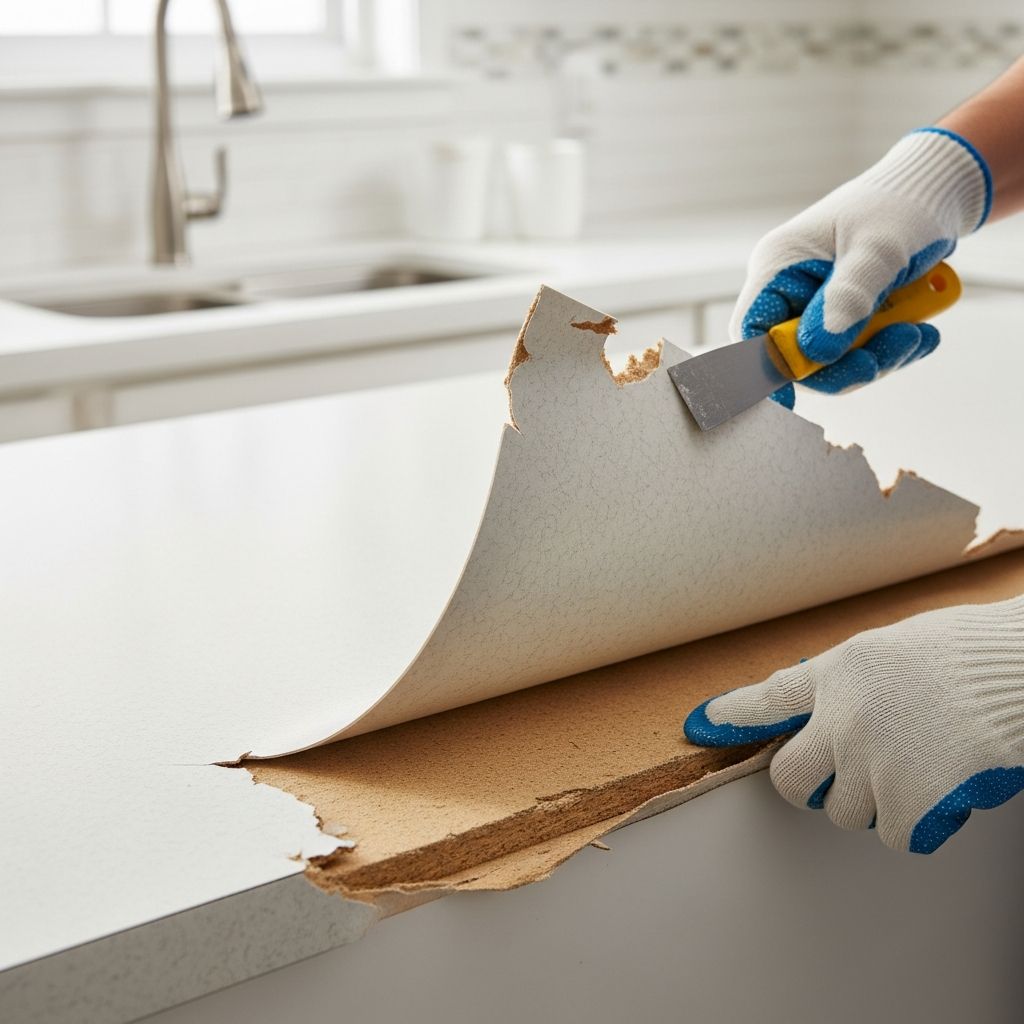
Before diving into removal techniques, it helps to understand what you’re working with. Formica countertops typically consist of a particleboard or plywood base layer that serves as structural support. This foundation is then topped with a thin laminate veneer—usually around 1/16 inch thick—that provides the visible surface and protective finish. The laminate is adhered using contact cement or similar adhesives, creating a strong bond that will require deliberate effort to separate.
Many Formica installations also feature additional components. A wooden trim edge may be fastened to the front perimeter, and a backsplash section often extends up the wall. Some countertops include rounded edges and curved surfaces that were common in mid-to-late century kitchen designs. Understanding this layered construction helps you anticipate what you’ll encounter during removal and plan your approach accordingly.
Assembling Your Tools and Safety Equipment
Successful countertop removal begins with having the right tools. Unlike projects requiring specialized or expensive equipment, this task can be accomplished with items you may already own or can easily borrow or purchase affordably.
Essential Tools for the Job
- Screwdrivers (both Phillips and flathead) – for removing fasteners from beneath cabinets and detaching trim components
- Pry bar or crowbar – essential for gently separating the countertop from cabinet supports
- Metal scraper – crucial for removing adhesive residue and surface buildup
- Utility knife – helps separate caulk lines and sealants between sections
- Putty knife – particularly useful for working behind backsplash sections and in tight spaces
- Hammer – provides controlled impact force for scraper and putty knife work
- Heat gun (optional but helpful) – softens contact cement for easier removal, especially for backsplash sections
Critical Safety Equipment
Protecting yourself during this project is non-negotiable. Formica removal generates dust, sharp edges, and adhesive particles that can cause injury or respiratory issues if proper precautions aren’t taken.
- Work gloves – prevent cuts and protect hands from adhesive residue
- Safety glasses or goggles – shield eyes from dust particles and flying debris
- Dust mask or respirator – protects lungs from fine particulate matter released during removal
- Hearing protection – if using power tools like circular saws for any cutting work
- Closed-toe work shoes – protect feet from dropped tools and heavy materials
Preparing Your Workspace and Shutting Down Utilities
Before touching tools to countertop, prepare your space and manage utilities. Begin by turning off the water supply to your kitchen sink. This prevents accidental water damage and keeps your work area clear of obstacles. Unplug all nearby appliances—coffee makers, mixers, toasters, and other electric devices. Not only does this eliminate potential shock hazards, it also clears countertop space and removes items that could be damaged during removal.
Clear your work zone of decoration items, canisters, small appliances, and anything else on or near the countertop. Remove cabinet drawers if they extend far enough to interfere with your removal process. Lay down drop cloths or cardboard on the floor beneath your work area to catch falling debris and protect flooring from scratches and damage. Good lighting is essential—position work lights or lamps to illuminate the underside of cabinets where fasteners are located.
Step-by-Step Removal Process
Removing Fasteners from Beneath Cabinets
Most Formica countertops are secured from underneath the cabinet structure rather than from above. This hidden fastening method means your first real work happens below, out of sight. Using your screwdriver, locate all screws securing the countertop to the cabinet frame. These are typically spaced evenly along the perimeter beneath the countertop surface. Remove each screw completely and place them in a container—you may want to reuse them or keep them for reference when installing a new countertop.
Take time to locate every fastener. Missed screws will prevent smooth removal and could result in damage when you attempt to lift the countertop. Some older installations may also have been glued in addition to being screwed down, so don’t be surprised if removal remains slightly difficult even after removing all visible fasteners.
Separating the Countertop from Its Base
With fasteners removed, your countertop is ready to be lifted away. This is where the pry bar becomes invaluable. Insert the pry bar between the countertop and the top edge of the cabinet base at multiple points along the length. Work systematically—position the bar, apply gentle but firm pressure, and lift slightly. Move along the countertop in sections rather than trying to force the entire piece up at once.
The goal is coaxing the countertop free through measured force, not violent yanking. If you encounter significant resistance in one area, try working from a different section. Sometimes adhesive that wasn’t obvious will hold one area more firmly than others. When using pry bars, work them in tandem if possible—pressing one area down while lifting another helps balance the load and prevents binding.
Managing Backsplash and Edge Trim
If your countertop includes a backsplash section that extends up the wall, this may need removal before the main countertop comes free. Backsplash sections are sometimes fastened independently or may be caulked to the wall. Use your paint scraper or putty knife to work between the backsplash and wall, driving downward with gentle hammer taps to create separation. Work along the entire length until the section begins to come away from the wall.
Wooden trim or edge banding along the front of the countertop should be removed separately. Pry bars work well for this, and you can often reuse trim pieces if they remain undamaged. Some trim may be nailed while other sections are screwed—remove fasteners first before attempting to pry.
Handling Stubborn Adhesive Bonds
If your countertop remains stubbornly attached despite screw removal, contact cement adhesive is likely the culprit. Contact cement, once cured, creates an extremely strong bond. For particularly difficult backsplash sections or countertops that resist prying, a heat gun can be remarkably effective. Direct the heat gun at small areas of the stubborn section, warming the adhesive beneath the laminate. As the cement softens, carefully attempt to peel the material away.
Lacquer thinner offers another approach for contact cement removal. Get a putty knife behind a spot and pry just enough to create a small gap, then squirt lacquer thinner behind the laminate. Work your way along the attached section, gradually squirting and prying as the solvent dissolves the cement. This method requires patience but often succeeds where force alone fails.
Post-Removal Surface Preparation
Once your old countertop is removed, your work isn’t finished. The cabinet surface beneath will likely be covered with adhesive residue, old caulk, and possibly damaged particleboard or plywood. This cleanup phase is critical—a properly prepared surface ensures your new countertop will install correctly and look professional.
Use your metal scraper to methodically remove adhesive and caulk buildup. This is labor-intensive but necessary work. Scrape at angles to avoid gouging the underlying surface. For stubborn adhesive, acetone or similar solvents can help soften the material. Any old paper or drywall backing that came loose should be removed or sealed with joint compound if the base material is damaged.
Inspect the underlying surface carefully. If your cabinets are particle board that’s damaged, water-stained, or degraded, you may need to reinforce or replace sections before installing new countertops. Ensure the surface is clean, dry, and relatively flat—high spots or debris will cause your new countertop to sit unevenly.
Common Challenges and Solutions
| Challenge | Cause | Solution |
|---|---|---|
| Countertop won’t budge despite screw removal | Contact cement adhesive holding material | Use heat gun to soften adhesive, apply lacquer thinner behind laminate, or work with pry bars from multiple angles |
| Particleboard base is soft or water-damaged | Moisture exposure or age-related deterioration | Replace damaged sections before new installation, or reinforce with plywood backing |
| Backsplash won’t separate from wall | Strong adhesive bond or caulk seal | Use paint scraper and hammer to gradually separate, or apply heat gun to soften adhesive |
| Laminate tears or fragments during removal | Aggressive prying or brittle aging material | Work more slowly with gentler pressure, use scrapers to work from edges inward |
| Wall damage when backsplash is removed | Paper facing comes away with laminate | Apply sealant compound to exposed gypsum, or consider leaving thin laminate behind if covered by new backsplash |
Disposal and Recycling Considerations
Your removed countertop creates disposal challenges. Formica laminates don’t biodegrade, and landfills increasingly restrict such materials. Check with your local waste management facility about disposal options. Some facilities accept mixed materials like laminate-covered particleboard, while others require separation. Recycling centers rarely accept these materials, but breaking them into smaller sections may help with disposal logistics.
If your countertop is in good condition, consider salvaging sections for other projects—shelving, tabletops, or craft surfaces. Online marketplaces and community groups sometimes want free or inexpensive building materials from DIY projects.
Timeline and Physical Demands
Most homeowners complete countertop removal in one to two hours, depending on the size of the surface and complexity of fastening. A larger kitchen with multiple sections or particularly stubborn adhesive may require three to four hours. The work is physically demanding—you’ll be working overhead, applying sustained pressure with hand tools, and dealing with heavy materials.
Build in extra time if this is your first such project. Rushing increases the chance of mistakes, injuries, or damage to cabinets. If you find yourself struggling significantly, it’s acceptable to take breaks or spread the work across multiple days.
Frequently Asked Questions
Can I remove a Formica countertop without damaging the cabinets underneath?
Yes, with careful technique using pry bars instead of hammers and working gently from multiple points, cabinet damage can be avoided. The key is patience and distributed force rather than concentrated impact.
What’s the best tool for removing stubborn adhesive?
A combination approach works best: start with mechanical removal using scrapers, apply heat gun to soften adhesive, and use chemical solvents like lacquer thinner for residual buildup. Each approach has strengths in different situations.
Do I need to hire a professional for this project?
For most homeowners with basic tool experience, professional help isn’t necessary. The task is straightforward compared to installation. Only consider professional removal if you have mobility limitations, health concerns about dust exposure, or if your specific installation has complications.
Can I install new countertops immediately after removal?
Not immediately. The surface must be cleaned of adhesive, inspected for damage, repaired if necessary, and allowed to dry completely. Plan for at least one day between removal and new installation, preferably two to ensure any moisture from cleaning has evaporated.
What should I do if I accidentally damage the cabinet surface during removal?
Small dings or gouges can be filled with wood filler or patching compound. Larger damage may require reinforcement with plywood or replacement of affected sections. This is why careful technique during removal is so important.
References
- How to Remove a Formica Countertop Easily and Safely — Plaiwoo. 2024. https://plaiwoo.com/blogs/diy-guides-ideas/how-to-remove-a-formica-countertop-easily-and-safely-plaiwoo-guide
- DIY Tips & Tricks: How to Cut Formica Laminate — Formica Group. 2024. https://www.formica.com/en-us/articles/home-design/how-to-cut-formica-laminate
- Removal of Formica — Fine Homebuilding Forum. 2024. https://www.finehomebuilding.com/forum/removal-of-formica
- How To Remove Formica Counter Tops — Dani DIY’d It. YouTube. 2024. https://www.youtube.com/watch?v=VuDj_IU7ibc
- How to Remove Laminate Kitchen Countertops — HGTV. YouTube. 2024. https://www.youtube.com/watch?v=tFhsfheopjI
Similar Articles


Read full bio of medha deb