DIY Geothermal Cooling: 6-Step Guide For Efficient Home AC
Harness earth's stable temperatures for efficient home cooling with this comprehensive DIY geothermal system blueprint.
DIY Geothermal Cooling Guide
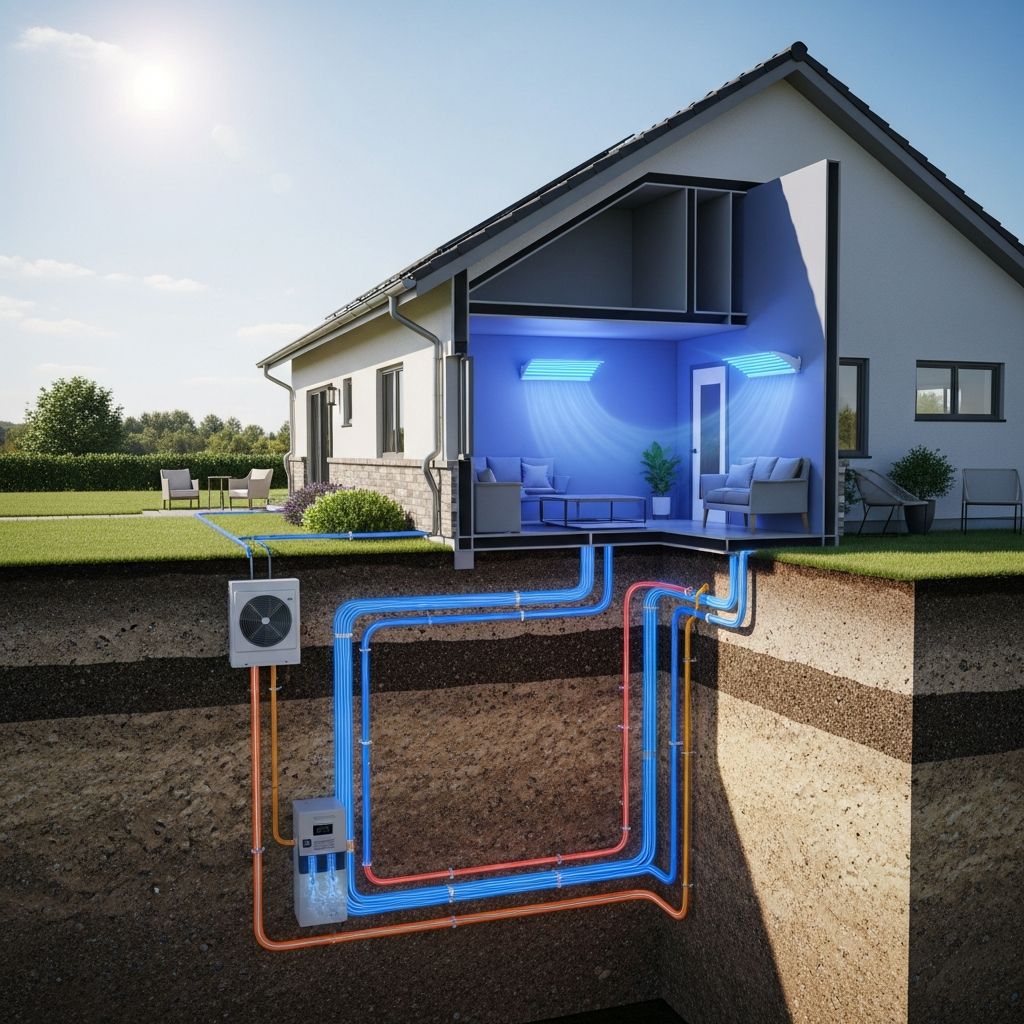
Geothermal cooling systems leverage the consistent underground temperatures to provide efficient air conditioning without relying heavily on electricity. These setups circulate fluid through buried pipes to absorb heat from your home, offering a sustainable alternative to traditional AC units. Ideal for homeowners seeking long-term energy savings, a properly installed system can drastically reduce cooling costs while minimizing environmental impact.
Understanding Geothermal Cooling Basics
The core principle of geothermal cooling involves transferring heat from your living space to the earth via a closed-loop system. Underground, soil and rock maintain stable temperatures around 45-55°F year-round, far cooler than summer air. Fluid in the loop—typically water mixed with antifreeze—picks up heat indoors and releases it into the ground, cycling back chilled for continuous operation.
Unlike conventional air conditioners that expel heat outside, geothermal systems use the ground as a massive heat sink. This results in efficiencies up to 400-500%—meaning for every unit of electricity used, you get four to five units of cooling. Systems can be horizontal (trenches) or vertical (boreholes), depending on available space.
Assessing Your Property for Installation
Before starting, evaluate your site’s suitability. Key factors include soil type, available land, and local climate. Sandy or loamy soils conduct heat better than clay, which may require longer loops. Measure your yard: horizontal systems need 400-600 feet per ton of cooling capacity, while vertical borings suit smaller lots.
- Land Space: Horizontal loops require 1/4 to 3/4 acre; vertical options need less surface area but deeper drilling.
- Soil Temperature: Check regional ground temps—warmer climates may need less loop length.
- Climate Zone: Hotter areas benefit most, as the ground-to-air differential increases efficiency.
- Utilities: Avoid underground lines; call 811 for marking.
Calculate your home’s cooling load using Manual J methods, aiming for 1 ton (12,000 BTU/hr) per 400-600 sq ft. Tools like free online calculators help estimate loop footage.
Gathering Materials and Tools
| Component | Description | Approx. Cost |
|---|---|---|
| HDPE Piping | 1-inch diameter, 500-3600 ft loops | $0.10-$0.50/ft |
| Antifreeze | Ethylene glycol, 10-30% mix | $20/gallon |
| Circulation Pump | 12V brushless or QT Flow Center | $18-$700 |
| Heat Exchanger | Car radiator or custom coil | $35-$150 |
| Manifold | PVC or steel fittings with valves | $50-$200 |
| Trenching Tools | Shovel, backhoe rental | $100/day |
Source HDPE pipe rated for geothermal use—it’s durable, corrosion-resistant, and flexible for looping. For pumps, opt for variable-speed models to match flow needs. Include fittings, clamps, zip ties, and pressure gauges. Safety gear: gloves, goggles, and dust masks.
Planning Permits and Safety
Secure building permits where required, especially for trenching over 4 feet deep. Check local codes for groundwater protection and backfill standards. Safety first: mark utilities, use proper lifting techniques, and test for gas leaks post-assembly. Wear protective equipment and work with a buddy for heavy digging.
Step-by-Step Installation Process
1. Designing the Ground Loop
Opt for a closed horizontal loop for DIY feasibility. Dig trenches 4-6 feet deep, 6 feet apart to prevent thermal interference. For a 2-ton system, plan 800-1200 feet total, slinky-coiled for space savings. Lay pipe in a U-shape or multiple parallel runs, ensuring supply and return lines are paired.
2. Excavating Trenches
Rent a backhoe for efficiency—manual digging suits small prototypes only. Start at the house foundation, trenching outward. Slope slightly for drainage. As one trench completes, uncoil pipe from the far end, securing with zip ties every 10 feet. Proceed trench-by-trench to maintain workflow.
3. Preparing and Inserting Pipes
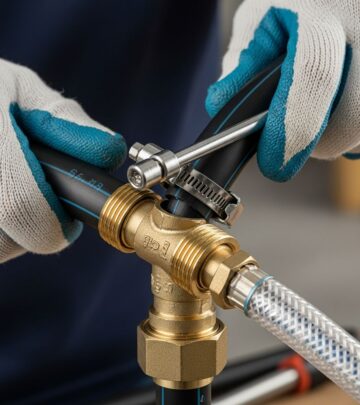
Unroll HDPE pipe carefully to avoid kinks. Connect ends with barbed fittings and double hose clamps—galvanized steel outperforms plastic for seals. For foundation entry, drill 1-1/8 inch holes from inside using a hammer drill. Thread pipes through, sealing penetrations with foam.
4. Building the Manifold
Construct a supply/return manifold from 1.25-inch PVC with individual ball valves per loop for balancing flow. Include isolation valves, air vents, and pressure ports. Test for leaks under pressure before burial. Steel barbs with clamps ensure tight connections under circulation stress.
5. Installing Circulation and Heat Exchange
Mount a flow center with dual pumps near the indoor unit. Connect to loops and fill with 10-25% antifreeze solution (e.g., 10 gallons glycol in 100-gallon system lowers freeze point to 23°F). Wire pumps to a thermostat-controlled circuit. Pair with a radiator or evaporator coil: pump chilled fluid through coils, fanning air over them for room cooling.
6. Backfilling and Testing
Backfill trenches in layers, compacting to prevent settling. Install temperature/pressure gauges to monitor performance. Prime the system, purge air, and run pumps. Check for leaks, balance flows, and verify delta-T (temperature drop) of 10-20°F across loops.
Optimizing Performance and Efficiency
Insulate all above-ground pipes to minimize losses. Size pumps for 2-3 GPM per ton. Integrate with a heat pump for dual heating/cooling—winter mode reverses flow to extract ground heat. Add desuperheaters for free hot water. Expect payback in 5-10 years via 50-70% energy savings.
- Monitor fluid levels quarterly.
- Clean coils annually.
- Flush loops every 5 years.
Cost Analysis and Savings
DIY costs range $5,000-$15,000 for a 3-ton system, versus $20,000+ professional. Ongoing: $0.02-$0.05/kWh equivalent. Federal tax credits cover 30% through 2032. Compare:
| System Type | Install Cost | Annual Savings |
|---|---|---|
| Conventional AC | $3,000-$7,000 | Baseline |
| DIY Geothermal | $5,000-$15,000 | $500-$1,200 |
| Pro Geothermal | $20,000-$40,000 | $800-$2,000 |
Common Challenges and Troubleshooting
Leaks: Tighten clamps, switch to metal fittings. Low flow: Bleed air, check valves. Poor cooling: Extend loops or insulate better. Ground freeze risk: Maintain antifreeze concentration. Noise: Mount pumps on isolators.
Advanced DIY Modifications
Hybridize with solar-powered pumps for off-grid use. Convert old AC units by swapping condensers for ground loops. Experiment with earth tubes (PVC air ducts) for passive pre-cooling. Scale up with vertical loops using well-drilling rigs.
Frequently Asked Questions (FAQs)
Can beginners build a geothermal cooling system?
Yes, with planning and basic plumbing skills. Start small to test.
How deep should trenches be?
4-6 feet to reach stable soil temps, avoiding frost lines.
What fluid is best?
Water-glycol mix; propylene glycol for potable systems.
Does it work in cold climates?
Primarily for cooling, but full heat pumps excel everywhere.
What’s the warranty on DIY parts?
Depends on components; HDPE lasts 50+ years.
Environmental and Long-Term Benefits
Geothermal cuts CO2 by 50% vs. standard AC, with zero refrigerants. Loops last 50-100 years, pumps 10-20. Enhance home value and resilience against rising energy prices.
References
- Homeowners Guide to Geothermal Heating, Cooling, and Hot Water Systems — International Ground Source Heat Pump Association (IGSHPA). 2023. https://igshpa.org/wp-content/uploads/Homeowners-Guide-to-Geothermal.pdf
- Geothermal Heating, Cooling, and Hot Water Systems — U.S. Department of Energy (via IGSHPA). 2023. https://igshpa.org/wp-content/uploads/Homeowners-Guide-to-Geothermal.pdf
- DIY Geothermal Installation Guide — Build My Own Cabin. 2022. https://www.buildmyowncabin.com/geothermal/diy-geothermal.html
Similar Articles


Read full bio of Sneha Tete