Landscape Block Porch Stairs: Step-By-Step DIY Guide
Step-by-step instructions to create durable, attractive porch stairs using landscape blocks for enhanced outdoor access.
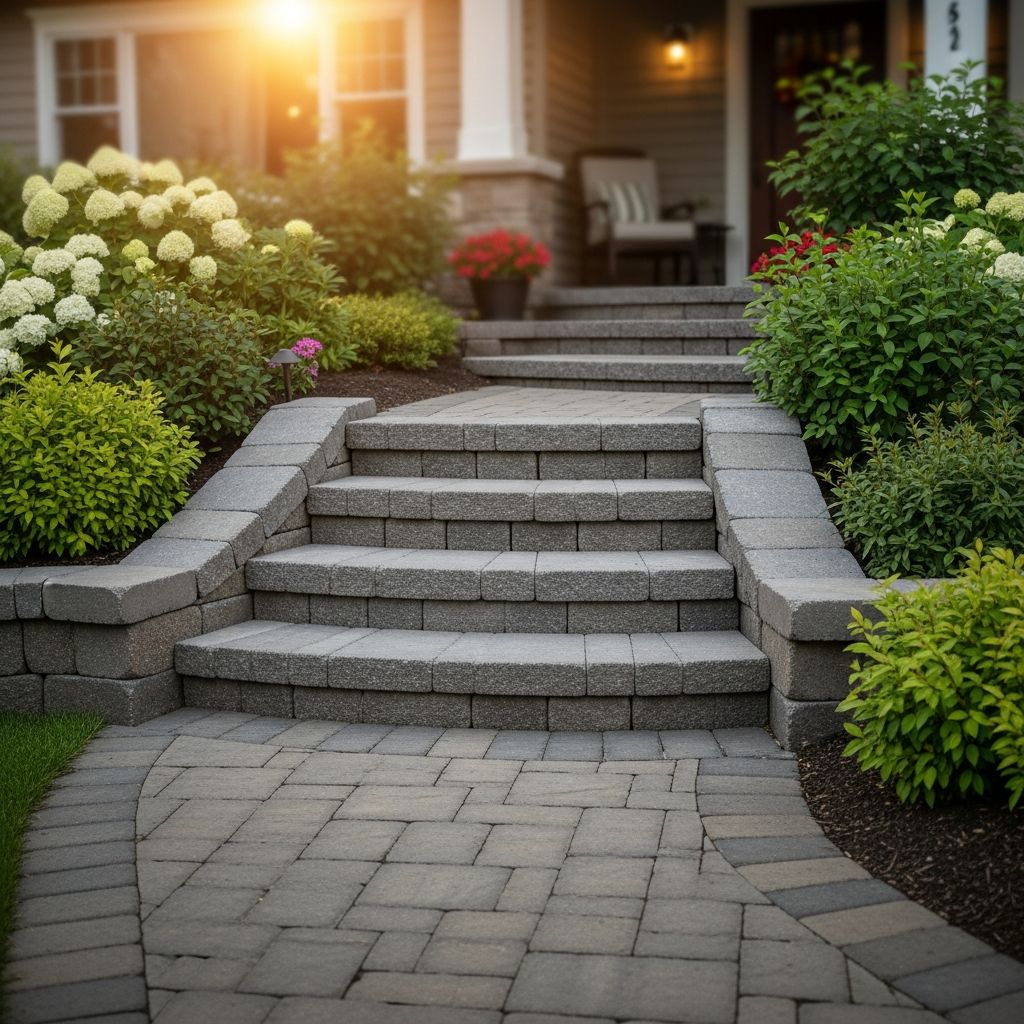
DIY Guide: Landscape Block Porch Stairs
Constructing porch stairs with landscape blocks offers a robust, visually appealing solution for connecting your home to the outdoors. These steps integrate seamlessly with retaining walls or standalone structures, providing safe passage while enhancing curb appeal. This guide draws on established construction practices to help you build steps that withstand weather and heavy use.
Planning Your Porch Stair Project
Effective planning prevents common pitfalls in stair construction. Begin by assessing the total rise—the vertical distance from ground level to the porch surface. Industry standards recommend riser heights between 6 and 8 inches for comfort and building code compliance. Divide the total rise by your chosen riser height to determine the number of steps. For instance, a 36-inch rise with 7-inch risers requires about five steps.
Next, calculate the run, or tread depth, typically 10 to 12 inches per step. Sketch a layout ensuring the stairs align with door placement and avoid obstacles. Consider the width: 36 inches minimum for single-person use, wider for households. Factor in local codes, which may mandate handrails for four or more risers.
- Measure total rise accurately using a level and tape.
- Choose block dimensions that match riser heights; many landscape blocks are 8 inches tall.
- Plan for sidewalls to contain treads and enhance stability.
- Account for drainage to prevent water pooling.
Gathering Essential Materials and Tools
Select high-quality, interlocking landscape blocks designed for retaining walls or steps. These often feature textured faces for grip and pins or lugs for secure stacking. You’ll need gravel for base, sand for leveling, construction adhesive, and tread materials like concrete pavers or caps.
Tools include a shovel, plate compactor, level, rubber mallet, circular saw with masonry blade, safety gear, and string line for alignment.
| Material | Quantity Estimate (for 5-step, 36″ wide stair) | Purpose |
|---|---|---|
| Landscape blocks (8x12x16 inches) | 100-150 units | Risers and sidewalls |
| 3/4″ crushed gravel | 2-3 cubic yards | Base and drainage |
| Mason sand | 1 cubic yard | Leveling bed |
| Construction adhesive | 10-15 tubes | Block bonding |
| Tread pavers or caps | 50-75 sq ft | Walking surface |
Site Preparation and Foundation Basics
A solid foundation is critical for step longevity. Mark the stair footprint with stakes and string, excavating 12-18 inches deep across the entire area, plus 6-12 inches beyond sides for backfill. Remove organic material to prevent settling.
Install geotextile fabric to inhibit weed growth and soil migration. Spread 6-8 inches of crushed gravel in 2-inch lifts, compacting each thoroughly with a plate compactor. This creates a permeable base that manages water runoff. Check for level every step; tolerances should not exceed 1/4 inch over 10 feet.
For steps adjacent to retaining walls, align the base course with the wall’s foundation, ensuring no gaps that could undermine integrity.
Building the Core Step Structure
Start from the bottom, working upward. Place the first course of riser blocks on the compacted gravel, burying them partially for stability. Use a 1-inch sand bed for fine adjustments. Ensure blocks are plumb and level, tapping with a mallet.
Construct sidewalls using corner or half blocks, building vertically without batter for clean lines. Pin or lug blocks together per manufacturer specs. For each subsequent riser, backfill behind with gravel, compact, then stack the next course on half-bond—offseting joints by half a block for strength.
In pedestal-style builds, excavate isolated footings for each step base. For inset designs within walls, integrate sidewalls as you progress, maintaining a 1-inch setback where needed.
- Lay base course, fill cores with gravel if not using concrete.
- Build sidewalls to full height simultaneously for support.
- Stack risers course-by-course, bonding with adhesive on upper levels.
- Verify level and plumb after every course.
Enhancing Stability with Backfill and Core Filling
After each course, backfill behind risers and sidewalls with 6 inches of gravel, compacting in layers. This locks blocks in place and promotes drainage. For superior strength, fill block cores with concrete, vibrating to eliminate voids—ideal for high-traffic areas.
Avoid soil backfill near cores to prevent freeze-thaw damage. In cold climates, ensure 12 inches of gravel depth below frost line.
Installing Tread Surfaces for Safety and Style
Treads complete the stairs. Options include pavers, flagstone, or precast caps. Lay a 1-inch sand or mortar bed atop risers, then place treads with 1/2-inch joints. Cut pieces as needed for edges, using a wet saw. Secure with adhesive or polymeric sand.
Leave a slight forward slope (1/8 inch per foot) for water shedding. Add non-slip textures or coatings for wet conditions.
- Pavers: Versatile, easy to replace.
- Stone caps: Natural elegance.
- Concrete pour: Seamless, custom look.
Advanced Techniques for Custom Configurations
For curved or wider stairs, adjust block placement to follow contours, narrowing treads gradually. In multi-riser setups, build full-height sidewalls first for rigidity. Integrate lighting by embedding low-voltage LEDs in risers. Handrails attach via core-embedded posts.
Table for riser-run compliance:
| Riser Height (in) | Recommended Tread Depth (in) | Max Steps w/o Railing |
|---|---|---|
| 6 | 11 | 3 |
| 7 | 10.5 | 3 |
| 8 | 10 | 2 |
Common Mistakes to Avoid
Poor drainage leads to shifting; always prioritize gravel backfill. Skipping compaction causes settling. Inaccurate measurements result in uneven risers—double-check math. Neglecting safety gear risks injury from dust and heavy lifting.
Finishing Touches and Maintenance
Seal blocks and treads for stain resistance. Inspect annually for shifts, re-leveling as needed. Sweep debris and reseal joints to maintain integrity.
Frequently Asked Questions (FAQs)
What is the ideal riser height for porch steps?
Riser heights of 6-8 inches ensure comfortable ascent and meet most codes.
Do I need to fill block cores with concrete?
Concrete filling boosts stability, especially for freestanding stairs; gravel suffices for walled integrations.
How wide should porch stairs be?
Minimum 36 inches; 42-48 inches for frequent use.
Can these steps handle snow and ice?
Yes, with proper drainage and textured surfaces; salt or de-icers won’t degrade quality blocks.
What’s the estimated cost for a basic 5-step stair?
$500-1500, depending on materials and size.
References
- County Block Retaining Wall Guidelines for Step Construction — County Materials. 2023. https://hub.countymaterials.com/hubfs/downloads/county_block_retaining_wall_guidelines_for_step_construction.pdf?hsLang=en
- How to Construct Steps — Unilock. 2024-01-15. https://unilock.com/construction/how-to-construct-steps/
- Build Cornerstone 100 Stairs with Retaining Wall Blocks — Cornerstone Wall Solutions. 2023-06-10. https://cornerstonewallsolutions.com/cornerstone-100-stairs/
- How to Build Steps with Pavers: Step-by-Step DIY Guide — NT Pavers. 2024-05-20. https://ntpavers.com/how-to-build-steps-with-pavers/
- Allan Block Commercial Installation Manual: Proper Stair Construction — Allan Block. 2022-11-01. https://allanblock.com/docs/Commercial_Installation_Manual/proper-stair-construction-for-retaining-walls.html
Similar Articles








Read full bio of medha deb