Building a Mirrored Coffee Table: A Complete DIY Guide
Transform your living space with a stunning mirrored coffee table using basic tools and materials.
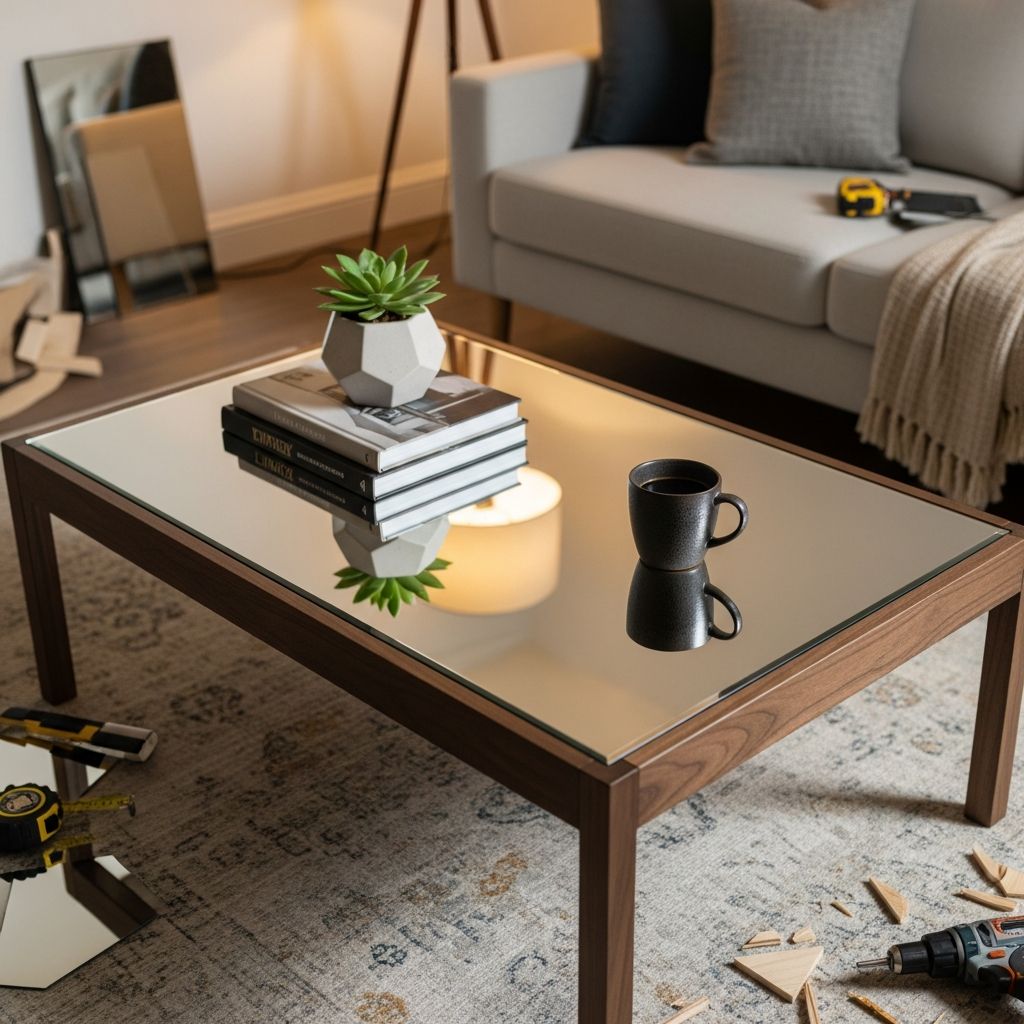
Creating your own mirrored coffee table is an achievable project for DIY enthusiasts of all skill levels. Whether you’re looking to add a stylish centerpiece to your living room or seeking a budget-friendly furniture solution, a mirrored coffee table offers both aesthetic appeal and functional storage. This guide walks you through the entire process, from selecting materials to final assembly, ensuring you end up with a professional-quality piece you’ll be proud to display.
Why Choose a Mirrored Coffee Table?
Mirrored surfaces reflect light throughout your room, making spaces feel larger and brighter. A coffee table with mirrored elements serves as both a conversation starter and a practical furniture piece. Unlike purchasing pre-made furniture, building your own allows customization to match your décor style, room dimensions, and personal preferences. Additionally, DIY construction typically costs significantly less than buying comparable pieces from furniture retailers.
Essential Materials and Tools
Before beginning your project, gather the following materials and tools to ensure smooth construction:
Materials You’ll Need
- Mirror or mirrored plexiglass sheets (sized according to your table dimensions)
- Lumber for the base structure (typically 2×4 boards and 1×4 boards)
- Wood strips for reinforcement and safety support underneath the mirror
- Wood glue and construction adhesive
- Screws (2-inch and 2.5-inch lengths)
- Sandpaper in multiple grits (60, 100, and 220)
- Wood filler or caulk for seamless joints
- Primer and paint or stain of your choice
Tools Required
- Miter saw for accurate crosscutting
- Power drill with various bits
- Jigsaw for curved cuts or openings
- Sanding block and orbital sander
- Measuring tape and pencil
- Kreg pocket hole jig for strong joints
- Clamps for holding pieces during assembly
- Paintbrushes and painting supplies
Planning Your Design
Begin by determining the dimensions of your coffee table. Standard coffee tables measure between 36 to 48 inches long and 18 to 24 inches wide, though you can adjust these measurements based on your space requirements. Sketch your design, noting the mirror placement and structural support needed. Calculate the exact dimensions of your mirror or mirrored plexiglass sheets, ensuring they account for the wooden border frame that will surround them. This planning phase prevents costly mistakes and ensures all components fit together properly.
Preparing the Wooden Base Structure
The foundation of your mirrored coffee table is the wooden base that supports the weight of the mirror. Start by cutting all wooden pieces to their designated lengths using your miter saw. For example, if you’re creating an X-legged table design, cut your 2×4 lumber to the appropriate lengths for the angled legs, ensuring the angles are consistent on both sides.
Sand all cut surfaces thoroughly to remove rough edges and splinters. Begin with coarser sandpaper (60 grit) for rough spots, progress to medium grit (100 grit), and finish with fine grit (220 grit) for a smooth surface. Smooth wood not only looks better but also prevents slivers when handling the table.
Assembling the Frame
Create a sturdy frame that will hold your mirror securely. Using a Kreg pocket hole jig, pre-drill holes at joints where pieces will connect. This tool creates hidden joints that result in a more polished appearance compared to traditional screw methods. Apply wood glue to joints before screwing pieces together for maximum strength.
For each joint, ensure you’re drilling at the correct angle—typically 15 degrees—as specified by your Kreg jig. This creates a pocket hole that allows the screw to pull the wood pieces together tightly. After inserting screws, wipe away excess glue with a damp cloth before it dries.
Check the frame for level and square as you assemble it. Place the frame on your mirror to verify proper fit, then remove it for finishing. Any gaps or misalignments should be corrected before proceeding to the next step.
Creating the Mirror Mounting Surface
Install wood strips along the underside of the mirror opening to provide support and distribute the mirror’s weight evenly. These strips should be positioned close to the edges but not visible from above. The strips serve as safety supports that prevent the mirror from breaking should the adhesive fail.
Mark the exact position where the mirror will sit within the frame. Measure carefully and use a pencil to outline this area. Creating a consistent mounting surface ensures the mirror sits flush with the wooden frame, creating a seamless appearance.
Finishing the Wooden Components
Before attaching the mirror, finish all exposed wood surfaces. Fill any screw holes or imperfections with wood filler, sand smooth once dry, and apply caulk along all joints for a seamless look. Run your finger along the caulked joints to create smooth lines that disappear once painted.
Apply primer to all wooden surfaces, which helps paint adhere better and provides more even coverage. Once primer dries, apply your chosen paint color or wood stain. For a modern look, black or white finishes work well. For a more traditional aesthetic, consider darker stains or natural wood finishes. Apply multiple coats if necessary, sanding lightly between coats for the smoothest finish.
Installing the Mirror
Once the wooden base is completely finished and dry, apply construction adhesive to the mounting surface. Apply the adhesive in a grid pattern, leaving small gaps to prevent excess adhesive from squeezing out and creating visible residue. Use enough adhesive for a strong bond, but not so much that it creates a messy appearance.
Carefully position the mirror onto the adhesive, pressing down with firm, even pressure across the entire surface. For large mirrors, enlist a helper to ensure proper placement and prevent accidents. Allow the adhesive to cure completely according to the manufacturer’s instructions—typically 24 hours—before using the table.
Alternative Mirror Options
While traditional glass mirrors offer excellent reflective qualities, mirrored plexiglass provides a safer, lighter-weight alternative. Plexiglass won’t shatter if accidentally struck and is easier to handle during installation. However, it may scratch more easily than glass, so handle it carefully during assembly and use it with placemats to protect the surface.
Another option involves using multiple smaller mirror pieces arranged in a geometric pattern. This approach allows for creative design possibilities and provides redundancy—if one piece becomes damaged, you can replace just that section rather than the entire table surface.
Adding Decorative Elements
Consider enhancing your mirrored coffee table with decorative additions. LED strip lights installed along the wooden border create a modern ambiance and can be programmed for different colors. Edge trim or molding around the mirror frame adds a finished, professional appearance. Some builders incorporate glass shelving below the table for additional storage and display space.
Maintenance and Care
Maintain your mirrored coffee table with regular cleaning and proper care. Clean the mirror surface with glass cleaner and a soft cloth to maintain its reflective quality. Wipe up spills immediately to prevent water spots or staining. Place coasters under beverages and use placemats during meals to protect the mirror surface from scratches and heat damage.
For the wooden base, dust regularly with a soft cloth. If the finish becomes dull, refresh it with furniture polish appropriate for your paint or stain type. Address any loose joints or wobbly legs promptly by re-tightening screws or adding additional support as needed.
Troubleshooting Common Issues
Mirror Surface Separation: If the mirror begins to separate from the wooden base, apply additional construction adhesive around the edges, working it between the gap. Clamp or weight the area while the adhesive cures.
Uneven Table Legs: Use furniture shims under table legs to level the surface. Alternatively, add felt pads or adjustable furniture glides to the bottom of each leg for stability.
Visible Adhesive Residue: Remove excess adhesive with a plastic scraper or heat gun set to low temperature. Be careful not to damage the mirror or wood finish.
Scratched Mirror Surface: Minor scratches can be minimized by applying mirror polish, which reflects light differently and makes imperfections less noticeable. For significant damage, consider replacing the mirror sheet.
Design Variations to Consider
You can customize your mirrored coffee table design in numerous ways. Create an X-legged style for a contemporary look, build straight-legged designs for traditional spaces, or construct cube-shaped tables with mirrored sides for a modern aesthetic. Some builders create tiered designs with multiple mirror surfaces at different heights, adding visual interest and functionality.
Consider incorporating storage solutions like hidden shelves beneath the mirror or enclosed compartments within the base. These practical additions increase the table’s functionality while maintaining its decorative appeal.
Budget Considerations
Building your mirrored coffee table typically costs between $100 to $300, depending on mirror quality, wood type, and finish materials chosen. This represents significant savings compared to purchasing a comparable piece from furniture retailers. To maximize your budget, source materials from local salvage yards, reclaimed wood suppliers, or sales at lumber yards. Reclaimed mirrors from old dressers or vintage frames can add unique character while reducing material costs.
Final Thoughts
Creating a mirrored coffee table through DIY construction offers a rewarding project that combines practical functionality with aesthetic appeal. By following these steps, selecting quality materials, and taking time to ensure precise measurements and proper assembly, you’ll produce a professional-quality furniture piece that enhances your living space. Whether this is your first furniture-building project or you have previous experience, the satisfaction of enjoying a handcrafted piece you created yourself makes the effort worthwhile.
References
- Infinity Mirror Coffee Table — Instructables. Accessed 2026. https://www.instructables.com/Infinity-Mirror-Coffee-Table/
- 3 Easy Ways to Make a Mirror Table on a Budget — IKEA Hackers. 2024-02-01. https://ikeahackers.net/2024/02/mirror-table.html
- Repurposed Mirror Coffee Table — In My Own Style. Accessed 2026. https://inmyownstyle.com/repurposed-mirror-coffee-table.html
- How to Make Mirrored Side Tables — A Beautiful Mess. Accessed 2026. https://abeautifulmess.com/how-to-make-mirrored-side-tables/
Similar Articles



Read full bio of medha deb