Build Your Own Oversized Garage Storage Cabinets: A Complete DIY Guide
Turn chaotic garage clutter into sleek, wall-to-wall storage with custom oversized cabinets you can build yourself.
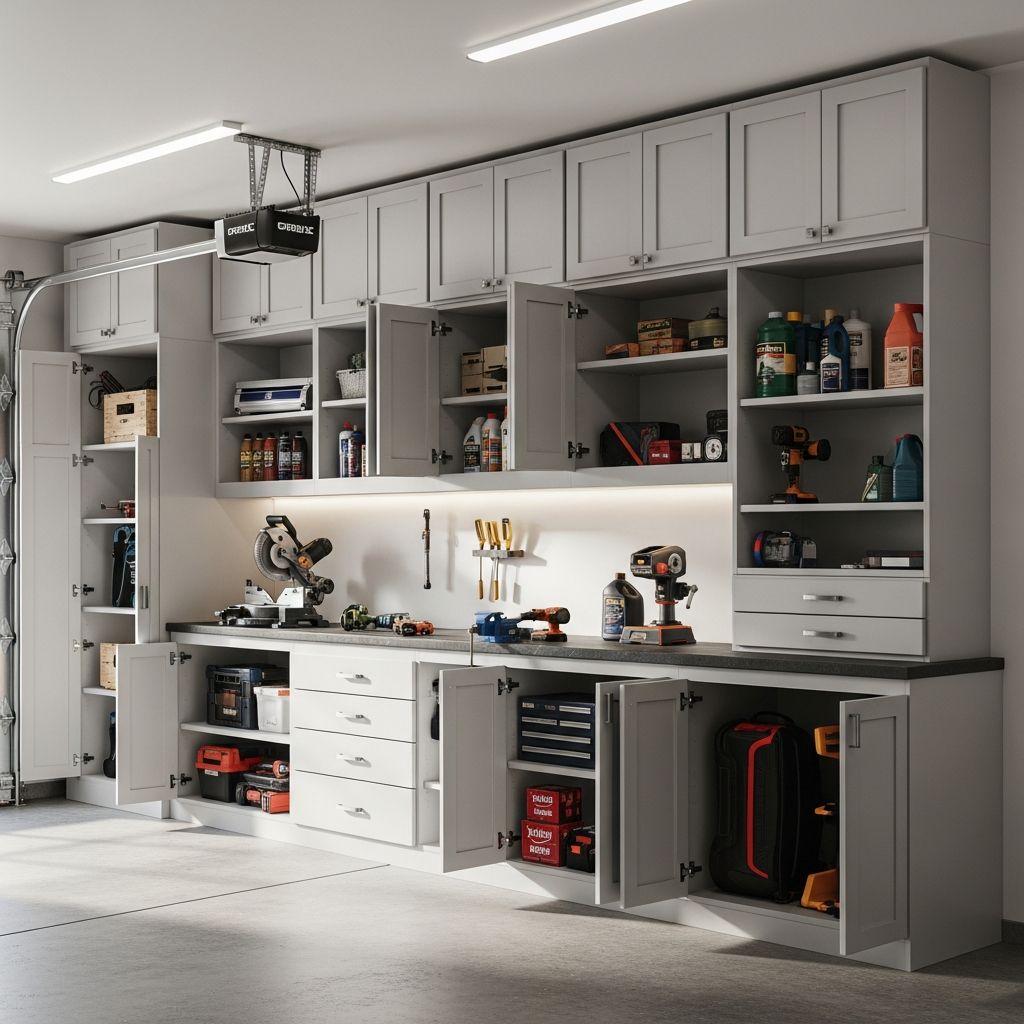
DIY Oversized Garage Storage Cabinets: From Cluttered to Controlled
Oversized garage storage cabinets are one of the most effective ways to reclaim floor space, protect your tools and gear, and give your garage a clean, finished look. Instead of relying on mismatched shelves and plastic bins, you can build custom cabinets that fit your exact wall dimensions and storage needs.
This guide walks through how to plan, design, and build large-capacity garage cabinets, along with tips for organizing what goes inside and keeping your new system safe and durable for years.
Why Oversized Cabinets Beat Open Shelving
Open shelves can hold a lot, but oversized cabinets add several key advantages that transform a garage from “storage zone” into a truly functional workspace.
- Hidden clutter: Doors keep visual chaos out of sight, making the space look bigger and calmer.
- Better protection: Closed cabinets shield contents from dust, overspray, sunlight, and curious pets.
- Higher capacity: Tall, deep cabinets can handle bulky totes, camping gear, and seasonal items in one place.
- Customization: You decide the width, height, depth, and internal layout to match your tools and lifestyle.
Step 1: Define Your Storage Goals
Before touching a saw, take inventory of what you want to store so you size the cabinets correctly and avoid overbuilding or underbuilding.
- List categories: Group items like automotive tools, lawn and garden, sports equipment, camping gear, paint and chemicals, and seasonal décor.
- Identify bulky items: Note coolers, large totes, shop vacuums, air compressors, and bins that need extra depth or height.
- Set access priorities: Items used weekly should be at mid-height and easy reach; rare seasonal items can live up high.
Questions to Ask Yourself
- Do you need a clear floor for parking two cars, or just one?
- Will you add a workbench now or in the future?
- Do kids or pets share the space and require locked storage for chemicals and sharp tools?
Step 2: Measure Your Space Like a Pro
Accurate measurements are the backbone of successful oversized cabinets. A small mistake at this stage can ripple through every cut you make later.
- Measure wall length at floor, mid-height, and near the ceiling to catch any irregularities.
- Measure from floor to ceiling at multiple points along the wall.
- Note obstructions like outlets, switches, windows, doors, garage door tracks, and water heaters.
- Decide on a minimum clearance in front of the cabinets for parking and walking (usually 30–36 inches).
Typical Cabinet Dimensions (Guidelines)
| Cabinet Type | Common Height | Common Depth | Typical Use |
|---|---|---|---|
| Tall floor cabinet | 84–96 in | 20–24 in | Storage totes, tools, bulk items |
| Wall cabinet | 30–36 in | 12–16 in | Paint, small tools, supplies |
| Oversized upper (over car hood) | Varies | 16–24 in | Seasonal and rarely used items |
For truly oversized storage, leaning toward the deeper end of these ranges (20–24 inches) gives you more flexibility for bins and odd-shaped gear.
Step 3: Choose a Cabinet Style and Layout
Think of your garage wall as a blank canvas. You can mix tall cabinets, uppers, and open cubbies to build a cohesive storage wall.
Common Layout Approaches
- Full wall of tall cabinets: Best for maximum concealed storage; creates a clean, built-in look.
- Tall cabinets plus workbench: Tall units on the ends, a counter-height run in the middle with wall cabinets above.
- Offset cabinets: Staggered heights to clear windows or electrical panels while still maximizing vertical space.
Cabinet Style Options
- Full overlay doors: Modern, seamless appearance that helps hide slight alignment imperfections.
- Framed vs. frameless boxes: A face frame can add rigidity; frameless (European-style) boxes maximize interior space.
- Open cubbies: Great for boots, frequently used tools, or sports gear that needs quick grab-and-go access.
Step 4: Select Materials and Hardware
The right materials make a huge difference in how your cabinets handle moisture, temperature swings, and heavy loads.
Recommended Sheet Goods
- 3/4″ plywood: Strong, holds screws well, and resists sagging on wide shelves.
- 1/2″ plywood: Suitable for backs and some interior partitions to save weight and cost.
- Melamine or pre-finished plywood: Smooth, easy-to-clean surfaces; edges need banding or trim for durability.
Essential Hardware
- Cabinet screws or construction screws for joining boxes.
- Heavy-duty hinges for full-height doors.
- Adjustable shelf pins or metal standards and brackets.
- Continuous French cleats or metal cabinet hang rails for wall mounting.
- Leg levelers or pressure-treated bases to keep cabinets off concrete.
Step 5: Plan the Cabinet Structure
Oversized cabinets must be sturdier than typical kitchen units because they carry heavier loads and span greater distances. A simple but strong box construction will keep everything square and safe.
Basic Box Components
- Two side panels cut to full height.
- Top and bottom panels, usually the full depth of the cabinet.
- A full- or partial-height back panel for racking resistance.
- One or more fixed shelves to tie the sides together.
For very wide cabinets, consider dividing the interior with a vertical partition so shelves do not span the entire width unsupported.
Reinforcement Tips
- Add a toe-kick or base frame under tall cabinets to distribute weight evenly.
- Use glue plus screws on all major joints to improve stiffness.
- Include a full back panel when possible; it dramatically improves strength.
Step 6: Cut and Assemble the Boxes
Once the design is set, you can move on to cutting panels and building each cabinet box. Working methodically keeps everything square and consistent.
Cutting Strategy
- Break down full sheets into manageable strips (for sides, tops, bottoms, and shelves).
- Crosscut strips to final length using a stop block for repeatable pieces.
- Label every part as you cut to avoid confusion during assembly.
Assembly Order
- Join top and bottom to the side panels using screws and glue, checking for square.
- Install at least one fixed shelf to stiffen the structure.
- Attach the back panel, nailing or screwing around the perimeter and into all shelves and rails.
- Drill holes or install hardware for adjustable shelves before closing hard-to-reach areas.
Step 7: Build and Hang the Doors
Large doors give a clean, modern finish but need to be carefully sized and supported so they do not sag over time.
Door Design Tips
- Use thicker material (ideally 3/4″) for tall doors to prevent warping.
- Limit door width to maintain stability; two doors are better than one very wide door.
- Consider simple slab doors for a contemporary look, or add trim for a more traditional style.
Hinge and Alignment Basics
- Use three or more hinges on tall doors to support the weight.
- Install hinges on the door first, then mount to the cabinet box, adjusting as needed.
- Fine-tune gaps so doors remain even across multiple cabinets for a built-in appearance.
Step 8: Secure Cabinets to the Wall
Oversized cabinets hold heavy loads, so they must be firmly anchored to wall framing. Do not rely on fasteners into drywall alone.
- Locate and mark studs along the wall.
- Lift cabinets into place with help or temporary supports.
- Level and shim as needed so fronts align flush along the run.
- Screw through the cabinet backs or mounting rails into studs using appropriately sized structural screws.
- Join adjacent cabinets together through their side panels for added stability.
Step 9: Finish, Paint, and Protect
Finishing not only makes your cabinets look better but also helps them withstand dirt, moisture, and daily wear.
Finishing Options
- Painted finish: Sand edges smooth, prime, and apply durable enamel or cabinet paint.
- Clear or stained finish: Ideal for high-quality plywood; protect with a clear topcoat.
- Edge banding: Apply to exposed plywood edges for a clean, professional appearance.
Durability Upgrades
- Add bumpers or soft-close hardware to reduce slamming.
- Use heavy-duty pulls or handles that are easy to grip with work gloves.
- Install rubber mats or liners on shelves that will hold metal tools or liquids.
Organizing Inside Oversized Cabinets
Once the cabinets are up, smart organization ensures the space stays functional instead of becoming another cluttered black hole.
Suggested Zones
| Cabinet Area | Best For | Why It Works |
|---|---|---|
| Upper shelves | Holiday décor, keepsakes, spare supplies | Items you rarely need stay out of the way but organized. |
| Mid-level shelves | Everyday tools, cleaning supplies, small hardware | Comfortable, eye-level access prevents constant bending. |
| Lower shelves or cubbies | Heavy items, large bins, car care products | Lowers strain from lifting and reduces tipping risk. |
Organization Accessories
- Labeled plastic bins for screws, nails, and small parts.
- Pull-out trays or shallow drawers for hand tools and accessories.
- Door-mounted racks for spray cans, small bottles, and frequently used items.
Safety and Load Capacity Considerations
Because oversized cabinets invite you to store a lot of weight, keeping safety in mind is critical. Overloaded or poorly anchored cabinets pose a real hazard.
- Check recommended load capacities for shelves and hardware and stay under them.
- Keep the heaviest items on the lowest shelves or the floor to lower the center of gravity.
- Use locking doors or separate locked compartments for chemicals, fuels, and sharp tools.
- Ensure cabinet doors do not interfere with vehicles, garage doors, or walkways when open.
Maintenance Tips to Extend Cabinet Life
With a little periodic attention, your garage cabinets will stay sturdy and attractive long term, even in demanding conditions.
- Inspect fasteners annually and tighten any loose screws in hinges, mounts, or shelf supports.
- Wipe down shelves and door fronts regularly to remove dust, grease, and cobwebs.
- Touch up paint or finish on edges and high-contact areas to prevent moisture intrusion.
- Reevaluate your storage layout every year and adjust shelf heights as needs change.
Sample Oversized Cabinet Configurations
Here are a few example setups to help you imagine how oversized cabinets can transform different types of garages.
Two-Car Family Garage
- Full-height cabinets along one wall for sports gear, holiday décor, and bulk household supplies.
- Shallower wall cabinets over a workbench for tools and repair items.
- A tall, lockable cabinet for chemicals, paints, and automotive fluids.
DIY Workshop Garage
- Oversized cabinets flanking a large workbench with open shelves for power tools.
- Deep cabinets for lumber offcuts, clamps, and jigs.
- Drawer units or pull-out trays inside cabinets for hand tools, bits, and fasteners.
Outdoor and Hobby Focused Garage
- Tall cabinets sized for camping bins, fishing gear, and coolers.
- Upper storage for tents, sleeping bags, and seasonal recreational equipment.
- Low, wide cubbies for boots, backpacks, and pet supplies near the entry door.
Frequently Asked Questions
How deep should oversized garage cabinets be?
For most garages, a depth between 20 and 24 inches works well for oversized cabinets because it accommodates standard storage totes, power tools, and bulkier items without sticking too far into the parking area. Shallower depths around 16–18 inches can work for upper cabinets mounted above a workbench or over the hood of a car.
Do garage cabinets need backs?
While it is possible to build backless cabinets, a full back panel adds significant strength, keeps small items from falling against the wall, and creates a more finished look. For heavy-duty, oversized storage, backs are strongly recommended.
Can I build cabinets directly on the concrete floor?
It is better to raise cabinets off the concrete using a pressure-treated base, adjustable legs, or a platform. This helps prevent moisture wicking into the cabinet material and makes it easier to level units on an uneven slab.
What tools are essential for building these cabinets?
You can complete most oversized cabinet projects with a circular saw or table saw, drill/driver, measuring tape, square, clamps, and a sander. Additional tools like a pocket hole jig, track saw, or miter saw can speed up the process and improve accuracy but are not strictly required.
Should I use metal or wood for garage cabinets?
Metal cabinets are very durable and low maintenance but typically cost more and offer fewer custom sizing options. Wood or plywood cabinets are more DIY-friendly, easier to customize for your exact wall, and can be finished in any style, making them a popular choice for homeowners who want a fully tailored solution.
How long does a typical DIY build take?
A dedicated weekend warrior can often build and install a basic run of oversized cabinets in two to three weekends, depending on complexity and finishing choices. Planning, measuring, and cutting carefully at the beginning will save time during assembly and installation.
With thoughtful planning, quality materials, and careful installation, oversized garage storage cabinets can turn an overstuffed, underused space into a clean, efficient hub for projects, hobbies, and everyday life.
Similar Articles








Read full bio of Sneha Tete