DIY Painted Stair Runner Guide
Transform worn stairs into stunning focal points with this comprehensive DIY guide to painting a custom stair runner that withstands daily use.
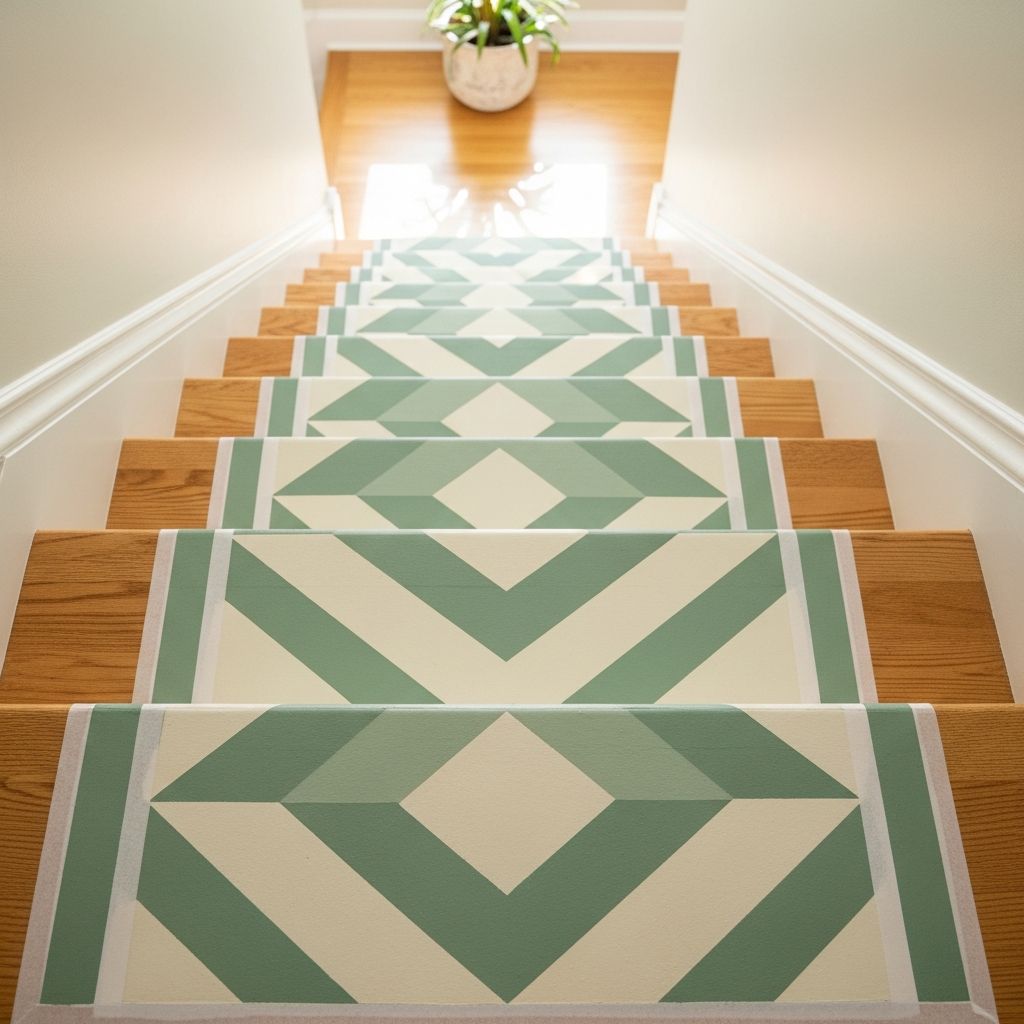
Creating a painted stair runner offers an affordable way to refresh your home’s staircase, blending functionality with custom style. This technique simulates the look of a fabric runner while providing a tough, easy-to-maintain surface ideal for high-traffic areas.
Why Choose a Painted Stair Runner?
A painted runner elevates plain or dated stairs into a striking feature that complements any decor. Unlike real carpet runners, painted versions resist stains, allergens, and wear from foot traffic, making them suitable for families with pets or children. The process allows endless customization—stripes, patterns, or solids—in colors matching your interior palette. Expect costs under $200 for materials, far less than professional carpeting or replacement.
Assessing Your Staircase for the Project
Before starting, evaluate your stairs’ condition. Straight runs are simplest, but curved or multi-flight designs require extra planning for consistent width. Measure total rise (vertical height) and run (tread depth) per step, noting irregularities like squeaks or gaps. Wooden stairs yield the best adhesion; avoid glossy laminates without heavy sanding. Test a small area for paint compatibility if unsure.
- Inspect for structural issues: Loose treads or railings need securing first.
- Calculate runner width: Typically 24-30 inches centered, leaving 4-6 inches exposed on each side.
- Plan downtime: Stairs may be unusable for 2-3 days during drying.
Gathering Essential Materials and Tools
Stock up on durable products formulated for floors to ensure longevity. Key items include floor-grade paint, high-quality tape, and sealants.
| Category | Items | Purpose |
|---|---|---|
| Prep | Wood filler, 120-220 grit sandpaper, vacuum, tack cloths | Smooth and clean surfaces |
| Painting | Primer, base coat paint (semi-gloss), runner color paints, mini rollers, 2-inch angled brushes | Base layers and accents |
| Taping/Design | Painter’s tape (blue frog tape), ruler, pencil, level | Crisp edges and straight lines |
| Finishing | Stain (optional), satin polyurethane, lambswool applicator | Protection and aging effects |
Opt for brands like those recommended by paint experts for high-traffic durability. Budget $10-20 per paint quart; one gallon often suffices for average stairs.
Initial Preparation: Cleaning and Repairing
Success hinges on flawless prep. Begin by removing any existing carpet remnants, pads, or staples using pliers and a flathead screwdriver. Fill holes, cracks, or tread gaps with flexible wood filler, allowing full drying (usually 1-2 hours). Sand thoroughly with 120-grit to remove gloss and old finishes, progressing to 220-grit for smoothness. Wipe away dust with tack cloths or damp sponges—dry completely to prevent adhesion issues.
For curved stairs, sand edges meticulously to avoid snags. Vacuum crevices and protect surrounding floors/walls with drop cloths and tape. This phase prevents peeling and ensures paint bonds securely.
Applying Base Coats for Uniform Coverage
Prime all surfaces (treads, risers, strings) with a high-hiding primer using a mini roller for efficiency and brushes for edges. One coat often suffices on bare wood; two on stained areas. Follow with 1-2 coats of base color (e.g., white or neutral semi-gloss) on risers and tread sides, skipping the center tread initially to allow foot traffic during curing. Dry times: 4-6 hours between coats, full cure in 24 hours.
Use quality floor paint with anti-slip additives for safety. Paint from top to bottom, working every other tread to maintain access.
Designing and Marking Your Runner Layout
Decide on style: classic stripes (2-4 inches wide), chevrons, or faux weaves. Measure from walls inward for symmetry, marking light pencil lines at tread top/bottom and riser midpoints. For stripes, space evenly (e.g., 3-inch runner flanked by equal borders). On landings or turns, use a flexible ruler for curves.
Pro tip: Snap chalk lines on long straight runs for precision, then refine with pencil. Erase marks post-taping.
Precision Taping Techniques for Sharp Edges
Apply painter’s tape along marks, pressing firmly with a putty knife or ruler edge, especially in nosing curves. For stripes, tape alternating sections. Use transparency sheets behind treads to shield risers during painting. Tape in segments: 3-4 steps at a time to avoid overwhelming the project.
Seal edges with base coat paint before accent colors to prevent bleeds. Remove tape immediately after wet final coat on each section for clean reveals.
Painting the Runner: Layering for Depth and Durability
Start with runner accent color inside taped zones using rollers for broad areas and brushes for details. Apply thin coats (2-3 total), drying 2-4 hours between. Darker hues may need fewer layers; lights require more for opacity. Feather edges near tape for seamless blends.
For multi-color designs, paint lightest first. On risers, extend runner pattern downward. Address bubbles by lightly sanding and recoating.
Optional Distressing and Staining for Authentic Look
To mimic vintage runners, lightly sand painted areas for texture, then wipe on wood stain (dark walnut works well). Focus on edges and high-wear zones. Buff excess after 15 minutes. This adds character without compromising integrity.
Sealing for Long-Term Protection
Apply 2-3 thin coats of water-based satin poly using a lambswool applicator, avoiding brush marks. Lightly sand (320-grit) between coats. Cure fully (72 hours) before heavy use. Poly guards against scuffs, spills, and fading, extending life 5-10 years with traffic.
Safety and Maintenance Best Practices
- Add non-slip additives or grit to final coat.
- Avoid painting in high-humidity (>60%).
- Clean with damp mop and mild soap; no abrasives.
- Reapply poly every 2-3 years in heavy-use homes.
Post-project, restrict access with temporary barriers during curing.
Creative Design Ideas and Color Schemes
Neutral runners (grays, beiges) suit modern homes; bold stripes (navy/red) energize traditional spaces. Geometric patterns via stencils offer variety. Match adjacent flooring for cohesion.
Common Mistakes and Troubleshooting
| Issue | Cause | Solution |
|---|---|---|
| Bleeding edges | Poor tape seal | Seal tape with base paint; use premium tape |
| Peeling paint | Inadequate prep | Sand/prime fully; use floor-grade products |
| Uneven stripes | No guides | Measure meticulously; use level |
| Slippery finish | Glossy sealant | Choose satin; add anti-slip |
Frequently Asked Questions (FAQs)
Can I paint over carpet?
No—remove it first for proper adhesion. Use primer on remnants if needed.
How long does it last?
5-10 years with sealing and moderate traffic.
Best paint type?
Floor/stair-specific acrylics for durability.
Curved stairs possible?
Yes, with flexible taping and custom measurements.
Cost breakdown?
$100-250 total, mostly paint/supplies.
References
- DIY Painted Stair Runner — Jaime Costiglio. 2023. https://jaimecostiglio.com/diy-painted-stair-runner/
- How to Paint a Stair Runner: Easy Step-by-Step DIY Guide — Making the Room. 2023. https://www.makingtheroom.com/blog/how-to-paint-a-stair-runner-diy-step-by-step-guide
- PAINT THIS: Striped Staircase Runner — Miller Paint. 2023. https://www.millerpaint.com/paint-this-striped-staircase-runner/
- DIY Painted Stair Runner – Transforming Our Attic Stairs — Kezzabeth. 2023-02. https://www.kezzabeth.co.uk/2023/02/diy-painted-stair-runner-transforming-our-attic-stairs.html
- How to Paint a Staircase Walkthrough — Benjamin Moore. 2023. https://www.benjaminmoore.com/en-us/interior-exterior-paints-stains/how-to-advice/interiors/paint-stairs
- DIY Stair Painting: Step-by-Step Guide — Your Home Only Better. 2023. https://www.yourhomeonlybetter.com/blog/painting-stairs-diy-faqs-and-tips/
Similar Articles



Read full bio of Sneha Tete