DIY Patio Awning: Step-By-Step Guide For Your Patio
Transform your outdoor space with this comprehensive guide to constructing a durable patio awning from scratch using basic tools and materials.
DIY Patio Awning Guide
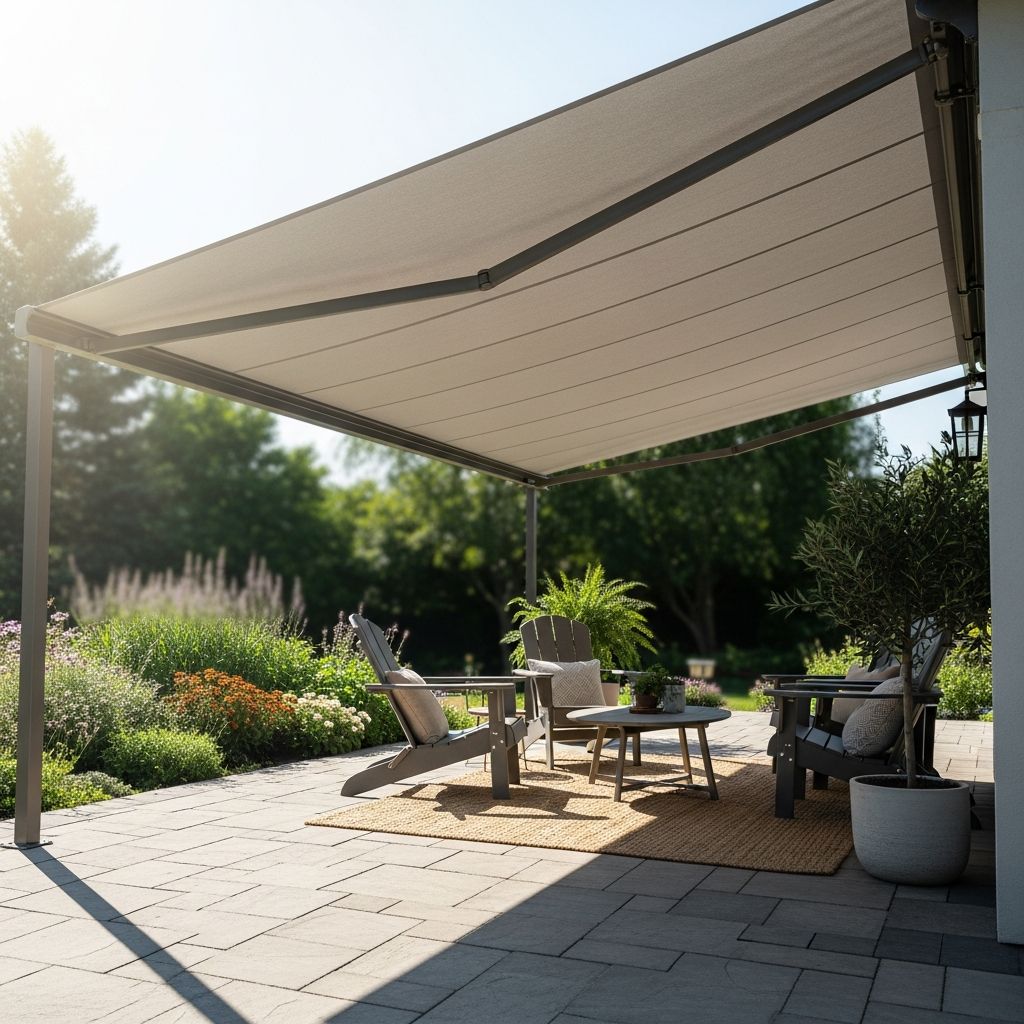
Constructing a patio awning provides essential shade and shelter, extending your outdoor living area while boosting property appeal. This guide outlines a complete process using pressure-treated lumber, concrete anchors, and weather-resistant roofing for a robust structure that withstands elements.
Planning Your Awning Project
Begin with precise measurements to ensure the awning fits your patio seamlessly. Determine the desired projection—typically 8 to 12 feet from the house wall—and width matching your patio dimensions. Sketch a simple diagram noting post locations, beam spans, and roof pitch for water runoff, ideally 1/4 inch per foot.
- Assess patio slab condition; it must support post footings without cracking.
- Check local building codes for permit requirements, especially for structures over 200 square feet.
- Calculate material quantities: for a 12×10-foot awning, expect 4 posts, 3 beams, 10 rafters, and 400 square feet of roofing.
Factor in wind loads; in high-wind areas, opt for deeper footings and hurricane ties. Budget $500-$1500 depending on size and materials, with lumber costing the bulk.
Gathering Essential Materials and Tools
Select durable, weather-resistant materials to guarantee longevity. Pressure-treated 6×6 posts resist rot, while galvanized hardware prevents corrosion.
| Category | Items | Quantity Example (12×10 ft) |
|---|---|---|
| Posts & Beams | 6×6 posts, 4×8 beams | 4 posts, 3 beams |
| Rafters | 2×6 lumber | 10 pieces @ 14 ft |
| Roofing | OSB sheathing, asphalt shingles, underlayment | 5 sheets OSB, 4 bundles shingles |
| Hardware | Concrete anchors, lag screws, carriage bolts | 8 anchors, 50 bolts |
Tools include a circular saw for cuts, post hole digger, level, drill, and safety gear like gloves and goggles. Rent a concrete mixer for efficiency on larger projects.
Site Preparation and Foundation Work
Mark post positions using stakes and string lines, ensuring plumb alignment from the house fascia. Dig holes 3 feet deep and 12 inches wide, below frost line for stability.
- Mix concrete per bag instructions; aim for 3500 PSI strength.
- Install post base anchors in wet concrete, verifying level in all directions.
- Allow 48 hours curing before proceeding.
This foundation prevents settling, critical for structural integrity. In slab patios, use expansion anchors drilled into concrete.
Installing the Structural Frame
Cut posts to height, notching tops for beam seating—use a circular saw set to beam depth, then chisel clean. Erect posts, securing with lag screws to anchors.
Hoist beams onto notches, aligning ends for even overhangs of 12-18 inches. Drill and bolt through post-beams with 1/2-inch galvanized carriage bolts, two per joint.
- Plumb each post repeatedly as framing progresses.
- Add temporary diagonal braces to square the frame.
For the house attachment, lag a 2×8 ledger board to rafters or wall studs, flashing with metal to divert water.
Building the Roof Framework
Install rafters at 16-inch centers, birdsmouth cuts resting on beams. Use hurricane clips at each junction for uplift resistance.
End rafters define fascia lines; cut overhangs flush post-installation. Reinforce with 2×4 blocking between rafters for sheathing support.
A gentle pitch ensures drainage; secure rafters with 3-inch deck screws, pre-drilling to avoid splits.
Applying Decking and Waterproofing
Lay 5/8-inch OSB or plywood sheathing perpendicular to rafters, staggering seams. Nail every 6 inches along edges, 12 inches in field.
Roll out 30-pound roofing felt, overlapping 6 inches and stapling securely. This underlayment blocks moisture penetration.
For metal roofing, align panels over peaks, screwing through pre-drilled holes with neoprene washers. Asphalt shingles require starter strips and offset rows for overlap.
Adding Finishing Touches and Trim
Install fascia boards along rafter tails, mitered at corners for clean lines. Soffit panels—1/2-inch plywood—close the underside, vented for airflow.
- Paint or stain all wood surfaces with exterior-grade products.
- Add gutters along the front edge to channel rainwater.
- Incorporate lighting via rafter-mounted fixtures for evening use.
Caulk all seams and seal screw heads to maintain weatherproofing.
Safety Considerations During Construction
Prioritize safety to avoid injuries. Wear protective eyewear and harnesses when working at heights over 6 feet.
- Secure ladders on stable ground; use spotters.
- Lift heavy materials with partners to prevent strains.
- Inspect tools daily; unplug when changing blades.
Work in good weather, pausing during high winds. Have a first-aid kit and fire extinguisher on site.
Common Mistakes to Avoid
Skipping permits risks fines; always verify codes. Inaccurate measurements lead to crooked frames—double-check with levels.
Inadequate footings cause sagging; dig deeper in freeze-prone areas. Poor sealing invites leaks—use quality flashing everywhere.
Maintenance for Longevity
Inspect annually for loose fasteners, rot, or shingle wear. Tighten bolts, replace damaged sections promptly.
Clean gutters seasonally; apply sealant every 3-5 years. This upkeep extends life beyond 20 years.
Cost Breakdown and Variations
| Component | Estimated Cost | Notes |
|---|---|---|
| Foundation | $150 | Concrete, anchors |
| Framing Lumber | $600 | Posts, beams, rafters |
| Roofing Materials | $400 | Shingles, sheathing |
| Hardware/Tools | $200 | Bolts, screws rental |
| Total | $1350 | For 12×10 ft |
Customize with retractable fabric for flexibility or polycarb panels for light diffusion.
FAQs
Do I need a permit for a patio awning?
Yes, most municipalities require permits for attached structures; check local zoning for size limits.
What is the best roofing for an awning?
Asphalt shingles or corrugated metal offer durability and affordability; choose based on aesthetics and climate.
How long does construction take?
A weekend for solo builders, faster with help; factor drying times.
Can I build on an uneven patio?
Yes, use adjustable post bases to level; avoid soft soil without reinforcement.
Is pressure-treated wood necessary?
Recommended for ground contact to prevent decay; cedar alternatives work for exposed areas.
References
- Patio Cover Plans — MyCarpentry.com. Accessed 2026. https://www.mycarpentry.com/patio-cover-plans.html
- How To Build a Covered Patio | DIY Porch Part 1 — YouTube (April Wilkerson). 2016-11-06. https://www.youtube.com/watch?v=1_JhhlFFyEE
- How To Build A Patio Cover — Wilkerdo’s. Accessed 2026. https://wilkerdos.com/how-to-build-patio-cover/
- DIY Patio cover | Under $400 in materials — YouTube. Accessed 2026. https://www.youtube.com/watch?v=6K-ljD3upvQ
Similar Articles





Read full bio of medha deb