DIY Pool Pump Enclosure: 6-Step Guide For Durable Protection
Transform your backyard with a custom-built pool pump enclosure that safeguards equipment while boosting curb appeal and functionality.
DIY Pool Pump Enclosure Guide
Protecting your pool pump from harsh weather, debris, and pests is essential for longevity and efficiency. A custom enclosure not only shields the equipment but also improves your backyard’s appearance. This comprehensive guide walks you through creating a functional, ventilated shelter using basic tools and materials.
Why Build a Pool Pump Enclosure?
Pool pumps are vital but often eyesores in outdoor spaces. Exposure to rain, sun, and animals can lead to premature wear. An enclosure provides shelter while allowing necessary airflow to prevent overheating. Homeowners report extended equipment life and reduced maintenance costs with proper covers. Designs range from simple frames to elaborate sheds, fitting any skill level and budget.
Planning Your Enclosure Design
Start by assessing your pump’s dimensions, location, and backyard style. Measure height, width, and depth, adding 6-12 inches clearance for access and ventilation. Consider local climate: sloped roofs shed rain in wet areas, while open designs suit dry regions. Sketch a blueprint ensuring doors or lids open easily for servicing. Factor in electrical access and hose routing.
- Evaluate space: Ensure 2-3 feet around the pump for maintenance.
- Check regulations: Verify building codes for sheds or structures.
- Match aesthetics: Use wood tones or metal to blend with fencing or patios.
- Plan ventilation: Include gaps or vents to avoid moisture buildup.
Essential Materials and Tools
Select weather-resistant materials for durability. Treated lumber resists rot; metal sheets offer modern looks.
| Category | Materials | Quantity Estimate |
|---|---|---|
| Framing | 4×4 posts, 2×4/2×6 lumber | 4-6 posts, 10-15 boards |
| Cladding | Merbau panels, slats, plywood | 4-6 panels |
| Roofing | Metal sheeting, felt, shingles | Enough for top coverage |
| Hardware | Hinges, screws, locks | 4 hinges, 100+ screws |
| Foundation | Concrete slabs, gravel | 4-6 slabs |
Tools include saw, drill, level, measuring tape, hammer, and safety gear like gloves and goggles.
Step-by-Step Construction Process
Step 1: Prepare the Site
Clear vegetation and level the ground. Dig post holes 12-18 inches deep for stability. Place gravel for drainage, then set concrete slabs or pour footings. Use a level to ensure evenness, preventing structural shifts.
Step 2: Erect the Frame
Cut 4×4 posts to height, angling tops for roof slope. Secure posts in holes with concrete or brackets. Attach horizontal 2×4 beams at base and top, forming a rectangular frame. Add center supports for larger units. Rip wider boards if needed for precise fits.
Step 3: Install Walls and Cladding
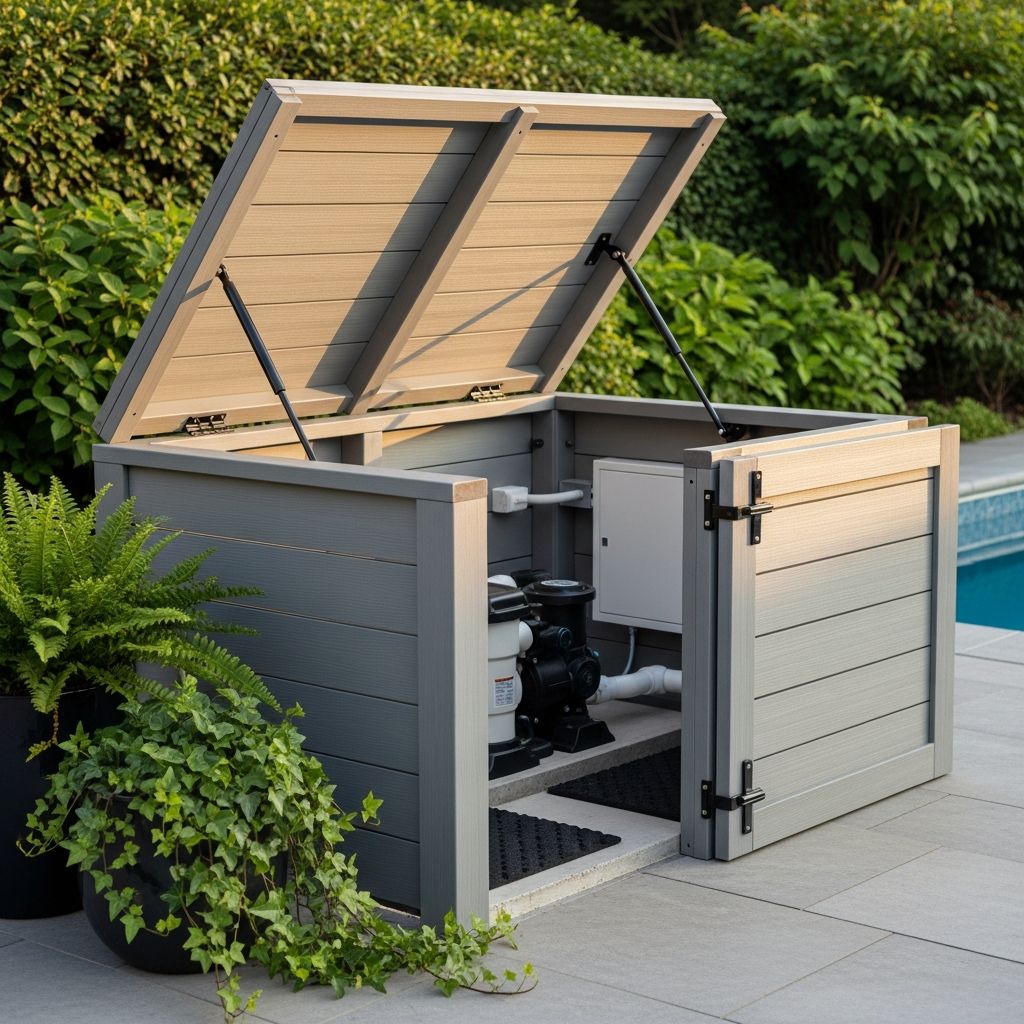
Build side panels with slatted wood for airflow, nailing or screwing to frames. Front gets a hinged door; back can be solid plywood. Space slats 1-2 inches apart using spacers. For metal options, rivet corrugated sheets.
Step 4: Construct the Roof
Frame a slanted roof with 2×4 rafters. Cover with plywood, then apply waterproof felt or metal. Hinge the entire top for lift-off access, adding gas struts for easy opening. Slope ensures water runoff.
Step 5: Add Doors and Security
Mount heavy-duty hinges on doors, using exterior screws. Install latches or locks against intruders. Test swing for smooth operation without obstructing pump controls.
Step 6: Finishing and Sealing
Sand rough edges, apply weatherproof stain or paint. Seal joints with caulk. Add vents if enclosed tightly.
Design Variations for Every Style
- Rustic Wooden Fence: Cedar slats mimic backyard fencing.
- Modern Metal Shed: Corrugated panels for sleek, low-maintenance look.
- Open Slat Shelter: Three-sided with lift-top for minimalism.
- Compact Box: Fully enclosed for small spaces.
Customize with planters on top or integrated benches.
Safety and Maintenance Best Practices
Prioritize ventilation to avoid motor overheating. Schedule annual inspections for rot or loose hardware. Clean debris regularly. Use galvanized fasteners in coastal areas to combat corrosion.
| Issue | Solution |
|---|---|
| Water pooling | Increase roof pitch |
| Pest entry | Seal gaps, add screens |
| Overheating | Add louvers or fans |
| UV damage | Apply UV protectant |
Cost Breakdown and Budget Tips
Basic builds cost $100-300; premium versions $500+. Source reclaimed wood to save. Buy in bulk for hardware.
Common Mistakes to Avoid
- Ignoring airflow, risking pump failure.
- Poor leveling, causing instability.
- Skipping weatherproofing, leading to rot.
- Oversized designs blocking access.
FAQs
What materials last longest outdoors?
Treated pine, cedar, or galvanized metal endure years with minimal upkeep.
Do I need permits?
Check local codes; small enclosures often exempt, but slabs may require approval.
How do I ensure ventilation?
Incorporate slats, gaps, or vents; aim for 20% open area.
Can I build without power tools?
Yes, hand saws and hammers suffice for simple frames.
What’s the ideal roof angle?
15-30 degrees for effective drainage.
Building a pool pump enclosure enhances functionality and aesthetics. With planning, it’s a rewarding weekend project yielding years of protection.
References
- DIY Pool Pump Shed: A Step-by-Step Guide — Jim’s Pool Care. 2023-06-15. https://www.jimspoolcare.com.au/news-pool-cleaning/diy-pool-pump-shed-a-step-by-step-guide/
- How to make a wooden pool pump cover? — Bunnings Workshop. 2022-05-10. https://www.workshop.bunnings.com.au/t5/Outdoor/How-to-make-a-wooden-pool-pump-cover/td-p/49911
- DIY Pool Pump Cover Ideas for a Neat Backyard — CU Independent. 2024-03-20. https://www.cuindependent.com/diy-pool-pump-cover-ideas-for-a-neat-backyard/
- How to build a Pool or A/C Equipment Cover — A Shade Of Teal. 2021-07-12. https://ashadeofteal.com/how-to-build-a-pool-or-ac-equipment-cover/
Similar Articles








Read full bio of medha deb