DIY Stainless Steel Kitchen Table Top
Transform your old kitchen work table into a durable, professional-grade stainless steel surface with this comprehensive DIY guide for home cooks and renovators.
Creating a stainless steel cover for your kitchen work table offers a practical upgrade that enhances durability, simplifies cleaning, and gives your space a modern, commercial-kitchen vibe. This project suits homeowners looking to refresh worn surfaces without professional help. Using thin sheet metal, adhesive, and basic fasteners, you can achieve a seamless, long-lasting finish that withstands daily use.
Why Choose Stainless Steel for Kitchen Tables?
Stainless steel stands out for its corrosion resistance, heat tolerance, and ease of sanitation, making it ideal for food prep areas. Unlike wood or laminate, it doesn’t absorb stains or harbor bacteria, aligning with guidelines from the U.S. Food and Drug Administration (FDA) on food contact surfaces. A custom cover protects underlying structures from spills and scratches while adding a sleek aesthetic.
- Durability: Resists dents, cuts, and impacts better than painted wood.
- Hygiene: Non-porous surface wipes clean with soap and water.
- Versatility: Handles hot pots, knives, and heavy appliances.
- Affordability: Materials cost under $100 for average tables.
Gathering Materials and Tools
Start by measuring your table precisely: length, width, and edge profiles. Opt for 24- or 26-gauge stainless steel sheets from hardware stores, as they balance flexibility and strength. You’ll need enough to cover the top and fold over edges, plus extras for ends if your table is rectangular.
Required Materials
| Item | Quantity Estimate | Purpose |
|---|---|---|
| Stainless steel sheet (24-gauge, 24×48 inches) | 1-2 sheets | Main surface and edges |
| Smaller end pieces (12×24 inches) | 2 pieces | Covering narrow sides |
| Heavy-duty construction adhesive (e.g., Liquid Nails) | 2 tubes | Secure bonding |
| Wire nails or panel pins (1-inch) | 1 box | Edge fastening |
| Protective edge trim (optional) | As needed | Finishing jagged cuts |
Essential Tools
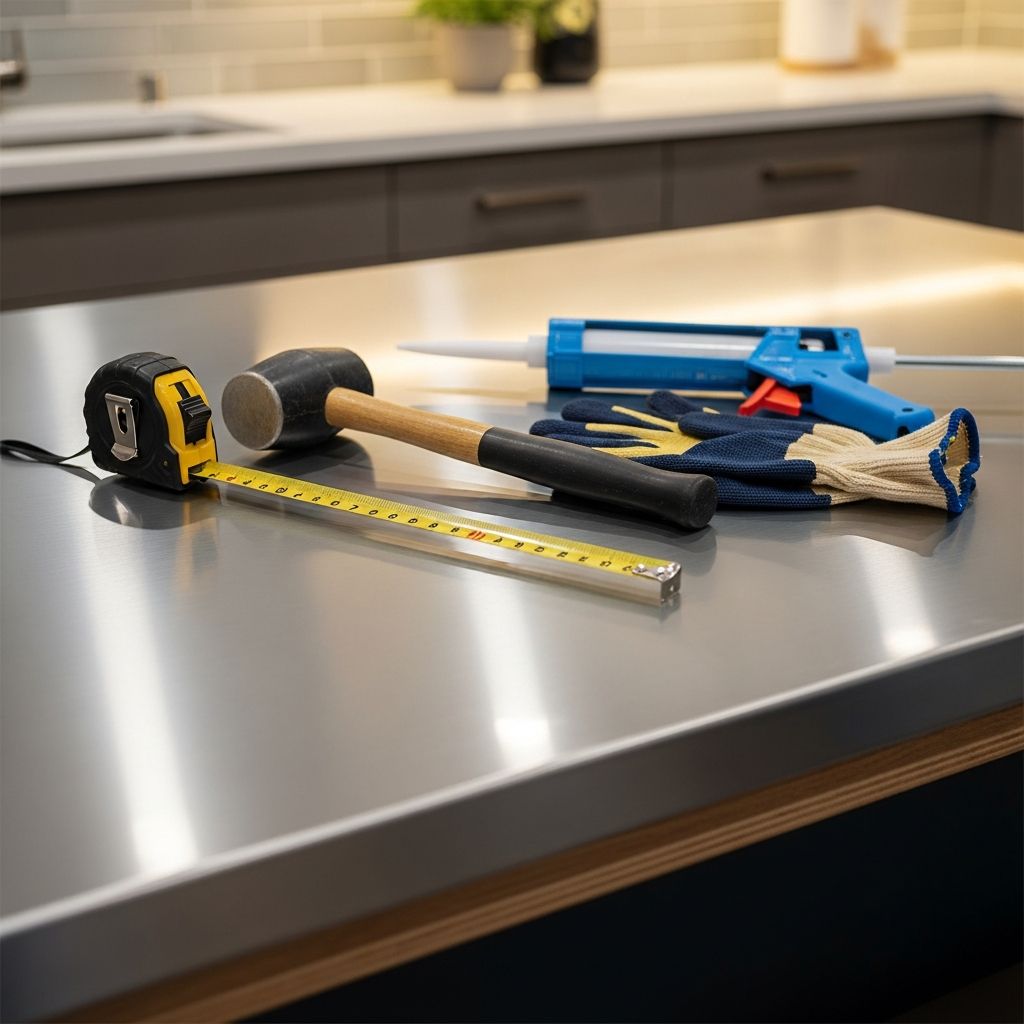
- Metal snips or aviation shears for cutting
- Center punch and drill with 1/16-inch bit
- Rubber mallet for bending without marring
- Clamps (at least 4 heavy-duty)
- Measuring tape, marker, and gloves
- Drop cloth or towels for floor protection
According to the Occupational Safety and Health Administration (OSHA), always wear cut-resistant gloves when handling sheet metal to prevent injuries. Total material costs range from $50-$150, depending on table size and local prices.
Preparing Your Workspace and Table
Clear the table completely and protect surrounding areas with drop cloths. Inspect the existing top for loose parts or deep damage; sand or fill imperfections if needed for a flat base. Clean thoroughly with degreaser to ensure strong adhesion.
- Measure and mark sheet metal to match table dimensions, adding 2-3 inches overhang for folding.
- Protect floors with towels under the table to avoid scratches during inversion.
- Test-fit pieces dry before applying adhesive.
Step-by-Step Installation Process
Step 1: Cutting and Shaping the Metal
Lay out your main sheet and use metal snips to trim to size. For edges, score fold lines with a marker and bend gradually using the table edge as a guide. A rubber mallet helps shape curves without dents—tap lightly and check progress often.
For end pieces, measure overhang for clean folds and overlap the main sheet slightly for a layered, industrial look. Cut corners squarely but expect some jaggedness; file or hammer down burrs immediately.
Step 2: Applying Adhesive and Initial Placement
Flip the table upside down on a soft surface. Apply generous beads of construction adhesive across the entire underside in a crisscross pattern. Position the metal sheet carefully, aligning edges precisely. Press firmly and use clamps to hold while curing—follow adhesive instructions for 24-48 hour set time.
Step 3: Securing Edges and Ends
Once adhesive sets partially, fold edges over the table rim. Use a center punch to dent pilot holes every 4-6 inches along seams and edges. Pre-drill with a fine bit to avoid cracking, then hammer in wire nails. Drilling through double layers requires patience; use lubricant if bits dull quickly.
For end caps, align, clamp, and repeat the adhesive-nail process. Trim corners and reinforce with scrap metal triangles nailed in place for stability.
Step 4: Finishing Touches and Painting Base (Optional)
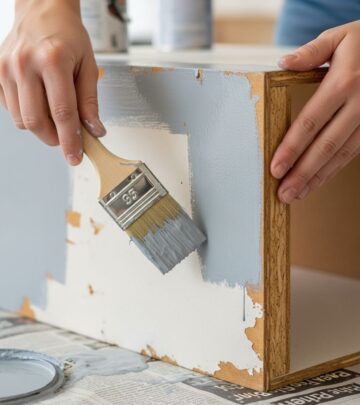
File any remaining sharp spots and consider adding U-channel trim for a polished edge. If the table legs or frame need refresh, apply chalk paint or rust-inhibiting primer—no sanding required for chalk formulas. Multiple thin coats yield a smooth, matte finish.
Safety Precautions During Fabrication
Sheet metal poses risks like cuts, pinch injuries, and flying debris. The Centers for Disease Control and Prevention (CDC) emphasizes eye protection and proper ventilation when drilling or cutting metals. Key precautions include:
- Wearing safety glasses, gloves, and long sleeves.
- Securing workpieces with clamps to prevent slips.
- Working in well-ventilated areas to disperse metal dust.
- Storing tools safely post-use.
Maintenance for Longevity
Your new stainless steel top requires minimal upkeep. Clean daily with mild detergent and a soft cloth; avoid abrasives that scratch the finish. For fingerprints or water spots, use a vinegar-water mix. According to the National Sanitation Foundation (NSF), regular wiping prevents bacterial buildup on stainless surfaces.
- Polish quarterly with stainless steel cleaner for shine.
- Re-tighten loose nails annually.
- Avoid prolonged exposure to salt or acids to prevent pitting.
Cost Breakdown and Budget Tips
| Component | Estimated Cost | Savings Tip |
|---|---|---|
| Metal Sheets | $40-80 | Shop remnants or local metal suppliers |
| Adhesive & Fasteners | $15-25 | Buy in bulk for future projects |
| Tools (if needed) | $30-50 | Borrow or use multi-purpose items |
| Paint & Misc | $20-40 | Skip paint for natural wood look |
| Total | $105-195 | Under $100 with owned tools |
Customization Ideas for Unique Tables
Adapt the design for round tables by piecing sectors or add rivets for a riveted industrial style. Integrate wood accents under edges for contrast or etch patterns with a Dremel tool. For mobility, attach casters to legs during refresh.
Frequently Asked Questions (FAQs)
Can I use aluminum instead of stainless steel?
Aluminum is lighter and cheaper but dents easier and lacks stainless’s sanitation benefits. Stick to stainless for food areas.
How long does the adhesive take to cure fully?
Typically 24-72 hours; avoid heavy use until then for maximum bond strength.
What if my table has uneven legs?
Shim legs first for level surface; metal won’t conform to warps well.
Is this suitable for outdoor use?
Yes, with marine-grade stainless and rust-proof paint on the frame.
Can beginners complete this project?
With basic skills, yes—focus on precise measuring and safety.
Troubleshooting Common Issues
- Bubbling adhesive: Press out air pockets before curing; use less product.
- Jagged edges: Use quality snips and deburr with a file.
- Drill bit breakage: Start with pilot holes and replace dull bits.
- Popping seams: Add more nails or reinforcing strips.
References
- Food Code — U.S. Food and Drug Administration. 2022. https://www.fda.gov/food/fda-food-code/food-code-2022
- Sheet Metal Workers Safety — Occupational Safety and Health Administration. 2023-01-15. https://www.osha.gov/sheet-metal-workers
- Metalworking Hazards — Centers for Disease Control and Prevention. 2024. https://www.cdc.gov/niosh/topics/metalworking/default.html
- Stainless Steel Sanitation Standards — NSF International. 2023-06-01. https://www.nsf.org/knowledge-library/stainless-steel-food-equipment
- DIY Metal Fabrication Guide — American Welding Society. 2022-11-10. https://www.aws.org/standards/page/core-safety-standards
Similar Articles



Read full bio of medha deb