Replacing Your Wall Furnace: A Step-By-Step Guide
Learn how to safely replace your wall furnace and save thousands on installation costs.
Comprehensive Guide to Replacing Your Wall Furnace
Replacing a wall furnace can be one of the most cost-effective home improvement projects a homeowner can undertake. By handling this task yourself, you can save anywhere from $3,000 to $10,000 in professional installation fees. While the process requires attention to detail and adherence to safety protocols, it is manageable for homeowners with basic mechanical skills and the right guidance. This comprehensive guide walks you through every step of the wall furnace replacement process, from initial assessment through final commissioning.
Understanding Your Wall Furnace System
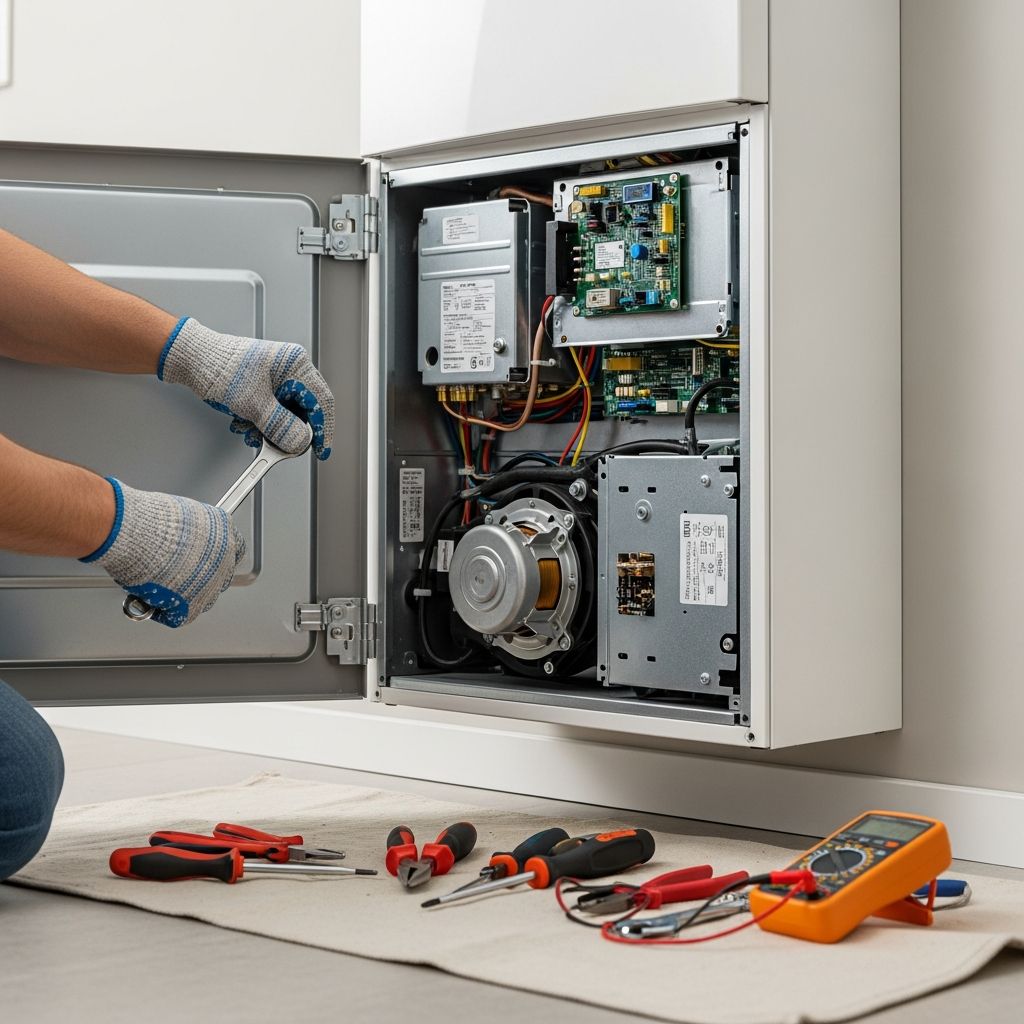
A wall furnace is a compact heating unit mounted directly into an exterior or interior wall, making it an efficient solution for smaller spaces or homes with limited basement or attic space. Unlike traditional furnaces housed in central locations, wall furnaces provide heating where needed most. Before beginning any replacement work, you must understand the key components of your existing system, including the combustion chamber, heat exchanger, blower assembly, gas valve, thermostat connections, and venting system. Familiarizing yourself with these components helps you make informed decisions during the replacement process.
Wall furnaces come in various sizes and BTU ratings, which measure heating capacity. The BTU (British Thermal Units) determines how much heat your furnace can produce and distributes it throughout your space. Understanding your current furnace’s specifications ensures you select an appropriate replacement unit that meets your heating needs.
Essential Tools and Materials for the Job
Gathering the right tools before starting is crucial for a smooth replacement process. You will need basic hand tools including adjustable wrenches, socket sets, screwdrivers (both Phillips and flathead), pliers, and an Allen wrench set for various sized bolts. For refrigerant line work, you may need specialized equipment such as a manifold gauge set and evacuation pump if you’re working with air conditioning components. A leveling tool ensures proper installation, while a tape measure and pencil help with positioning and marking.
Additionally, prepare the following materials:
- The replacement furnace unit (ensure compatibility with your space)
- Pipe dope or thread sealant for gas connections
- Electrical wire nuts or Wago connector levers for safe electrical connections
- Ductwork tape and sealing materials
- Flex connectors for gas lines
- Electrical wire and conduit if rewiring is necessary
- Safety equipment including gloves and eye protection
Safety Considerations Before Starting
Safety must be your highest priority when replacing a wall furnace. Before touching any part of the system, shut off the main electrical breaker supplying power to the furnace. Additionally, locate and shut off the gas supply valve at the main meter or wall connection. This two-step process ensures no electrical shock or gas leak risk exists while you work.
Never attempt this project without proper ventilation, as gas furnaces produce carbon monoxide and other combustion byproducts. Open windows and doors to maintain air circulation throughout your work area. If you suspect any gas leaks after work is complete, evacuate the building and call your gas utility company immediately. They will inspect the installation for free and address any safety concerns.
Working with refrigerant lines (if your unit includes air conditioning) requires special handling. Refrigerant is a pressurized substance that can cause frostbite or injury if mishandled. If you’re unfamiliar with refrigerant recovery procedures, consult the furnace manual or consider hiring a licensed HVAC technician for this specific portion of the work.
Disconnecting the Old Furnace
Begin the removal process by taking photographs of your existing connections. This visual reference proves invaluable when reconnecting the new unit. Start by shutting off power at the breaker and gas at the main valve. Then, carefully disconnect the thermostat wires, noting their positions or labeling them with tape for later reference. Most thermostats use standardized wire colors—typically white, black, red, and green—but your specific system may vary.
Next, disconnect the gas line by loosening the connection at the furnace. If you have a flexible gas line, simply unbolt it. Rigid pipe connections may require two wrenches (one to hold the fitting, one to turn the nut) to prevent twisting and damaging the line. Catch any small amount of residual gas that may drip into a container.
If your unit has refrigerant lines for air conditioning, you must properly evacuate the system before disconnecting these lines. Close the isolation valves on both the low-pressure and high-pressure lines using an Allen wrench, then carefully disconnect the flared fittings. Never open these lines to atmosphere without proper evacuation equipment, as this releases harmful refrigerants and violates environmental regulations.
Removing Ductwork and Housing
Wall furnace ductwork varies depending on your installation. Some systems use metal ductwork throughout, while others employ flexible connectors. Begin by photographing your ductwork layout for reference during reinstallation. Remove all screws, bolts, and clamps holding ductwork to the furnace unit. For metal ductwork, you may need to cut through sections carefully using tin snips or a reciprocating saw with a metal-cutting blade.
Once the ductwork is completely disconnected, you can remove the furnace unit from its mounting location. Some units are mounted with bolts through flanges, while others rest on brackets. Remove all fasteners and carefully pull the unit away from the wall. You may need assistance, as furnaces can weigh 100 pounds or more. Use a dolly or hand truck to prevent injury and protect flooring.
After removing the old unit, inspect the wall opening and surrounding area. Clean away any debris, dust, or old sealing materials. If structural repairs are needed—such as patching holes or reinforcing mounting points—complete these before installing the new furnace.
Preparing the New Furnace Installation
Unpack your new furnace carefully and inspect it for any shipping damage. Read through the manufacturer’s installation manual thoroughly, as specific procedures vary between models and brands. The manual provides critical information about clearances, venting requirements, electrical connections, and gas line specifications.
Before mounting the new unit, perform a dry run of your ductwork and connections without permanently fastening anything. This allows you to verify that all components fit properly and that you understand the assembly sequence. Measure twice and cut once—this principle applies to ductwork and pipe work as well.
For wall-mounted furnaces, ensure the mounting surface is level and sturdy. Use a level tool to verify proper orientation before securing fasteners. Most furnaces have pre-drilled holes or flanges that align with wall studs or mounting brackets. Consult your manual for the specific mounting hardware required.
Gas Line Installation and Safety
Proper gas line connection is absolutely critical for safe operation. Begin by dry-fitting all pipe sections without applying sealant to verify they fit correctly and reach all necessary connection points. Once satisfied with the layout, disassemble the connections and apply pipe dope (thread sealant) to all male threads. Never apply sealant to female threads, as this can clog the fitting.
Reassemble the connections hand-tight, then use two wrenches to tighten the final connection—one wrench holds the fitting while the other turns the nut. This prevents line damage from twisting. If your furnace manual specifies a particular pipe size (commonly 1/2-inch or 3/4-inch diameter), use that specification exclusively.
Many installations include a drip leg, which is a short vertical pipe section just before the furnace connection. This component catches any liquid particles in the gas line and prevents them from entering the furnace. A flex connector may connect the hard pipe to the furnace, allowing for slight vibration isolation. Once all connections are complete, apply soapy water to all joints and look for bubbles, which would indicate a leak. If you detect any leaks, tighten the connection slightly and retest. Never use an open flame to check for leaks.
Electrical Connections and Thermostat Wiring
Electrical work must comply with local building codes and your furnace manufacturer’s specifications. If rewiring is necessary, run new electrical cable in conduit to protect it from physical damage. Connect the furnace to a dedicated circuit with appropriate amperage rating, as specified in your manual. Most wall furnaces require either 115 or 240 volts, depending on model size.
For thermostat connections, consult both your old unit’s configuration and the new furnace manual. Typically, wire colors follow standardized conventions: white for heat call, black for cooling or secondary connections, red for 24-volt power, and green for common ground. However, older systems may use different schemes. Test connections before fully powering the system by applying 24 volts to the thermostat circuit and confirming the furnace responds appropriately.
All electrical connections should be made using wire nuts or modern connectors rated for the wire gauge you’re using. Loose or corroded electrical connections can cause fires, so ensure all connections are mechanically secure and electrically sound. After final connection, restore power slowly and monitor the system during initial startup for any unusual sounds or smells.
Ductwork Reconnection and Sealing
Properly sealed ductwork is essential for efficient heating distribution and system performance. As you reconnect ducts to the new furnace, use metal screws (often called zip screws or sheet metal screws) to secure all joints. Follow these connections with duct sealant tape on both interior and exterior surfaces of the joint. This double-sealing approach prevents air leaks that would reduce system efficiency.
If your installation includes a new filter box or return air plenum, ensure these components are properly sized for your furnace and connected with sealed joints. Mismatched ductwork or poor connections create pressure imbalances that force air to escape through unintended pathways, reducing heating effectiveness and increasing energy consumption.
Pay particular attention to the transition from return air ductwork to the furnace inlet and from the furnace outlet to supply ductwork. These critical connections should be tested for air leaks using smoke pencils or tissue paper—if either moves near the joint, you’ve found a leak that requires sealing.
Ventilation and Exhaust Installation
Proper venting is non-negotiable for safe furnace operation. Wall furnaces require either a through-wall exhaust pipe or connection to an existing chimney or vent stack, depending on furnace type. Most modern units use concentric venting, where intake air comes through an outer pipe while exhaust exits through an inner pipe, eliminating the need for separate intake and exhaust penetrations.
When running vent pipe through exterior walls, particularly masonry, take care to use the correct pipe diameter and support it adequately. Consult your furnace manual for maximum allowable horizontal pipe runs and elbow configurations, as these factors affect venting efficiency. Insufficient venting can lead to combustion products backing up into your living space, creating serious health hazards.
Seal around any exterior vent penetrations with appropriate caulk or flashing to prevent water infiltration. This detail is easily overlooked but critical for long-term performance and building integrity.
Initial System Testing and Commissioning
Once all connections are complete, don’t immediately run the furnace at full capacity. Instead, perform a step-by-step startup sequence. First, verify the gas valve is open and test for leaks one final time with soapy water. Next, restore electrical power and listen for the ignition sequence. Most modern furnaces perform a self-diagnostic check upon startup.
If the furnace ignites successfully and runs for several minutes without shut-down, observe the flame color through the combustion chamber (if visible). A blue flame indicates proper combustion, while orange or yellow flames may indicate incomplete combustion or dirty burners.
Allow the system to run for 15-20 minutes to warm up, then check that heated air flows through all supply vents. Listen for unusual noises, vibrations, or rattles, which might indicate loose connections or improperly installed components. Set your thermostat to a comfortable temperature and confirm the system responds to calls for heat.
Permits and Inspection Requirements
Check with your local building department regarding permit requirements for furnace replacement. Many jurisdictions require permits and final inspections to ensure the work meets code. While permits add cost and time, they provide important protections. Inspectors verify that gas connections are safe, electrical work is properly grounded, and venting is adequate.
An inspection also protects you legally and ensures your homeowner’s insurance remains valid. Without proper permits and inspections, you may face challenges with insurance claims or when selling your home. The small investment in proper documentation pays dividends in peace of mind and property value protection.
Troubleshooting Common Issues
If your newly installed furnace doesn’t operate as expected, work through these common issues systematically. If the furnace won’t ignite, verify the gas valve is open, check for pilot light operation (on standing pilot models), and confirm the thermostat is calling for heat. No heat output might indicate closed dampers in ductwork or improper thermostat connections.
Unusual noises often result from unsecured components or loose ductwork. Walk around the furnace while it operates and identify noise sources. Tighten any loose fasteners you find. If the system runs but doesn’t maintain temperature, check for duct leaks using the tissue paper method mentioned earlier.
Maintenance Moving Forward
Your newly installed furnace will require regular maintenance to operate efficiently for years to come. Change air filters according to manufacturer recommendations, typically every 1-3 months depending on dust levels. Inspect visible ductwork and connections annually for signs of damage, and reseal any areas where tape has deteriorated.
Schedule professional inspections every few years, particularly to verify that gas connections remain tight and that venting remains unobstructed. Preventive maintenance extends furnace lifespan and prevents costly emergency repairs during cold weather.
References
- How To Replace your Furnace and AC Yourself — iDIY. Accessed February 2026. https://www.youtube.com/watch?v=Ye9JNVcVgFg
- Save THOUSANDS Replacing Your Gas Furnace Yourself — YouTube. Accessed February 2026. https://www.youtube.com/watch?v=jo98d4lx0FQ
- How to Install a Gas Wall Heater Easy Way with Step by Step Tips — Santos Electric. Accessed February 2026. https://santoselectric.com/how-to-install-a-gas-wall-heater/
- Do It Yourself: Install a gas wall heater — Tribune Content Agency. Accessed February 2026. https://tribunecontentagency.com/article/do-it-yourself-install-a-gas-wall-heater/
Similar Articles


Read full bio of Sneha Tete