Support Legs For Wall-Mounted Sinks: Step-By-Step Guide
Build sturdy support legs for your wall-mounted sink with basic tools and materials.
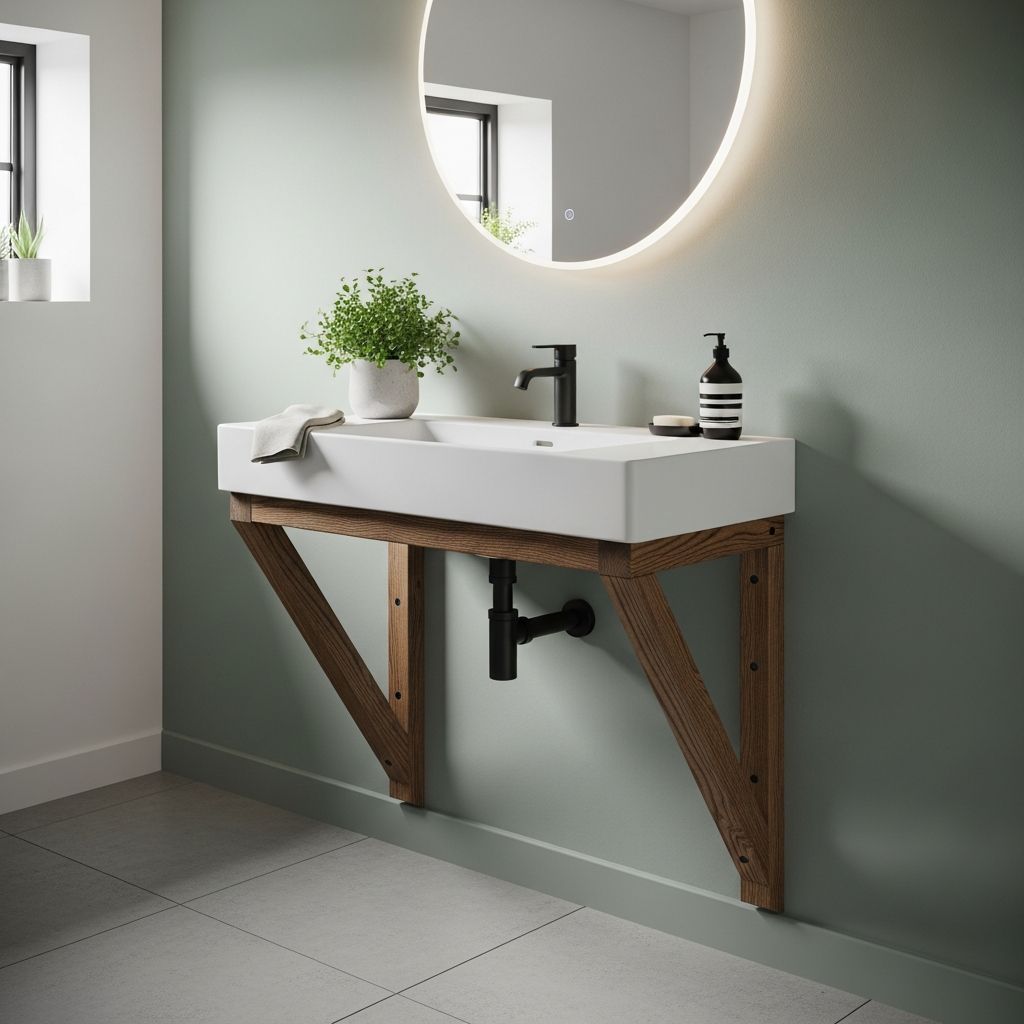
Creating Custom Support Structures for Wall-Mounted Sinks
Wall-mounted sinks offer an elegant, space-efficient solution for modern bathrooms, but they require proper structural support to function safely and reliably. While commercial support legs are readily available, building your own custom support legs allows you to match your aesthetic preferences while maintaining complete control over the installation process. This comprehensive guide walks you through every aspect of designing, fabricating, and installing support legs tailored specifically to your wall-mounted sink configuration.
Understanding the Critical Role of Support Legs in Sink Installation
Wall-mounted sinks create an open, uncluttered appearance that makes bathrooms feel larger and more inviting. However, relying solely on wall-mounted brackets places significant stress on your wall structure and plumbing connections. Support legs extend from beneath the sink down to the floor, distributing the weight more evenly and preventing potentially catastrophic failures that could result in injury or water damage.
The importance of proper support becomes evident when you consider the cumulative weight involved. Standard residential sinks typically weigh between 30 to 80 pounds, but when you account for water, soap, and other contents during daily use, the actual load can increase substantially. This additional burden makes supplementary support essential for long-term stability.
Beyond safety considerations, support legs transform the visual presentation of your sink installation. Rather than appearing to float mysteriously on the wall, a properly supported sink presents a finished, intentional look that enhances your overall bathroom design.
Evaluating Your Specific Needs and Constraints
Before purchasing materials or commencing construction, assess several critical factors that will influence your support leg design:
- Sink composition and weight: Determine whether your sink is made from vitreous china, cast iron, steel, or another material. Cast iron and solid steel sinks demand more robust support structures than lighter alternatives.
- Wall construction quality: Inspect the wall behind your sink for solid wood blocking. If wood blocking exists, you may need less substantial leg support. Walls without adequate backing require more substantial leg reinforcement.
- Mounting point spacing: Measure the distance between the bolt lugs on your sink’s underside. Antique sinks often utilize 11-1/2 inch center spacing, while contemporary models may follow different standards.
- Aesthetic preferences: Consider whether you want legs that blend invisibly with your bathroom design or architectural elements that complement your décor.
- Local building codes: Verify whether your jurisdiction requires permits for sink installations or mandates specific support configurations, particularly in commercial settings.
Essential Materials for Constructing Support Legs
Building effective support legs requires selecting materials that combine strength with appropriate appearance for your bathroom environment. The most suitable material choices include:
| Material Type | Characteristics | Best Applications | Cost Range |
|---|---|---|---|
| Aluminum Tubing | Lightweight, corrosion-resistant, easily adjustable | Modern bathrooms, easy retrofitting | Budget-friendly |
| Steel Tubing | Maximum strength, requires finish protection, durable | Heavy sinks, industrial aesthetics | Moderate |
| Brass or Copper | Premium appearance, corrosion-resistant, aesthetic appeal | Traditional or luxury bathrooms | Higher cost |
| Acrylic or Composite | Contemporary look, lightweight, limited strength | Decorative accent legs only | Moderate |
Most commercial support legs feature either hexagonal or round tubing construction with built-in height adjustment mechanisms. This adjustability proves invaluable during installation, allowing fine-tuning to achieve perfect level alignment.
You’ll also need appropriate fastening hardware including lag bolts for wall mounting, washers sized appropriately for your sink material, rubber hat washers for porcelain protection, and nuts and bolts matching your chosen tubing diameter.
Tools Necessary for Custom Leg Construction and Installation
Assembling the right tool collection prevents frustration and ensures professional results. Essential tools include:
- Tubing cutter: Enables precise length adjustments to achieve perfect fit and height adjustment.
- Adjustable wrench: Necessary for tightening all connections securely without over-torquing.
- Drill with appropriate bits: For creating mounting holes and pilot holes through tile or backing materials.
- Level: Critical for ensuring sink sits perfectly horizontal throughout the installation process.
- Measuring tape and marking pencil: Essential for accurate dimension recording and placement marking.
- Porcelain sealer: Protects delicate sink finishes if drilling becomes necessary.
- Diamond hole saw: For drilling through tile without cracking or chipping.
- Pliers: For threading screws and securing fasteners.
Measuring and Planning Your Support Leg Installation
Precise measurement forms the foundation for successful installation. Begin by determining your desired sink rim height. Standard bathroom sinks typically sit between 34 to 36 inches above the finished floor, though personal preference and accessibility needs may warrant adjustments.
Mark your chosen height on the wall at multiple points. This reference line becomes crucial for positioning mounting brackets and support legs consistently. If your sink includes a pedestal component, remember that the pedestal itself typically measures approximately 7 inches in height, so you’ll need to position mounting hardware accordingly.
Next, measure the horizontal distance between mounting points on your sink’s underside. Record this measurement precisely, as it determines which leg style and fastening method will work. Take additional measurements to confirm bolt-lug spacing matches standard configurations or requires custom spacing.
Before finalizing your measurements, locate your home’s water shut-off valve and determine optimal drain positioning. Drain lines should sit approximately 21 inches above the finished floor, while shut-off valves typically position around 24¾ inches. These measurements influence the overall height and angle of your support legs.
Constructing Your Support Leg Framework
With materials gathered and measurements confirmed, construction begins. If working with tubing, cut pieces to your calculated length using the tubing cutter. Allow for slight overages that can be trimmed during installation adjustment. For legs featuring adjustable height mechanisms, ensure the adjustment range accommodates typical bathroom floor variations—usually about one inch provides sufficient latitude.
Weld or bolt individual leg segments together according to your design specifications. For maximum durability, consider a four-leg configuration that distributes weight evenly, though two-leg designs work effectively when positioned directly under mounting points. Ensure all joints are structurally sound and can withstand the anticipated load.
If your design incorporates decorative elements or specific finishes, apply these after construction completion. Paint, plating, or staining should occur before installation to prevent damage during the mounting process.
Wall Preparation and Bracket Installation
Successful support leg installation depends critically on proper wall preparation. Wall-mounted sinks absolutely require wood blocking behind the mounting surface, typically utilizing 2×10 lumber or plywood affixed to wall studs. This backing provides the structural foundation necessary to safely anchor your support leg mounting hardware.
If wood blocking doesn’t already exist, you’ll need to open the wall, install backing material, and ensure it’s securely fastened to adjacent studs through toenailing or screw attachment. Cover the blocking with drywall and finish your wall surface (tile, paint, or other materials) before proceeding with leg installation.
Mount your brackets at the marked height using lag bolts secured into the wood blocking. Ensure brackets sit perfectly level before tightening fasteners. Check your work with a level positioned both horizontally and vertically to guarantee accurate alignment. Improper bracket positioning at this stage becomes nearly impossible to correct after sink installation.
Attaching Legs and Achieving Perfect Level
Position your constructed support legs beneath the sink, aligning them with pre-drilled or marked mounting points. Use rubber hat washers under fasteners for porcelain sinks—these distribute pressure and prevent the material from cracking. Aluminum, steel, or brass legs benefit from standard washers and lock washers to ensure connections remain tight throughout years of use.
Insert fasteners hand-tight initially, allowing for height adjustment before final tightening. Place your level on the sink top and check alignment in both directions. Adjust leg height using your tubing cutter or adjustment mechanisms until the sink sits perfectly horizontal. This step determines whether your installation looks professional and functions optimally.
Once achieving perfect level, gradually tighten all fasteners using your adjustable wrench. Proceed methodically, tightening each fastener incrementally rather than completely tightening one before moving to the next. This approach prevents uneven stress distribution that could cause cracking or misalignment.
Addressing Common Installation Challenges
Several obstacles frequently arise during support leg installation. Uneven bathroom floors represent the most common problem—most bathrooms contain slight slopes for water drainage. Your support legs must accommodate these variations through adjustable height mechanisms. If floor unevenness exceeds your adjustment range, shim beneath the legs using stainless steel shims until the sink achieves level positioning.
Tile drilling often presents challenges, particularly when precision matters. Use a diamond hole saw with a standard drill or impact driver, maintaining a 45-degree angle initially to prevent bit slipping. Once the bit is established, gradually tilt to 90 degrees. This technique prevents damage to both your tiles and drilling equipment.
In retrofit situations where wood blocking doesn’t exist, you may need to use heavy-duty wall anchors rather than lag bolts. While less ideal than bolting to solid backing, modern anchors rated for bathroom use can provide adequate support when properly selected and installed. Choose anchors rated for your combined sink and water weight with a safety margin of at least 50 percent.
Final Touches and Long-Term Maintenance
After achieving proper installation, apply silicone caulk around the base of your support legs and the perimeter of mounting brackets. This prevents water intrusion while creating a finished appearance. Allow caulk to cure fully before using your sink.
Test your installation by applying downward pressure at multiple points along the sink rim. The sink should feel absolutely solid with no movement or creaking. If you detect any flex or movement, tighten fasteners further and reassess your support structure.
Periodically inspect your installation during regular bathroom maintenance. Check fastener tightness annually, particularly if your bathroom experiences significant temperature fluctuations that cause material expansion and contraction. Corrosion-resistant materials require minimal maintenance, but painted or finished legs may need touch-ups over time.
Comparing Custom-Built versus Commercial Support Legs
| Aspect | Custom-Built Legs | Commercial Legs |
|---|---|---|
| Cost | Potentially lower with quality materials; labor time variable | Standardized pricing; $40–$450 depending on material |
| Customization | Complete design flexibility for unique requirements | Limited to available styles and dimensions |
| Fit | Tailored precisely to your sink and wall configuration | May require adaptation or shimming |
| Aesthetic Control | Full design authority over appearance and finish | Must accept predetermined styling |
| Installation Complexity | Requires construction skills but straightforward mounting | Simplified installation but limited adjustment options |
Frequently Asked Questions About Support Leg Installation
- How much weight can properly installed support legs support?
- Well-constructed legs using appropriate materials and fastening methods can safely support 200+ pounds when properly installed into solid wall backing. Verify your specific material specifications and fastener ratings.
- Can I install support legs on existing sinks?
- Yes, this is called retrofitting. Ensure your existing sink has appropriate mounting points and that your wall contains adequate backing. Retrofitting requires more careful measurement and potentially access to your sink’s underside.
- What’s the ideal leg height adjustment range?
- Most legs should feature approximately 1 inch of height adjustment to accommodate typical floor variations and achieve perfect level positioning.
- Do I absolutely need wood blocking in the wall?
- Solid wood backing is strongly recommended for all installations. It provides the structural foundation necessary for safe, reliable sink support that lasts for decades.
- How long does a typical DIY installation take?
- Most homeowners with intermediate DIY skills can complete installation in 1–4 hours, depending on whether you’re retrofitting an existing sink or performing a new installation.
Safety Considerations Throughout the Process
Always turn off your home’s water supply before beginning installation work. This prevents accidental leaks if you bump shut-off valves or plumbing connections during the process. Never skip this crucial safety step.
When drilling through tile, wear appropriate safety glasses to protect against flying tile fragments. Work carefully and patiently—rushing through drilling operations frequently results in damaged tile or cracked sinks.
Avoid over-tightening fasteners, particularly those connecting to porcelain sinks. Excessive tightening pressure can crack delicate sink material even if the fasteners themselves don’t shear. Apply firm, steady pressure until you feel resistance, then stop.
References
- Hexagonal Traditional Lavatory Legs – Jones Stephens — Jones Stephens. Accessed February 2026. https://www.jonesstephens.com/L65001
- Everything You Need to Know About Wall Mount Sink Legs — My Mortuary Cooler. Accessed February 2026. https://www.mymortuarycooler.com/blogs/news/everything-you-need-to-know-about-wall-mount-sink-legs
- How to Install a Wall Mounted Pedestal Sink — Instructables. Accessed February 2026. https://www.instructables.com/How-to-Install-a-Wall-Mounted-Pedestal-Sink/
Similar Articles




Read full bio of medha deb