Double-Height Art Studios: Creative Home Transformations
Discover innovative ways to craft expansive double-height art studios within residential homes for ultimate creativity.
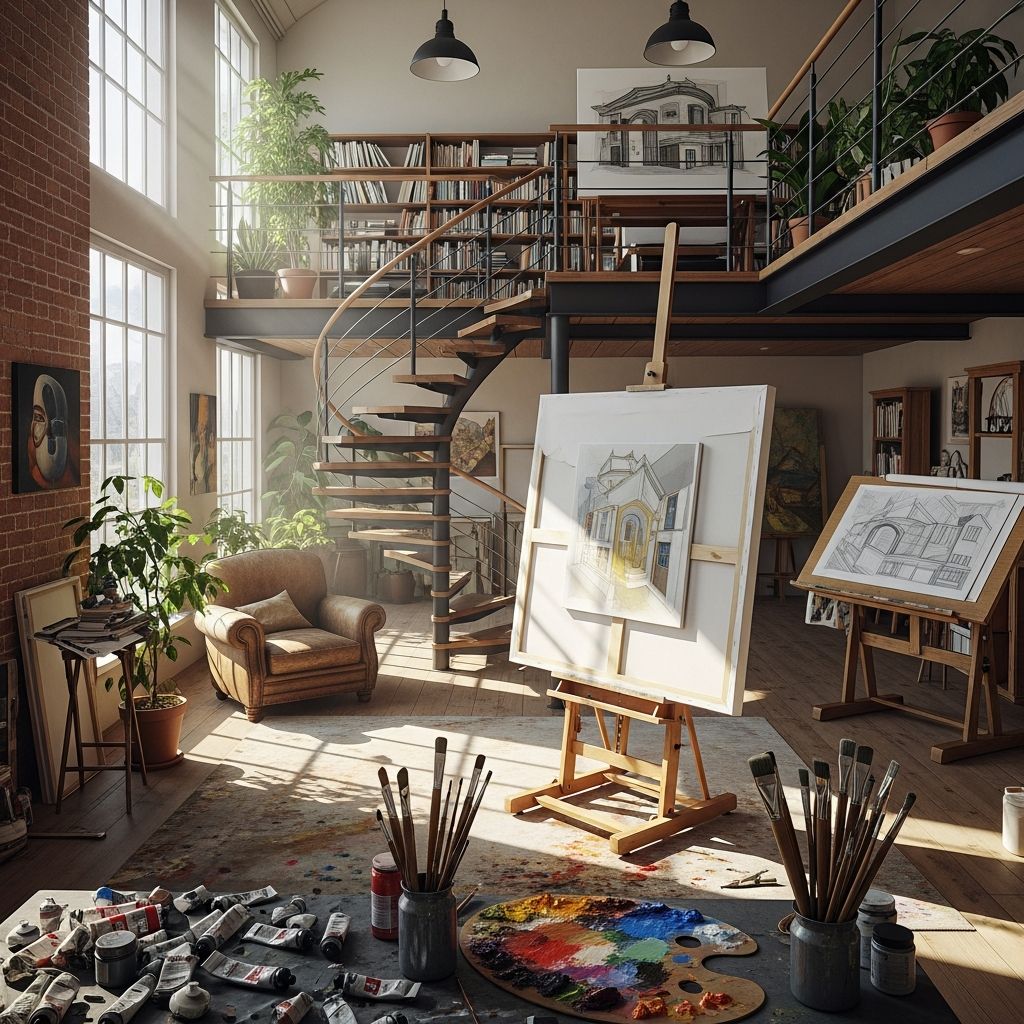
Integrating a double-height art studio into a standard home demands visionary architecture and precise planning. These spaces elevate creativity by offering vast vertical room for large-scale works, abundant natural light, and an inspiring atmosphere that blurs indoor-outdoor boundaries.
Why Vertical Space Revolutionizes Artistic Work
Artists frequently grapple with confined areas that limit canvas sizes, sculpture heights, or installation experiments. A double-height studio counters this by doubling ceiling clearance, often reaching 16-20 feet, allowing for monumental pieces without compromise. This design fosters a sense of boundless potential, encouraging bolder projects.
Natural illumination pours in through clerestory windows or skylights positioned high on walls, minimizing glare while maximizing even lighting crucial for color accuracy in painting or detailed sculpting. Ventilation improves too, as taller volumes dissipate fumes from solvents or kilns more effectively.
- Enhanced Scale: Accommodate oversized canvases or hanging mobiles.
- Superior Light: High windows deliver diffuse daylight throughout the day.
- Psychological Boost: Expansive volumes inspire flow states and innovation.
Site Selection: Finding Room for Vertical Expansion
Not every home suits a double-height addition, but many offer untapped potential. Unused garages, attics, or underutilized living areas often become prime candidates. Architects assess structural integrity first, ensuring floors and foundations support added height.
For attached expansions, garages provide sturdy bases with existing high doors for material transport. Detached structures like sheds allow freer modifications but require utility extensions. Indoor conversions, such as merging two stories by removing a floor, demand professional engineering to maintain safety.
| Location Type | Pros | Cons | Best For |
|---|---|---|---|
| Garage Conversion | Easy access, durable floors | May need insulation upgrades | Sculpture, messy media |
| Attic Expansion | Existing height potential | Steep roofs limit uniformity | Painting, drawing |
| New Addition | Custom design freedom | Higher cost, permits | Any large-scale art |
| Two-Story Merge | Maximizes interior space | Complex structural work | Urban homes |
Structural Innovations for Seamless Integration
Achieving double height involves strategic interventions. Removing intermediate floors or ceilings creates the void, reinforced by steel beams or laminated wood posts to bear loads. In one notable Seattle project, homeowners collaborated with builders to excavate and rebuild, inserting a soaring studio adjacent to their living quarters.
Glass walls or retractable panels connect studios to gardens, importing outdoor inspiration. Skylights with operable vents regulate temperature, while insulated walls prevent heat loss in cooler climates. Floor choices prioritize durability: polished concrete resists spills, cork cushions standing hours, and radiant heating ensures year-round comfort.
Optimizing Lighting and Ambiance
Daylight mastery defines superior studios. North-facing clerestory windows provide consistent, non-shifting light ideal for artists. Track lighting supplements with adjustable LEDs mimicking daylight spectra, crucial for evening sessions.
Acoustic panels on upper walls tame echoes in voluminous spaces, maintaining focus. Plants trailing from mezzanine levels add vitality, their movement echoing artistic fluidity. Custom murals or rotating displays on high walls keep the environment dynamic.
Furniture and Layout Strategies for Efficiency
Layout prioritizes workflow: zones for creation, storage, critique, and rest. Central worktables on casters enable reconfiguration. Vertical storage dominates—pegboards climbing to 15 feet hold tools, shelves spiral upward for supplies.
Mezzanines at half-height offer overlook vantage points for perspective checks without ladders. Rolling carts ferry materials between zones, embodying mobility. Ergonomic stools with adjustable heights support prolonged sessions.
- Fold-down benches for multi-use.
- Magnetic walls for sketches.
- Integrated sinks with filtration.
Smart Organization in Tall Volumes
Height poses organizational hurdles; ladders or lifts access upper reaches. Pulley systems lower supply baskets, color-coded bins maintain order. Digital inventories track stock via apps, paired with RFID-tagged containers.
Pare down possessions ruthlessly: categorize by frequency of use, donate surplus. Creation stations—wet for painting, dry for sketching—prevent cross-contamination. Open table surfaces invite immediacy, unencumbered by clutter.
Budgeting and Phased Implementation
Costs range widely: $50,000-$200,000 depending on scope. Prioritize structure first, then finishes. DIY elements like pegboard installs cut expenses, while pros handle beams. Permits for height alterations are mandatory; consult local codes early.
Phased builds mitigate disruption: temporary setups evolve into permanents. Grants for artist spaces or tax credits for home offices offset investments.
Real-World Inspirations from Artist Homes
Countless creators repurpose spaces inventively. Garages yield to studios with skylights exposing beams. Attics exploit roof peaks for asymmetrical heights suiting tall easels. Outdoor-access sheds blend indoor-outdoor flows via retractable doors.
Urban adapters merge stories, inserting steel supports amid Victorian charm. Portable kits suit nomads, scaling to dedicated realms. These tales prove adaptability trumps size.
Frequently Asked Questions
What are the biggest challenges in building a double-height studio?
Structural reinforcements and permitting top the list, alongside balancing natural light without overheating. Professional consultation averts pitfalls.
How much natural light is ideal for an art studio?
North-facing clerestory or skylights provide glare-free, consistent illumination. Combine with dimmable LEDs for versatility.
Can small homes accommodate double-height designs?
Yes, via two-story merges or compact additions. Vertical storage maximizes footprint efficiency.
What flooring withstands art messes best?
Sealed concrete or epoxy coatings excel for spills; add rugs for warmth.
Is ventilation critical in tall studios?
Absolutely, for fume dispersal. High operable windows and exhaust fans are essential.
Customization for Your Artistic Discipline
Painters favor flat walls for leaning canvases; sculptors need robust floors and cranes. Photographers integrate darkrooms with light traps; digital artists prioritize outlets and cable management. Tailor heights—18 feet for installations, 12 for drafting.
Incorporate rest nooks: hammocks suspended midway recharge without leaving the flow. Sound systems pipe ambient tracks, fostering immersion.
Sustainability in Studio Design
Eco-materials shine: reclaimed wood beams, low-VOC paints, solar skylights. Passive designs leverage stack ventilation, rising hot air exiting high vents naturally. Rainwater catchment fills sinks, closing water loops.
Energy-efficient LEDs and motion sensors slash bills. Native landscaping outside regulates microclimates, reducing HVAC loads.
Future-Proofing Your Creative Haven
Modular elements adapt to evolving practices: demountable walls shift footprints. Tech integration—smart mirrors for virtual critiques, AR overlays for composition—prepares for digital shifts. Community hooks like shared walls invite collaborations.
Document the build; it inspires others. As practices grow, studios scale inspirationally.
References
- Your DIY Guide to Designing a Home Art Studio — Extra Space Storage. 2023-05-15. https://www.extraspace.com/blog/home-organization/diy-guide-to-designing-a-home-art-studio/
- Studio Space: Design + Create Your Unique Home Art Studio — Mindful Art Studio. 2022-11-10. https://mindfulartstudio.com/shop/studio-space-design-create-your-unique-home-art-studio/
- Get Ideas for a Model-of-Perfection Artist’s Studio — Houzz. 2013-06-20. https://www.houzz.com/magazine/get-ideas-for-a-model-of-perfection-artist-s-studio-stsetivw-vs~3699750
- 8 Tips on Designing a Home Art Studio — Stampington & Company. 2021-09-01. https://stampington.com/blogs/somerset-place/8-tips-on-designing-a-home-art-studio
Similar Articles








Read full bio of medha deb