Draining and Flushing an Electric Water Heater
Master the essential maintenance task of draining and flushing your electric water heater to improve efficiency and extend its lifespan.
Why Draining and Flushing Your Electric Water Heater Matters
One of the most important maintenance tasks for your home’s electric water heater is draining and flushing the tank to remove sediment buildup. Beyond just electric water heaters, draining and flushing is essential for gas-powered water heaters and heat pump water heaters. This simple yet effective process can prevent scaling, improve energy efficiency, and extend the life of your water heater.
Over time, minerals and sediment naturally accumulate at the bottom of your water heater tank. This buildup can cause several problems, including reduced heating efficiency, increased energy consumption, corrosion of the tank interior, and potential damage to heating elements. By performing regular draining and flushing maintenance, you can mitigate these issues and ensure your water heater operates at peak performance.
The frequency of draining and flushing depends on your water quality and local conditions. In areas with hard water, you may need to flush your water heater annually. In regions with softer water, flushing every two to three years may be sufficient. However, checking your system regularly and flushing whenever you notice sediment accumulation is always a good practice.
Preparing Your Water Heater for Draining
Before you begin the draining and flushing process, proper preparation is crucial to ensure your safety and protect your water heater system from damage.
Step 1: Turn Off the Power Supply
The first and most critical step is to turn off the power supply to your electric water heater. Locate your home’s electrical panel and switch off the circuit breaker dedicated to your water heater. This step is essential for your safety and prevents electrical hazards during the draining process. After turning off the power, give the water inside the tank one to two hours to cool down. Hot water can cause severe burns, so allowing adequate cooling time is crucial before you begin draining.
Step 2: Turn Off the Water Supply
Next, locate the cold water supply line connected to your water heater and turn off the valve by rotating it to the off position. This prevents fresh water from entering the tank while you’re draining it. If you cannot locate the main water supply valve for your water heater, you may need to shut off your home’s main water supply instead. This step is vital to ensure that the tank remains empty while you’re flushing it out.
Step 3: Open the Pressure Relief Valve
Before opening the drain valve, open the temperature and pressure relief valve located on the top or side of your water heater. This valve allows air to enter the tank as water drains, preventing a vacuum from forming that could slow the draining process. Simply lift the small lever on the relief valve slightly. You should hear air entering the tank, which indicates the valve is functioning properly.
The Draining Process
Step 4: Locate and Connect the Drain Valve
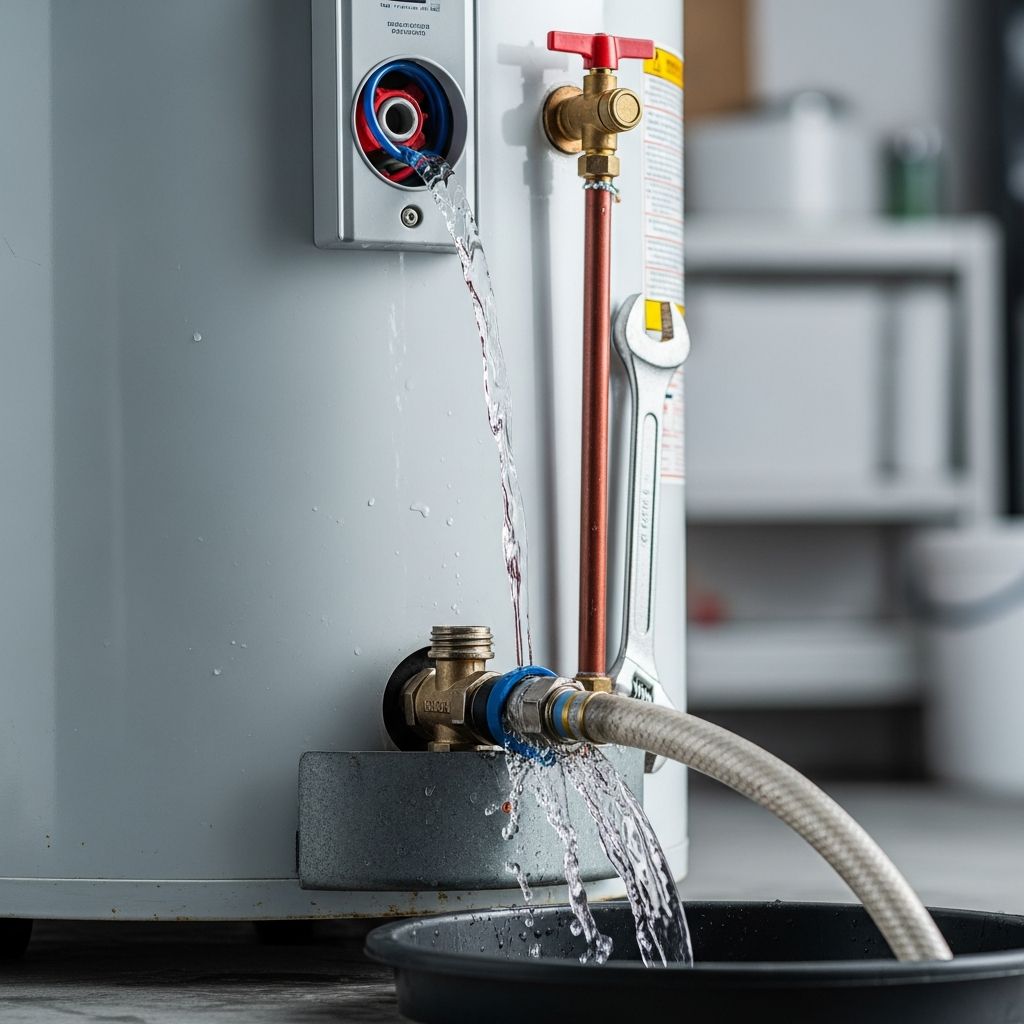
Locate the drain valve at the bottom of the tank. It typically looks like a small faucet or spigot. Connect a garden hose to the drain valve opening. Direct the other end of the hose to a suitable drainage area, such as a floor drain, sump pump, or a large bucket if no drain is available. Make sure the drainage area can accommodate the volume of water that will be discharged—most residential water heaters contain 40 to 80 gallons of water.
Step 5: Open the Drain Valve
Carefully turn the drain valve handle counterclockwise to open it. If the valve is tight or difficult to turn, use a flathead screwdriver or pliers to help rotate it, but be gentle to avoid damaging the valve mechanism. As you open the valve, water will begin flowing through the hose. Be cautious, as this water may still be quite hot even after the cooling period. Allow the water to flow freely and observe the clarity of the water coming through the hose.
Step 6: Monitor the Draining Process
As the water drains, inspect it carefully for sediment. If the water appears cloudy or contains visible particles, you’ll need to flush the tank thoroughly. Many homeowners prefer to use a clear container or place a white shirt over a bucket to better observe the water quality and sediment content. This visual inspection helps you determine when the water has become clear enough to proceed to the flushing stage.
Flushing the Tank
Step 7: Perform the Flushing Procedure
Once the water stops flowing or becomes very slow, begin the flushing process. To flush the tank, turn the cold water supply valve on and off several times in quick succession. By briefly allowing new water to enter an empty tank and then shutting it off, you stir up any sediment that sits on the bottom of the tank. This action helps dislodge and flush out remaining sediment that hasn’t already drained. Repeat this on-and-off cycle several times, waiting a few seconds between each cycle.
Step 8: Continue Draining Until Water Runs Clear
After each flushing cycle, allow the newly stirred water to drain through the hose. Continue this process of flushing and draining until the water running out of the hose appears completely clear with no visible sediment particles. This may take several cycles, depending on the amount of sediment buildup in your tank. Patience during this step ensures that you remove as much sediment as possible, maximizing the benefits of the maintenance.
Completing the Flushing Process
Step 9: Close the Drain Valve and Remove the Hose
Once the water runs clear and you’re satisfied with the flushing results, close the drain valve by turning the handle clockwise. Remove the garden hose from the drain valve opening. If water drips from the valve, this is normal. Allow it to drip into a bucket or container until it stops. Be sure to properly dispose of the drained water according to local regulations.
Step 10: Refill the Tank
Turn on the cold water supply valve to refill the tank. Listen for water flowing into the tank and monitor the process to ensure proper refilling. As the tank fills, you may hear gurgling or air being expelled from the system, which is completely normal. Once the tank is full, water should flow steadily from the hot water faucets in your home when you briefly turn them on.
Step 11: Restore Power to Your Water Heater
The final step is to restore electricity to your water heater. Return to your electrical panel and switch the circuit breaker back to the on position. Your water heater will now begin heating the fresh water in the tank. It typically takes 30 minutes to an hour for the water to reach its normal operating temperature, depending on your heater’s capacity and settings.
Common Challenges and Solutions
Stuck or Difficult Drain Valve
If the drain valve is stuck or too tight to open by hand, do not force it excessively. Use a flathead screwdriver or a wrench to gently apply additional leverage. If the valve still won’t budge, it may be corroded or damaged. In such cases, contact a professional plumber who can safely replace the drain valve without damaging the tank.
Sediment-Clogged Drain Valve
Sometimes sediment buildup inside the tank can clog the drain valve itself, preventing water from flowing out properly. If you encounter this issue, try opening and closing the valve multiple times or gently tapping the valve with a hammer to help dislodge the sediment. If this doesn’t work, you may need to call a professional service technician for assistance.
Persistent Cloudiness in Drained Water
If the water remains cloudy even after multiple flushing cycles, you may have an exceptionally high level of sediment buildup. Continue the flushing process for additional cycles, or consider scheduling a professional flush with specialized equipment designed for heavy sediment removal.
Maintenance Tips to Reduce Sediment Buildup
In addition to regular draining and flushing, you can take several steps to minimize sediment accumulation in your water heater:
– Install a water softener if you have hard water, which will significantly reduce mineral deposits- Lower your water heater temperature to 120 degrees Fahrenheit to slow mineral precipitation- Insulate your hot water pipes to improve energy efficiency and reduce heating demands- Consider installing a sediment filter on your main water supply line- Schedule professional water heater inspections annually to catch problems early
Signs Your Water Heater Needs Flushing
Be alert to these indicators that your water heater may need immediate attention:
– Rusty or discolored hot water coming from your faucets- Reduced hot water availability or slower heating- Unusual noises coming from the water heater, such as popping or rumbling sounds- Increased energy bills without explanation- Visible leaks or corrosion around the tank
When to Call a Professional
While draining and flushing your water heater is a manageable DIY task for most homeowners, certain situations warrant professional assistance:
– Your drain valve is damaged, corroded, or won’t open- You’re uncomfortable working with electrical or plumbing components- Your water heater is still under warranty, and you want to preserve coverage- You discover significant corrosion or signs of tank damage- Your water heater is older than 10-15 years and showing multiple signs of deterioration
Frequently Asked Questions
Q: How often should I drain and flush my electric water heater?
A: In areas with hard water, drain and flush your water heater annually. In areas with softer water, flushing every two to three years is usually sufficient. However, if you notice sediment in your water or reduced heating efficiency, flush more frequently regardless of the schedule.
Q: Can I drain my water heater without turning off the power?
A: No, you should always turn off the power before draining your electric water heater. This is essential for your safety and prevents damage to the heating elements. Never attempt to drain a water heater while it’s powered on.
Q: How long does the entire draining and flushing process take?
A: The process typically takes 30 minutes to 2 hours, depending on the amount of sediment buildup and the size of your water heater. The actual draining time can vary significantly based on water pressure and drain valve efficiency.
Q: Is it normal for the water to remain slightly cloudy after flushing?
A: Some slight cloudiness may persist, especially if your water has high mineral content. However, most cloudiness should clear after flushing. If significant cloudiness remains, continue the flushing process or consider professional service.
Q: What should I do if water leaks from the drain valve after I close it?
A: Minor dripping is normal and will stop within a few minutes. However, if water continues to flow steadily, the valve may be damaged or not fully closed. Gently tighten it further, but don’t force it. If leaking persists, contact a plumber to replace the valve.
Q: Can I use hot water immediately after flushing and refilling?
A: It’s best to wait 30 minutes to an hour for the water to heat properly after refilling. Your water heater needs time to restore the water to the desired temperature after the draining and flushing process.
References
- Draining and Flushing an Electric Water Heater — This Old House. 2024. https://www.thisoldhouse.com/plumbing/21016872/draining-flushing-an-electric-water-heater
- How to Drain & Flush A Water Heater — A.O. Smith. 2024. https://www.hotwater.com/info-center/how-to-drain-a-water-heater.html
- How-To Safely Drain A Water Heater — The Huneycutt Group. 2024. https://www.huneycuttgroup.com/how-to-drain-water-heater/
Similar Articles



Read full bio of medha deb