Clean Tarnished Silver: 4 Easy Methods To Restore Shine
Master the art of silver cleaning with simple household items and proven techniques.
The Easy Way to Clean Tarnished Silver
Silver is a beautiful and timeless metal that adds elegance to any home, whether displayed as fine dining silverware, jewelry, decorative pieces, or heirloom collectibles. However, over time, silver develops a dark coating known as tarnish, which occurs when silver oxidizes due to exposure to air, moisture, and sulfur compounds. While tarnished silver may look dull and uninviting, the good news is that restoring its shine doesn’t require expensive commercial products or professional cleaning services. With common household items and simple techniques, you can effectively remove tarnish and restore your silver to its original luster.
Understanding Silver Tarnish
Before diving into cleaning methods, it’s important to understand what causes silver tarnish. Tarnish is a natural chemical reaction that occurs when silver comes into contact with sulfur-containing substances in the air or on your skin. This oxidation process creates a layer of silver sulfide on the surface of the metal, giving it a dark, gray, or black appearance. While tarnish doesn’t indicate that your silver is damaged or compromised in quality, it certainly affects its visual appeal. The good news is that tarnish is completely reversible, and you don’t need harsh chemicals or expensive treatments to remove it.
Why Clean Silver Infrequently
One important principle to keep in mind when caring for your silver is to avoid over-cleaning. While it may be tempting to polish away tarnish the moment you notice it, excessive cleaning can actually be harmful to your silver. Polishes and abrasive cleaning methods, by their very nature, remove a thin layer of the silver surface each time they’re used. Over time, repeated polishing can wear down decorative details, thin delicate pieces, and diminish the overall quality of your silver items. Therefore, it’s best to clean your silver as infrequently as possible, only addressing significant tarnish buildup when necessary. This approach helps preserve your silver’s integrity and longevity for generations to come.
The Aluminum Foil and Baking Soda Method
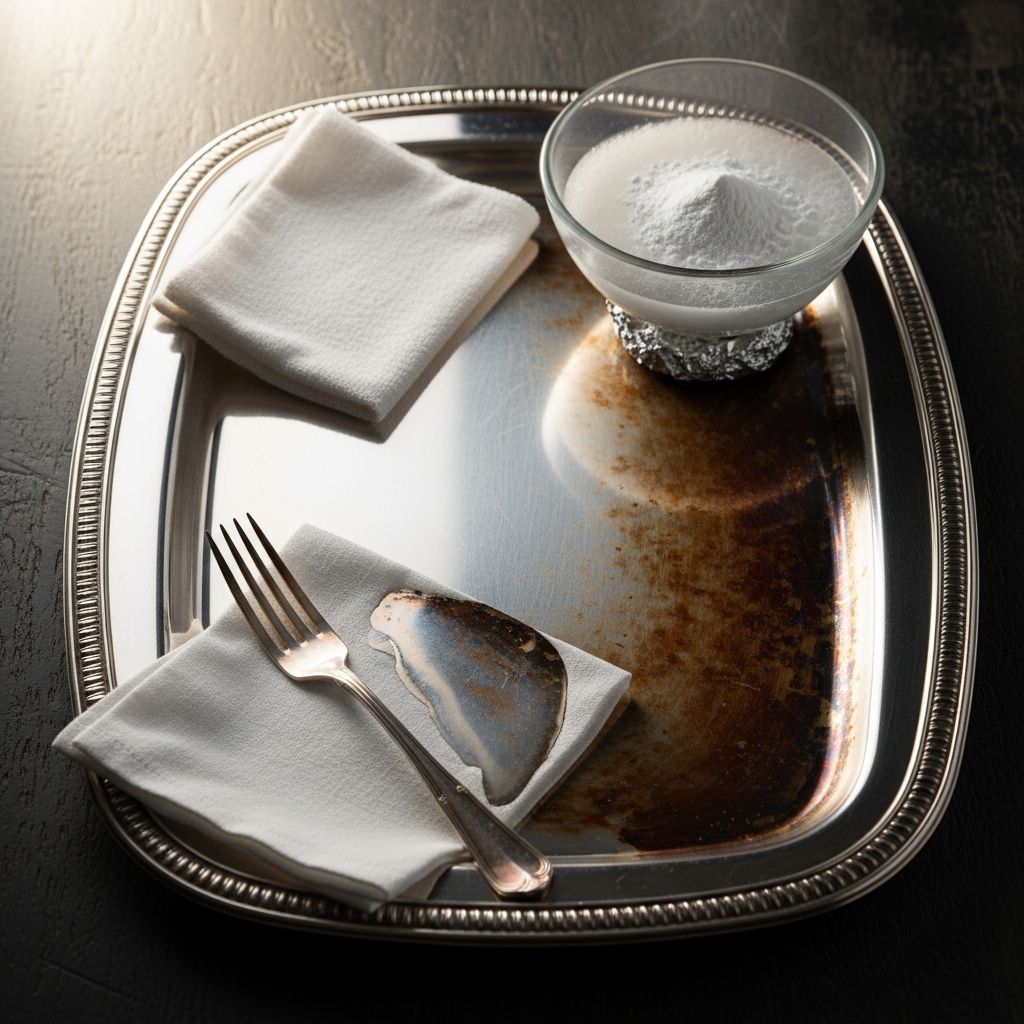
One of the most effective and safest methods for cleaning tarnished silver uses two common pantry staples: aluminum foil and baking soda. This method works through a chemical process called ion exchange, where the aluminum foil facilitates the transfer of sulfur from the silver back into the baking soda solution. This gentle yet powerful technique is particularly effective for removing heavy tarnish without the abrasive nature of traditional polishing.
Step-by-Step Instructions
Materials Needed:
- Aluminum foil
- Baking soda
- Hot water
- A bowl or sink (preferably non-metal)
- Soft cloth or sponge
Process:
- Line a bowl or your sink with aluminum foil, shiny side up
- Fill the container with hot (but not boiling) water
- Add one tablespoon of baking soda per cup of water
- Stir the solution until the baking soda dissolves
- Carefully place your tarnished silver items in the solution, making sure they touch the aluminum foil
- Let the silver soak for 5 to 10 minutes, depending on the level of tarnish
- Remove the silver and rinse thoroughly with clean water
- Gently dry the silver with a soft, lint-free cloth
- If tarnish remains, repeat the process or soak for a longer duration
This method is safe for most silver items, including delicate jewelry and heirloom pieces. The chemical reaction between the aluminum foil and tarnish effectively removes the oxidation without requiring scrubbing or abrasive polishing, making it ideal for preserving the finish and details of your silver.
Alternative Cleaning Methods
While the aluminum foil and baking soda method is highly effective, there are several other household approaches you can use to clean tarnished silver, each with its own advantages and applications.
Dish Soap and Water
For light tarnish and routine maintenance, a simple solution of warm water and mild dish soap works wonderfully. This gentle method is perfect for everyday cleaning and won’t damage even the most delicate silver pieces. Simply soak your silver in the soapy water for a few minutes, gently scrub with a soft cloth or soft-bristled brush, rinse thoroughly, and dry immediately. This method is particularly useful for keeping your silver looking fresh between deeper cleanings.
Toothpaste Method
Believe it or not, regular white toothpaste can be an effective silver cleaner for light to moderate tarnish. The mild abrasives in toothpaste work to gently remove tarnish without being too harsh. Apply a small amount of toothpaste to a soft cloth and gently rub the tarnished areas in circular motions. Rinse thoroughly with water and dry with a clean cloth. Avoid toothpaste with whitening agents or gel formulations, as these may be too abrasive or leave residues on your silver.
Laundry Detergent Solution
For heavily tarnished silver pieces, a solution made with laundry detergent can be effective. Dissolve one tablespoon of oxygen-based laundry detergent in a quart of warm water. Soak your silver items for several hours, then gently scrub with a soft cloth and rinse thoroughly. This method is particularly good for heavily oxidized items but should be tested on inconspicuous areas first, especially for valuable or antique pieces.
Comparison of Cleaning Methods
| Method | Tarnish Level | Time Required | Abrasiveness | Best For |
|---|---|---|---|---|
| Aluminum Foil & Baking Soda | Light to Heavy | 5-10 minutes | Very Low | Delicate and antique pieces |
| Dish Soap & Water | Light | 5 minutes | Very Low | Routine maintenance |
| Toothpaste | Light to Moderate | 10-15 minutes | Moderate | Regular silverware and jewelry |
| Laundry Detergent | Moderate to Heavy | Several hours | Low to Moderate | Heavily oxidized items |
Important Precautions and Tips
When cleaning valuable, sentimental, or antique silver pieces, always perform a spot test first. Choose an inconspicuous area of the item and test your chosen cleaning method on a small section before treating the entire piece. This precaution ensures that the cleaning method won’t cause any unwanted damage or discoloration to your precious items.
Additionally, always use soft cloths and gentle techniques when cleaning silver. Avoid steel wool, harsh scouring pads, or vigorous scrubbing, as these can scratch and damage the metal’s finish. Pat your silver dry immediately after cleaning to prevent water spots and oxidation. Never allow silver to air-dry, as this can lead to new tarnish formation.
Preventing Future Tarnish
While knowing how to clean tarnished silver is valuable, preventing tarnish buildup in the first place is even better. Store your silver in a cool, dry place away from direct sunlight and moisture. Consider using anti-tarnish strips or cloths in your storage containers, as these help absorb sulfur compounds that cause tarnish. Keep silver items in sealed bags or cases when not in use, and handle them with clean hands to minimize skin oils and dirt transfer.
Regular use of your silver actually helps prevent tarnish, as handling and gentle friction can help keep the surface bright. However, if you won’t be using your silver frequently, proper storage is essential to maintain its appearance.
When to Seek Professional Help
While most tarnish can be removed with household methods, extremely valuable antiques, heirloom pieces with intricate detailing, or silver with gemstones or delicate settings should sometimes be professionally cleaned. Professional silver cleaners have specialized equipment and experience handling delicate items. If you’re uncertain about cleaning a particular piece, or if it has sentimental or monetary value, consulting a professional is a wise investment.
Frequently Asked Questions
Q: How often should I clean my silver?
A: Clean silver as infrequently as possible to preserve its finish. Light cleaning during routine maintenance can happen occasionally, but deep cleaning should only occur when significant tarnish appears. Limit intensive polishing to a few times per year at most.
Q: Can I use the aluminum foil method on all types of silver?
A: The aluminum foil and baking soda method is safe for most silver items, including sterling silver, silver plate, and jewelry. However, always test on a small, inconspicuous area first, especially with valuable or antique pieces.
Q: Is it safe to use commercial silver polish?
A: Commercial polishes can be effective but are often more abrasive than natural methods. If you choose to use them, follow the manufacturer’s instructions carefully and minimize use to protect your silver’s finish.
Q: Why does silver tarnish faster in some environments?
A: Silver tarnishes faster in humid environments or areas with high sulfur content in the air. Coastal areas, areas near industrial sites, and homes with rubber bands or certain plastics nearby can accelerate tarnishing.
Q: Can tarnish damage silver permanently?
A: No, tarnish is a surface-level oxidation that doesn’t damage the silver itself. It can be completely removed with proper cleaning methods, restoring the silver to its original appearance.
Q: Is baking soda safe for antique silver?
A: Yes, the baking soda and aluminum foil method is very gentle and is generally considered safe for antique silver. It’s one of the safest non-abrasive methods available for valuable pieces.
References
- Easy DIY Silver Cleaner — HGTV. 2019-01-11. https://www.youtube.com/watch?v=A2mevl7e1R8
- How to Clean Silver 10 Ways — The Home Depot. https://www.homedepot.com/c/ah/how-to-clean-silver-10-ways/9ba683603be9fa5395fab90d380f435
Similar Articles



Read full bio of medha deb