Electric Heater Fan Running Without Heat: Diagnostic Guide
Master the art of diagnosing why your heater fan spins but produces no warmth
Understanding and Resolving the Fan-Only Electric Heater Problem
One of the most frustrating scenarios homeowners encounter involves an electric heater where the fan operates normally but produces absolutely no heat output. This specific malfunction presents a diagnostic puzzle that requires systematic investigation of several interconnected components. Rather than assuming the entire unit has failed, understanding the underlying causes can help you identify whether a simple adjustment suffices or professional intervention becomes necessary.
Why Your Fan Operates Without Heat Production
When an electric heater fan continues running while heat output ceases, the issue typically stems from one of several distinct subsystems within the unit. The fan motor and heating element operate as separate circuits controlled by different components, meaning a failure in the heating circuit doesn’t necessarily affect the fan’s operation. This independence helps pinpoint the problem source more effectively than if the entire unit shut down simultaneously.
The heating element itself may function normally, but power delivery to this component might be interrupted by a faulty thermostat, broken internal wiring, or a tripped safety device. Conversely, the heating element might have failed completely while the fan circuit remains intact. Identifying which scenario applies to your situation requires methodical testing and observation.
Initial Assessment: Starting Your Diagnostic Process
Before performing any electrical testing, conduct a visual inspection of your heater’s exterior and accessible internal components. Check whether the heater feels warm to the touch in areas surrounding the heating element housing. Even minimal warmth suggests the element generates some heat, though inadequate power delivery prevents proper functioning. Complete absence of warmth indicates either element failure or complete power loss to that component.
Examine the thermostat setting carefully. Sometimes the thermostat has been inadvertently set too low or positioned to a setting that prevents the heating element from activating. Raise the thermostat setting by three to five degrees Fahrenheit and wait approximately twenty minutes to observe whether heat production resumes. This simple adjustment resolves many cases of apparent heater failure.
Inspect all visible wiring connections for loose terminals, discoloration, or signs of burning. Loose connections create electrical resistance that generates heat in the wires themselves rather than in the heating element. This condition produces discolored, brittle wiring that may eventually fail completely. If you observe such damage, disconnecting all power immediately becomes essential before proceeding further.
Electrical Power Assessment: Ensuring Adequate Supply
Electric heaters require substantial electrical power to generate heat effectively. A tripped circuit breaker represents the most common cause of power loss to heating elements while fans continue operating. Circuit breakers protect your home’s electrical system from overload and surge conditions by automatically disconnecting power when voltage or current exceeds safe limits.
Locate your home’s circuit breaker panel and identify the breaker controlling your heater. Power surges, temporary overload conditions, or aging equipment frequently trigger breaker trips. Check whether the breaker switch occupies a middle position between fully ON and OFF, indicating a tripped state. Reset the breaker by switching it completely OFF, then back ON. Allow several minutes for the heater to respond before concluding whether this action resolved the issue.
If the breaker repeatedly trips after you reset it, discontinue further troubleshooting immediately. Repeated breaker trips indicate a serious electrical fault requiring professional HVAC technician evaluation. Continuing to reset the breaker risks electrical fire or damage to your heater’s internal components.
Check whether your electric heater features an internal disconnect switch. This safety device interrupts power during maintenance or emergency situations. Verify that this switch occupies the ON position, as an OFF position would prevent power delivery to all heater components despite correct thermostat settings.
Identifying Faulty Heating Elements
Heating elements consist of resistive wire coils that generate warmth when electrical current flows through them. Over years of operation, these elements gradually deteriorate, eventually developing open circuits where the continuous wire breaks internally. An open-circuit element cannot conduct electricity and therefore produces zero heat regardless of thermostat settings or voltage supplied.
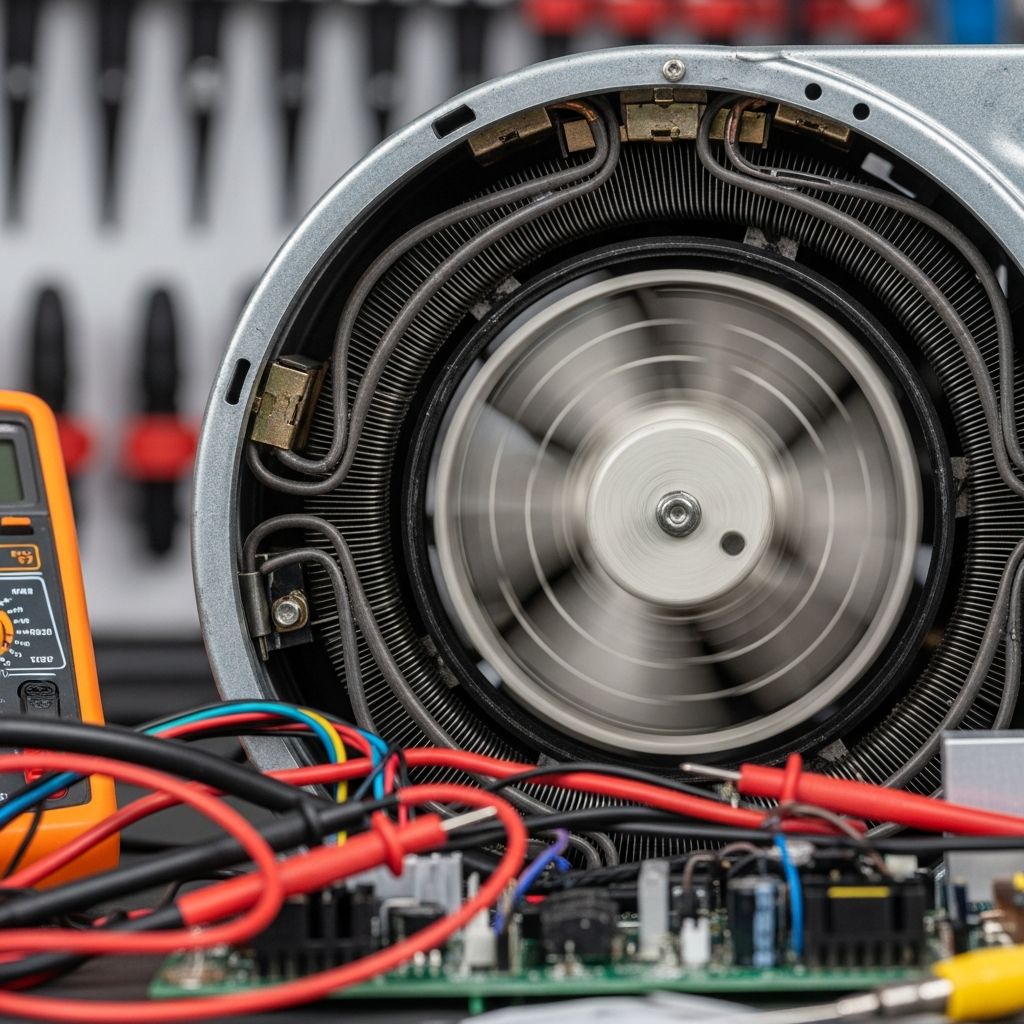
To test whether a heating element has failed, you need a multimeter capable of measuring resistance in ohms. After disconnecting all power to the heater, remove the wiring connected to the heating element terminals. Set your multimeter to the ohms resistance function and place the probes on the element’s terminals. A functioning element displays measurable resistance, typically ranging from several ohms to several hundred ohms depending on element design. An open-circuit element shows infinite resistance or no continuity, confirming replacement is necessary.
Heating element replacement varies significantly depending on your specific heater model. Some elements mount with simple screw connections allowing straightforward removal and installation. Others require soldering, special tools, or professional installation. Consult your heater’s manual to determine whether element replacement falls within acceptable DIY parameters for your skill level.
Thermostat Function and Control Circuits
The thermostat acts as an intelligent switch that monitors room temperature and controls power delivery to the heating element. A faulty thermostat may fail to send the signal allowing current to reach the element, resulting in fan operation without heat production. Thermostats can malfunction in various ways: the temperature-sensing mechanism might fail, internal switch contacts might oxidize or stick, or the electrical circuit might break.
Testing thermostat function requires an ohmmeter or continuity tester. After disconnecting all power and removing wiring from the thermostat terminals, set your multimeter to the ohms function. Touch the probes to the thermostat’s terminal pairs. When the thermostat should be in an activated state (temperature setting above current room temperature), you should read continuity or very low resistance. If the thermostat shows infinite resistance or no continuity despite being set to call for heat, the thermostat requires replacement.
Some heating problems arise from thermostat settings rather than component failure. Modern digital thermostats sometimes enter programming modes that prevent normal operation. Check your thermostat’s display for unusual messages, error codes, or menu screens. Consulting the thermostat manual often reveals simple solutions to apparent malfunctions. Battery-powered thermostats may malfunction due to depleted batteries, a problem remedied by simple battery replacement.
Internal Wiring and Connection Points
The electrical pathways connecting your heater’s components must remain intact and properly connected to deliver power throughout the unit. Physical damage, corrosion, loose terminals, and failed solder joints all interrupt these pathways, preventing heat production while the fan potentially continues operating on alternative circuits.
After disconnecting all power to the heater, visually inspect all internal wiring. Look for discoloration, scorching, or charring that indicates previous overheating. Burnt wire insulation exposes the bare conductor underneath, creating dangerous shock hazards and potential short circuits. Check that all terminal connections remain tight and secure. Gently tugging on each wire near its terminal should produce no movement; any flex indicates a loose connection requiring remedial tightening.
Corroded terminals appear as green or white crusty deposits on copper connection points. These deposits increase electrical resistance and reduce power delivery efficiency. Light corrosion can often be cleaned with a wire brush and suitable contact cleaner. Heavy corrosion may require terminal replacement, particularly if the corrosion penetrates deeply into the terminal material.
The Fan-Delay Component: An Often-Overlooked Element
Some electric heaters incorporate a fan-delay mechanism, a temperature-sensitive device that prevents the fan from operating until the heating element reaches a predetermined temperature threshold. This safety feature prevents circulating cold air during startup. A failed fan-delay might allow the fan to run continuously while preventing the heating element from activating, or it might prevent fan startup when the element reaches temperature.
Testing a fan-delay requires heating it to its operating temperature while monitoring electrical continuity. After disconnecting power and removing wiring, place the multimeter probes on the fan-delay terminals. Using a hair dryer as a safe heat source, warm the fan-delay gradually while monitoring the multimeter. When the fan-delay reaches its designed temperature threshold, you should observe continuity or sudden resistance drop, indicating the internal switch has closed. If no continuity appears despite adequate heating, the fan-delay component requires replacement.
Addressing Airflow Blockages
Electric heaters operate safely within specific temperature parameters. When airflow becomes restricted by dust accumulation, debris, or internal blockages, the heating element can reach dangerously high temperatures. Many modern heaters include high-limit safety devices that automatically shut off power to the heating element when temperatures exceed safe thresholds. This protective mechanism prevents fires but results in fan operation without heat output.
Inspect all air intake and exhaust openings for blockage. Remove any visible dust, lint, or debris blocking these passages. Check that furniture, curtains, or other objects don’t obstruct air movement around the heater. Internal blockages require opening the heater housing (after disconnecting power) to access internal fans or heating chambers. Compressed air can effectively dislodge accumulated dust and debris from internal components.
After clearing blockages, you may need to manually reset the high-limit safety device, typically a red button located on the heater’s control panel or heating element assembly. Pressing this reset button restores power to the heating circuit. If the high-limit continues triggering repeatedly, persistent airflow obstruction or thermostat malfunction may require professional evaluation.
When to Call Professional Technicians
While many electric heater problems yield to systematic troubleshooting, certain situations demand professional expertise. If the circuit breaker trips repeatedly despite no obvious overload condition, internal electrical faults exist that require professional diagnosis. Faulty relays, shorted contacts in control switches, or damaged internal components create conditions beyond safe DIY repair.
Any indication of water damage, corrosion from environmental exposure, or burning smells should trigger immediate professional consultation. These conditions indicate serious electrical hazards that risk shock or fire. Never attempt repair work on water-damaged electrical equipment without professional guidance, even if the heater appears to function partially.
Heaters manufactured more than fifteen to twenty years ago may use obsolete parts impossible to source through standard channels. Professional technicians maintain access to specialized parts catalogs and can sometimes repair or replace unavailable components. For these older units, replacement often proves more economical and safer than continued repair attempts.
Preventive Maintenance to Avoid Future Problems
Regular maintenance significantly extends heater lifespan and prevents emergency situations. Quarterly cleaning removes dust and debris that accumulate on heating elements and fans. Use a soft brush or compressed air, never water or liquid cleaners on electrical components. Allow heaters to cool completely before cleaning to prevent burn injuries from hot surfaces.
Check thermostat batteries (if applicable) twice yearly and replace them before depletion occurs. Verify that breaker switches move freely without sticking or resistance. Inspect visible wiring annually for any signs of damage or corrosion. These simple steps catch developing problems before they result in complete heating failure during winter months when heater demand peaks.
References
- Troubleshooting Common Electric Heating Issues: Stay Warm Without the Worry — 21st Century Heating. https://21stcenturyheating.co.uk/advice/troubleshooting-common-electric-heating-issues-stay-warm-without-the-worry/
- Electric Furnace Troubleshooting: Common Problems and How to Fix Them — Cotes Mechanical. https://www.cotesmechanical.com/heaters/electric-furnace-troubleshooting-tips/
- How to Troubleshoot a Fan-Forced Electric Wall Heater — Mor Electric Heating. https://morelectricheating.com/articles/how-to-troubleshoot-fan-forced-electric-wall-heater
- How to Troubleshoot an Electric Water Heater — USW Home Pro. https://www.uswhpro.com/how-to-troubleshoot-an-electric-water-heater
- How to Troubleshoot Common Issues with Heating Elements: A Step-by-Step Guide — iSquared Element. https://isquaredrelement.com/how-to-troubleshoot-common-issues-with-heating-elements-a-step-by-step-guide/
Similar Articles







Read full bio of Sneha Tete