Electrical Wiring Guide: Safe Home Wiring Essentials
Master home electrical wiring basics: cables, wire gauges, color codes, and safety standards for DIY projects.
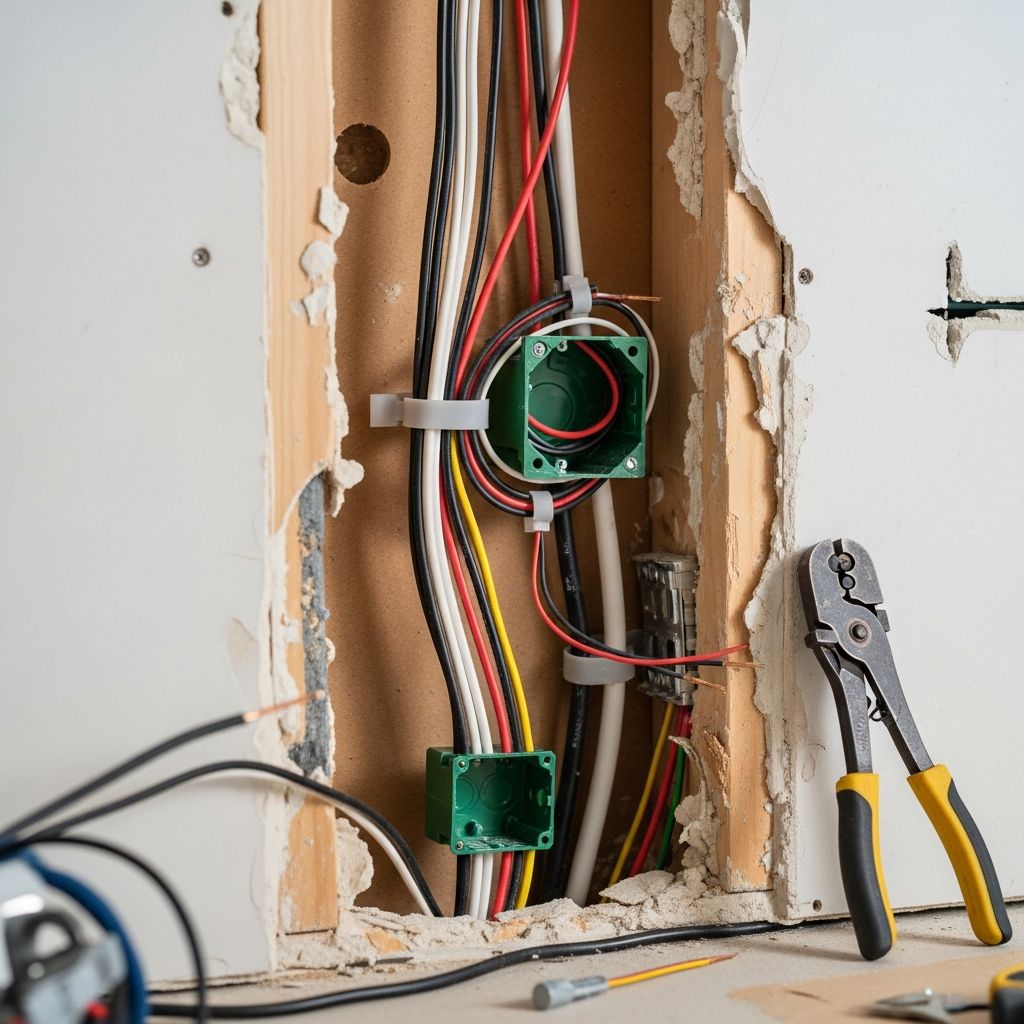
Understanding the fundamentals of home electrical wiring is crucial for any homeowner, whether you’re planning a DIY project or simply want to understand the systems in your house. Electrical wiring forms the backbone of your home’s power distribution system, and improper installation or maintenance can lead to serious safety hazards including electrical shocks, fires, and equipment damage. This comprehensive guide covers everything you need to know about residential electrical wiring, from basic cable types to color coding standards and circuit requirements.
Understanding Wire Gauges and Sizing
One of the most important concepts in electrical wiring is wire gauge, which determines the wire’s thickness and its capacity to safely carry electrical current. Wire gauge follows a counterintuitive numbering system: the larger the gauge number, the smaller the actual wire diameter. This inverse relationship confuses many homeowners, but it’s essential to understand for safe electrical work.
The most common residential wire gauges you’ll encounter are 14-gauge and 12-gauge, which handle standard household circuits. However, larger appliances and systems require thicker wires to safely manage higher amperage:
- 14-gauge wire: Used for 15-amp circuits powering lights and standard outlets
- 12-gauge wire: Used for 20-amp circuits in kitchens, bathrooms, laundry areas, and garages
- 10-gauge wire: Used for 30-amp circuits serving major appliances
- 8-gauge wire: Used for 40-60 amp circuits powering large appliances
- 6-gauge wire: Used for 60-amp circuits and high-power applications
When adding outlets or extending circuits, you must use wire of the same gauge as the existing wiring in that circuit. Using undersized wire for a circuit creates a serious fire hazard, as the wire will overheat and potentially ignite surrounding materials. Conversely, using oversized wire is inefficient and unnecessarily expensive.
Electrical Cable Types for Residential Use
Modern homes typically use several different types of electrical cables, each designed for specific applications and environments. Understanding these cable types helps you identify existing wiring and choose the correct cable for new installations.
Nonmetallic Sheathed Cable (NM or Romex)
Nonmetallic sheathed cable, commonly called Romex or NM cable, is the most widely used wiring method in residential construction. This cable consists of two or more individual THHN/THWN wires bundled together inside a plastic sheath. The plastic outer coating provides basic protection, but this cable is only suitable for use inside walls, attics, and finished spaces where it won’t be exposed to physical damage or moisture.
Metal-Clad Cable (MC)
Metal-clad cable features individual wires wrapped in a flexible metal sheathing, typically aluminum. A bare aluminum wire runs continuously inside the metal sheath, providing a built-in ground path. This cable is ideal for unfinished areas such as basements, crawl spaces, and garages where exposure to physical damage is a concern. The metal armor protects the conductors from punctures and abrasion, and the continuous ground wire simplifies grounding. MC cable is sometimes used inside walls as an alternative to NM cable for added protection.
Conduit and Individual Wires
In some applications, electricians use individual THHN/THWN wires pulled through metal or PVC conduit rather than pre-assembled cables. This method is more labor-intensive but offers maximum flexibility for complex routing and allows for future wire replacement. Solid wire must be used when pulling through conduit, rather than stranded wire, as it provides better conductivity and easier insertion.
Wire Color Coding Standards
Electrical wire color coding is a critical safety feature that helps electricians and homeowners identify wire function at a glance. The standardized color system has been in place for decades and is essential for safe electrical work.
Hot Wires
Black or red wires are designated as hot wires. Hot wires carry electrical current from the main panel to switches, receptacles, light fixtures, and appliances. These wires are always energized when the breaker is on, making them the most dangerous wires to contact. In some circuits, you may encounter other hot wire colors such as blue or yellow, though these are less common in residential work. Whenever working with electrical circuits, always assume black and red wires are hot unless you’ve verified otherwise with a voltage tester.
Neutral Wires
White wires serve as neutral conductors, completing the circuit by carrying current back to the electrical panel. While neutral wires carry current, they are not considered “live” in the same sense as hot wires. However, you should still treat white wires with respect and never touch them without proper precautions, as they can still deliver a potentially fatal shock under certain conditions.
Ground Wires
Bare copper or green wires provide the ground connection. These ground conductors provide a safe path for fault current to return to the panel, allowing the circuit breaker to detect the fault and open the circuit before dangerous voltage levels develop. In the event of a ground fault, the ground wire ensures that excess current flows safely to ground rather than through a person who might be touching the equipment. Green wires are insulated ground conductors, while bare copper ground wires are uninsulated.
Common Cable Configurations
Residential electrical cables are typically identified by their wire gauge and the number of conductors they contain. Understanding these designations helps you select the correct cable for your project.
| Cable Type | Common Uses | Maximum Circuit | Notes |
|---|---|---|---|
| 14-2 | General lighting and receptacle circuits | 15-amp | Two conductors plus ground |
| 14-3 | Three-way switches and split receptacles | 15-amp | Three conductors plus ground |
| 12-2 | Kitchen, bathroom, laundry receptacles; heating circuits; standard circuits | 20-amp | Can substitute for 14-2 anywhere |
| 12-3 | Same as 12-2 plus three-way switches | 20-amp | More versatile than 12-2 |
Understanding Amperage and Circuit Protection
Amperage, measured in amps, represents the amount of electrical current flowing through a wire. Each circuit is designed to safely handle a specific amperage, with circuit breakers or fuses providing protection if current exceeds safe levels. The relationship between wire gauge, amperage, and appliance requirements must always be properly matched.
A 15-amp circuit typically uses 14-gauge wire and is suitable for lights and general receptacles. A 20-amp circuit requires 12-gauge wire and handles higher-demand devices like kitchen appliances and bathroom outlets. Larger appliances such as electric ranges, water heaters, and air conditioning units may require 30, 40, 50, or even 60-amp circuits with appropriately sized wire and circuit protection.
Common Electrical Wiring Mistakes to Avoid
Electrical mistakes can be dangerous and are surprisingly common in residential installations. Being aware of frequent errors helps you avoid costly and potentially hazardous problems:
- Using undersized wire for the circuit amperage, causing overheating
- Mixing wire gauges within the same circuit
- Failing to properly ground circuits and equipment
- Overcrowding wires in conduit or outlet boxes
- Improper wire connections at switches and outlets
- Exposing NM cable in areas where it should be protected
- Failing to secure cables properly with appropriate fasteners
- Ignoring local electrical codes and permit requirements
- Working with live circuits without proper safety precautions
- Installing outlets on wrong circuit types for the application
Wire Installation Techniques
Proper installation of electrical wire ensures safe, reliable operation and compliance with building codes. When running NM cable through walls and conduit, support it securely every 4.5 feet with approved cable staples or clamps. Avoid making sharp bends, as excessive bending can damage the insulation and create safety hazards. When pulling wire through conduit, use solid THHN/THWN wire rather than stranded cable to minimize friction and ensure proper contact through the conduit length.
All wire connections must be made securely using appropriate methods such as wire nuts, terminal screws, or push-in connectors. Loose connections create resistance, generate heat, and can lead to fires. When connecting wires with wire nuts, strip approximately 3/4 inch of insulation from each wire, twist them together clockwise, then screw the wire nut on firmly until no bare copper is visible.
Safety Considerations for Electrical Work
Working with home electrical systems requires respect for the power involved. Always turn off power at the breaker before working on any circuit, then verify the power is off using a non-contact voltage tester. Never assume a breaker is in the off position without verifying with a meter or tester. When in doubt, call a licensed electrician rather than risk serious injury or property damage.
Wet or damp conditions dramatically increase electrical hazard risk. Never work on electrical systems in wet conditions, and always ensure your hands and the work area are dry. Ground-fault circuit interrupter (GFCI) protection is essential in kitchens, bathrooms, and other damp locations, providing extra protection against electrical shock.
Frequently Asked Questions
Q: What’s the difference between wire gauge and amperage?
A: Wire gauge refers to the physical diameter of the wire, while amperage is the amount of electrical current it can safely carry. Thicker wires (lower gauge numbers) can carry more current safely than thinner wires (higher gauge numbers).
Q: Can I use 12-gauge wire on a 15-amp circuit?
A: Yes, using 12-gauge wire on a 15-amp circuit is safe and acceptable. You can always use a larger gauge wire on a circuit designed for a smaller gauge, but never do the opposite.
Q: What does the number mean in cable designations like 14-2 or 12-3?
A: The first number indicates the wire gauge (14 or 12), while the second number indicates how many conductors are in the cable (2 or 3), not counting the ground wire.
Q: When should I use MC cable instead of NM cable?
A: Use MC cable in unfinished areas subject to physical damage, such as basements, crawl spaces, and garages where NM cable would be exposed and vulnerable to punctures or abrasion.
Q: Do I need a permit to do my own electrical work?
A: Permit requirements vary by location. Many jurisdictions require permits for electrical work and mandate inspection by a licensed electrician. Always check local codes before starting any electrical project.
Q: What should I do if I find outdated or damaged wiring?
A: Damaged or outdated wiring should be replaced by a licensed electrician. Common issues include aluminum wiring (a fire hazard) and deteriorated insulation, both of which require professional attention.
References
- Homeowner Electrical Cable Basics — The Family Handyman. 2020-03-02. https://www.familyhandyman.com/list/cable-and-wire-basics/
- National Electrical Code (NEC) — National Fire Protection Association. 2023. https://www.nfpa.org/
- Residential Wiring to the NEC — Electrical Training Alliance. 2024. https://www.njatc.org/
Similar Articles








Read full bio of Sneha Tete