Eliminate Odors From Leather Jackets: Expert Tips
Discover proven, safe methods to banish stubborn smells from your leather jacket's interior and restore its fresh appeal effortlessly.
Eliminate Odors from Leather Jackets
Leather jackets are timeless wardrobe staples prized for their durability and style, but persistent odors from sweat, smoke, storage, or mildew can diminish their appeal. Addressing smells inside the lining requires gentle, leather-safe approaches to avoid damage while effectively neutralizing bacteria and trapped moisture. This comprehensive guide explores natural deodorizers, preventive strategies, and professional options to refresh your jacket thoroughly.
Understanding Odor Sources in Leather Jackets
Odors in leather jackets often stem from organic buildup. Sweat accumulates in fabric linings during wear, fostering bacterial growth that produces musty scents. Smoke particles from tobacco or campfires embed deeply into porous materials. Prolonged storage in humid environments leads to mildew, while new jackets may carry chemical ‘tannery’ smells from manufacturing. Identifying the root cause guides the best treatment, ensuring targeted and lasting results.
Moisture is a common culprit; leather’s natural breathability can trap humidity inside linings if not aired properly. Grease from food or oils adds rancid notes, particularly in collar and cuff areas. Vintage pieces might retain aged leather aromas needing deeper extraction.
Essential Preparation Before Odor Removal
Before applying any treatment, prepare your jacket correctly. Inspect for visible stains, mold spots, or damage. Turn it inside out to expose the lining fully. Test solutions on a hidden seam to check for discoloration. Work in a well-ventilated space away from direct sunlight or heat sources, which can dry out leather. Gather tools like soft cloths, spray bottles, breathable bags, and gloves for protection.
- Choose the right environment: Cool, dry area with good airflow.
- Gather supplies: Baking soda, vinegar, charcoal, microfiber cloths, leather conditioner.
- Avoid common mistakes: No machine washing, harsh chemicals, or submersion in water.
Natural Absorbents for Deep Odor Neutralization
Baking soda excels as a natural deodorizer by absorbing moisture and odors without residue. Sprinkle a thin layer on the inverted lining, fold into a breathable cotton bag, and leave for 24-48 hours. Vacuum or shake outdoors to remove. Repeat if needed for smoke or sweat smells.
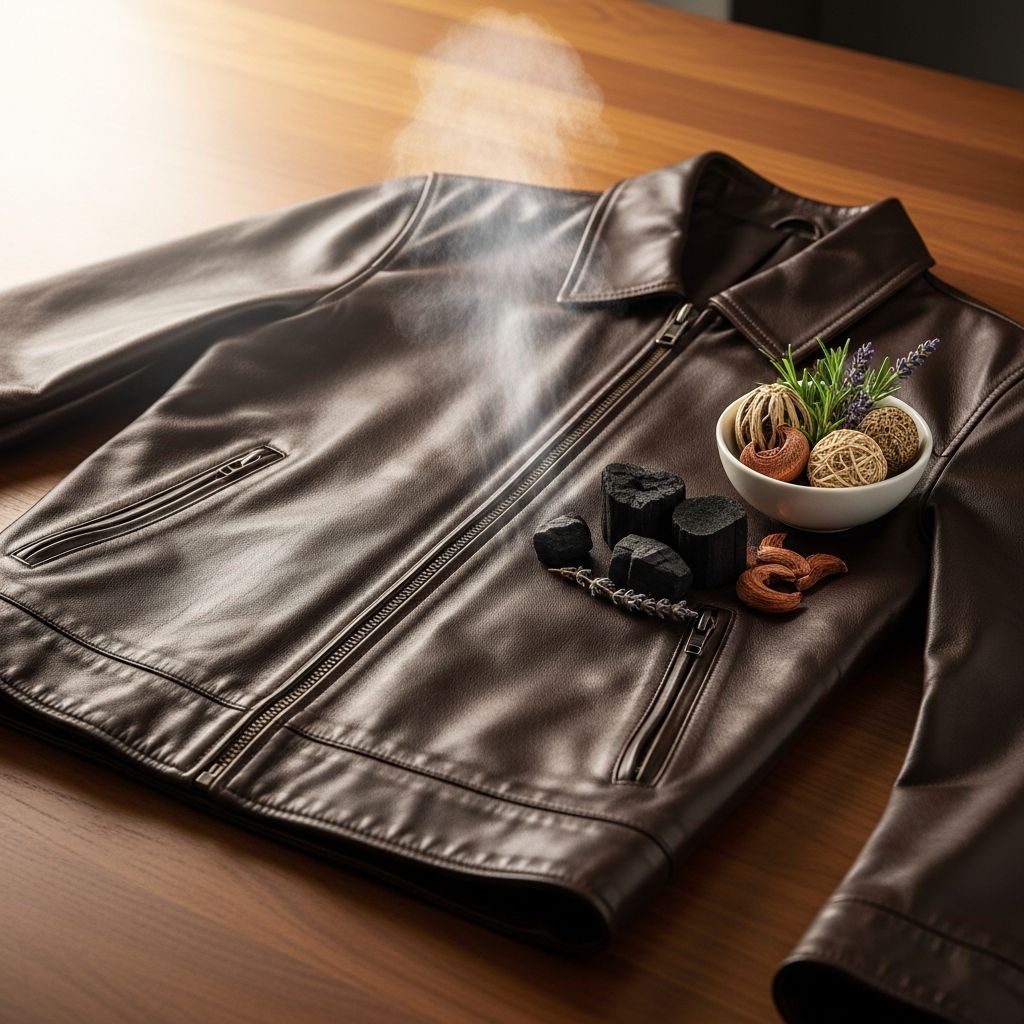
Activated charcoal or coffee grounds offer similar benefits for stubborn scents. Place unwrapped grounds or charcoal chunks in bowls inside a sealed garment bag with the jacket for 48-72 hours. These porous materials trap volatile compounds effectively, ideal for mildew or storage odors.
| Method | Best For | Duration | Precautions |
|---|---|---|---|
| Baking Soda | Sweat, general odors | 24-48 hours | Shake off completely; avoid suede |
| Activated Charcoal | Mildew, smoke | 48-72 hours | Use breathable pouch; ventilate after |
| Coffee Grounds | New leather, musty | 24-48 hours | Fresh grounds work best; discard post-use |
Liquid Sprays for Bacterial Odor Control
Diluted white vinegar neutralizes acids in musty smells. Mix 1:4 vinegar to water, lightly mist the lining, and air dry on a hanger. The alcohol evaporates, leaving no vinegary trace. Vodka serves as an odorless alternative in equal water parts for sweat or underarm areas.
Rubbing alcohol combats mildew with antifungal properties. Dilute 1:1 with water, wipe affected spots gently, and dry fully. For enhanced effect, follow with soapy water wipe using mild dish soap on a damp cloth, then rinse residue.
- Vinegar Spray: Targets acidity; safe for most linings.
- Vodka Mix: Kills bacteria discreetly.
- Alcohol Wipe: For persistent mold; test first.
Professional Cleaning and Conditioning Techniques
Start with pH-balanced leather cleaner applied via microfiber cloth or soft brush. For nappa or aniline leathers, use specialized mousses to preserve delicacy. Wipe in circular motions, then buff dry.
Post-cleaning, apply leather conditioner infused with natural scents to restore oils and prevent cracking. Use a sponge applicator in thin layers, buffing after drying. This step locks in freshness and protects against future odors.
Quick Fixes for On-the-Go Freshness
For immediate relief, stuff sleeves and pockets with crumpled newspaper overnight to draw out mild moisture. Dryer sheets tucked inside provide temporary masking. Cornstarch sprinkled on greasy spots absorbs oils before brushing off.
Cedar sachets or bamboo charcoal bags offer passive deodorizing in closets, preventing recurrence during storage.
Prevention Strategies for Long-Lasting Freshness
Maintain your jacket proactively. Air it out after wear in shaded, ventilated spots. Store in breathable garment bags with cedar blocks, avoiding plastic. Spot clean spills immediately. Condition quarterly to retain moisture balance. Rotate wear to allow drying between uses.
- Post-wear routine: Brush off dust, hang loosely.
- Seasonal care: Deep clean before storage.
- Humidity control: Silica packs in storage bags.
Troubleshooting Common Issues
If odors persist after two rounds, check for hidden mold in seams—use alcohol wipes. New jackets’ chemical smells fade with airing and coffee grounds. Vintage leathers benefit from professional assessment to avoid over-treatment.
Sweat in armpits responds to vodka sprays followed by baking soda. Cigarette smoke requires charcoal cycles plus conditioning.
Frequently Asked Questions
Can new leather jackets smell bad?
Yes, tanning chemicals cause initial odors. Air out with coffee grounds or cedar for 1-2 weeks.
How do I remove sweat smells from underarms?
Spray diluted vodka on lining, air dry, then apply baking soda overnight.
Is vinegar safe for leather?
Diluted yes, but mist lightly and test first; avoid direct leather contact.
What if DIY fails?
Consult professionals for moldy, vintage, or delicate leathers.
How often should I condition?
Every 3-6 months or after cleaning to prevent drying.
When Professional Help Is Necessary
Opt for experts if facing severe mildew, fragile vintage leather, or failed DIY efforts. They use specialized tools for deep extraction without harm, often restoring value to high-end pieces.
References
- How to Get Bad Smells Out of Leather Jackets — Decrum. 2023-10-15. https://decrum.com/blogs/news/how-to-get-bad-smells-out-of-leather-jackets
- How To Get Smell Out of Leather Jacket — The Leather City. 2024-02-20. https://www.theleathercity.com/how-to-get-smell-out-of-leather-jacket/
- How To Remove Bad Smells From Leather Jackets — Leather Repair Company. 2023-05-10. https://www.leatherrepaircompany.com/blogs/help-guides/how-to-remove-bad-smells-from-leather-jackets
- How to Get Odor Out of a Leather Jacket or Vest — First MFG Co. 2024-01-12. https://firstmfg.com/blogs/articles/how-to-get-odor-out-of-a-leather-jacket-or-vest
- How to Remove Odor From Leather Jackets — Legendary USA. 2023-11-08. https://legendaryusa.com/blogs/news/how-to-remove-odor-from-leather-jackets-proven-methods-for-modern-gear-beck-northeastern-flying-togs-classics
- How to Remove Mildew and Cigarette Smell from a Leather Jacket — YouTube (Video Guide). 2022-07-19. https://www.youtube.com/watch?v=q4R6SKKfq2c
Similar Articles








Read full bio of medha deb