Eliminating Wallpaper Borders: Methods and Best Practices
Master the art of removing decorative wall borders with proven techniques and professional tips.
Decorative wallpaper borders have long served as a finishing touch in interior design, adding visual interest and defining spaces within rooms. However, the time often comes when homeowners need to refresh their décor or restore walls to their original condition. Removing wallpaper borders presents a unique challenge that differs from removing full wallpaper installations. Whether you’re updating your home’s aesthetic or preparing walls for new treatments, understanding the various removal techniques available will help you complete this task efficiently and without damaging your walls.
Understanding Your Wallpaper Border Type
Before selecting a removal method, it’s essential to identify the type of wallpaper border you’re working with. Different materials and installation ages require different approaches. Some borders are designed for easy removal, featuring adhesives that release cleanly from walls, while others have been permanently adhered and will resist conventional removal attempts.
Removable wallpaper borders are engineered to come away cleanly when pulled, making them ideal for renters or those who frequently update their décor. These typically require minimal preparation and can often be peeled away by hand. Conversely, borders installed years ago may have adhesive that has hardened and bonded strongly to both the wall surface and any existing wallpaper beneath them. Sun exposure, humidity fluctuations, and wall composition all influence how firmly a border adheres.
Testing a corner of your border is the most reliable way to determine its type. Gently attempt to lift an edge with your fingernail or a plastic scraper. If it releases easily, you’re working with a cooperative border. If it resists, you’ll need to employ more aggressive techniques to achieve successful removal without wall damage.
Preparing Your Workspace for Safe and Effective Removal
Proper workspace preparation prevents damage to surrounding areas and ensures safety throughout the removal process. Begin by clearing the room of unnecessary furniture or moving items to the center and covering them with plastic sheeting. This protects belongings from moisture, adhesive residue, and dust.
Lay protective flooring by spreading drop cloths or old towels across the floor beneath the work area. This catches falling debris, water drips, and adhesive particles. Pay particular attention to carpet or hardwood flooring, which can be permanently damaged by prolonged exposure to water or chemical removers.
Ensure adequate ventilation, especially if using chemical removers or heat sources. Open windows and doors to allow air circulation. Wear protective gear appropriate to your chosen method, including work gloves, safety glasses, and dust masks when sanding. For chemical applications, ensure proper respiratory protection and follow all manufacturer safety guidelines.
Six Distinct Techniques for Border Removal
Manual Removal: The Simplest Starting Point
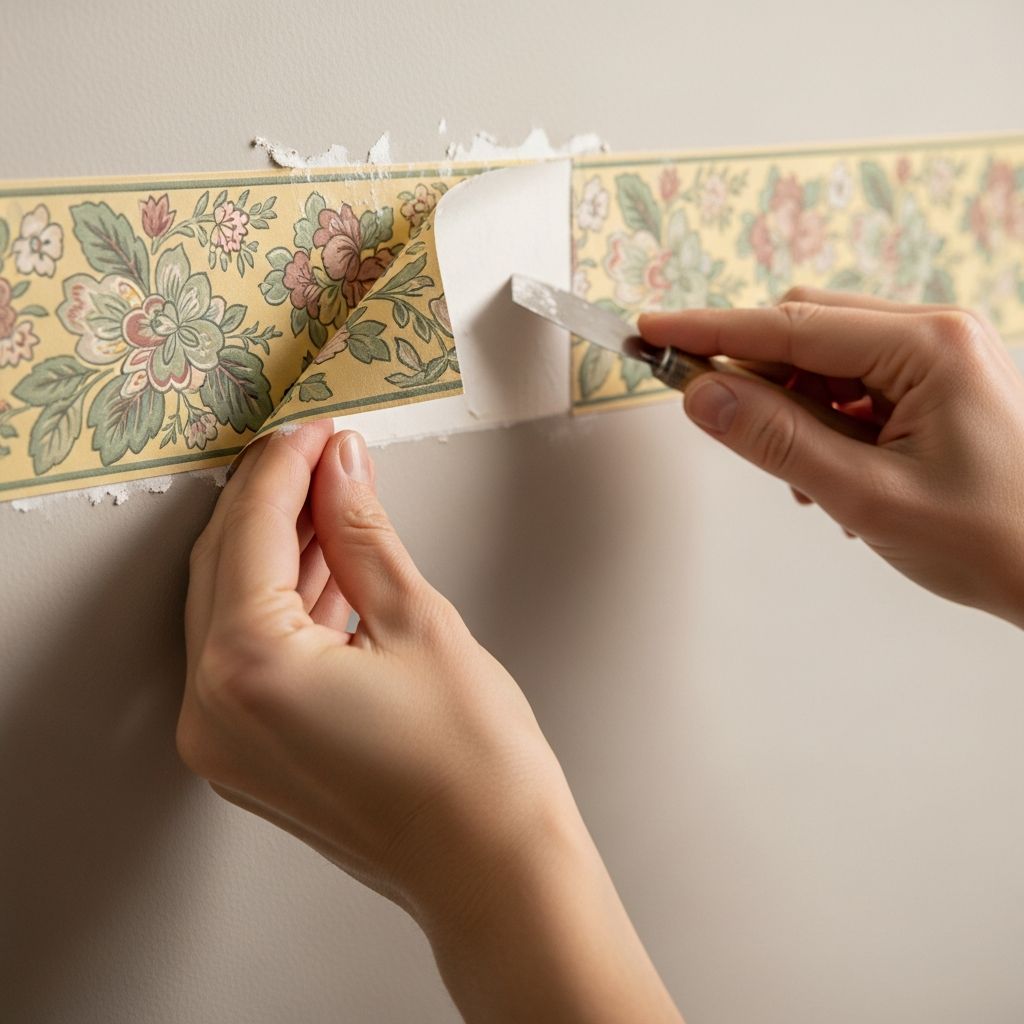
Manual removal represents the most economical and straightforward approach, particularly suitable for newer borders that haven’t developed strong adhesion. This technique requires minimal equipment and works best on removable wallpaper borders or those installed within the past few months.
Essential tools include:
- Wallpaper scraper or plastic putty knife
- Warm soapy water or commercial adhesive remover
- Sponge or soft cloth
Execution steps: Begin by locating a seam or corner where the border meets the wall. Use your scraper to gently lift this edge, applying steady pressure without forcing the tool beneath the border. Once you’ve created lifting space, grip the border edge firmly between your fingers and peel it away slowly, maintaining even tension. Work methodically along the entire length rather than attempting to remove the entire border in one motion. After removing the border, wipe any residual adhesive with warm soapy water applied via sponge, then dry the wall completely.
Warm Water Saturation: Adding Moisture for Enhanced Adhesive Release
When manual removal alone proves insufficient, introducing moisture creates conditions that soften adhesive bonds. Warm water penetrates the border backing and weakens the glue holding it to the wall surface.
Required materials:
- Scoring tool or utility knife
- Warm water in a spray bottle or bowl
- Sponges or cloths
- Putty knife or scraper
Application process: Start by using your scoring tool to create small perforations across the border surface. Apply light pressure—the objective is penetrating the paper layer without gouging the wall. These small holes allow water to reach the adhesive beneath. Soak a sponge or cloth in warm water and apply it generously to the scored border. Allow five to ten minutes for water absorption and adhesive softening. Slide your putty knife beneath the border edge and lift gradually. As you work around the border, reapply water as needed to maintain moisture and adhesive softness. Clean away remaining adhesive with warm soapy water.
Fabric Softener Solution: A Natural Adhesive Softener
Fabric softener mixed with water creates an effective and gentle adhesive softener. This method works particularly well on borders that have been installed for extended periods, as fabric softener penetrates and breaks down adhesive bonds more effectively than water alone.
Mix equal parts warm water and liquid fabric softener in a spray bottle. Score the border to allow solution penetration, then spray generously and allow ten to fifteen minutes of penetration time. The fabric softener’s chemical composition helps dissolve adhesive while remaining safe for most wall surfaces. Once the adhesive has softened appropriately, peel the border away using your putty knife. This method is particularly valued for being non-toxic and safe for use around children and pets.
Heat Application: Using Thermal Energy to Loosen Adhesive
Heat guns and wallpaper steamers apply thermal energy directly to borders, warming adhesive and making it pliable enough for removal. This technique proves especially effective on borders that have hardened due to sun exposure or age.
A wallpaper steamer holds moisture-laden heat against the border surface, allowing heat and moisture to work synergistically. Hold the steamer plate against the border for approximately fifteen seconds, allowing heat to penetrate through the paper layer and into the adhesive. The steam often enables removal of large border sections in single pieces. Hair dryers provide a gentler alternative for small areas or less resilient bonds.
Heat guns offer more concentrated thermal energy. Position the gun several inches from the wall and move it continuously to avoid overheating any single area. Excessive heat can damage paint or drywall, so maintain steady movement. Once the adhesive has warmed sufficiently, use your scraper to lift and peel the border.
Chemical Removers: Targeted Adhesive Dissolution
Commercial wallpaper removal products contain solvents specifically formulated to dissolve adhesive bonds. These products prove invaluable when other methods have failed or when dealing with extremely stubborn borders.
Before application, carefully read manufacturer instructions, as different products have varying penetration times and safety requirements. Score the border surface to allow solution penetration. Apply the remover using a sponge or brush according to package directions, allowing the specified waiting period for the solution to penetrate and work. The chemical breaks down adhesive bonds, allowing border peeling. If initial application proves insufficient, apply additional remover and wait the recommended time before attempting removal again. Always ensure adequate ventilation when using chemical products.
Orbital Sanding: Mechanical Removal for Extreme Cases
When borders resist all other removal methods, mechanical sanding offers a final solution. An orbital sander with medium-grit sandpaper (40-60 grit) abrades the border away. This method requires careful technique to avoid damaging the underlying wall surface.
Sand in circular motions, maintaining consistent pressure and continuous movement. Avoid concentrating pressure on any single area, as this can create gouges or damage the drywall surface. After sanding away the border material, use warm water to remove the loosened backing and adhesive residue. This method generates significant dust, making respiratory protection and ventilation essential.
Comparative Analysis of Removal Methods
| Method | Cost | Time Required | Difficulty Level | Best For | Wall Risk |
|---|---|---|---|---|---|
| Manual Removal | Low | 30-60 minutes | Easy | Recently installed borders | Minimal |
| Warm Water | Low | 60-90 minutes | Easy | Moderately adhered borders | Low |
| Fabric Softener | Low | 90-120 minutes | Easy | Long-installed borders | Low |
| Heat Application | Medium | 45-75 minutes | Moderate | Sun-exposed borders | Low-Medium |
| Chemical Remover | Medium | 75-120 minutes | Moderate | Extremely stubborn borders | Low |
| Orbital Sanding | High | 60-90 minutes | High | Last-resort removal | High |
Advanced Tips for Successful Border Removal
Patience represents the most valuable asset when removing stubborn borders. Rushing the process often results in wall damage that requires repair before applying new treatments. Allow adequate time for adhesive-softening products to penetrate and work effectively.
Always work from seams when possible. Wallpaper borders typically have seams where two sections connect, and these naturally weak points provide the best lifting locations. Attempting to remove the border from the middle of a section typically results in the border tearing rather than peeling away cleanly.
Temperature matters significantly. Warm solutions work more effectively than cold water, as heat accelerates adhesive breakdown. However, excessive heat can damage paint or wall surfaces, so maintain appropriate temperatures and application methods.
Test your chosen method on an inconspicuous area first. Apply your selected removal technique to a small section of border to ensure it works effectively without damaging the wall. This approach prevents wasted effort if your initial method proves ineffective.
Addressing Common Removal Challenges
Vinyl-backed borders: These resist moisture penetration, making scoring and chemical removers essential preliminaries. The vinyl coating prevents water from reaching the adhesive, so create adequate perforation points.
Borders over existing wallpaper: Removing borders from wallpapered walls requires extra care to avoid removing the underlying wallpaper. Use gentler methods initially, graduating to more aggressive techniques only if necessary.
Painted-over borders: Paint seals the border surface, preventing moisture penetration. Scoring becomes crucial for these applications, and chemical removers may prove necessary.
Multiple border layers: Rooms sometimes feature multiple borders from different installation periods. Remove them one at a time, starting with the topmost layer and working downward.
Post-Removal Wall Treatment
After successful border removal, the wall requires assessment and preparation for its next treatment. Check for adhesive residue, dust, or damage. Clean the wall thoroughly with mild soapy water and dry completely. Inspect for gouges, tears, or other damage requiring repair before applying new wallpaper, paint, or additional borders.
Minor adhesive residue can be removed with a rubber eraser or by applying additional warm soapy water and gently scrubbing. Significant damage may require spackle application, sanding, and primer before final finishing treatments.
Frequently Asked Questions
What’s the fastest way to remove a wallpaper border?
A wallpaper steamer or heat gun typically delivers the fastest results, enabling removal of large border sections in minimal time. However, manual removal of fresh borders can also be surprisingly quick when adhesion is weak.
Can I remove a border without damaging the underlying wallpaper?
Yes, using gentle methods like warm water saturation or fabric softener solutions minimizes wallpaper damage. Patience and proper technique are essential—rushing increases damage risk.
Is it safe to use chemical removers on all wall types?
Most modern chemical removers are safe for painted drywall, but test on an inconspicuous area first. Avoid using harsh chemicals on delicate surfaces or with inadequate ventilation.
How do I prevent wall damage during removal?
Use plastic scrapers instead of metal ones, apply moisture or heat to soften adhesive before scraping, work patiently from seams, and test methods on small areas before full application.
What should I do if the border won’t come off?
Escalate through removal methods progressively. If warm water doesn’t work, try chemical removers. If those fail, consider heat application or, as a last resort, mechanical sanding.
References
- How to Remove Wallpaper Border – Photowall — Photowall Ireland. 2024. https://www.photowall.com/ie/diy/how-to-remove-wallpaper-border-article
- How to Remove a Wallpaper Border the Right Way — Dundee Deco. 2024. https://dundeedeco.com/blogs/blog/remove-a-wallpaper-border
- How to Remove Wallpaper Border: A Comprehensive Guide — I Want Wallpaper. 2024. https://www.iwantwallpaper.co.uk/blog/home-makeover/how-to-remove-wallpaper-border-a-comprehensive-guide/
- How to Easily Remove Wallpaper — Lowe’s. 2024. https://www.lowes.com/n/how-to/remove-old-wallpaper
- The Easiest Way to Remove Wallpaper — Just a Girl and Her Blog by Abby Lawson. 2024. https://justagirlandherblog.com/remove-wallpaper/
Similar Articles



Read full bio of medha deb