Enhance Your End Table with a Custom Shelf
Transform a basic end table into a functional storage solution by adding a sturdy shelf with these detailed DIY instructions for beginners.
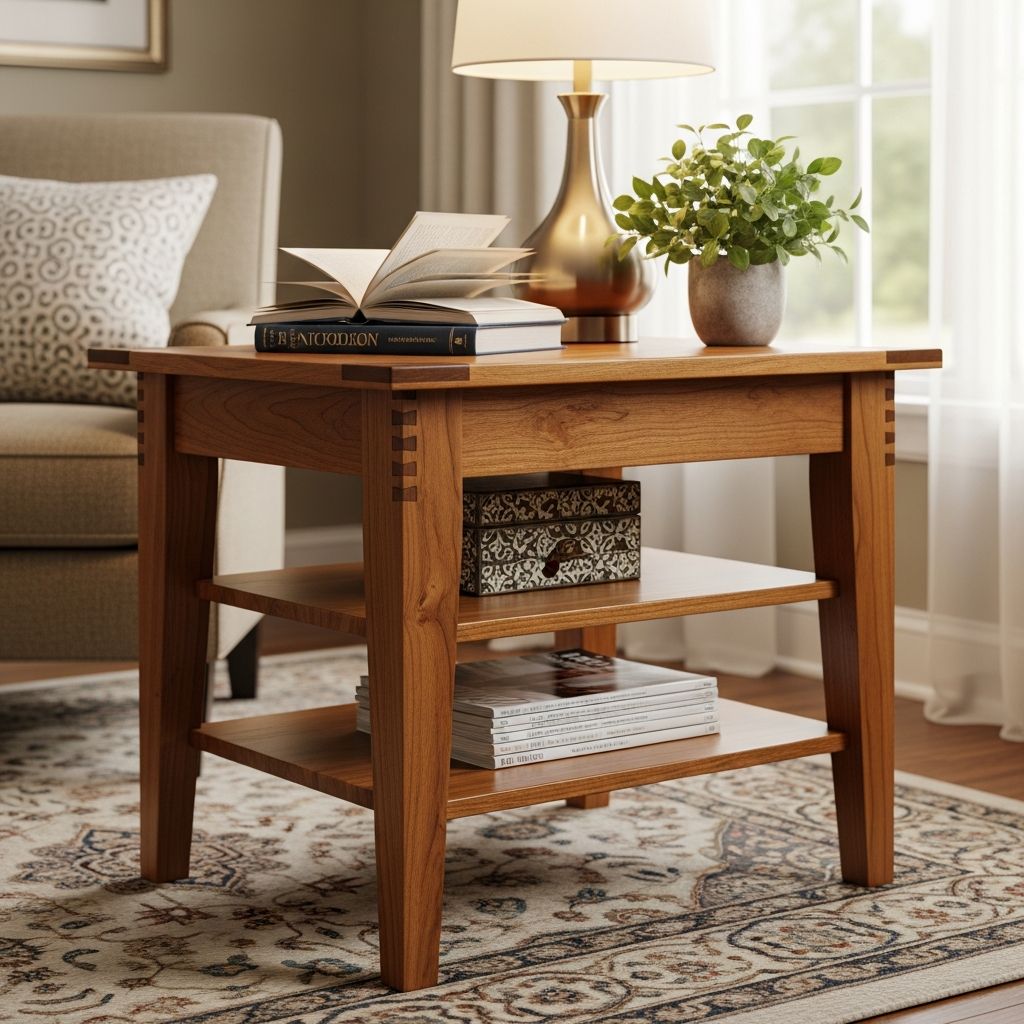
Adding a shelf to an end table is a straightforward woodworking project that increases storage space for books, remotes, or decor items while refreshing your living room or bedroom setup. This modification works well on existing tables or as part of building one from scratch, offering both practicality and a personalized touch.
Why Modify Your End Table?
End tables often serve as mere surfaces for lamps or drinks, but a lower shelf expands their utility. It prevents floor clutter, improves organization, and can elevate the table’s aesthetic appeal. Whether your table has legs, a frame, or an open design, a shelf addition provides stability and visual balance. Homeowners frequently choose this upgrade for small spaces where every inch counts.
Planning Your Shelf Addition
Before cutting wood, assess your end table’s dimensions and style. Measure the height, width, and leg spacing to ensure the shelf fits without obstructing movement. Decide on shelf height—typically 6 to 12 inches from the floor for easy access. Consider the load: a shelf for light items like magazines needs less support than one for heavier objects.
- Examine leg thickness and material; thicker legs support more complex attachments.
- Sketch a simple diagram noting shelf depth (usually matching tabletop width minus 1-2 inches).
- Account for wood expansion; leave small gaps if using solid lumber.
Match the shelf material to the table for cohesion—plywood for affordability, hardwood for durability.
Essential Tools and Materials
Gather these items to complete the project efficiently. Basic setups suit beginners, while advanced tools speed up precision work.
| Category | Items | Purpose |
|---|---|---|
| Tools | Saw (circular, miter, or table), drill, clamps, sander, measuring tape, square | Cutting, joining, smoothing, and aligning pieces |
| Materials | Wood boards (1×12 or 2×2 lumber), dowels or screws, wood glue, sandpaper (120-220 grit), finish (stain/paint/poly) | Building shelf, securing joints, protecting surface |
| Fasteners | 2.5-inch wood screws, 1-inch dowels, nails | Strong, hidden connections |
Budget options use scrap wood; premium builds employ kiln-dried lumber to prevent warping.
Safety Precautions for Woodworking
Prioritize safety to avoid injuries. Wear safety glasses, dust masks, and hearing protection. Secure workpieces with clamps, unplug tools when changing bits, and work in a ventilated area. Keep blades sharp to reduce kickback risks.
Step-by-Step Guide: Building a Basic Shelf
This method uses dowels for a clean, strong hold, ideal for legged tables.
- Prepare the Shelf Board: Cut plywood or lumber to size, e.g., 20×10 inches for a standard table. Sand edges smooth.
- Mark Attachment Points: Position shelf 8 inches from floor. Mark spots on legs 1 inch from shelf ends.
- Drill Dowel Holes: Use a dowel jig for 3/8-inch holes, 1 inch deep on shelf edges and matching on legs.
- Insert Dowels: Apply glue to dowels, tap into shelf holes with a mallet.
- Assemble: Align shelf with leg marks, tap into place, and clamp for 30 minutes.
- Reinforce: Add screws from underside if needed, countersinking heads.
Allow 24 hours for glue to cure before loading.
Advanced Techniques for Framed Tables
For tables with aprons or frames, integrate the shelf into the structure.
- Cut rails from 1×2 boards to span between legs.
- Glue and screw rails at desired height, creating a ledge.
- Rest shelf on rails, securing with brackets or pocket screws for invisibility.
This approach distributes weight evenly, suiting heavier loads.
Customizing Shelf Design
Tailor the shelf to your decor:
- Shape Variations: Round corners with a jigsaw for softness; add cutouts for cables.
- Multi-Tier: Stack two shelves with spacers for more storage.
- Material Mix: Pair wood with metal brackets for industrial vibe.
Test fit dry before gluing to perfect proportions.
Sanding and Finishing for Professional Results
Smooth surfaces enhance durability and beauty. Progress from 120-grit to 220-grit sandpaper. Wipe dust with tack cloth. Apply stain evenly, wiping excess after 5 minutes. Seal with two coats of polyurethane, sanding lightly between coats.
| Finish Type | Pros | Cons |
|---|---|---|
| Stain + Poly | Highlights grain, protective | Multi-step process |
| Paint | Quick coverage, customizable colors | Hides wood texture |
| Oil | Natural look, easy touch-ups | Less durable |
Dry times vary; follow product instructions.
Common Mistakes and Fixes
Avoid pitfalls for a flawless project:
- Misaligned Holes: Use a jig or centers for accuracy.
- Weak Joints: Combine glue with mechanical fasteners.
- Warping: Acclimate wood indoors for a week.
- Over-Sanding: Stop at 220-grit to retain smoothness without thinning.
Alternative Methods for Different Table Types
Adapt for unique designs:
- Metal-Legged: Drill and epoxy shelf directly.
- Pedestal Base: Notch shelf around center column.
- Glass Top: Use adhesive brackets underneath.
Always reinforce based on expected use.
Styling Ideas Post-Installation
Showcase your upgrade:
- Place woven baskets for hidden storage.
- Display plants or sculptures for elegance.
- Layer with coasters and books for lived-in charm.
FAQs
What wood is best for the shelf?
Plywood offers stability; oak or maple provides strength and beauty.
How much weight can the shelf hold?
With dowels and glue, 20-50 pounds, depending on leg size.
Can I add a shelf to an antique table?
Yes, use reversible methods like clamps to preserve value.
What’s the easiest attachment?
L-brackets under the shelf for quick, strong support.
How long does the project take?
2-4 hours active time, plus drying.
References
- Bookshelf End Table (Step-by-Step Instructions) — ChiselandFork.com. 2023-01-15. https://www.chiselandfork.com/bookshelf-end-table/
- DIY End Table with Shelves–Building Plans Using Basic Tools! — Woodshop Diaries. 2022-05-20. https://www.woodshopdiaries.com/diy-end-table-with-shelf-using-only-2x2s/
- Adding a shelf to a table — Fine Woodworking. 2021-11-10. https://www.finewoodworking.com/project-guides/beginner-projects/making-tabletop-start-woodworking-s3ep6
Similar Articles








Read full bio of medha deb