Epsom Salt For Palm Trees: Expert Care Guide
Discover how Epsom salt boosts palm tree vitality, corrects deficiencies, and promotes lush growth for healthier landscapes.
Enhance Palm Trees with Epsom Salt Care
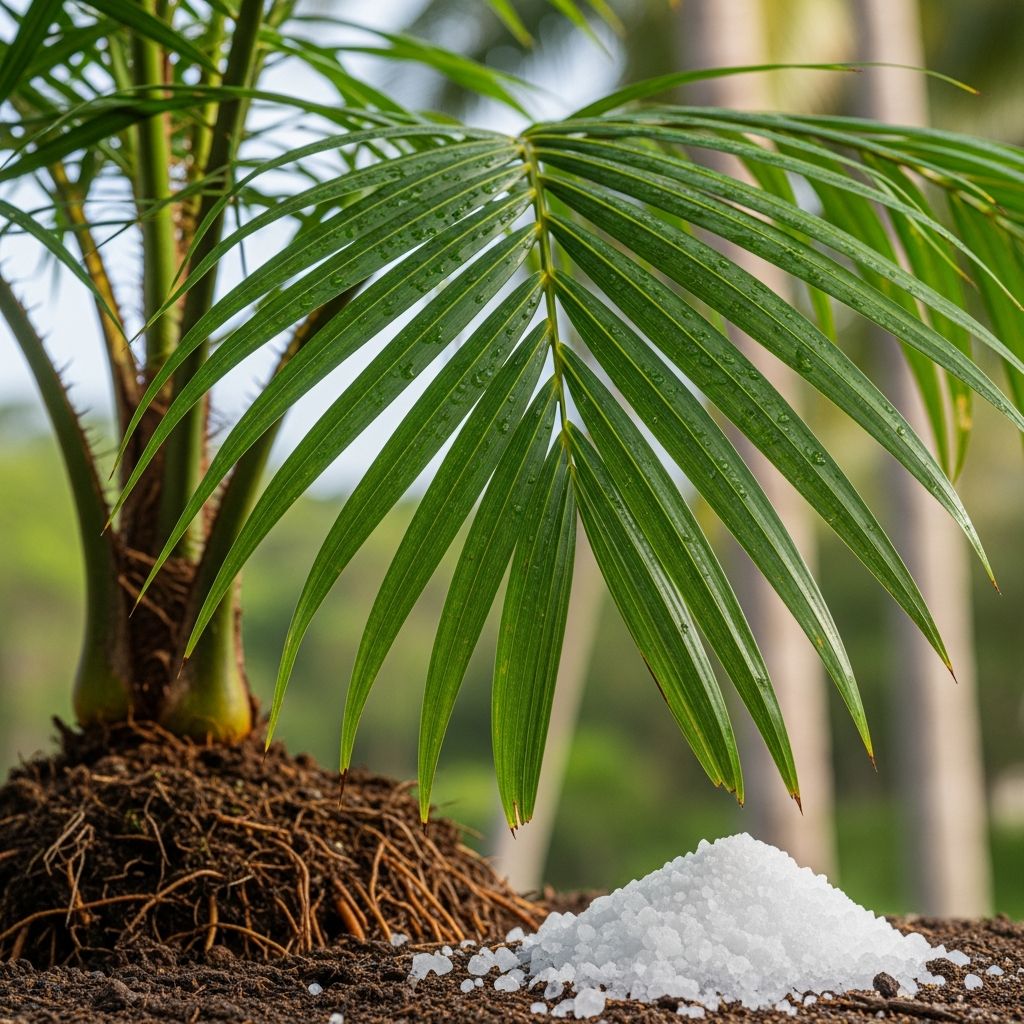
Palm trees thrive when provided with targeted nutrients like magnesium, which Epsom salt delivers effectively to prevent common issues such as frond discoloration and stunted growth. This guide explores practical applications, supporting practices, and long-term strategies to keep your palms vibrant and robust.
Understanding Magnesium’s Vital Role in Palm Health
Magnesium serves as a core component of chlorophyll, enabling palms to perform photosynthesis efficiently and maintain their signature green foliage. Deficiencies often manifest as yellowing between leaf veins, a condition known as chlorosis, which weakens the plant’s ability to produce energy. Palms demand higher magnesium levels than many other trees, making supplementation essential in nutrient-poor soils.
Soil tests reveal that sandy or alkaline conditions common in palm-growing regions deplete magnesium rapidly, exacerbating problems during dry spells or rapid growth phases. Regular monitoring ensures timely intervention, preserving the tree’s structural integrity and aesthetic appeal.
Recognizing Signs of Nutrient Shortfalls in Palms
Early detection of issues allows for precise corrections using Epsom salt. Look for these indicators:
- Frizzle top: Browning tips on new fronds, signaling manganese alongside magnesium needs.
- Yellow older leaves: Interveinal chlorosis where veins stay green but tissue yellows.
- Stunted growth: Smaller, weaker fronds unable to expand fully.
- Premature frond drop: Healthy-looking leaves shedding unusually early.
These symptoms frequently overlap with potassium or iron shortages, but magnesium depletion is a primary culprit in tropical settings. Visual inspections combined with soil analysis provide the clearest diagnosis.
Preparing and Applying Epsom Salt Solutions
Epsom salt, or magnesium sulfate, dissolves easily for foliar or soil drenches. For a standard solution, mix 1-2 tablespoons per gallon of water, adjusting based on tree size and deficiency severity.
| Method | Rate | Frequency | Best Time |
|---|---|---|---|
| Foliar Spray | 1 tbsp/gallon | Every 4-6 weeks | Early morning or evening |
| Soil Drench | 2 tbsp/gallon | Monthly during growing season | After deep watering |
| Granular Broadcast | 1-2 lbs per mature tree | 3-4 times yearly | Spring and fall |
Apply foliar sprays directly to fronds until runoff, targeting undersides for better absorption. Soil applications work best after rain or irrigation to carry nutrients to roots. Avoid over-application to prevent salt buildup, which harms fine palm roots.
Integrating Epsom Salt with Complete Fertilization Plans
While Epsom salt addresses magnesium, palms require a balanced approach with nitrogen, potassium, and micronutrients. Use palm-specific slow-release fertilizers elevated in magnesium and manganese, applied 3-4 times annually.
- Combine with mycorrhizal fungi to enhance nutrient uptake from soil.
- Incorporate biostimulants for greener foliage and stress resistance.
- Follow label rates to avoid imbalances that cause further yellowing.
For newly planted palms, start fertilization lightly after establishment, ramping up as roots expand. In coastal areas like Florida, salt-tolerant formulas prevent exacerbation of environmental stressors.
Optimal Watering Techniques for Nutrient Delivery
Water deeply but infrequently to reach the root zone 24-36 inches deep, mimicking natural rainfall patterns. New palms need daily watering initially, tapering to three times weekly for matures.
Check soil moisture by inserting a finger knuckle-deep; water only when dry. Drip systems or soaker hoses ensure even distribution without trunk wetting, which invites fungal issues. Mulch with 2-3 inches of organic material retains moisture and moderates soil temperature.
Pruning Practices to Support Nutrient Health
Remove only dead or dying fronds to avoid stressing the tree, as palms recycle nutrients from older leaves. Use sharp, sterilized tools to make clean cuts, preventing disease spread.
Never top palms or remove more than 25% of canopy at once. For trunks with persistent leaf bases (boots), strip carefully if desired for cleanliness, but leave natural skirt on some species for protection.
Preventing Pests and Diseases Through Nutrition
Well-nourished palms resist spider mites, scales, and fungal pathogens better. Inspect regularly for webbing, sticky residue, or spots; prune affected areas and improve air flow.
Epsom salt strengthens cell walls, reducing susceptibility. In winter, reduce watering and apply mulch to insulate roots against cold snaps in subtropical zones.
Seasonal Care Calendar for Epsom Salt Users
| Season | Key Actions | Epsom Salt Use |
|---|---|---|
| Spring | Deep water, fertilize, prune lightly | Soil drench monthly |
| Summer | Increase watering, monitor for pests | Foliar spray biweekly if yellowing |
| Fall | Fertilize, mulch base | Granular application |
| Winter | Reduce water, protect from frost | One light foliar if needed |
This schedule aligns treatments with growth cycles, maximizing Epsom salt efficacy.
Common Mistakes to Avoid in Palm Maintenance
- Over-pruning green fronds, which robs the tree of nutrients.
- Shallow, frequent watering that leaves deep roots dry.
- Ignoring soil pH; palms prefer slightly acidic conditions for magnesium availability.
- Using generic fertilizers lacking palm-specific micronutrients.
Correcting these sustains long-term vigor.
Frequently Asked Questions
Can Epsom salt fix all yellow fronds on palms?
It primarily addresses magnesium deficiency but may need pairing with other fertilizers for comprehensive recovery. Test soil first.
How often should I apply Epsom salt to young palms?
Monthly during active growth for the first year, then quarterly for established trees.
Is Epsom salt safe for all palm species?
Yes, but dosage varies; consult species-specific guides for exotics.
Does Epsom salt replace regular palm fertilizer?
No, it supplements magnesium; use alongside balanced formulas.
Can I use Epsom salt indoors for potted palms?
Yes, dilute further and ensure good drainage to prevent root burn.
Advanced Tips for Thriving Palm Landscapes
For multi-palm groves, zone fertilization to match species needs. Incorporate companion plants that improve soil biology without competing for resources. Annual professional inspections catch subtle declines early.
Bracing young trees against wind with cushioned supports for six months post-planting stabilizes growth. Proper planting depth—root ball crown at soil level—prevents rot and ensures upward development.
In high-salt environments, flush soil periodically with fresh water before Epsom applications. These refinements elevate basic care to professional standards.
References
- Palm Tree Care Guide — TreeHelp. Accessed 2026. https://www.treehelp.com/pages/palm
- How To Keep Palm Trees Healthy & Vibrant On Your Property — Davey Tree. Accessed 2026. https://www.davey.com/commercial-blog/all-about-palms/
- Caring For Palm Trees In Florida: Top Do’s And Don’ts — Island Tree Service FL. 2022-06-05. https://islandtreeservicefl.com/2022/06/05/how-care-for-palm-trees/
- Palm Tree Care and Maintenance in Myrtle Beach — NPK Lawncare. Accessed 2026. https://npklawncare.com/blog-details/palm-tree-care-and-maintenance-in-myrtle-beach-your-expert-guide
- How to Care for Palm Trees — Pennington Seed. Accessed 2026. https://www.pennington.com/all-products/fertilizer/resources/how-to-care-for-palm-trees
- Palm Care Made Simple — UF/IFAS Extension. Accessed 2026. https://sfyl.ifas.ufl.edu/media/sfylifasufledu/wakulla/images/master-gardeners/Palm-Care-Made-Simple.pdf
Similar Articles






Read full bio of Sneha Tete