Epsom Salt for Plants: Effective Fertilizer Guide
Unlock the benefits of Epsom salt as a natural fertilizer to boost plant health, growth, and yields in your garden.
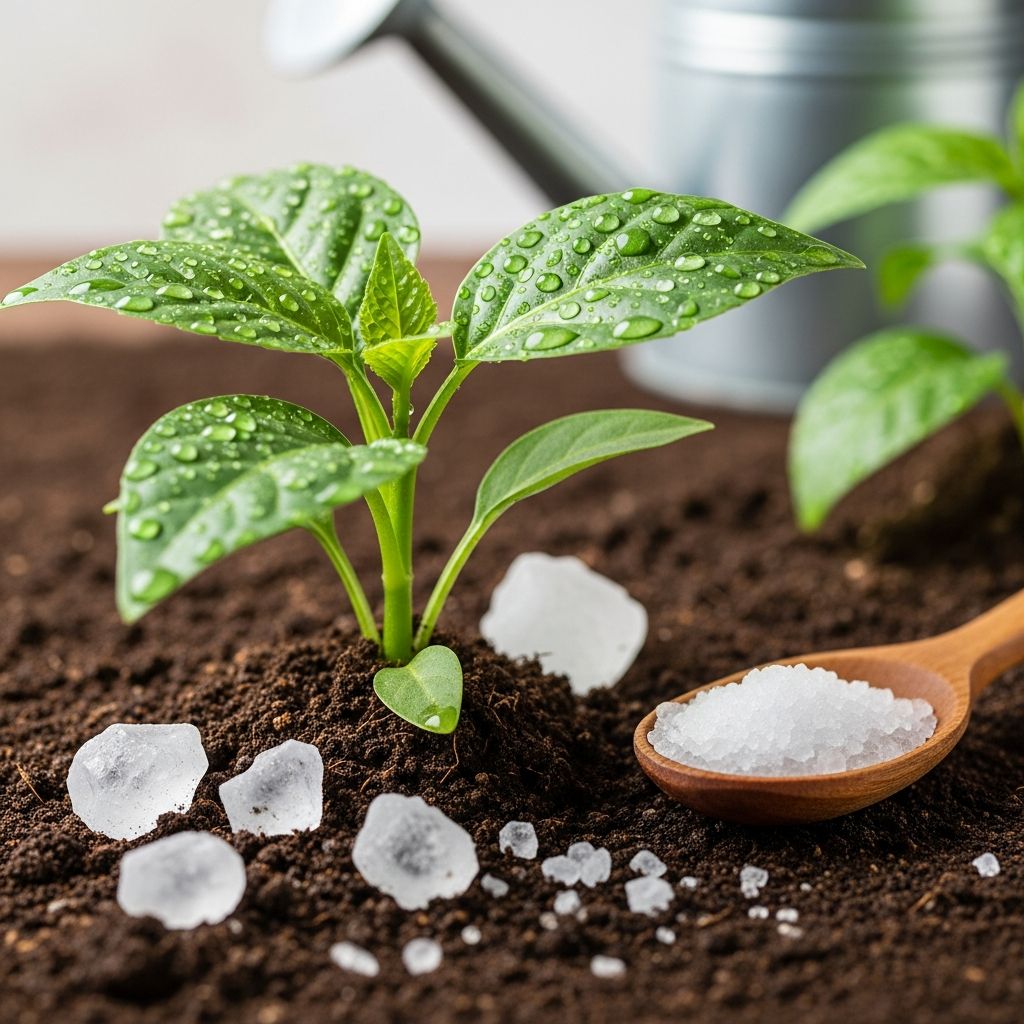
Epsom salt, chemically known as magnesium sulfate, serves as a supplemental fertilizer that delivers magnesium and sulfur to plants, aiding in chlorophyll production and nutrient absorption when soil levels are low.
What Makes Epsom Salt Valuable in Gardening?
This mineral compound occurs naturally and dissolves easily in water, allowing quick uptake by plant roots or leaves. Magnesium supports photosynthesis and enzyme functions, while sulfur enhances overall nutrient efficiency. Gardeners often turn to it for crops like tomatoes, peppers, and roses showing signs of stress.
- Magnesium’s role: Essential for green foliage and energy production in plants.
- Sulfur’s contribution: Helps with protein synthesis and vitamin formation.
- Solubility advantage: Rapid delivery compared to slower-release options.
Unlike primary fertilizers focused on nitrogen, phosphorus, or potassium, Epsom salt targets secondary nutrients, making it a targeted fix rather than a complete replacement.
Recognizing When Your Plants Need Magnesium Boost
Yellow leaves with green veins, known as interveinal chlorosis, signal magnesium shortage, especially in tomatoes late in the season. Stunted growth, weak stems, or reduced fruit set can also indicate deficiency. Soil tests every few years confirm needs, as excess magnesium competes with calcium uptake.
| Symptom | Possible Cause | Epsom Salt Solution |
|---|---|---|
| Yellowing between veins | Magnesium deficiency | Foliar spray or soil drench |
| Pale, bushy growth | Nutrient imbalance | Balanced application |
| Smaller fruits | Impaired photosynthesis | Early season boost |
Container plants and sandy soils deplete magnesium faster, warranting closer monitoring.
Step-by-Step Mixing Instructions for Soil Application
For soil use, dissolve 1 tablespoon of Epsom salt per gallon of water. Water plants at the base every two weeks during active growth, avoiding overhead to prevent leaf burn. For larger areas, mix 1 cup per 100 square feet into topsoil.
- Measure Epsom salt accurately using a kitchen scale for precision.
- Fill a watering can with lukewarm water to speed dissolution.
- Stir until fully dissolved; crystals should vanish completely.
- Apply in early morning or evening for best absorption.
Start with half-strength for sensitive plants like seedlings to gauge response.
Foliar Spray: Faster Nutrient Delivery Method
Spraying leaves bypasses soil issues, providing immediate magnesium access. Mix 1-2 tablespoons per gallon and mist undersides of leaves weekly until symptoms improve. Tests show foliar methods yield greener peppers and fuller roses compared to soil-only.
- Use fine mist sprayer for even coverage.
- Avoid hot sun to prevent scorching.
- Repeat after rain for sustained effect.
Roses treated foliarly showed bushier growth and more blooms in gardener trials.
Best Plants to Fertilize with Epsom Salt
Tomatoes benefit from mid-season applications to counter yellowing and boost fruit size. Peppers gain juicier yields, while roses display deeper colors and vigor. Evergreens, azaleas, and rhododendrons respond with improved blooms.
- Vegetables: Tomatoes, peppers for larger, healthier produce.
- Flowers: Roses for enhanced color and abundance.
- Shrubs: Acid-lovers like azaleas for lush foliage.
Houseplants in pots often need it due to leaching from frequent watering.
Potential Drawbacks and How to Avoid Them
Overuse builds magnesium excess, blocking calcium and worsening issues like blossom end rot. It doesn’t supply calcium, so pair with balanced fertilizers. Quick leaching in rainy areas means repeated applications may be needed, but soil tests prevent waste.
| Pro | Con | Mitigation |
|---|---|---|
| Quick deficiency fix | Calcium competition | Soil test first |
| Promotes growth | Leaches easily | Foliar + soil combo |
| Low cost | Not a full fertilizer | Use with NPK |
No evidence supports claims like pest control or germination boosts; focus on proven benefits.
Seasonal Application Strategies for Maximum Results
Spring: Light soil drench at planting for root establishment. Summer: Foliar sprays during fruiting. Fall: Soil incorporation for overwintering perennials. Adjust based on rainfall; drier climates retain benefits longer.
For tomatoes, apply at first yellowing sign; peppers show doubled fruit thickness in some trials. Roses monthly in field studies reduced disease impact initially.
Combining Epsom Salt with Other Garden Amendments
Pair with compost for organic matter or lime for pH balance in acidic soils. Avoid high-potassium fertilizers simultaneously, as they hinder magnesium uptake. Slow-release micronutrient formulas complement it for full nutrition.
- With coffee grounds: Adds nitrogen without magnesium clash.
- Eggshells: Calcium source to counter competition.
- Avoid excess alongside high-calcium amendments.
Frequently Asked Questions
Is Epsom salt safe for all plants?
Yes, in moderation, but test soil first to avoid overload, especially in alkaline conditions.
How often to apply to vegetables?
Every 2-4 weeks during growth; reduce in fall.
Can it fix blossom end rot?
No, as it lacks calcium and may worsen it; address calcium directly.
Organic gardeners approve?
Natural source, but use sparingly as supplement.
Seed starting viable?
No proven germination boost; focus on mature plants.
DIY Recipes for Home Gardeners
Tomato Tonic: 2 tbsp Epsom salt + 1 gallon water + 1 tsp dish soap (stickiness). Spray biweekly.
Rose Reviver: 1 tbsp per gallon, soil soak monthly.
General Boost: 1 cup in 5 gallons for lawn edges or beds.
Store mixes refrigerated up to a week; fresh is best.
Monitoring Progress and Long-Term Soil Health
Observe new growth greening within days of foliar use. Annual tests track levels; aim for balanced profile. Rotate amendments to prevent imbalances.
Gardener anecdotes highlight vigor gains, backed by trials on peppers and roses. Sustainable use enhances yields without synthetic reliance.
References
- Pros and Cons of Epsom Salt For Plants — Gubba Homestead. 2023. https://gubbahomestead.com/gardening/pros-and-cons-of-epsom-salt-for-plants/
- Is Epsom Salt Good For Plants? — Gardening Know How. 2024-01-15. https://www.gardeningknowhow.com/garden-how-to/soil-fertilizers/epsom-salt-gardening.htm
- Fertilize with Epsom Salts — The National Gardening Association. 2022. https://garden.org/learn/articles/view/68/Fertilize-with-Epsom-Salts/
- Coffee grounds, eggshells and Epsom salts in the home garden — University of Minnesota Extension. 2023-05-10. https://extension.umn.edu/manage-soil-nutrients/coffee-grounds-eggshells-epsom-salts
- Gardening with Epsom Salt For Plants — SaltWorks. 2024. https://seasalt.com/salt-101/about-bath-salt/gardening-with-epsom-salt
Similar Articles



Read full bio of medha deb